

Phase 1: 공감 (Story-Driven Opening)
안녕하세요! 매일한글 에디터입니다.
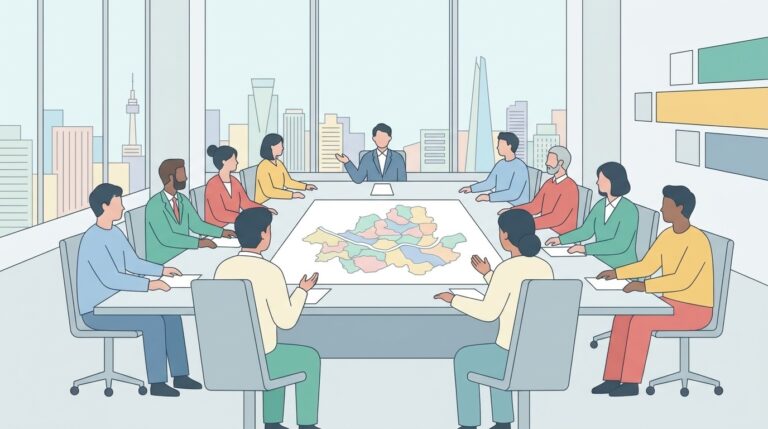
Imagine walking into a tense community town hall meeting in Seoul’s Mapo district. Rows of passionate residents are clutching flyers, microphones are echoing, and local district representatives are seated on stage with folded hands and nervous expressions. The topic? A proposed eco-friendly recycling plant right next to a residential apartment complex. In Korea, navigating local NIMBY (Not In My Back Yard) or 기피 시설 (gipi siseol) conflicts requires far more than basic linguistic fluency; it demands a high-level diplomatic touch, cultural emotional intelligence (Nunchi), and sophisticated vocabulary designed to mediate rather than confront.
Many advanced Korean learners tell us that while they feel confident discussing politics or economics in a classroom, stepping into high-stakes negotiation or neighborhood mediation (주민 갈등 조정) makes them freeze. Using overly casual phrasing or blunt textbook translations can instantly escalate tension among Korean stakeholders. This comprehensive C1-level guide draws from real-world civic administration cases and feedback from advanced expatriates working in Korean NGOs, public affairs, and urban policy. Master these nuanced expressions today so you can build consensus, disarm heated debates, and navigate community disputes like a seasoned Korean mediator.
Phase 2: 핵심 표현 3선 심층 분석 (3 Core Advanced Expressions)
1. 상생 방안을 모색하다 (Sangsaeng bangan-eul mosaekhada)
- Pronunciation: [Sang-saeng bang-an-eul mo-saek-ha-da] (Sounds like “Sahng-seng bahng-ahn-ool mo-sek-hah-dah”)
- Meaning: Literally “To seek measures for mutual living/symbiosis” | Nuance: To pursue a sustainable, win-win solution where neither side feels defeated.
- K-Culture Moment: In civic and corporate K-Dramas like Queen of Tears or Agency, you will hear executives and civic leaders invoke this exact phrase during intense boardrooms or resident town halls to pivot from conflict to mutual benefit.
- Editor’s Insight: 상생 (Sangsaeng) is one of the most powerful keywords in contemporary Korean public relations. It softens rigid negotiation positions by framing the outcome as collective growth rather than a zero-sum sacrifice.
- Situation Spectrum: Casual 🚫 | Semi-formal ⚠️ | Formal ✅
- 🤔 Think About It: In your native culture, do public negotiations emphasize individual legal rights or communal coexistence? How does the concept of 상생 shift the emotional temperature of a debate?
2. 주민 공청회를 통해 의견을 수렴하다 (Jumin gongcheonghoe-reul tonghae uigyeon-eul suryeomhada)
- Pronunciation: [Ju-min gong-cheong-hoe-reul tong-hae ui-gyeon-eul su-ryeom-ha-da] (Sounds like “Joo-min gong-chuhng-hweh-reul tong-heh oo-ee-gyun-ool soo-ryum-hah-dah”)
- Meaning: Literally “To gather and synthesize resident opinions through a public hearing” | Nuance: To systematically collect and listen to grassroots feedback before taking administrative action.
- K-Culture Moment: Seen in local news reports whenever a city announces a new transportation hub or waste facility, reassuring citizens that no unilateral decisions are being made.
- Editor’s Insight: The verb 수렴하다 (suryeomhada) means more than just “listening”; it implies harvesting disparate perspectives and weaving them into an actionable plan.
- Situation Spectrum: Casual 🚫 | Semi-formal ⚠️ | Formal ✅
- 🤔 Think About It: Why is holding formal hearings (공청회) psychologically vital for maintaining trust within high-density Korean apartment communities?
3. 원만한 합의점을 도출하다 (Wonmanhan hab-uijeom-eul dochulhada)
- Pronunciation: [Won-man-han ha-bui-jeom-eul do-chul-ha-da] (Sounds like “Won-mahn-hahn hah-boo-ee-jum-ool doh-chool-hah-dah”)
- Meaning: Literally “To derive a smooth point of agreement” | Nuance: To successfully bridge gaps and reach an amicable compromise.
- K-Culture Moment: Often delivered by seasoned mediators or chief arbiters in legal dramas like Stranger (Secret Forest) after grueling settlement sessions.
- Editor’s Insight: 원만하다 (Wonmanhada) translates to smooth, harmonious, and devoid of friction. Adding 도출하다 (dochulhada – to deduce/derive) shows active, methodical effort to craft peace.
- Situation Spectrum: Casual 🚫 | Semi-formal ⚠️ | Formal ✅
- 🤔 Think About It: How does prioritizing “harmony” (원만함) over “winning a debate” alter your negotiation strategy?
Phase 3: 교과서 한국어 vs 진짜 한국어 (Textbook vs. Real Korean)
Situation 1: Raising resident objections during a planning meeting
- 📖 교과서 한국어: 우리는 이 시설 설치에 전적으로 반대합니다. (Urineun i siseol seolchie jeonjeogeuro bandaebnida. / We completely oppose the installation of this facility.)
- 🗣️ 진짜 한국어: 일방적인 추진보다는 주민들의 우려 사항을 사전에 충분히 수렴해 주셨으면 합니다. (Ilbangjeogin chujinbodaneun jumindeurui uryeo sahangeul sajeone chungbunhi suryeomhae jusyeosseumyeon habnida. / Rather than a unilateral rollout, we would appreciate it if residents’ concerns were thoroughly gathered beforehand.)
- 💡 왜 다를까?: In advanced Korean civic dialogue, saying “우리는 반대합니다” sounds combative and creates an immediate deadlock. Framing the objection around process transparency (일방적인 추진 지양) and respect for community voice (우려 수렴) yields far better leverage.
Situation 2: Negotiating community incentives or compensation
- 📖 교과서 한국어: 보상금을 더 주면 찬성하겠습니다. (Bosanggeumeul deo jumyeon chanseonghagesseubnida. / If you give more compensation money, we will agree.)
- 🗣️ 진짜 한국어: 지역 인프라 확충이나 상생 발전 기금 조성을 전제로 다각적인 검토가 필요해 보입니다. (Jiyeok impeura hwakchung-ina sangsaeng baljeon gigeum joseongeul jeonjero dagakjeogin geomtoga piryohae boibnida. / Multifaceted review seems necessary, on the premise of expanding local infrastructure or establishing a mutual development fund.)
- 💡 왜 다를까?: Demanding cash directly can make a resident committee look mercenary in the media. Using administrative phrasing like 상생 발전 기금 (mutual development fund) or 인프라 확충 (infrastructure expansion) elevates the legitimacy of the community’s demands.
Phase 4: K-Culture 딥다이브 & 비언어적 매너 (Non-Verbal Etiquette & Culture Code)
4-1. 눈치(Nunchi) & Body Language at the Mediation Table
- Two-Handed Posture & Pitch Control: When presenting counter-proposals in front of local elders (주민대표) or government officials, keep both hands resting calmly on the table or clasped together in your lap. Never point your finger; gesture with an open palm facing upward.
- Strategic Pausing (침묵의 미학): When tempers flare, do not talk over an upset resident. Maintain empathetic eye contact, nod slowly, and wait 2–3 seconds after they finish before responding in a calm, slightly lower vocal register. This shows immense respect (예의) and emotional command.
4-2. Cultural Code: The Psychology Behind Korean NIMBY Conflicts
In South Korea’s densely populated metropolitan areas, residential apartment complexes (아파트 단지) are not just living spaces—they represent the majority of a family’s financial assets and identity. When a waste treatment plant, electrical substation, or public rental housing project is announced nearby, anxiety over property valuation (부동산 시세) and children’s safety drives community pushback. To arbitrate successfully, you must address both the emotional pride of the residents and concrete developmental incentives.
Phase 5: 실전 롤플레이 시나리오 (Real Roleplay Simulation)
Setting: A heated public consultation room in the Mapo District Office. Resident Representative Park is voicing fierce opposition to a newly proposed regional recycling hub.
Characters:
* Park (주민대표 박 대표): Stern, passionate community leader defending his neighborhood.
* Alex (알렉스 조정관 – You): Lead Urban Mediation Specialist for the district.
- Turn 1 (Park): 🎭 (자료를 탁자에 내려놓으며 목소리를 높인다) 우리 동네에 또 기피 시설을 짓겠다니요? 주민들의 의견은 완전히 무시된 처사입니다!
(Uri dongnee tto gipi siseoreul jitgetdaniyo? Jumindeurui uigyeoneun wanjeonhi musidoen cheosaimnida!)
“Building another unwelcome facility in our neighborhood? This is a complete disregard of the residents’ voices!” -
Turn 2 (Alex): 🎭 (정중하게 고개를 끄덕이며 차분한 어조로) 대표님께서 염려하시는 바를 충분히 이해하고 있습니다. 절차상 미흡했던 점에 대해 유감스럽게 생각합니다.
(Daepyonimkkeseo yeomryeohasineun bareul chungbunhi ijeonhago itseumnida. Jeolchasang miheubhaetdeon jeome daehae yugamseureopge saenggakhapnida.)
“I fully understand what you are concerned about, Representative. We deeply regret any procedural shortcomings.” -
Turn 3 (Park): 🎭 (팔짱을 끼며 의심스러운 눈빛으로) 유감으로 끝날 문제가 아닙니다. 구체적인 대책 없이 공사를 강행한다면 집단행동도 불사할 겁니다.
(Yugameuro kkeutnal munjega animnida. Guchejeogin daechaek eopseoge gongsa-reul ganghaenghandamyeon jipdanhaengdongdo bulsahalggeomnida.)
“This won’t end with simple regret. If you push ahead with construction without concrete measures, we won’t hesitate to take collective action.” -
Turn 4 (Alex): 🎭 (두 손을 모으고 주민대표단을 둘러보며) 그래서 일방적인 진행 대신, 주민 여러분과 함께 상생 방안을 모색하고자 이 자리를 마련했습니다.
(Geuraeseo ilbangjeogin jinhaeng daesin, jumin yeoreobungwa hamkke sangsaeng banganeul mosaekhagoja i jarireul maryeonhaesseumnida.)
“That is why, rather than unilateral execution, we have organized this forum to seek win-win coexistence measures together with you.” -
Turn 5 (Park): 🎭 (한숨을 내쉬며 톤을 약간 낮춘다) 상생 방안이라… 말뿐인 공약이 아니라는 걸 어떻게 보장합니까?
(Sangsaeng banganira… Malppunin gongyagi aniraneun geol eotteoke bojanghamnikka?)
“Win-win measures… How can you guarantee this isn’t just empty rhetoric?” -
Turn 6 (Alex): 🎭 (준비된 제안서를 정중하게 건네며) 민관 합동 협의체를 구성하여, 주민 공청회를 통해 수렴된 요구 사항을 설계 단계부터 철저히 반영하겠습니다.
(Mingwan habdong hyeob-uichereul guseonghayeo, jumin gongcheonghoereul tonghae suryeomdoen yogu sahangeul seolgye dangyebuteo cheoljeohi banyeonghagetseumnida.)
“By forming a joint public-private council, we will rigorously integrate the demands gathered through public hearings right from the design phase.” -
Turn 7 (Park): 🎭 (서류를 넘겨보며 고개를 끄덕인다) 좋습니다. 그렇다면 인근 복지 인프라 확충과 환경 정화 시스템에 대한 확약이 선행되어야 합니다.
(Jotseumnida. Geureotdamyeon ingeun bokji impeura hwakchunggwa hwangyeong jeonghwa siseuteme daehan hwagyagi seonhaengdoeeoya hamnida.)
“Very well. In that case, concrete commitments regarding nearby community welfare infrastructure and environmental purification systems must come first.” -
Turn 8 (Alex): 🎭 (미소를 지으며 깍듯하게 인사한다) 네, 해당 안건을 최우선으로 검토하여 모두가 납득할 수 있는 원만한 합의점을 도출해 내겠습니다.
(Ne, haedang angeoneul choe-useoneuro geomtohayeo moduga nabdeukhal su inneun wonmanhan habuijeomeul dochulhae naegetseumnida.)
“Yes, we will review that agenda with top priority to derive an amicable consensus that satisfies everyone.”
🔀 Interactive Decision Point (What would you say next?)
- Option A: “시간이 촉박하니 다음 주까지 무조건 합의서에 서명해 주시기 바랍니다.” (Since time is tight, please sign the agreement by next week unconditionally.)
- Option B: “제시해 주신 인프라 확충 안건을 바탕으로 차주 수요일에 2차 실무 협의를 진행하는 것은 어떠실까요?” (How about holding a second working-level consultation next Wednesday based on the infrastructure proposal you presented?)
- Option C: “주민들의 요구가 너무 과도하면 구청 예산상 사업 자체가 전면 취소될 수도 있습니다.” (If the residents’ demands are too excessive, the project itself might be completely canceled due to district budget limits.)
Feedback:
* Option A (Bad): Escalates pressure and destroys hard-earned trust. In Korean civic mediation, setting rigid ultimatums triggers instant hostility.
* Option B (Best!): Professional and respectful. It locks in the next concrete step while honoring the representative’s input.
* Option C (Risk): Threatening project cancellation sounds defensive and manipulative, likely triggering public protests.
Phase 6: 10초 감정 섀도잉 드릴 (Emotional Shadowing Drill)
Practice reading these aloud with the designated emotion and pauses (/ indicates a breath/intonation pause):
[🧐 차분하고 신중하게 - Calm & Deliberate]
“주민 여러분의 우려 사항을 / 충분히 경청하고 / 행정에 반영하겠습니다.”
(Jumin yeoreobun-ui uryeo sahangeul / chungbunhi gyeongcheonghago / haengjeonge banyeonghagesseumnida.)
“We will fully listen to the concerns of residents / and reflect them into public administration.”-
[🤝 포용력 있고 진정성 있게 - Empathetic & Sincere]
“갈등보다는 상생을 위해 / 민관 합동 협의체를 / 조속히 구성하고자 합니다.”
(Galdeungbodaneun sangsaengeul wihae / mingwan hapdong hyeobuichereul / josokhi guseonghagoja hamnida.)
“For mutual coexistence rather than conflict / we wish to promptly organize / a joint public-private committee.” -
[⚖️ 단호하면서도 열린 태도로 - Firm yet Open]
“모두가 상호 신뢰 속에서 / 원만한 합의점을 도출할 수 있도록 / 최선을 다하겠습니다.”
(Moduga sangho sinroe sogeseo / wonmanhan habuijeomeul dochulhal su itdorok / choeseoneul dahagesseumnida.)
“So that everyone, amidst mutual trust / can draw out an amicable consensus / we will do our utmost.”
Phase 7: K-Culture 미니 사전 (Key Mini-Dictionary)
- 기피 시설 (Gipi siseol) | NIMBY / Avoided Facility
- Formal term used in urban planning to denote waste plants, substations, crematoriums, or correctional facilities that local residents resist hosting.
- 상생 협약 (Sangsaeng hyeobyak) | Win-Win Coexistence Pact
- A formal signed charter between municipal authorities, private contractors, and resident committees outlining reciprocal benefits.
- 공론화 위원회 (Gongnonhwa wiwonhoe) | Public Discourse / Deliberation Committee
- An independent civic jury or mediation body created to deliberate on contentious regional developments objectively.
- 주민 수용성 (Jumin suyongseong) | Resident Acceptance / Social Receptivity
- The degree to which a local populace accepts a proposed public project; often cited as the key benchmark for feasibility.
Phase 8: 여행자 & 거주자를 위한 생존 키트 (Expat & Traveler Survival Kit)
Top 3 Survival Phrases for Community Disputes
- “관리사무소에 정식으로 안건을 제출하겠습니다.” (Gwallisamuso-e jeongsigeuro angeoneul jechulhagetseumnida.)
- Pro Tip: Use this when neighbor disputes (like noise or parking issues) occur in an apartment complex to move the problem to formal channels.
- “양측의 입장을 균형 있게 고려해 주시기 바랍니다.” (Yangcheugui ipjangeul gyunhyeong itge goryeohae jusigi baramnida.)
- Pro Tip: A stellar line for mediation meetings when you feel one side is dominating the discussion.
- “원활한 소통을 위해 서면으로 전달해 주시겠습니까?” (Wonhwalhan sotong-eul wihae seomyeon-euro jeondalhae jusigesseumnikka?)
- Pro Tip: Requesting written communication prevents verbal misunderstandings in high-stress situations.
Editor’s Travel & Living Note
If you reside in a Korean apartment or officetel, download essential community and administrative apps. To check neighborhood development plans and verified property data, visit the 국토교통부 실거래가 공개시스템 웹사이트 or navigate local zoning discussions on the 네이버 부동산 공식 플랫폼. When apartment issues arise, check your building’s notice board (게시판) or use the dedicated apartment management app to review community announcements.
Phase 9: “한 발 더 깊이” (Cultural Insights Essay)
In modern Korean urban society, the friction between collective public interest (공익) and private property rights (사익) reveals a fascinating cultural duality. On one hand, Korea’s rapid post-war modernization was driven by strong collective solidarity (공동체 의식); on the other hand, apartment homeownership represents the pinnacle of personal achievement and economic security. Therefore, resolving a NIMBY dispute in Korea is never merely a legal calculation. It is a delicate ritual of recognition—acknowledging the community’s sacrifice, restoring their pride through respectful dialogue, and offering tangible community assets in return.
💬 Your Turn: How are local community disputes handled in your home country? Would an approach centered on 상생 (mutual coexistence) work in your hometown? Leave your thoughts in the comments below!
Phase 10: FAQ & 오해 방지 (FAQ & Common Mistakes)
Q: Is it rude to directly say “반대합니다 (I object)” in a public hearing?
A: While grammatically correct, stating it bluntly without softeners makes you sound uncompromising. In C1-level Korean, it is much more effective to say: “~에 대해 우려가 큰 상황이므로, 재검토가 필요하다고 봅니다” (Since there is deep concern regarding ~, we believe a re-examination is warranted).
Q: What is the difference between 합의 (Habi) and 협의 (Hyeobi)?
A: 협의 (Hyeobi) refers to the process of consulting and discussing, whereas 합의 (Habi) refers to the final agreement or consensus reached.
Q: When should I use ‘유감입니다 (I express regret)’ during mediation?
A: Use 유감입니다 to express diplomatic sympathy or acknowledge procedural inconvenience without legally admitting civil or criminal fault.
🚨 흔한 실수 (Common Mistakes) Warning Board
- Mistake: Translating “We demand money” directly into “우리는 돈을 원합니다.”
- Correct Action: Use “정당한 보상 및 상생 지원책을 요구합니다.” (We request legitimate compensation and mutual support measures.)
- Mistake: Using casual imperative forms like “내 말 좀 들어보세요” in meetings.
- Correct Action: Say “제 발언권을 존중해 주시면 감사하겠습니다.” (I would appreciate it if you would respect my turn to speak.)
- Mistake: Saying “합의를 포기하겠습니다” when discussions stall.
- Correct Action: Say “추가적인 논의를 거쳐 이견을 좁혀 나가길 희망합니다.” (We hope to narrow the differences through further discussion.)
Phase 11: 액션 미션 & 참여 유도 (Action Missions)
- 🥉 Bronze Mission (Solo): Practice reading the Phase 5 dialogue aloud 3 times, focusing on maintaining a calm, authoritative mediator tone.
- 🥈 Silver Mission (Social): Write your own sample sentence using the keyword 상생 방안 (win-win measures) and share it in the comment section below!
- 🥇 Gold Mission (Real Life): Listen to a Korean news report or watch a civic scene in a K-Drama; spot at least two mediation-related terms (공청회, 수렴, 합의점) and note down their context.
- 🎮 K-Culture Mission: Watch an episode of a civic/legal K-Drama (such as Stranger or Law School) and notice how public officials balance honorific speech levels (하십시오체 and 해요체) during formal hearings.
Phase 12: 인터랙티브 퀴즈 챌린지 (Interactive Quiz Challenge)
1. Situational Judgment Quiz
You are leading a neighborhood meeting where residents are upset about a new municipal project. Which response demonstrates the most polished C1 mediation strategy?
* (A) “법적으로 문제없으니 예정대로 공사를 진행하겠습니다.”
* (B) “주민 여러분의 의견을 충분히 수렴하여 상생 방안을 마련하겠습니다.”
* (C) “반대하시는 분들은 따로 서면으로 민원을 접수하세요.”
🔍 정답 및 해설 보기 (Click to expand answer)
- Correct Answer: (B)
- Explanation: Option (B) demonstrates empathy, respects community agency, and utilizes key mediation terminology (의견 수렴, 상생 방안). Options (A) and (C) are dismissive and heighten confrontation.
2. Fill-in-the-Blank Quiz
“민관 합동 회의를 통해 양측이 모두 만족할 수 있는 원만한 ( )을/를 도출했습니다.”
* (A) 기피 시설
* (B) 합의점
* (C) 일방 추진
🔍 정답 및 해설 보기 (Click to expand answer)
- Correct Answer: (B) 합의점 (Point of agreement / Consensus)
- Sentence Translation: “Through the joint public-private meeting, we derived an amicable consensus that satisfies both parties.”
3. True / False Cultural Quiz
In Korean civic disputes, demanding an ‘인프라 확충 (Infrastructure expansion)’ or ‘상생 발전 기금 (Mutual development fund)’ is considered a more culturally respected negotiation strategy than demanding direct individual cash payouts. (T / F)
🔍 정답 및 해설 보기 (Click to expand answer)
- Correct Answer: True (T)
- Explanation: Framing requests around collective neighborhood infrastructure projects protects the moral legitimacy of resident groups and aligns with the Korean civic value of community uplift.







