

Phase 1: Empathy (Storytelling Opening)
안녕하세요! 매일한글 에디터입니다.
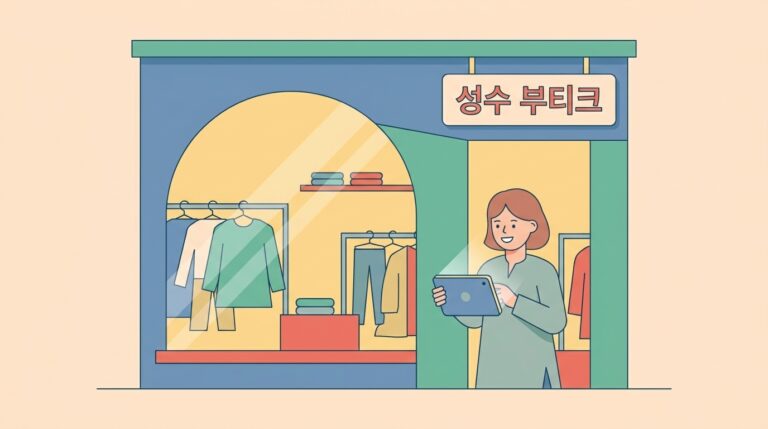
Imagine this: You are strolling down the cobblestone alleys of Seongsu-dong or the sleek avenues of Hannam-dong—Seoul’s ground zero for trendsetters. You walk into an impossibly chic boutique, the kind where K-pop stylists curate red-carpet outfits. Hanging on the rack is the oversized tailored blazer you saw in your favorite K-drama. Your heart skips a beat. You reach for it, check the tag, and realize… it’s a Medium, but you need a Large. Or worse: a tiny label whispers “Display Only (디스플레이용)”.
You look around. The stylish staff member is busy arranging hangers nearby. You want to ask if they have your size in the back warehouse, or whether you can place a pre-order before it sells out completely. But your mind goes blank. How do you politely ask for stock without sounding robotic or pushy?
If you have ever stood frozen with a hanger in hand, smiling awkwardly while desperately scrolling through a translation app, you are not alone! Over 80% of our intermediate learners tell us that retail interactions—specifically checking inventory and reserving coveted items—feel unexpectedly intimidating because customer-clerk dynamics in Korea rely on specific polite indirect patterns. Today, we are upgrading your shopping Korean to a polished B2 level so you can shop effortlessly like a seasoned Seoulite!
Phase 2: Core 3 Expressions In-Depth
1. 혹시 이거 다른 사이즈 재고 남아 있나요? (Hoksi igeo dareun sa-i-jeu jaego nama innayo?)
- Pronunciation: Hok-shi ee-geo da-reun sa-ee-jeu jae-go na-ma in-na-yo? (Think of Hoksi as a gentle “by any chance” cushion, and nama innayo rolling off the tongue smoothly like “nah-mah-een-nah-yo”).
- Meaning: Literal: “By any chance, does stock of this in another size remain?” | Actual Nuance: “Excuse me, do you happen to have this in a different size in stock?”
- K-Culture Moment: The magic opener heard in every trendy flagship store from Musinsa Standard to Ader Error when an item on the display rack is missing your fit.
- Editor’s Insight: The word 혹시 (hoksi) is Korea’s ultimate politeness lubricant. Starting your question with 혹시 softens the inquiry, signaling that you understand they might not have it and you aren’t demanding it.
- Situation Spectrum:
- Casual: ⚠️ (Only among close friends at a flea market: 이거 다른 사이즈 있어?)
- Semi-formal / Standard Retail: ✅ (Perfect for retail staff and boutiques)
- Formal: ✅ (혹시 다른 사이즈 재고가 남아 있습니까?)
- 🤔 Think About It: Notice how Korean inquiries rarely use the direct pronoun “you” (당신). Instead, the sentence focuses on the object and the state of existing (재고 남아 있나요?). How does shifting the focus away from the person change the politeness level in your language?
2. 지금 품절인데 재입고나 예약 주문 가능한가요? (Jigeum pumjeorinde jae-ipgona yeyak jumun ganeunghangayo?)
- Pronunciation: Jee-geum poom-jeol-een-deh jae-eep-go-nah yeh-yak joo-moon gah-neung-hahn-gah-yo? (Pronounce pumjeol crisp like popping a bubble wrap: poom-jeol).
- Meaning: Literal: “It is sold out now, but are restocking or reservation orders possible?” | Actual Nuance: “It’s sold out right now, but can I backorder this or get on a pre-order list?”
- K-Culture Moment: Used when iconic “sold out (품절 대란)” fashion pieces drop and you are determined not to pay 3x on resale platforms like KREAM.
- Editor’s Insight: B2 speakers stand out by combining clauses naturally using ~ㄴ/은데 (background context) followed by ~가능한가요? (is it possible?). It sounds exceptionally native, elegant, and considerate.
- Situation Spectrum:
- Casual: 🚫 (Too stiff for peers)
- Semi-formal / Boutique: ✅ (The golden standard phrase)
- Formal: ✅ (재입고 예약이 가능하십니까?)
- 🤔 Think About It: In Korean commerce, terms like 품절 (stock out) and 완판 (total sellout) carry immense social buzz. Why do you think pre-order culture (프리오더/예약 주문) is so systematically developed in fast-paced Korea?
3. 새 상품으로 꺼내주실 수 있을까요? (Sae sangpumeuro kkeonaejusil su isseulkkayo?)
- Pronunciation: Sae sang-poom-eu-ro kkeo-nae-joo-shil soo ee-sseul-kkah-yo? (Kkeonae starts with a tense double ‘kk’ sound, like the sharp snap in “cupcake”).
- Meaning: Literal: “Could you take it out as a new product for me?” | Actual Nuance: “Could you grab a fresh, unopened piece from the back for me?”
- K-Culture Moment: In Korea, rack items are often for fitting (피팅용). When buying, it is standard practice to ask for an untouched, packaged piece from the back room warehouse.
- Editor’s Insight: Using ~주실 수 있을까요? adds double modal softening (honorific -시- + conditional -ㄹ까요?). It turns a transaction into a respectful, pleasant interaction that staff love to assist.
- Situation Spectrum:
- Casual: 🚫
- Semi-formal / Department Stores: ✅ (Ideal)
- Formal: ✅
- 🤔 Think About It: Why is there a clear etiquette distinction between “the display piece on the floor (디스플레이/피팅용)” and “the boxed inventory in the back (새 상품)”?
Phase 3: Textbook Korean vs Real Korean
Situation 1: Checking if there is extra stock in the storage room
- 📖 교과서 한국어 (Textbook): 창고에 옷이 더 있습니까? (Changgo-e osi deo itsseumnikka? / Do you have more clothes in the storage?)
- 🗣️ 진짜 한국어 (Real-world): 혹시 뒤에 새 재고 여유 있나요? (Hoksi dwie sae jaego yeoyu innayo? / Excuse me, do you happen to have spare new stock in the back?)
- 💡 왜 다를까? (Why the difference?): Real Koreans rarely refer to the stock room as 창고 (warehouse) in a retail setting; they casually and naturally say 뒤에 (in the back) and use 여유 (extra leeway/cushion) to ask if there are backup units available.
Situation 2: Inquiring about restock notifications or production runs
- 📖 교과서 한국어 (Textbook): 이 옷은 언제 다시 들어옵니까? (I oseun eonje dasi deureo-omnikka? / When does this clothing enter again?)
- 🗣️ 진짜 한국어 (Real-world): 이거 혹시 리오더 들어가나요? 아니면 재입고 알림 신청 되나요? (Igeo hoksi ri-odeo deureoganayo? Animyeon jae-ipgo allim sincheong doenayo? / Is this getting a re-order production run, or can I sign up for a restock notification?)
- 💡 왜 다를까? (Why the difference?): Contemporary fashion shoppers frequently adopt industry terms like 리오더 (re-order) and digital service terms like 재입고 알림 (restock alert) rather than simple literal verbs.
Phase 4: K-Culture Deep Dive & Non-verbal Manners
4-1. 눈치 (Nunchi) & Gestures
When shopping in high-end or indie boutique districts like Dosan Park or Yeonhui-dong, staff frequently use handheld inventory tablets (PDA).
* Two-Handed Pointing / Holding: When showing an item on your phone screen (e.g., an Instagram lookbook photo or an online SKU), hold your phone with both hands or support your right elbow with your left hand. It conveys immense respect.
* The Personal Space “Nunchi”: If a clerk says “잠시만 확인해 드릴게요~” (Let me check that for you in a moment~), take a half-step back and wait by the counter or fitting room mirror. Hovering right over their shoulder while they check their inventory system is considered slightly intrusive.
4-2. Culture Code: “Sold Out Culture” (품절 대란 & 리오더)
Korea’s fashion ecosystem moves at lightning speed. Limited-edition drops (드롭), designer collaborations, and celebrity “worn-by” items cause instant sellouts (완판 / 품절 대란). Because keeping excess inventory is costly for indie designer labels, brands operate on a fast 리오더 (Re-order / Pre-order) system. Asking for a pre-order reservation (예약 주문) is completely routine and often earns you early-bird perks or direct home delivery!
Phase 5: Real-World Roleplay Scenario
Setting: A minimalist designer showroom in Seongsu-dong with ambient lofi music playing.
Characters: You (The discerning shopper) & 민지 (Minji, a friendly, ultra-chic showroom associate).
- 민지 (Staff): 어서 오세요! 편하게 둘러보시고 피팅 필요하시면 말씀해 주세요. (Eoseo oseyo! Pyeonhage dulleobosigo pitting piryohasimyeon malsseumhae juseyo.)
🎭 Smiling warmly while folding knitwear on the center display table.
“Welcome! Feel free to look around, and let me know if you’d like to try anything on.” -
You: 저기요, 혹시 이 자켓 M 사이즈는 재고가 다 나갔나요? (Jeogiyo, hoksi i jaket M sa-i-jeuneun jaegoga da nagannayo?)
🎭 Gently lifting the sleeve of the display jacket to show the label.
“Excuse me, by any chance, is the Medium size for this jacket completely gone?” -
민지 (Staff): 아, 그 제품 인기가 많아서요. 제가 전산으로 재고 한번 조회해 드릴게요. (A, geu jepum ingiga manaseoyo. Jega jeonsaneuro jaego hanbeon johoehae deurilgeyo.)
🎭 Tapping on her store tablet to scan the SKU code.
“Ah, that item has been super popular. Let me look up the inventory on the system for you.” -
민지 (Staff): 죄송해요, 고객님! 지금 M 사이즈는 매장 내 전량 품절이네요. (Joesonghaeyo, gogaengnim! Jigeum M sa-i-jeuneun maejang nae jeonnyang pumjeorineyone.)
🎭 Looking up with an apologetic head tilt.
“I’m so sorry! The Medium is currently completely sold out storewide.” -
You: 아쉽네요! 혹시 예약 주문이나 본사에서 택배 수령 가능한가요? (Aswimneyo! Hoksi yeyak jumun-ina bonsa-eseo taekbae suryeong ganeunghangayo?)
🎭 Showing keen interest without being pushy.
“What a shame! Is it possible to place a pre-order or get it shipped directly to my address from the headquarters?” -
민지 (Staff): 네! 예약 결제해 주시면 3일 내로 본사 물류에서 새 상품으로 발송 가능하세요. (Ne! Yeyak gyeoljehae jusimyeon sam-il naero bonsa mullyu-eseo sae sangpumeuro balsong ganeunghaseyo.)
🎭 Nodding enthusiastically and pulling up the pre-order delivery form.
“Yes! If you process a pre-order payment, we can dispatch a fresh item from the main logistics hub within 3 days.” -
You: 다행이네요! 그럼 이걸로 예약 주문 결제 부탁드릴게요. (Dahaeng-ineyone! Geureom igeollo yeyak jumun gyeolje butakdeurilgeyo.)
🎭 Handing over your payment card with both hands.
“That’s such a relief! I’d like to place a pre-order payment for this, please.” -
민지 (Staff): 네, 이쪽 카운터에서 성함이랑 배송지 작성 도와드리겠습니다! (Ne, ijjok kaunteo-eseo seongham-irang baesongji jakseong dowadeurigesseumnida!)
🎭 Guiding you towards the register with an open palm gesture.
“Great, I’ll assist you with your name and shipping address right over here at the counter!”
🔀 Interactive Choice Point
After Minji tells you the item is sold out in the store, how do you respond?
- Option A: “왜 없어요? 지금 당장 창고 가서 찾아봐 주세요.” (Why don’t you have it? Go check the warehouse right now.)
- Option B: “혹시 언제쯤 재입고되나요? 예약 걸어둘 수 있을까요?” (Around when will it be restocked? Can I put down a reservation?)
- Option C: “그냥 갈게요.” (I’ll just leave.) and walking out abruptly.
[Feedback Analysis]
- Option A (Bad / Aggressive): 🚫 Demanding staff to search when the database confirms zero stock creates severe social friction ("Gapjil" nuance). Avoid direct imperatives!
- Option B (Best / Native B2): 🌟 Polished, proactive, and respectful. It immediately opens doors to backorders, showroom delivery, or restock alerts.
- Option C (Risk / Lost Opportunity): ⚠️ While not rude, you miss the chance to get the item shipped or reserved before prices surge online!
Phase 6: 10-Second Emotion Shadowing Drill
Practice these with natural speech rhythms! Slash (/) marks a micro-pause.
- [🥺 아쉽지만 공손하게 / Regretful yet polite]
“혹시 이거 / 다른 사이즈 재고는 / 다 나갔을까요?”
(Hoksi igeo / dareun sa-i-jeuneun / da nagasseulkkayo?) -
[✨ 기대감과 호기심을 담아 / Hopeful & eager]
“지금 품절이면 / 혹시 리오더나 / 예약 주문 되나요?”
(Jigeum pumjeorimyeon / hoksi ri-odeona / yeyak jumun doenayo?) -
[😊 감사하고 깔끔한 마무리 / Cheerful & satisfied]
“네, 그러면 / 새 상품으로 / 택배 배송 부탁드릴게요!”
(Ne, geureomyeon / sae sangpumeuro / taekbae baesong butakdeurilgeyo!)
Phase 7: K-Culture Mini Dictionary
| # | Term (Hangul + Romanization) | English Meaning | Real-World Context & Usage |
|---|---|---|---|
| 1 | 품절 대란 (Pumjeol daeran) | Massive Sellout Craze | Used when a viral piece (e.g., worn by Jennie or NewJeans) sells out nationwide within minutes. |
| 2 | 리오더 / 재입고 (Ri-odeo / Jae-ipgo) | Re-order / Restock | Refers to second-run manufacturing batches for high-demand apparel. |
| 3 | 피팅 (Fitting) (Pitting) | Trying on Clothes | You’ll often hear: “피팅 3벌까지 가능하세요” (You can try on up to 3 garments). |
| 4 | 완판 (完販) (Wanpan) | Total Sold Out | An industry milestone celebrated by K-fashion brands indicating 100% inventory clearance. |
Phase 8: Survival Kit for Travelers
Top 3 Survival Phrases
- 이거 피팅해 봐도 되나요? (Igeo pittinghae bwado doenayo?)
- Meaning: “May I try this on in the fitting room?”
- Pro Tip: Always ask before stepping into a fitting booth. In Korea, you are often provided face covers (페이스커버) to prevent makeup smudges on collar openings.
- 디스플레이된 거 말고 새 상품 있나요? (Diseupeullei-doen geo malgo sae sangpum innayo?)
- Meaning: “Do you have a new, packaged piece rather than the floor display?”
- Pro Tip: If only the floor piece remains, stores frequently offer a 5%–10% display discount if you ask politely!
- 택스 리펀(Tax Refund) 영수증 끊어주실 수 있나요? (Taeksu ripeon yeongsujeung kkeoneojusil su innayo?)
- Meaning: “Could you issue an immediate Tax Refund receipt?”
- Pro Tip: Most major boutique flagship stores offer immediate on-site tax reduction if you carry your physical passport.
Editor’s Travel Note
- App Navigation: Before hunting for hidden designer showrooms in Seongsu or Hannam, make sure to use the 네이버 지도 앱 다운로드 instead of Google Maps, as local footpaths and boutique addresses update in real-time on Naver Map.
- Digital Pre-Orders: Check brand availability on the 무신사(Musinsa) 앱 다운로드 to see live offline boutique inventory before visiting!
- Payments: Foreign Visa/Mastercards are universally accepted, but having a physical card is safer than mobile contactless wallets in smaller independent designer studios.
Phase 9: “One Step Deeper” (Reflective Cultural Insight)
In Korean retail spaces, the customer-clerk interaction is framed around 상호 존중 (mutual respect) and linguistic indirectness. Notice how clerks rarely say a harsh “없어요” (We don’t have it); instead, they say “재고가 다 소진되셨어요/나갔습니다” (The stock has run out). In turn, skilled shoppers mirror this by using honorific cushioning like “혹시 ~있을까요?”. Language in Korea is never just about getting an item off a shelf—it is a collaborative social dance where acknowledging the other person’s effort yields top-tier service.
💬 Your Turn: What has been your most memorable shopping experience abroad? Have you ever had to track down a sold-out item in another country? Share your stories in the comments below!
Phase 10: FAQ & Common Mistakes
Q: Can foreigners without a Korean phone number place a pre-order in offline stores?
A: Yes! If you don’t have a Korean mobile number (+82) for automatic KakaoTalk notifications, simply show your passport, email address, and hotel accommodation address. Boutique staff will manually email you tracking information or arrange direct hotel courier delivery.
Q: What is the difference between 품절 (Pumjeol) and 매진 (Maejin)?
A: While both mean sold out, 품절 is used almost exclusively for tangible merchandise, retail products, and clothes (의류/상품 품절). 매진 is used for tickets, admissions, concert seats, and food menus (티켓 매진 / 점심 특선 매진).
Q: Is it rude to ask for a new piece if I am buying a discounted sale rack item?
A: For regular items, asking for 새 상품 (brand new boxed item) is standard. However, during major clearance/archive sales (시즌오프/샘플 세일), items are sold strictly “as-is (현 상태 그대로)”. In that case, asking for a backroom duplicate might show a slight lack of shopping nunchi.
🚨 Common Mistakes Warning Board
- Mistake 1: Calling showroom staff “아줌마 (Ajumma)” or “이모 (Imo)” in trendy boutiques.
- Correct Action: Address them neutrally as “저기요~” (Excuse me) or “직원분/매니저님” (Staff/Manager).
- Mistake 2: Entering fitting rooms while wearing shoes or makeup without a face guard.
- Correct Action: Look down for the doormat step-up line, take off your shoes if requested, and use the non-woven white face cover provided by staff.
- Mistake 3: Using direct blunt commands like “새 거 줘요” (Give me a new one).
- Correct Action: Always use softening requests: “새 상품으로 확인 부탁드려요~” (Please check for a new item, thank you).
Phase 11: Action Missions & Engagement
- 🥉 Bronze Level (Solo Practice): Stand in front of your closet, pick your favorite jacket, and recite: “혹시 이거 다른 사이즈 재고 남아 있나요?” three times with polite intonation.
- 🥈 Silver Level (Community Connection): Head over to our Instagram/TikTok post and comment on your favorite K-fashion brand using the phrase “이거 리오더 언제 되나요?”!
- 🥇 Gold Level (Real-World Application): Next time you visit an offline store in Korea (or a K-brand pop-up near you), ask the associate for a fresh boxed item using: “새 상품으로 꺼내주실 수 있을까요?”.
🎮 K-Culture Mission: Watch a boutique vlog of your favorite K-pop idol or YouTuber. Spot how many times they say 품절 (Sold out) or ask about 사이즈 (Sizes) on camera!
Phase 12: Interactive Quiz Challenge
Test your intermediate shopping intuition!
1. Situational Judgment
You find a gorgeous coat in a Myeongdong store, but the sleeves are slightly tight. How do you naturally ask if they have one size up in the back?
* (A) 창고에 가서 더 큰 거 가져와. (Changgo-e gaseo deo keun geo gajyeowa.)
* (B) 혹시 한 사이즈 더 큰 걸로 재고 있나요? (Hoksi han sa-i-jeu deo keun geollo jaego innayo?)
* (C) 이 옷은 사이즈가 왜 이것뿐입니까? (I oseun sa-i-jeuga waedatasppunimnikka?)
2. Fill-in-the-Blank
“지금 매장에는 없지만, 본사에 ( ) 주문을 넣으시면 3일 뒤에 받으실 수 있어요.”
* (A) 품절 (Pumjeol)
* (B) 예약 (Yeyak)
* (C) 완판 (Wanpan)
3. True / False Cultural Etiquette
- Q: In Korea, if an item is sold out in an offline store, you can never get it shipped directly to your temporary hotel stay. (True / False)
👉 Click here to reveal answers & explanations!
Answers:
1. (B) 혹시 한 사이즈 더 큰 걸로 재고 있나요?
* Explanation: Option B is the polite, native intermediate phrasing. Option A is an impolite command, and Option C sounds overly confrontational.
2. (B) 예약 (Yeyak – Pre-order/Reservation)
* Explanation: Putting in a reservation order (예약 주문) allows the store to fulfill backorders from logistics centers.
3. False
* Explanation: Most mid-to-high tier brand showrooms and department stores will happily take a paid offline reservation (예약 배송) and deliver brand new warehouse inventory directly to your hotel concierge!







