

Getting a Korean Wedding Invitation: The Ultimate Beginner Guide
Phase 1: Empathy & Storytelling Opening
안녕하세요! 매일한글 에디터입니다. (Hello! I am your Daily Hangul editor.)
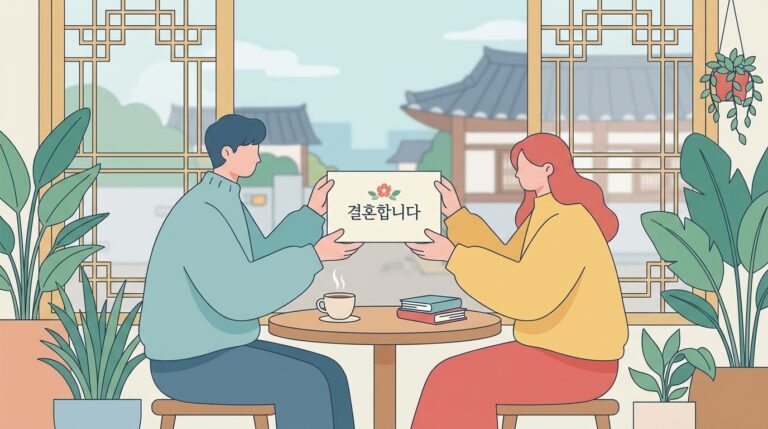
Picture this: You are sitting at a cozy cafe in Hongdae or finishing a casual lunch with your Korean coworker. Suddenly, your friend smiles shyly, reaches into their bag, and pulls out a delicate, ribbon-tied envelope. They slide it across the table with both hands. Your heart skips a beat. Is this a formal letter? A confession? Wait… is that a wedding invitation (청첩장)?
If you have ever frozen in that exact moment—wondering whether to grab it with one hand or two, what magic words to say without sounding like a robotic translation app, or whether you are now obligated to buy a tuxedo—you are definitely not alone! Hundreds of our beginner learners tell us that receiving a Korean wedding invitation (Cheongcheopjang) feels like stepping into a high-stakes K-Drama episode.
Here is the great news: You do not need complex grammar or fluent Korean to handle this moment like a pro. With just a few natural words, warm smiles, and correct non-verbal manners, you will not only make the bride or groom feel genuinely celebrated, but you will also show deep respect for Korean culture. Let us dive in step by step!
Phase 2: Top 3 Core Expressions Deep Dive
1. 축하해요! (Chukhahaeyo!)
- Pronunciation: [Chuk-ha-hae-yo] (Sounds like “Choo-ka-hay-yo” – like saying “Choo-choo train” + “Kah” + “Hey-yo!”)
- Meaning: Literal: “I celebrate [this]!” | Real Nuance: “Congratulations!” (Warm, friendly, and natural)
- K-Culture Moment: In K-Dramas like Business Proposal or Crash Landing on You, whenever friends hear good news over chicken and beer, everyone immediately clinks glasses and shouts “축하해요!”
- Editor’s Insight: This is the golden baseline for A1 learners. It carries polite, positive energy (
-해요ending) without feeling stiff or overly formal.- Situation Spectrum: Casual: ✅ | Semi-formal: ✅ | Formal: ⚠️ (Use 축하드립니다 for strict business bosses)
- 🤔 Think About It: In English, we often say “I’m so happy for you!” In Korean, the focus instantly shifts to celebrating the shared event (축하). How does your native language express personal good news?
2. 꼭 갈게요! (Kkok galgeyo!)
- Pronunciation: [Kkok gal-ge-yo] (Pronounce “Kkok” with a crisp, punchy ‘K’ like “Coke” without the ‘-e’, followed by “Gal-gay-yo”)
- Meaning: Literal: “I will surely go!” | Real Nuance: “I will definitely be there! / Count me in!”
- K-Culture Moment: When a character receives an invitation to a housewarming or wedding, they clutch the envelope and say with sparkling eyes, “꼭 갈게요!”
- Editor’s Insight: The magic word here is 꼭 (kkok), which means “surely” or “without fail.” It reassures the couple that you value their special day.
- Situation Spectrum: Casual: ✅ | Semi-formal: ✅ | Formal: ✅
- 🤔 Think About It: In many Western cultures, an RSVP comes via card weeks later. In Korea, expressing your warm intent to attend right on the spot brings immediate joy to the host.
3. 결혼 축하드려요! (Gyeolhon chukhadeuryeoyo!)
- Pronunciation: [Gyeol-hon chuk-ha-deu-ryeo-yo] (Sounds like “Gyul-hone choo-ka-deu-ryuh-yo”)
- Meaning: Literal: “I give congratulations on your marriage.” | Real Nuance: “Congratulations on your wedding!”
- K-Culture Moment: Used by juniors greeting their senior manager (seonbae) or when meeting your friend’s fiancé for the very first time.
- Editor’s Insight: The verb
드려요 (deuryeoyo)is the humble/honorific form of “to give.” Adding this single word makes you sound incredibly polite, polished, and considerate.- Situation Spectrum: Casual: ⚠️ | Semi-formal: ✅ | Formal: ✅
- 🤔 Think About It: Notice how Korean creates respect by lowering oneself and “offering” (드려요) congratulations upward. Isn’t it fascinating how politeness is built into Korean verbs?
Phase 3: Textbook Korean vs. Real Korean
Situation 1: Promising to attend the wedding
- 📖 Textbook Korean: “저는 당신의 결혼식에 참석하겠습니다.” (Jeoneun dangsin-ui gyeolhonsige chamseokhagessseumnida. – I shall participate in your wedding.)
- 🗣️ Real Korean: “와, 정말 축하해요! 저 꼭 갈게요!” (Wa, jeongmal chukhahaeyo! Jeo kkok galgeyo! – Wow, congrats! I will definitely be there!)
- 💡 Why is it different? The textbook sentence uses “당신” (which sounds awkward or confrontational in real speech) and overly robotic business vocabulary. Real Koreans keep it bright, lively, and warm.
Situation 2: Complimenting the invitation design
- 📖 Textbook Korean: “청첩장이 대단히 아름답습니다.” (Cheongcheopjang-i daedanhi areumdapsseumnida. – The invitation card is immensely beautiful.)
- 🗣️ Real Korean: “청첩장 너무 예뻐요!” (Cheongcheopjang neomu yeppeoyo! – The invitation is so pretty!)
- 💡 Why is it different? “너무” (so/very) paired with “예뻐요” (pretty) conveys genuine personal delight instantly, without sounding like an official speech.
Phase 4: K-Culture Deep Dive & Non-Verbal Manners
4-1. Nunchi (눈치) & Body Language Checklist
- 🤲 The Two-Hand Rule (두 손): Always accept the envelope using both hands! Even placing your left hand lightly under your right wrist shows instant respect.
- 👀 Open It Immediately: Unlike birthday gifts (which some cultures leave unopened until later), it is customary and polite to open the envelope right there, admire the photo or cardstock, and smile.
- 🙇 The 15-Degree Nod: Give a gentle nod or mini-bow as you receive the card to express gratitude for being invited.
4-2. The “Cheongcheopjang Gathering” Culture (청첩장 모임)
In Korea, handing out wedding invitations is rarely done through the post office. Instead, couples organize a 청첩장 모임 (Cheongcheopjang Moim)—a special dinner or coffee meeting where the bride or groom treats their friends or colleagues to a meal! Because the host covers the bill to honor your friendship, thanking them for the meal and showing excitement for their wedding is essential Korean etiquette.
Phase 5: Real-World Roleplay Scenario
Setting: A quiet cafe near Gangnam Station. Your Korean coworker Minjun (민준) pushes a white envelope toward you.
- 민준 (Minjun): “저… 알렉스 씨, 다음 달에 저 결혼해요.” (Jeo… Alex ssi, daeum dare jeo gyeolhonhaeyo. / Um… Alex, I am getting married next month.)
🎭 (Hands over a white envelope with both hands, smiling shyly) - You (Alex): “어머, 정말요? 축하해요!” (Eomeo, jeongmalyo? Chukhahaeyo! / Oh my, really? Congratulations!)
🎭 (Receives envelope with both hands and bows slightly) - 민준 (Minjun): “청첩장이에요. 바쁘시겠지만 와주실 수 있어요?” (Cheongcheopjang-ieyo. Bappeusigetjiman wajusil su isseoyo? / Here is the invitation. I know you’re busy, but could you come?)
- You (Alex): “당연하죠! 청첩장 너무 예뻐요.” (Dangyeonhajyo! Cheongcheopjang neomu yeppeoyo. / Of course! The invitation is so pretty.)
🎭 (Opens the card and looks at the photo inside) - 민준 (Minjun): “고마워요. 사진 잘 나왔죠?” (Gomawoyo. Sajin jal nawatjyo? / Thank you. The photo turned out nice, right?)
- You (Alex): “네! 두 분 정말 잘 어울려요.” (Ne! Du bun jeongmal jal eoullyeoyo. / Yes! You two look so wonderful together.)
- 민준 (Minjun): “와주시면 큰 힘이 될 것 같아요.” (Wajusimyeon keun himi doel geot gat-ayo. / It would mean so much if you could come.)
- You (Alex): “네, 저 꼭 갈게요! 결혼 축하드려요!” (Ne, jeo kkok galgeyo! Gyeolhon chukhadeuryeoyo! / Yes, I will definitely be there! Congratulations on your wedding!)
🔀 Interactive Choice Point: Minjun asks if you can come on a Saturday afternoon!
A: "와, 꼭 갈게요! 시간 비워둘게요!" (Best) -> Shows enthusiasm and promises to keep the day free.
B: "네, 갈게요." (Risk) -> A bit too dry and flat; might sound unenthusiastic.
C: "밥이 맛있으면 갈게요." (Bad) -> Joking "I'll only go if the food is good" with a coworker can seem rude.
Phase 6: 10-Second Emotion Shadowing Drill
Follow the pause marks (/) and embody the emotion tags as you speak out loud!
[😊 Bright & Surprised]“와! / 정말요? / 너무 축하해요!” (Wa! / Jeongmalyo? / Neomu chukhahaeyo! – Wow! Really? Congratulations so much!)[💖 Warm & Reassuring]“걱정 마세요, / 저 / 꼭 갈게요!” (Geokjeong maseyo, / jeo / kkok galgeyo! – Don’t worry, I will definitely go!)[✨ Sincere & Polite]“두 분 / 너무 잘 어울려요! / 축하드려요!” (Du bun / neomu jal eoullyeoyo! / Chukhadeuryeoyo! – You two match so well! Congratulations!)
Phase 7: K-Culture Mini Dictionary
- 청첩장 (Cheongcheopjang): Paper wedding invitation card.
- 모바일 청첩장 (Mobile Cheongcheopjang): Smartphone wedding invitation link sent via KakaoTalk containing photo galleries, map directions, and account details.
- 축의금 (Chug-uigeum): Congratulatory monetary gift given in a white envelope at the wedding reception.
- 식권 (Sik-gwon): Meal ticket received at the wedding hall reception desk upon submitting your monetary gift.
Phase 8: Survival Kit for Wedding Guests
Top 3 Survival Phrases
- 어디서 해요? (Eodiseo haeyo?) – Where is the wedding being held? (Use when asking for the venue location).
- 모바일 청첩장도 있어요? (Mobile cheongcheopjang-do isseoyo?) – Do you have a mobile version too? (Super handy for GPS navigation).
- 사진 같이 찍어요! (Sajin gachi jjigeoyo!) – Let’s take a picture together! (Great when visiting the bride’s waiting room on wedding day).
Editor’s Travel & Practical Note
- Navigate wedding halls seamlessly using the Naver Map Navigation App on App Store or Google Play. Simply copy the wedding venue address from your mobile invitation to find direct subway and shuttle bus routes!
- Need cash for the gift envelope? Most Korean convenience stores (CU, GS25) offer ATMs with global card support.
Phase 9: A Step Deeper (한 발 더 깊이)
In Korean society, a wedding is not simply an individual celebration of two lovers; it is a profound community milestone (Gyeongjosa / 경조사) that connects families, colleagues, and social networks. When someone presents you with a Cheongcheopjang, they are saying: “You are an important part of my life journey, and I want to share my happiest day with you.” Even if your Korean is simple, your heartfelt presence and warm smile honor this shared bond of Jeong (정).
💬 Your Turn: Have you ever attended a wedding in another country? What is the most important etiquette rule in your culture? Share in the comments below!
Phase 10: FAQ & Common Mistakes
Q: What if I already have plans and cannot attend the wedding?
A: Express your sincere congratulations first, explain politely that you have an unavoidable schedule, and say: “너무 가고 싶은데, 선약이 있어서 아쉬워요. 축하드려요!” (I really want to go, but I have a prior commitment. Congratulations!) Sending a small Chug-uigeum (gift money) via KakaoPay or bank transfer is standard etiquette.
Q: Is it rude to receive the invitation with one hand if the person is my same-age friend?
A: With very close childhood friends, one hand is okay, but using two hands is always the safest and warmest gesture in any Korean social or workplace environment.
Q: Should I bring a wrapped physical gift to the wedding?
A: In Korea, physical boxed gifts are rare. Guests almost exclusively give cash in a clean white envelope (축의금) at the front desk of the wedding hall.
🚨 Common Mistakes Board
- ❌ Mistake 1: Tossing the envelope into your bag without looking at it. -> Correct Action: Open the card immediately, admire the pictures, and say “청첩장 너무 예뻐요!”
- ❌ Mistake 2: Asking “How much did the wedding hall cost?” -> Correct Action: Keep compliments focused on the couple and their photos.
- ❌ Mistake 3: Wearing all-white clothing to the wedding. -> Correct Action: Avoid pure white dresses/suits as white is reserved exclusively for the bride.
Phase 11: Action Missions
- 🥉 Bronze Mission: Practice saying “축하해요! 꼭 갈게요!” 5 times in front of your mirror with a bright smile.
- 🥈 Silver Mission: Save a photo of a Korean wedding invitation on Pinterest or Instagram and label the key parts: 신랑 (Groom), 신부 (Bride), 일시 (Date & Time), 장소 (Location).
- 🥇 Gold Mission: Next time a friend or coworker shares good news, reply in Korean: “와! 정말 축하해요! (Wa! Jeongmal chukhahaeyo!)”
- 🎮 K-Culture Mission: Watch an episode of a modern K-Drama (e.g., King the Land or Crash Landing on You) and spot the exact moment two characters use two hands to exchange an envelope or business card!
Phase 12: Interactive Quiz Challenge
1. Situation Decision: Your coworker hands you their wedding invitation. Which response is the most natural and polite?
* ① “싫어요, 안 갈래요.” (I hate it, I won’t go.)
* ② “와, 정말 축하드려요! 꼭 갈게요!” (Wow, congratulations! I will definitely come!)
* ③ “얼마짜리 결혼식이에요?” (How much is this wedding?)
2. Fill-in-the-Blank: Complete the phrase meaning “I will definitely go!”:
* “저 [ ] 갈게요!”
3. True or False: In Korea, you should avoid opening the wedding invitation envelope until you get home.
* (True / False)
🔍 Click here to reveal the answers and explanations!
- Answer: ② -> Expressing warm congratulations (축하드려요) and promising attendance (꼭 갈게요) is the ideal reaction.
- Answer: 꼭 (kkok) -> “저 꼭 갈게요!” (I will definitely be there!)
- Answer: False -> Opening the invitation right away and complimenting the design shows enthusiasm and good etiquette in Korea!







