

Phase 1: Empathy & Immersion Opening
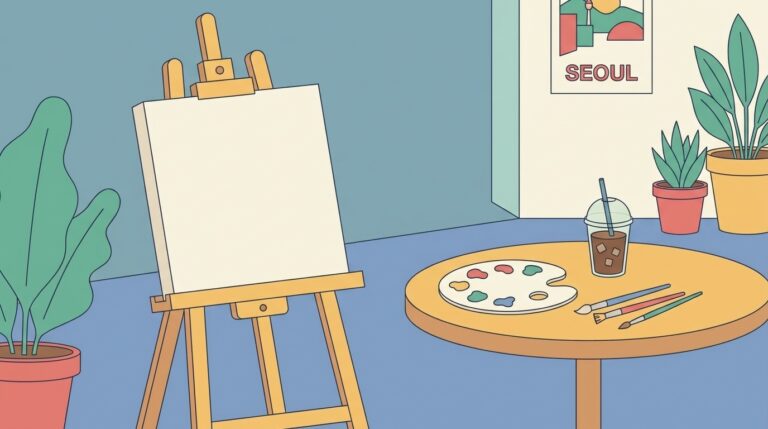
안녕하세요! 매일한글 (Daily Hangul) editor here! Have you ever walked through the hip alleyways of Seongsu-dong or Yeonnam-dong and stumbled into a sunlit, pastel-colored drawing cafe (드로잉 카페)? You step inside, surrounded by wooden easels, the gentle aroma of roasted coffee, and fellow art lovers painting their own canvases. You want to jump in, pick up a brush, and create your own Seoul memory—but suddenly your mind goes blank.
“What if the staff asks what kind of paint I want? How do I ask for an extra brush without sounding rude? How do I tell someone I just love drawing as a hobby?”
If you have ever felt hesitant to join a creative workshop in Korea because of language barriers, you are not alone! Over the past ten years coaching A2-level Korean learners, I have seen so many students freeze up over everyday hobby expressions. But here is the secret: you do not need complex art school vocabulary to enjoy drawing in Korea. With just a handful of authentic, conversational phrases, you can confidently navigate any art cafe, compliment someone’s artwork, and express your creative passions like a true local.
Phase 2: 3 Core Expressions Deep Dive
1. 그림 그리는 거 좋아해요 (Geurim geurineun geo joahaeyo)
- Pronunciation: [Geu-rim geu-ri-neun geo jo-a-hae-yo] (Sounds like “goo-rim goo-ree-noon go cho-ah-hae-yo”)
- Meaning: Literal: “I like the thing of drawing pictures” | Natural Nuance: “I enjoy drawing / Drawing is my hobby.”
- K-Culture Moment: In K-dramas like Our Beloved Summer, characters often introduce their creative hobbies during cozy cafe dates using this exact structure.
- Editor’s Insight: The pattern
[Verb stem] + 는 거 좋아해요is the ultimate golden key for beginners. Simply attach~는 거 좋아해요to any hobby verb to talk about what you love doing!- Situation Spectrum:
- Casual (with friends): 그림 그리는 거 좋아해 (✅)
- Semi-formal (polite everyday conversation): 그림 그리는 거 좋아해요 (✅)
- Formal (interviews, presentations): 그림 그리는 것을 좋아합니다 (✅)
- 🤔 Think About It: In English, we use the gerund “drawing”, but Korean literally turns actions into tangible concepts using
거(thing). How does treating an activity as an “object of joy” change the way you view your hobbies?
2. 붓이랑 물감 좀 더 주실 수 있나요? (Bus-i-rang mul-gam jom deo ju-sil su it-na-yo?)
- Pronunciation: [Bu-si-rang mul-gam jom deo ju-sil su in-na-yo?] (Sounds like “boo-she-rahng mool-gahm jom duh joo-sheel soo een-nah-yo”)
- Meaning: Literal: “Could you give brush and paint a little more?” | Natural Nuance: “Could I please get some extra brushes and paint?”
- K-Culture Moment: You are in a cozy Hongdae art studio running out of vibrant acrylics, and you politely ask the studio host for refills.
- Editor’s Insight: The word
좀(jom) literally means “a little,” but in Korean requests, it acts as a magical politeness cushion. Adding좀instantly softens your tone so you never sound demanding.- Situation Spectrum:
- Casual: 붓이랑 물감 더 줘 (⚠️ Only for close friends; rude to cafe staff!)
- Semi-formal: 붓이랑 물감 좀 더 주실 수 있나요? (✅ Ideal for cafes and workshops)
- Formal: 붓과 물감을 더 제공해 주시겠습니까? (⚠️ Too stiff for a relaxed cafe setting)
- 🤔 Think About It: Why do Koreans insert “a little (좀)” even when asking for something they definitely need? It reflects the cultural value of modesty and minimizing inconvenience to others!
3. 색감이 정말 예뻐요! (Saek-gam-i jeong-mal ye-ppeo-yo!)
- Pronunciation: [Saek-gam-i jeong-mal ye-ppeo-yo] (Sounds like “seck-gahm-ee jung-mahl yeh-ppuh-yo”)
- Meaning: Literal: “The color-feeling is really pretty!” | Natural Nuance: “The color palette / vibe of these colors is gorgeous!”
- K-Culture Moment: Praising a friend’s newly posted canvas on Instagram or complimenting fellow painters in a community workshop.
- Editor’s Insight: While
색깔(saekkkal) simply means an individual color,색감(saekgam) refers to the harmonious tone, mood, and aesthetic feeling of colors together. Using this word makes you sound like a sophisticated art connoisseur!- Situation Spectrum:
- Casual: 색감 진짜 예쁘다! (✅)
- Semi-formal: 색감이 정말 예뻐요! (✅)
- Formal: 색감이 매우 아름답습니다. (✅)
- 🤔 Think About It: Korean has countless sensory words ending in
~감(feeling/sense), such as grafting emotions onto visuals. How does your native language describe aesthetic color harmony?
Phase 3: Textbook Korean vs. Real Korean
Situation 1: Explaining what you are practicing
- 📖 Textbook Korean: 저는 풍경화를 그립니다. (Jeoneun punggyeonghwareul geurimnida.) – “I draw landscape paintings.”
- 🗣️ Real Korean: 저 요즘 풍경 그리는 거 연습 중이에요! (Jeo yojeum punggyeong geurineun geo yeonseup jung-ieyo!) – “Lately I’m practicing drawing landscapes!”
- 💡 Why is it different? Real speakers rarely use stiff nouns like 풍경화 (landscape painting genre) in casual chats. Instead, they use active verb phrases paired with
연습 중이에요(in the middle of practicing).
Situation 2: Complimenting someone’s artistic talent
- 📖 Textbook Korean: 당신은 그림을 아주 잘 그립니다. (Dangsineun geurimeul aju jal geurimnida.) – “You draw pictures very well.”
- 🗣️ Real Korean: 와, 완전 금손이시네요! (Wa, wanjeon geumson-isineyo!) – “Wow, you totally have golden hands! / You’re so talented!”
- 💡 Why is it different? Direct pronoun “당신” (you) feels unnatural and overly dramatic. Koreans love colorful slang metaphors like
금손(gold hands = gifted artist) to shower compliments!
Phase 4: K-Culture Deep Dive & Non-Verbal Manners
4-1. 눈치 (Nunchi) & Body Language in Drawing Spaces
- Sharing Community Palettes: In shared drawing studios, paint tubes and palettes are placed on communal tables. Always place items back in the center facing your neighbor, and make brief eye contact with a gentle nod before taking a shared color tube.
- Two-Handed Etiquette: When the cafe staff brings your canvas, water cup, or easel, receive it using both hands (or touch your right forearm with your left hand) to show courteous gratitude.
- Respecting Creative Focus: Koreans cherish a peaceful, meditative atmosphere in drawing cafes. Avoid staring fixedly at someone else’s unfinished sketch; instead, glance briefly, smile warmly, and offer a soft compliment when they take a break.
4-2. Culture Code: The Boom of “Healing Drawing Cafes” (드로잉 카페)
In Korea, drawing is no longer confined to fine arts academies. It has become a massive lifestyle trend known as 힐링 (Healing Culture). Young Koreans flock to trendy spots in Ikseon-dong, Seongsu, and Hongdae for “One-Day Classes” (원데이 클래스) or self-paced oil pastel sessions. It is part art therapy, part cozy coffee date, and part 인스타 감성 (Instagram Aesthetic). People embrace drawing not to become Da Vinci, but to unplug from high-stress work life.
Phase 5: Real-World Roleplay Scenario
Setting: “Palette & Sip”, a popular drawing cafe in Seongsu-dong.
Characters: You & Minji (민지), a cheerful cafe host wearing a paint-splattered denim apron.
- Minji: 안녕하세요! 오늘 캔버스에 아크릴로 그리실 건가요? (Annyeonghaseyo! Oneul kaembeoseue akeurillo geurisil geon-gayo?)
[🎭 Smiling warmly, holding two canvas sizes]
“Hello! Will you be painting with acrylics on canvas today?” -
You: 네, 아크릴 페인팅 해보고 싶어요! (Ne, akeuril peinting haebogo sipeoyo!)
[🎭 Nodding enthusiastically, looking around at the easels]
“Yes, I would love to try acrylic painting!” -
Minji: 좋아요. 도안을 고르시겠어요, 아니면 자유화로 하시겠어요? (Joayo. Doaneul goreusigesseoyo, animyeon jayuhwaro hasigesseoyo?)
[🎭 Showing an iPad filled with outline sketches]
“Great. Would you like to choose a pre-drawn template, or draw freely from scratch?” -
You: 도안 보고 그릴게요. 귀여운 고양이 도안 있나요? (Doan bogo geurilgeyo. Gwiyeoun goyangi doan阅读?)
[🎭 Pointing gently to the animal tab on the tablet]
“I will paint with a template. Do you have a cute cat template?” -
Minji: 네, 여기 귀여운 도안 많아요! 앞치마 착용하시고 자리에 앉아 계시면 물감 준비해 드릴게요. (Ne, yeogi gwiyeoun doan manayo! Apchima chagyonghasigo jarie anja gyesimyeon mulgam jumbihye deurilgeyo.)
[🎭 Handing over a clean beige apron]
“Yes, we have lots of cute templates here! Put on this apron, have a seat, and I will prepare your paints.” -
You: 감사합니다! 혹시 물감 모자라면 더 가져와도 돼요? (Gamsahamnida! Hoksi mulgam mojaramyeon deo gajyeowado dwaeyo?)
[🎭 Tying apron strings with a bright smile]
“Thank you! By any chance, if I run out of paint, may I bring more?” -
Minji: 물론이죠! 셀프 바에서 자유롭게 더 쓰시면 돼요. (Mollon-ijyo! Selpeu ba-eseo jayurobge deo sseusimyeon dwaeyo.)
[🎭 Pointing toward the colorful paint station]
“Of course! You can use anything freely at the self-bar.” -
You: 와, 색감이 다 너무 예뻐요. 재미있게 그릴게요! (Wa, saekgami da neomu yeppeoyo. Jaemiitge geurilgeyo!)
[🎭 Eyes sparkling while looking at the paint set]
“Wow, all the color tones are so pretty. I’ll enjoy painting!”
🔀 Interactive Branching Point
Oh no! While blending your background, you accidentally smudged dark blue paint over your cat’s nose! What do you say to Minji?
- Option A: “저 실수로 번졌는데 / 어떻게 수정해요?” (Jeo silsuro beonjyeonneunde / eotteoke sujeonghaeyo? – I accidentally smudged it / how can I fix it?)
👉 Feedback [Best]: Natural, polite, and clear! Minji will happily show you how to let acrylic dry and paint white over it. - Option B: “이거 망했어. 새 캔버스 공짜로 줘.” (Igeo manghaesseo. Sae kaembeoseu gongjjarogwo – This is ruined. Give me a new canvas for free.)
👉 Feedback [Bad]: Uses rude casual speech (반말) and makes an inappropriate demand. - Option C: “이거 지워주세요.” (Igeo jiwojuseyo. – Erase this for me.)
👉 Feedback [Risk]: Acrylic paint cannot be erased with water, and the tone sounds slightly demanding. Always ask for advice instead!
Phase 6: 10-Second Emotion Shadowing Drill
Read these sentences aloud, matching the pauses (/) and emotional tone!
- [😊 Cheerful & Passionate]
저 / 그림 그리는 거 / 진짜 좋아해요!
(Jeo / geurim geurineun geo / jinjja joahaeyo!)
“I / drawing pictures / really love doing!” -
[🥺 Soft & Courteous Request]
저기요, / 노란색 물감 좀 더 / 주실 수 있나요?
(Jeogiyo, / noransaek mulgam jom deo / jusil su itnayo?)
“Excuse me, / could I get a bit more / yellow paint?” -
[🤩 Amazed & Complimentary]
와! / 완성작 보니까 / 색감이 대박이에요!
(Wa! / Wanseongjak bonikka / saekgami daebagieyo!)
“Wow! / Looking at the finished piece / the colors are incredible!”
Phase 7: K-Culture Mini Dictionary
-
금손 vs 똥손 (Geum-son vs Ddong-son)
Literal: Gold hands vs Poop hands
Real Usage: Describes someone exceptionally skilled at art/crafts (금손) versus someone delightfully clumsy with DIY projects (똥손). Saying"저 완전 똥손이에요!"(I’m all thumbs!) is a beloved self-deprecating icebreaker in Korea! -
원데이 클래스 (Wondei Keullaeseu)
Literal: One-Day Class
Real Usage: 1 to 2 hour creative workshops (painting, pottery, perfume making, baking) immensely popular among Korean 20s and 30s as weekend leisure. -
인스타 감성 (Inseuta Gamseong)
Literal: Instagram Emotion / Vibe
Real Usage: Refers to chic, photogenic spaces designed with soft lighting, vintage easels, and art supplies tailored for aesthetic social media pictures. -
힐링 (Hilling)
Literal: Healing
Real Usage: Activities that soothe mental fatigue. Koreans often say"오늘 그림 그리면서 힐링했어요"(I found so much peace drawing today).
Phase 8: Traveler’s Survival Kit
Top 3 Survival Expressions
사진 한 장만 찍어주실 수 있나요?(Sajin han jangman jjigeojusil su itnayo?)
Meaning: “Could you take a quick photo of me?”
Pro Tip: Staff at Korean drawing cafes are expert photographers! They will gladly snap a candid photo of you working at your easel.다 그렸는데 말려주세요.(Da geuryeonneunde mallyeojuseyo.)
Meaning: “I finished drawing, please dry it for me.”
Pro Tip: Cafes use industrial heat dryers to set your acrylic paint in 3 minutes so it won’t smudge during travel.포장해 주실 수 있나요?(Pojanghae jusil su itnayo?)
Meaning: “Could you package/wrap it up for me?”
Pro Tip: They will pack your canvas into a neat transparent bag or sturdy box with protective parchment.
Editor’s Travel Note
- Finding Hidden Gem Studios: Search for keywords like
성수 드로잉카페(Seongsu Drawing Cafe) or연남 백드롭페인팅(Yeonnam Backdrop Painting) on the Naver Map App Download. - Reservations: While walk-ins are welcomed on weekday afternoons, weekend slots fill up fast. You can easily book classes via Naver Booking Service without a Korean phone number if you use Naver Pay or international cards.
Phase 9: “One Step Deeper” (Reflective Essay)
In Korean society, shared leisure activities carry a special cultural weight known as 정 (Jeong – relational bonding). In a high-paced urban environment where speed (빨리빨리) is often celebrated, drawing cafes offer a deliberate sanctuary to slow down together. When a Korean friend invites you by saying "우리 그림 그리러 가자!" (Let’s go paint!), they aren’t evaluating your fine art skills; they are inviting you to share comfortable silence, mutual encouragement, and vulnerable creativity.
💬 Your Turn: What subject would you love to paint if you visited a Korean drawing cafe today—a Seoul night cityscape, your pet, or a Han River sunset? Tell me in the comments below!
Phase 10: FAQ & Common Mistakes
Q: What is the difference between ‘그림을 그리다’ and ‘색칠하다’?
A: 그림을 그리다 (geurimeul geurida) means to sketch or draw lines and pictures from scratch, whereas 색칠하다 (saekchilhada) specifically means coloring in existing line art or color book templates!
Q: How do I say ‘acrylic paint’ versus ‘watercolor’ in Korean?
A: Acrylic paint is 아크릴 물감 (akeuril mulgam) and watercolor is 수채화 물감 (suchaehwa mulgam). Notice that 물감 (mulgam) is the universal word for artistic paints!
Q: Is it okay to ask the cafe teacher for help if I am an absolute beginner?
A: Yes, absolutely! Korean art cafe hosts are famously supportive. Simply say: "저 초보인데 조금만 도와주실 수 있나요?" (I’m a beginner, could you help me a little?).
🚨 Common Mistakes Alert!
- Calling art paint “페인트” (peinteu): In Korean, 페인트 refers exclusively to industrial wall/house paint! For art and canvases, always use
물감(mulgam). - Calling the cafe instructor “당신” (dangsin): Never call your host 당신. Always address them politely as
선생님(seonsaengnim – teacher) or get their attention with저기요(jeogiyo – excuse me). - Saying “그림을 만들다” (geurimeul mandeulda): In English, you might say “I made a painting,” but in Korean, artwork is always drawn (
그리다), never made (만들다).
Phase 11: Action Missions & Engagement
- 🥉 Bronze Mission (Solo Practice): Stand in front of your mirror and say aloud 3 times:
"저 그림 그리는 거 진짜 좋아해요!" - 🥈 Silver Mission (Social Connection): Draw a tiny 10-second doodle in your notebook, take a photo, and post it on your Instagram Story with the Korean hashtag
#금손도전(Challenging Golden Hands)! - 🥇 Gold Mission (Real-World Action): Visit a stationery store (like Artbox or Kyobo Hottracks) and ask the clerk in Korean:
"수채화 물감 어디에 있어요?"(Where is the watercolor paint?). - 🎮 K-Culture Mission: Watch an episode of the Korean reality show I Live Alone (나 혼자 산다) where cast members try creative hobbies, and listen for when they say
힐링(healing) or금손(gold hands)!
Phase 12: Interactive Quiz Challenge
1. Situational Choice: You want to ask the drawing cafe host for extra blue paint in the most natural, polite way. Which sentence should you use?
(A) 파란색 물감 빨리 줘.
(B) 파란색 물감 좀 더 주실 수 있나요?
(C) 파란색 페인트 만들어요.
2. Fill in the Blank: Complete this natural sentence meaning “I enjoy drawing pictures as a hobby.”
저 그림 __________ 거 좋아해요.
3. True or False Culture Check: In Korea, the slang word 똥손 (poop hands) means an extremely masterclass painter with incredible talent. (True / False)
👉 Click here to reveal the answers and explanations!
- Answer: (B)
파란색 물감 좀 더 주실 수 있나요?is polite and uses the correct word물감. (A) is rude banmal, and (C) incorrectly uses industrial paint (페인트) and the wrong verb (만들다). - Answer:
그리는(geurineun). The verb그리다combined with~는 거 좋아해요makes 그림 그리는 거 좋아해요. - Answer: False!
똥손means someone who is clumsy with crafts/art. A master artist is called a금손(golden hands)!







