

The Ultimate Guide to Makgeolli: Master Korean Rice Wine Etiquette Like a Local
Phase 1: Empathy & Storytelling
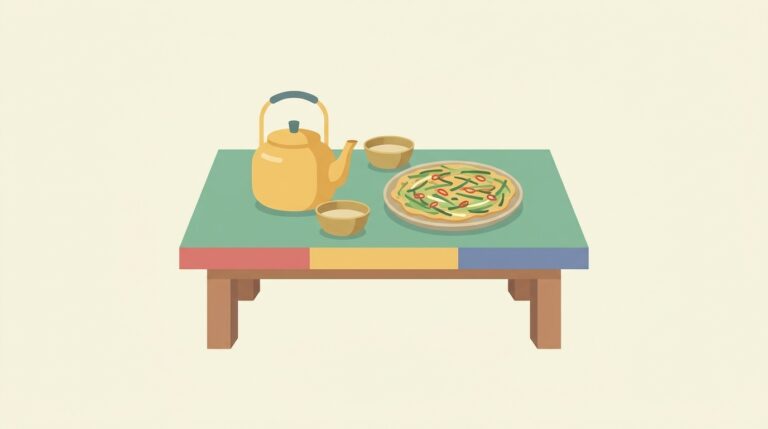
안녕하세요! 매일한글 (Daily Hangul) editor here! Imagine this: it is a rainy Thursday evening in Seoul. The sound of sizzling savory pancakes fills the air in an alleyway pub in Jongno. The server brings over a golden kettle and two brass bowls. Your Korean friends cheer, grab the kettle, and smile at you. But suddenly, your mind freezes: Do I shake the cloudy bottle first? How do I hold this shallow brass cup? Why are they using two hands to pour?
If you have ever felt nervous about making a cultural faux pas while enjoying Korean drinks, you are not alone! Drinking culture in Korea is all about warmth, connection, and subtle manners called nunchi. In this guide, tailored specifically for A2 elementary learners, we will walk through the exact phrases and etiquette you need to clink bowls of Makgeolli (막걸리) with confidence. Let’s dive into the cozy world of traditional Korean pubs!
Phase 2: Core 3 Expressions Deep-Dive
1. 막걸리 한 병 주세요 (Makgeolli han byeong juseyo)
- Pronunciation: [Mak-geol-li han byeong ju-se-yo] (Sounds like: “Mahk-gull-lee hahn byuhng joo-say-yo”)
- Meaning: “One bottle of Makgeolli, please.”
- K-Culture Moment: You’ll hear this instantly in any K-drama whenever characters sit down at a cozy orange-tented pocha (street cart) or traditional folk tavern.
- Editor’s Insight: The counter word for bottle in Korean is 병 (byeong). If you want two bottles, just swap han (one) with du (two): 막걸리 두 병 주세요 (Makgeolli du byeong juseyo).
- Situation Spectrum: Casual ✅ | Semi-formal ✅ | Formal ⚠️
- 🤔 Think About It: In English, we often say “Can I get a Makgeolli?” In Korean, the magic word 주세요 (juseyo – please give) makes your order polite and friendly without needing complex phrasing.
2. 살살 흔들어 주세요 (Salsal heundeureo juseyo)
- Pronunciation: [Sal-sal heun-deu-reo ju-se-yo] (Sounds like: “Sahl-sahl hoon-deu-ruh joo-say-yo”)
- Meaning: “Please shake it gently.” / “Let’s shake it lightly.”
- K-Culture Moment: When opening unfiltered Makgeolli, the white rice sediment settles at the bottom. Shaking it too vigorously will cause a fizzy explosion on the table!
- Editor’s Insight: The word 살살 (salsal) is a cute onomatopoeia/mimetic word meaning ‘softly’ or ‘gently’. Using it makes you sound like an absolute native speaker.
- Situation Spectrum: Casual ✅ | Semi-formal ✅ | Formal ✅
- 🤔 Think About It: Makgeolli can be enjoyed clear (just the top layer) or cloudy (shaken). Asking your table how they prefer it shows thoughtful nunchi!
3. 짠! / 건배할까요? (Jjan! / Geonbae-halkkayo?)
- Pronunciation: [Jjan! / Geon-bae-hal-kka-yo?] (Sounds like: “Jjahn! / Gun-bae-hahl-kkah-yoh?”)
- Meaning: “Cheers!” / “Shall we toast?”
- K-Culture Moment: The iconic sound of two brass bowls bumping together. In variety shows like I Live Alone, friends eagerly tap bowls with an energetic shout of “Jjan!”
- Editor’s Insight: 짠 (Jjan) is informal and mimics the clinking sound of glasses. 건배 (Geonbae) literally means ‘dry cup’ and is slightly more polite.
- Situation Spectrum: Casual ✅ (짠) | Semi-formal ✅ (건배) | Formal ✅ (건배합시다)
- 🤔 Think About It: Did you know that when clinking bowls with someone older, you should touch the rim of your bowl slightly lower than theirs?
Phase 3: Textbook Korean vs. Real-World Korean
Situation 1: Suggesting Makgeolli & Savory Pancake on a rainy day
- 📖 교과서 한국어 (Textbook): 비가 오니까 파전과 막걸리를 먹읍시다. (Bi-ga o-ni-kka pa-jeon-gwa mak-geol-li-reul meog-eup-si-da. – “Because it rains, let us eat green onion pancake and Makgeolli.”)
- 🗣️ 진짜 한국어 (Real-world): 비도 오는데 전막 갈까요? (Bi-do o-neun-de jeon-mak gal-kka-yo? – “Since it’s raining, shall we go for Jeon and Makgeolli?”)
- 💡 Why is it different?: Real native speakers love abbreviations. 전막 (Jeon-mak) is short for 전 (Pancake) + 막걸리 (Makgeolli)!
Situation 2: Asking if you can pour a drink for a friend
- 📖 교과서 한국어 (Textbook): 제가 당신의 잔에 술을 따르겠습니다. (Je-ga dang-sin-ui jan-e sul-eul tta-reu-get-seum-ni-da. – “I shall pour alcohol into your cup.”)
- 🗣️ 진짜 한국어 (Real-world): 한 잔 따라 드릴게요! (Han jan ttara deurilgeyo! – “Let me pour you a cup!”)
- 💡 Why is it different?: In Korean, you rarely use the second-person pronoun ‘당신 (you)’. Instead, using polite verb endings like -드릴게요 (deurilgeyo – ‘I will do for you’) expresses natural respect.
Phase 4: K-Culture Deep Dive & Non-Verbal Manners
4-1. 눈치 (Nunchi) & Drinking Etiquette
- The Two-Handed Pour: When pouring from a traditional kettle (주전자 – jujeonja), hold the handle with your right hand and lightly touch your wrist or forearm with your left hand. It shows respect and care.
- Receiving with Both Hands: When someone pours Makgeolli into your brass bowl, hold the bowl with both hands.
- The Polite Turn: If drinking with someone older or of higher status, turn your head slightly away from the table while taking a sip.
4-2. Cultural Code: The Rainy Day Formula (비 오는 날 = 파전 + 막걸리)
Why do Koreans crave Makgeolli and Pajeon whenever raindrops hit the window? The sizzle of frying pancakes on a cast-iron pan sounds just like falling rain! Moreover, Makgeolli has historically been the refreshing drink of farmers after working in the fields, creating a shared nostalgia of comfort food.
Phase 5: Real-Life Roleplay Scenario
Setting: A traditional tavern decorated with vintage wooden tables in Insadong. Minji (your Korean friend) and Alex (You) are grabbing a table.
- 민지: 비 오니까 분위기 진짜 좋다! 뭐 마실래? (Bi o-ni-kka bun-wi-gi jin-jja jo-ta! Mwo masillae?)
🎭 Looking at the wooden menu board on the wall.
(English: Since it’s raining, the vibe is so nice! What do you want to drink?) -
Alex: 우리 막걸리 마셔요! 파전도 시킬까요? (Uri makgeolli masyeoyo! Pajeon-do sikilkkayo?)
🎭 Smiling and pointing at the popular combo on the menu.
(English: Let’s drink Makgeolli! Shall we order green onion pancake too?) -
민지: 좋아! 여기요, 지평 막걸리 하나랑 해물파전 하나 주세요! (Jo-a! Yeo-gi-yo, Ji-pyeong mak-geol-li ha-na-rang hae-mul-pa-jeon ha-na ju-se-yo!)
🎭 Raising hand slightly toward the server.
(English: Great! Excuse me, one bottle of Jipyeong Makgeolli and one seafood pancake, please!) -
Alex: (The server brings the bottle) 제가 따를게요! 살살 흔들까요? (Je-ga tta-reul-ge-yo! Sal-sal heun-deul-kka-yo?)
🎭 Carefully holding the Makgeolli bottle with both hands.
(English: I’ll pour! Shall I shake it gently?) -
민지: 응! 탄산 있으니까 뚜껑 살짝 열었다가 닫고 흔들어 줘. (Eung! Tan-san iss-eu-ni-kka ttu-kkeong sal-jjak yeol-eot-da-ga dat-go heun-deu-reo jwo.)
🎭 Showing how to release the pressure slightly.
(English: Yes! It’s carbonated, so open the cap slightly, close it, and then shake it.) -
Alex: 이렇게요? 자, 한 잔 받으세요! (I-reoh-ge-yo? Ja, han jan bad-eu-se-yo!)
🎭 Supporting right wrist with left hand while pouring into Minji’s bowl.
(English: Like this? Here, please take a cup!) -
민지: 고마워! Alex 잔도 줘 봐, 내가 따라 줄게. (Go-ma-wo! Alex jan-do jwo bwa, nae-ga tta-ra jul-ge.)
🎭 Holding the kettle to pour back.
(English: Thank you! Give me your cup too, Alex, I’ll pour for you.) -
Alex: 감사합니다! 짠! (Gam-sa-ham-ni-da! Jjan!)
🎭 Clinking the brass bowls together with a wide smile.
(English: Thank you! Cheers!)
🔀 Interactive Choice Point
Minji just finished her bowl, and your own bowl is still half full. What should you do?
- Choice A: Pour more Makgeolli into her bowl right away using both hands.
- Choice B: Wait until she asks you to refill it.
- Choice C: Pick up the bottle and pour Makgeolli into your own bowl first.
👉 Click to see the Feedback!
- Choice A (Best!): In Korea, an empty glass should never stay empty for long! Pouring a refill shows great attentiveness (nunchi).
- Choice B (Risk): While not rude, Korean drinking culture thrives on proactively looking after your tablemate’s cup.
- Choice C (Bad): Big cultural no-no! Pouring alcohol for yourself (자작 – Jajak) when drinking with others is considered lonely or neglectful of company.
Phase 6: 10-Second Emotional Shadowing Drill
Repeat after the cues out loud! Pay attention to the rhythm pauses marked by /.
[😊 Cheerful & Bright]
비도 오는데 / 막걸리 한잔 어때요?
(Bi-do o-neun-de / mak-geol-li han-jan eo-ttae-yo?)
(Since it’s raining / how about a bowl of Makgeolli?)-
[🤝 Polite & Caring]
제가 / 한 잔 따라 드릴게요!
(Je-ga / han jan tta-ra deu-ril-ge-yo!)
(Let me / pour a drink for you!) -
[🎉 Energetic Toast]
오늘 고생 많았어요, / 짠!
(O-neul go-saeng man-ass-eo-yo, / jjan!)
(You worked hard today, / cheers!)
Phase 7: K-Culture Mini Dictionary
- 막걸리 (Makgeolli): Traditional Korean raw rice wine, naturally fermented and slightly fizzy with sweet and tangy notes.
- 파전 (Pajeon): Green onion pancake pan-fried to crisp perfection, often combined with seafood (해물파전).
- 주전자 (Jujeonja): Traditional brass/yellow aluminum kettle used to serve Makgeolli.
- 건배 / 짠 (Geonbae / Jjan): The quintessential Korean cheers phrases used across all social gatherings.
Phase 8: Traveler’s Survival Kit
🧳 Survival Expressions TOP 3
- 이거 흔들어 마셔요? (I-geo heun-deu-reo ma-syeo-yo?)
Meaning: Do we shake this before drinking?
Pro Tip: Great to ask the server if you are trying boutique or craft Makgeolli. - 해물파전 바삭하게 해 주세요. (Hae-mul-pa-jeon ba-sak-ha-ge hae ju-se-yo.)
Meaning: Please make the seafood pancake extra crispy. - 물 좀 더 주세요. (Mul jom deo ju-se-yo.)
Meaning: Please give us some more water.
🗺️ Editor’s Travel Note
- When navigating cozy local eateries in Ikseon-dong or Euljiro, avoid generic maps. Be sure to check routes using [Naver Map app on iOS & Android] for accurate business hours.
- If you stay out enjoying Makgeolli past midnight, easily hail a ride home using [Kakao T taxi hailing app]. Most Korean traditional pubs gladly accept overseas Visa and Mastercard!
Phase 9: One Step Deeper (Reflection)
In Western dining, it is very common to pour your own drink and sip independently. In Korea, drinking is fundamentally an act of 정 (Jeong)—communal affection and mutual care. When you hold the kettle for your friend and they hold your cup with both hands, you create an unspoken bond of mutual respect. You never drink alone when sitting at a Korean table.
💬 Your Turn: How does drinking etiquette in your home country compare to Korea’s two-handed pouring tradition? Share in the comments below! We’d love to hear your story.
Phase 10: FAQ & Common Mistakes
Q: Why is Makgeolli served in brass bowls instead of glasses?
A: The wide, shallow brass bowl allows the rice aroma to spread, keeps the drink ice-cold, and makes it easy to stir any rice sediment before taking a sip.
Q: Is it bad if I don’t shake Makgeolli before pouring?
A: Not at all! Some Koreans prefer drinking only the clear top liquid (청주 style) for a lighter, crisp taste and fewer hangover effects.
Q: What should I say if I cannot drink alcohol?
A: You can politely say: “저는 술을 못 마셔요. 음료수 마실게요!” (Jeo-neun sul-eul mot ma-syeo-yo. Eum-ryo-su ma-sil-ge-yo! – “I cannot drink alcohol. I will drink soda!”).
🚨 Common Mistakes TOP 3
- Pouring with one hand without eye contact: Always support your arm or kettle with two hands when serving someone older.
- Drinking facing directly at a senior boss or elder: Turn your head 45 degrees to the side when taking a sip.
- Opening a shaken bottle immediately: Always unscrew the cap halfway to let carbonation hiss out first, or you might trigger a Makgeolli fountain!
Phase 11: Action Mission & Engagement
- 🥉 Bronze Mission: Practice saying “막걸리 한 병 주세요!” aloud 5 times until it rolls smoothly off your tongue.
- 🥈 Silver Mission: Save this post and write down your favorite Korean food pairing in the comments below.
- 🥇 Gold Mission: Visit a Korean restaurant or pub this weekend and practice the two-handed pouring etiquette with a friend!
- 🎮 K-Culture Mission: Watch an episode of a K-drama (like Hospital Playlist or Business Proposal) and spot a scene where characters say 짠!
Phase 12: Interactive Quiz Challenge
Q1. Fill in the Blank:
To ask for two bottles of Makgeolli politely, you say:
“막걸리 ___ 병 주세요!”
a) 한 (Han)
b) 두 (Du)
c) 셋 (Set)
Q2. True or False:
In Korean drinking culture, it is considered polite to pour your own drink first before pouring for others. (T / F)
🔍 Check Quiz Answers & Explanations
- Q1 Answer: b) 두 (Du)
Explanation: ‘두 (Du)’ is the native Korean counter form for two. “막걸리 두 병 주세요” means “Two bottles of Makgeolli, please.” - Q2 Answer: False
Explanation: You should always pour for your companions first. Pouring your own drink (자작) in a group setting is avoided.







