

Phase 1: Empathy & Story Immersion
안녕하세요! 매일한글 에디터입니다.
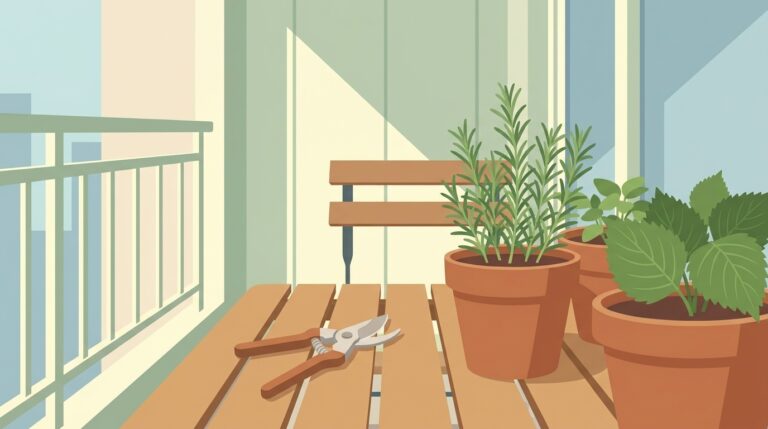
Picture this: You are living in a charming studio apartment in Mapo-gu, Seoul. Inspired by a serene episode of Three Meals a Day (삼시세끼) or the cozy balcony scenes in K-Dramas, you decided to cultivate your own urban jungle. You bought lush rosemary, sweet basil, and perilla leaves (kkaennip) from the local market. But three weeks in, disaster strikes. Your herbs have turned stringy, fragile, and what Koreans call utjaram (웃자람)—stretching helplessly toward the window. You walk into a neighborhood plant atelier to ask for advice, but your textbook Korean fails you: “식물의 나뭇가지를 자르고 싶습니다” sounds like you are ordering the deforestation of a national park rather than trimming a potted basil.
Gardening in Korea is not just a weekend hobby; it is a cultural movement driven by dedicated Sikjipsa (식집사, “Plant Butlers”). Mastering the high-level lexicon of plant nurturing, pruning (gajichigi), and repotting allows you to connect intimately with local green thumbs and join vibrant plant-swap (sikmul nanum) communities. Based on real feedback from C1-level learners who struggled to bridge botanical terminology with colloquial conversational nuances, this master guide will turn you from a hesitant plant owner into a confident Korean urban gardener.
Phase 2: Core 3 Expressions Deep-Dive
1. 과감하게 가지치기를 해주다 (Gawgam-hage gajichigi-reul hae-juda)
- Pronunciation: Gwah-gahm-hah-geh gah-jee-chee-gee-reul hae-joo-dah (Rhymes loosely with “calm-ha-gay”)
- Meaning: Literally “To prune branches boldly,” but idiomatically used to mean “Don’t hesitate to cut back aggressively for the plant’s long-term health.”
- K-Culture Moment: In lifestyle vlogs on YouTube (such as Ondo or Osol), creators often snip their bushy rosemary while whispering: “아깝지만 과감하게 가지치기를 해줘야 새순이 돋아요” (It feels wasteful, but pruning boldly encourages fresh shoots).
- Editor’s Insight: The adverb 과감하게 (boldly/decisively) is the defining attitude of seasoned Korean gardeners. Beginners fear harming the plant, but advanced speakers know that true care requires decisive pruning.
- Situation Spectrum:
- Casual (with friends / plant forums): ✅ (과감하게 쳐내!)
- Semi-formal (workshops / chatting with plant shop owners): ✅ (과감하게 가지치기 해주세요)
- Formal (botanical lectures / articles): ✅ (과감한 전정 작업이 필요합니다)
- 🤔 Think About It: In your native culture, do people express pruning as “cutting away waste” or as “making room for rejuvenation”? How does the Korean emphasis on boldness (과감함) reflect broader cultural views on growth through shedding?
2. 웃자라지 않게 곁순을 따주다 (Utjaraji anke gyeotsun-eul ttajuda)
- Pronunciation: Oot-jah-rah-jee ahn-keh gyeot-soon-eul ttah-joo-dah (Think oot like “boot” without the b)
- Meaning: “Pinching off lateral shoots/suckers to prevent leggy, weak growth.”
- K-Culture Moment: In Little Forest (리틀 포레스트), pruning tomato side shoots and pinching basil tips are portrayed as meditative acts essential for harvesting hearty ingredients.
- Editor’s Insight: 웃자라다 is a poetic and technical verb describing a plant that grows tall and spindly due to insufficient sunlight or excessive nitrogen. 곁순을 따다 refers to the delicate pinching of sucker buds between your thumb and index finger.
- Situation Spectrum:
- Casual: ✅ (웃자라기 전에 순 따줘)
- Semi-formal: ✅ (웃자라지 않게 곁순을 따주는 게 좋아요)
- Formal: ✅ (웃자람 방지를 위한 적심 및 액아 제거)
- 🤔 Think About It: Notice how Korean distinguishes between normal vertical growth (자라다) and structurally weak overgrowth (웃자라다). Does your language have a single intuitive verb for this phenomenon?
3. 통풍과 배수에 신경을 쓰다 (Tongpung-gwa baesu-e singyeong-eul sseuda)
- Pronunciation: Tohng-poong-gwah bae-soo-eh sheen-gyeong-eul sseu-dah
- Meaning: “Paying close attention to airflow ventilation and soil drainage.”
- K-Culture Moment: In apartment living shows like I Live Alone (나 혼자 산다), you often see cast members setting up mini electric fans for their herbs while remarking on how closed Korean veranda windows lead to root rot (gwaseup).
- Editor’s Insight: In Korean apartments where balconies are often glazed and sealed, 통풍 (ventilation) and 배수 (drainage) are practically religious commandments. 신경을 쓰다 implies constant mindful care.
- Situation Spectrum:
- Casual: ✅ (통풍에 신경 써야 과습 안 와)
- Semi-formal: ✅ (여름철엔 배수와 통풍에 특히 신경 써주세요)
- Formal: ✅ (원활한 통풍과 배수 관리가 핵심입니다)
- 🤔 Think About It: Why do you think apartment-specific environmental factors (like ventilation) have become such central themes in contemporary Korean conversation?
Phase 3: Textbook Korean vs Real Korean
Situation 1: Explaining how to make a herb bushier
- 📖 교과서 한국어 (Textbook Korean):
- 식물의 윗부분을 가위로 자르면 잎이 많아집니다. (Singmul-ui witbubu-neul gawi-ro jareumyeon ip-i man-ajimnida.)
- “If you cut the upper part of the plant with scissors, leaves will increase.”
- 🗣️ 진짜 한국어 (Real Korean):
- 생장점을 날려줘야 곁가지가 풍성하게 나와요. (Saengjangjeom-eul nallyeojwoya gyeotgaji-ga pungseong-hage nawayo.)
- “You need to nip the growth point off so lateral branches flourish luxuriously.”
- 💡 왜 다를까? (Why is it different?): Native plant enthusiasts use the idiomatic verb 날리다 (literally “to send flying/lop off”) to describe removing apical buds (생장점), paired with the expressive adjective 풍성하다 (lush/rich) rather than the generic 많다.
Situation 2: Advising against overwatering
- 📖 교과서 한국어 (Textbook Korean):
- 물을 너무 많이 주면 뿌리가 썩으니 주의하십시오. (Mul-eul neomu mani jumyeon ppuri-ga sseogeuni ju-uihasipsio.)
- “Be careful because roots rot if you give too much water.”
- 🗣️ 진짜 한국어 (Real Korean):
- 겉흙이 바짝 말랐을 때 흠뻑 줘야 과습이 안 와요. (Geothulk-i bajjak mallasseul ttae heumppeok jwoya gwaseup-i an wayo.)
- “Soak it thoroughly only when the topsoil is bone-dry to prevent moisture blight.”
- 💡 왜 다를까? (Why is it different?): Real Korean gardeners rely on mimetic adverbs like 바짝 (completely/crisply dry) and 흠뻑 (soaked/drenched), treating 과습 (overwatering syndrome) as an unwelcome guest that “comes” (과습이 오다).
Phase 4: K-Culture Deep Dive & Non-Verbal Manners
4-1. 눈치 (Nunchi) & Non-Verbal Gestures at the Plant Shop
When visiting a botanical studio or requesting a cutting (sapmok) from a fellow gardener, your physical etiquette speaks louder than words:
* The Gentle Soil Touch: Never poke deep into a display plant’s soil. Lightly tap the rim of the pot or gently touch the surface soil with the back of your knuckle to check moisture. Doing this demonstrates botanical literacy without damaging fragile roots.
* The Pruning Shears Two-Hand Rule: If a shop master lends you their pruning shears (wonye-gawi), receive them with both hands, blades facing inward toward yourself, resting along your forearm to show safety and deference.
* The Leaf Caress (Sseudam-sseudam): When admiring someone’s basil, support the leaf from underneath rather than pinching it from above. Accompany this with a soft vocalization like “잎 향이 정말 진하네요” (The leaf fragrance is truly rich).
4-2. Cultural Code: The Rise of the Sikjipsa (식집사)
In ultra-urbanized Korea, high-density apartment life sparked the Sikjipsa (Plant Butler) subculture—a portmanteau of 식물 (plant) and 집사 (butler, originally used by cat owners). During long work weeks, nurturing herbs on a narrow balcony (beranda) has evolved into an essential mental wellness practice known as Ppul-meong (풀멍, spacing out peacefully while gazing at greenery). Pruning is viewed as intentional decluttering for the soul—mirroring the minimalist lifestyle gaining traction across Seoul.
Phase 5: Real-Life Roleplay Scenario
Setting: Chorok-Gongbang (초록공방), a sun-drenched specialty plant studio in Seongsu-dong. Soft indie acoustic music plays as morning sunlight streams across rows of fragrant herbs.
Characters:
* 민지 (Min-ji): A knowledgeable, warm master gardener with sun-kissed hands.
* You (Learner): An ambitious urban gardener whose sweet basil has started blooming and stretching out of control.
- Turn 1 (You):
- 사장님, 제가 키우는 스위트 바질이 요즘 너무 웃자라서 줄기만 길어지는데 어떡하죠?
- Sajangnim, jega kiuneun seuwiteu bajil-i yojeum neomu utjaraseo julgi-man gireojineunde eotteokhajyo?
- 🎭 Gently showing a high-resolution photo on your phone showing spindly stems.
- (Boss, my sweet basil is stretching way too leggy lately with skinny stems. What should I do?)
- Turn 2 (민지):
- 아, 햇빛이 살짝 부족했거나 통풍 문제일 수 있어요. 꽃대도 이미 올라왔네요?
- A, haetbit-i saljjak bujokhaetgeona tongpung munje-il su isseoyo. Kkotdae-do imi ollawatneyo?
- 🎭 Squinting slightly at the photo with a warm, sympathetic smile.
- (Ah, it might be slightly lacking sunlight or having ventilation issues. Has a flower stalk already appeared?)
- Turn 3 (You):
- 네, 하얀 꽃이 피길래 그냥 뒀는데… 잎이 점점 억세지는 것 같아요.
- Ne, hayan kkot-i pigillae geunyang dwotneunde… ip-i jeomjeom eoksejineun geot gatayo.
- 🎭 Rubbing the back of your neck with an apologetic grin.
- (Yes, a white flower bloomed so I just left it… but the leaves seem to be getting tough.)
- Turn 4 (민지):
- 허브는 꽃을 피우면 잎의 향과 부드러움이 줄어들거든요. 지금 바로 꽃대 밑을 과감하게 쳐내셔야 해요.
- Heobeu-neun kkot-eul piumyeon ip-ui hyang-gwa budeureo-umi jureodeulgeodeunyo. Jigeum baro kkotdae miteul gwagamhage cheonaesyeoya haeyo.
- 🎭 Demonstrating a crisp cutting gesture with her index and middle fingers.
- (When herbs flower, the aroma and tenderness of leaves drop. You should boldly snip right below the flower stalk right now.)
- Turn 5 (You):
- 아깝더라도 생장점을 완전히 날려야 곁순이 실하게 자라겠네요?
- Akkapdeorado saengjangjeom-eul wanjeonhi nallyeoya gyeotsun-i silhage jaragetneyo?
- 🎭 Nodding thoughtfully while making a mental note.
- (Even if it feels wasteful, I must completely lop off the growth point for the side shoots to grow sturdy, right?)
- Turn 6 (민지):
- 맞아요! 마디 바로 위 1cm 지점을 소독된 원예가위로 잘라주시면 두 갈래로 풍성해질 거예요.
- Majayo! Madi baro wi il-senti jijeom-eul sodokdoen wonye-gawi-ro jallajusimyeon du gallae-ro pungseonghaejil geoyeyo.
- 🎭 Handing you a sleek pair of Japanese pruning shears to inspect.
- (Exactly! If you cut 1cm right above the leaf node with sterilized shears, it will branch out richly into two stems.)
- Turn 7 (You):
- 잘라낸 줄기는 물꽂이해서 뿌리를 내린 다음 삽목해도 될까요?
- Jallanaen julgi-neun mulkkoji-haeseo ppuri-reul naerin daeum sapmok-haedo doelkkayo?
- 🎭 Eyes lighting up with excitement.
- (Can I water-propagate the trimmed stems to root them and then pot them as cuttings?)
- Turn 8 (민지):
- 역시 고수시네요! 물만 이틀에 한 번 갈아주시면 금방 뿌리가 내릴 거예요. 화이팅!
- Yeoksi gosusineyyo! Mul-man iteul-e han beon garajusimyeon geumbang ppuri-ga naeril geoyeyo. Hwaiting!
- 🎭 Giving an enthusiastic thumbs-up and light nod.
- (You truly are an advanced gardener! Just change the water every two days and roots will sprout in no time. Fighting!)
🔀 Interactive Branching Point
Min-ji asks you: “혹시 흙 배합은 어떻게 하셨어요?” (By the way, how did you mix your potting soil?)
- Choice A: “상토에 펄라이트랑 마사토를 넉넉히 섞어서 배수성을 극대화했어요.” (Sangto-e peollaitteurang masato-reul neogneokhi seokkeoseo baesuseong-eul geukdaehwahae-sseoyo. – I mixed plenty of perlite and decomposed granite with potting soil to maximize drainage.)
- Outcome (Best!): Min-ji will be thoroughly impressed by your sophisticated knowledge of Korean potting soil terminology (상토, 마사토). She might offer you a rare perilla cutting for free!
- Choice B: “그냥 아파트 화단에서 흙을 퍼왔는데요?” (Geunyang apateu hwadan-eseo heulk-eul peowatneundeyo? – I just scooped dirt from the apartment flowerbed.)
- Outcome (Bad!): Min-ji will gasp in horror. Outdoor garden soil in Korea often harbors gnat larvae (ppuri-pari) and compacts too densely for potted herbs.
- Choice C: “화분 밑에 물받침대를 두고 항상 물을 가득 채워둬요.” (Hwabun mite mulbatchimdae-reul dugo hangsang mul-eul gadeuk chaewodwoyo. – I keep the saucer full of water at all times under the pot.)
- Outcome (Risk!): Min-ji will warn you immediately that standing water (jeomsu) without dynamic airflow guarantees devastating root rot (gwaseup).
Phase 6: 10-Second Emotional Shadowing Drill
Read these lines aloud using the indicated rhythm markers (/) and emotional tone!
[🌿 자신감 넘치고 시원하게 - Confidently & Decisively]
아깝다고 주저하지 말고 / 과감하게 생장점을 날려야 / 곁가지가 풍성해져요!
(Akkapdago jujeohaji malgo / gwagamhage saengjangjeom-eul nallyeoya / gyeotgaji-ga pungseonghaejyeoyo!)-
[🤔 진지하고 섬세하게 - Mindfully & Analytically]
여름철 실내 가드닝은 / 물주기보다 / 통풍과 서큘레이터 가동에 / 훨씬 더 신경 써야 해요.
(Yeoreumcheol sinnae gadeuning-eun / muljugiboda / tongpung-gwa seokyulleiteo gadong-e / hwolssin deo singyeong sseoya haeyo.) -
[✨ 뿌듯하고 설레며 - Proudly & Expectantly]
가지치기한 로즈마리를 / 물꽂이해 뒀더니 / 며칠 만에 / 새하얀 뿌리가 실하게 돋았어요!
(Gajichigihan rojeumari-reul / mulkkojihyeo dwotdeoni / myeochil man-e / saehayan ppuri-ga silhage dodatseoyo!)
Phase 7: K-Culture Mini Dictionary
- 식집사 (Sikjipsa) | Noun
- Meaning: “Plant Butler” (A devoted urban houseplant enthusiast).
- Usage: Used widely in social media bios, blogs, and everyday conversations (e.g., “초보 식집사의 바질 성장 일기” – A beginner plant butler’s basil growth diary).
- 순따기 / 순지르기 (Sunttagi / Sunjireugi) | Noun / Verbal Noun
- Meaning: Apical bud pinching (Topping / pinching back new shoots).
- Usage: Essential for herb thickening (e.g., “바질은 3단 이상 잎이 나면 바로 순따기를 해주세요”).
- 과습 (Gwaseup) | Noun
- Meaning: Overwatering damage / excessive moisture stagnation.
- Usage: The number-one killer of indoor plants in Korean apartments (e.g., “통풍이 안 되면 바로 과습 와요”).
- 식테크 (Siktekeu) | Noun
- Meaning: Plant-tech (식물 + 재테크, plant propagation as investment/hobby sharing).
- Usage: Propagating rare variegated monsteras or specialized culinary herbs for neighborhood barter.
Phase 8: Traveler’s Botanical Survival Kit
Top 3 Survival Phrases
- 1. “이 허브는 직사광선을 좋아하나요, 아니면 반음지 식물인가요?”
- (I heobeu-neun jiksagwangseon-eul joahanayo, animyeon baneumji singmul-ingayo?)
- Pro Tip: Use this at plant markets to ask if an herb needs direct sunlight or partial shade.
- 2. “가지치기용 원예가위랑 통기성 좋은 토분 추천해 주실 수 있나요?”
- (Gajichigiyong wonye-gawi-rang tonggiseong joeun tobun chucheonhae jusil su innayo?)
- Pro Tip: Asking for terracotta pots (토분) and shears instantly marks you as a discerning grower.
- 3. “흙에 펄라이트 비율을 얼마나 높여야 과습을 막을 수 있을까요?”
- (Heulk-e peollaitteu biyul-eul eolmana nopyeoya gwaseup-eul mageul su isseulkkayo?)
- Pro Tip: Great for asking customized soil-blend advice.
Editor’s Travel Note
- Yangjae Flower Market (양재꽃시장): Take Seoul Subway Shinbundang Line to Yangjae Citizen’s Forest Station, Exit 4. The underground and greenhouse sections house hundreds of herb stalls. Look for stalls labeled 허브/야생화.
- Essential App Setup: Download the Naver Map app on the iOS App Store or Google Play, and search for “종묘사” (traditional seed/agricultural store) or “플랜트샵” (trendy plant boutique).
- Local Payment: Most wholesale stalls accept mobile bank transfers (gyejwa-iche) or physical cards; bring a bit of cash if you want small ₩2,000 herb seedlings (podu-myomok).
Phase 9: One Step Deeper (Reflection)
In traditional Korean houses (Hanok), gardens were not manicured symmetrically to conquer nature; rather, they framed the natural landscape (Cha-gyeong, 차경 – “borrowed scenery”). Today’s urban Sikjipsa culture revives this philosophy within the concrete confines of modern high-rises. When Koreans boldly prune a plant (과감한 가지치기), they do not view it as destruction, but as an act of relational harmony—giving the plant space to breathe (통풍) and directing its vital energy (gi, 기) where it matters most.
💬 Your Turn: Have you ever hesitated to prune your favorite potted plant? How does the concept of 과감함 (bold decisiveness) apply to letting go of clutter in your own daily life? Share your thoughts below in Korean or English!
Phase 10: FAQ & Common Mistakes
Q: 바질 꽃이 피면 왜 바로 잘라줘야 하나요?
A: 허브가 개화(flowering)를 시작하면 모든 양분이 꽃과 씨앗으로 집중되어 잎의 성장이 멈추고 식감이 질겨집니다. 특유의 달콤한 향기도 급격히 떨어지므로, 꽃대가 올라오는 즉시 마디 아랫부분을 과감히 잘라내야 풍성한 잎을 계속 수확할 수 있습니다.
Q: 가지치기할 때 가위는 꼭 소독해야 하나요?
A: 네, 반드시 소독용 에탄올이나 불로 가위 날을 소독해야 합니다. 소독되지 않은 원예가위를 사용하면 줄기 절단면을 통해 곰팡이나 세균성 무름병 병원균이 침투하여 식물 전체가 고사할 수 있습니다.
Q: 물꽂이(수경재배)를 할 때 잎은 다 남겨두나요?
A: 아닙니다. 물에 잠기는 아래쪽 잎은 모두 따내야 합니다. 물속에 잎이 잠겨 있으면 부패하여 물이 오염되고 뿌리 발근을 방해하므로, 맨 위쪽 본잎 2~4장만 남기고 하단 잎은 말끔히 제거해 주세요.
🚨 Common Mistakes Warning Board
- Mistake: Cutting in the middle of an internode (마디 중간 자르기).
- Correct Action: Cut precisely 0.5cm ~ 1cm above a leaf node (마디 바로 위). Leaving a long bare stem causes stem dieback and rot.
- Mistake: Misting herb leaves heavily indoors without air circulation.
- Correct Action: Herbs like rosemary and thyme hate wet leaves in stagnant air. Focus on bottom-watering (jeommyon-gwan-su) or root watering.
- Mistake: Pruning more than 30% of a young, weak herb at once.
- Correct Action: Observe the 1/3 rule. Never remove more than one-third of the foliage simultaneously unless the plant is fully established.
Phase 11: Action Missions
- 🥉 Bronze Mission (Solo Shadowing): Read the Phase 6 Shadowing Drill aloud 3 times, focusing on the dynamic pitch drop on 날려야 and the cheerful lift on 풍성해져요.
- 🥈 Silver Mission (Community Sharing): Take a photo of an indoor plant or herb, post it on Instagram or your learning journal, and caption it in Korean using #식집사 #과감한가지치기 #웃자람방지.
- 🥇 Gold Mission (Real-World Execution): Visit a local Korean florist or plant forum (like Naver Cafe Pulgolmu), and ask a question using the structure: “[식물 이름]이/가 웃자라서 그런데, 어디쯤에서 생장점을 날려줘야 할까요?”
- 🎮 K-Culture Mission: Watch an episode of a Korean lifestyle/healing show (e.g., Little Forest or Home Café Vlog) and spot when the host trims fresh herbs for cooking. Listen closely for the word 순따기 or 곁순!
Phase 12: Interactive Quiz Challenge
Test your mastery of C1 gardening and pruning Korean!
1. Situation Judgment
Your friend’s mint plant has developed tall, thin stems with wide gaps between leaves because it was kept in a dark room. Which advice is the most natural and accurate C1 Korean?
* (A) 식물이 아프니까 물을 매일 흠뻑 주세요.
* (B) 웃자람이 심하니까 생장점을 과감하게 쳐내고 밝은 곳에서 통풍시켜 줘.
* (C) 잎을 자르면 식물이 죽으니까 가만히 두세요.
2. Fill in the Blank
줄기 사이에서 불필요하게 뻗어 나오는 (_____)을 제때 따줘야 본줄기가 굵고 튼튼해집니다.
* (A) 생장점
* (B) 곁순
* (C) 꽃받침
3. True / False Cultural Check
- Statement: In Korean apartment veranda gardening, 과습 (overwatering syndrome) is often caused not just by water frequency, but fundamentally by poor 통풍 (ventilation). (True / False)
👉 Click here for Answers & Detailed Explanations!
- Question 1 Answer: (B)
- Explanation: Spindly, weak growth due to low light is 웃자람. The correct botanical and colloquial prescription is trimming the growth point (생장점을 쳐내다) and increasing light and airflow (통풍).
- Question 2 Answer: (B) 곁순
- Explanation: 곁순 (lateral sucker bud / side shoot) should be pinched off (따주다) to direct energy to the main stem (본줄기).
- Question 3 Answer: True
- Explanation: Exactly right! Without active air circulation to evaporate ambient pot moisture in sealed apartment verandas, the roots quickly suffocate, leading to 과습.
- Explanation: Exactly right! Without active air circulation to evaporate ambient pot moisture in sealed apartment verandas, the roots quickly suffocate, leading to 과습.







