

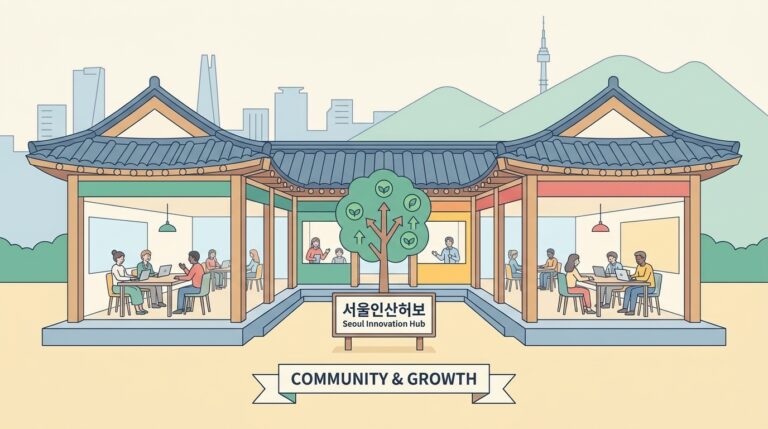
Beyond Profits: Mastering Korean Social Enterprise and Welfare Policy Discourse
Phase 1: Empathy & Immersion Opening
안녕하세요! 매일한글 에디터입니다. Have you ever watched a gripping scene in a drama like Start-Up or Itaewon Class where the protagonists are not just fighting to make a quick buck, but are desperately trying to balance public good, community revitalization, and corporate survival? Or perhaps you have attended a high-level policy panel in Seoul discussing how social enterprises (사회적기업) can survive in a fiercely competitive market once government subsidies expire.
At the advanced C2 level, standard textbook business Korean simply won’t cut it. Navigating the intersection of social welfare (복지), public governance, and market viability requires nuanced, sophisticated socio-economic vocabulary and an understanding of institutional diplomacy. Today, we bridge that gap. Based on real feedback from policy researchers, NGO directors, and venture founders working in Korea, this guide unpacks the precise rhetorical tools and cultural subtleties needed to discuss sustainability, public support policies, and social innovation with native-level authority.
Phase 2: Core Expressions Deep Dive (C2 Mastery)
1. 사회적 가치와 수익성을 동시에 추구하다
- Pronunciation: Sahoejeok gachiwa su-ikseong-eul dongsi-e chugu-hada (Sounds like: Sah-hwe-jeok gah-chee-wah soo-ik-seong-eul dong-she-eh choo-goo-hah-dah)
- Meaning: Literal: “To simultaneously pursue social value and profitability.” / Nuance: Balancing impact and commercial viability without compromising the core social mission.
- K-Culture Moment: Echoed in boardroom meetings across Seongsu-dong (Seoul’s social innovation hub) when pitching to impact investors who demand both financial returns and measurable community impact.
- Editor’s Insight: Using “동시에 추구하다” elevates your stance from idealistic activist to pragmatic social entrepreneur.
- Situation Spectrum: Casual 🚫 | Semi-formal ⚠️ | Formal ✅
- 🤔 Think About It: In your home country, is “social value” seen as fundamentally opposed to commercial profit, or are they integrated as they are in Korea’s hybrid social economy model?
2. 정부 보조금 의존도를 낮추고 자생력을 확보하다
- Pronunciation: Jeongbu bojogum uijon-do-reul natchugo jasaeng-nyeok-eul hwakbo-hada (Sounds like: Jung-boo boh-joh-goom wee-john-doh-reul naht-choo-goh jah-seng-nyuk-eul hwahk-boh-hah-dah)
- Meaning: Literal: “To lower reliance on government subsidies and secure self-viability.” / Nuance: Shifting from a grant-funded survival model to an organic, revenue-generating enterprise.
- K-Culture Moment: Frequently heard during parliamentary audit broadcasts (국정감사) or policy symposiums when evaluating the mid-to-long term health of welfare-to-work initiatives.
- Editor’s Insight: 자생력 (self-regenerative vitality/viability) is the golden keyword in Korean welfare policy debates. It demonstrates deep economic insight.
- Situation Spectrum: Casual 🚫 | Semi-formal ⚠️ | Formal ✅
- 🤔 Think About It: How does your language express the concept of “weaning off public aid” without sounding punitive or derogatory?
3. 민관 협력 거버넌스를 구축하다
- Pronunciation: Min-gwan hyeopnyeok geobeoneonseu-reul guchuk-hada (Sounds like: Meen-gwahn hyup-nyuk guh-buh-nun-soo-reul goo-chook-hah-dah)
- Meaning: Literal: “To construct public-private partnership governance.” / Nuance: Establishing institutional synergy between state institutions, private corporations, and civic innovators.
- K-Culture Moment: A foundational tagline used in municipal development announcements by the Seoul Metropolitan Government when launching joint ESG welfare funds.
- Editor’s Insight: 민관 협력 (Private-Public Cooperation) is a core institutional philosophy in Korea, reflecting the historical reality that rapid national development required close collaboration between the state (관) and private civil sectors (민).
- Situation Spectrum: Casual 🚫 | Semi-formal ⚠️ | Formal ✅
- 🤔 Think About It: Why does Korean administrative discourse frequently combine two contrasting stakeholders into compound prefixes like 민관 (Civic-State) or 노사 (Labor-Management)?
Phase 3: Textbook Korean vs. Real Native Korean
Situation 1: Discussing Financial Viability After Initial Grant Support
- 📖 Textbook Korean: 정부 지원이 끝나면 회사가 문을 닫을 수도 있습니다. (Jeongbu jiwon-i kkeutnamyeon hoesaga mun-eul dad-eul sudo itsseumnida. – “If government support ends, the company might close its doors.”)
- 🗣️ Real Native Korean: 초기 육성 단계 이후의 데스밸리(Death Valley)를 극복하려면 비즈니스 모델의 피벗팅과 독자적인 판로 개척이 필수적입니다. (Chogi yukseong dangye ihu-ui deseubaelli-reul geukbok-haryeomyeon bijeuniseu model-ui pibeoting-gwa dokja-jeogin pallo gaecheok-i pilsujeok-imnida.)
- 💡 Why the difference? C2 level policy and business Korean relies on precise industry jargon (판로 개척, 데스밸리) rather than colloquial descriptions of enterprise failure.
Situation 2: Emphasizing the Purpose of Policy Subsidies
- 📖 Textbook Korean: 정부가 사회적 약자들을 돕기 위해 돈을 줍니다. (Jeongbuga sahoejeok yakjadeul-eul dopgi wihae don-eul jumnida. – “The government gives money to help vulnerable people.”)
- 🗣️ Real Native Korean: 단순 시혜성 복지를 지양하고, 취약계층의 지속 가능한 일자리 창출을 위한 마중물 예산으로 집행되고 있습니다. (Dansun sihye-seong bokji-reul jiyanghago, chwiyak-gyecheung-ui jisok ganeung-han iljari changchul-eul wihan majungmul yesan-euro jiphaengdoego itsseumnida.)
- 💡 Why the difference? Terms like 시혜성 복지 (charity-based handout welfare) vs 마중물 (priming water / catalytic investment) reveal profound insight into contemporary welfare philosophy.
Phase 4: K-Culture Deep Dive & Non-Verbal Manners
4-1. Nunchi & Gestures: Navigating Public-Private Policy Tables
When presenting social enterprise models to Korean municipal committees or public evaluation panels (심사위원회), aggressive assertiveness can be perceived as confrontational.
* Two-Handed Material Handover (양손 건네기): Always deliver policy briefs and business plans using both hands with a slight, respectful bow (15 degrees).
* The Attentive Nod (경청의 끄덕임): When committee chairs or civil servants (공무원) provide critiques on policy alignment, maintain steady eye contact, nod gently, and take handwritten notes. This signals intellectual humility and respect for public administration.
4-2. Cultural Code Analysis: The Seongsu-dong Ecosystem & ESG Wave
South Korea has witnessed a transformative shift from traditional conglomerates (재벌) to vibrant social venture hubs, epitomized by Seoul’s Seongsu-dong district. Unlike traditional charity models, modern Korean social enterprises leverage cutting-edge tech, sustainable upcycling, and community-driven platforms. Supported by initiatives like the 사회적기업 육성법 (Social Enterprise Promotion Act), welfare is no longer viewed as purely state-administered relief, but as an entrepreneurial ecosystem where social impact and market innovation converge.
Phase 5: Real-World Roleplay Scenario
Setting: A conference room at the Seoul Social Innovation Hub. Founder Min-ji meets with Director Park, a veteran public policy advisor, to evaluate her eco-friendly packaging venture’s transition away from initial public subsidies.
- 박 국장 (Director Park): 김 대표님, 예비사회적기업 지정 기간 만료가 임박했는데, 재정 자립도 제고 방안은 마련되셨습니까? (Kim daepyonim, yebisahoejeok gieop jijeong gigan mallyoga imbak-haenneunde, jaejeong jaripdo jego bang-an-eun maryeondoesyeosseumnikka?)
🎭 Lean forward with an earnest yet analytical expression. - 김민지 (Min-ji): 네, 박 국장님. 그동안 정부 인건비 지원에 의존했던 구조에서 탈피하여 B2B 판로를 적극적으로 확장하고 있습니다. (Ne, Park gukjangnim. Geudong-an jeongbu ingeonbi jiwon-e uijonhaetteon gujo-eseo talpihayeo B2B pallo-reul jeokgeukjeog-euro hwakjanghago itsseumnida.)
- 박 국장 (Director Park): 고무적이군요. 하지만 민간 시장에서의 단가 경쟁력을 확보하지 못하면 지속 가능성에 한계가 올 텐데요. (Gomujeog-igunyo. Hajiman mingan sijang-eseoui danga gyeongjaengnyeok-eul hwakbohaji mothamyeon jisok ganeungseong-e hangyega ol tendeyo.)
- 김민지 (Min-ji): 맞습니다. 그래서 공공조달 우선구매제도를 지렛대 삼아 초기 물량을 확보하고, 친환경 ESG 공시 의무화 기업들과 전략적 파트너십을 체결했습니다. (Matseumnida. Geuraeseo gong-gong jodal useon gumaejedo-reul jirettae sama chogi mullyang-eul hwakbohago, chinhwangyeong ESG gongsi uimu-hwa gieopdeul-gwa jeollyakjeok pateuneoshib-eul chegyeolhaesseumnida.)
- 박 국장 (Director Park): 아주 탁월한 접근입니다. 취약계층 고용 창출이라는 본래의 소셜 미션도 잘 유지되고 있나요? (Aju tagwolhan jeopgeun-imnida. Chwiyak-gyecheung goyong changchul-iraneun bollae-ui sosyeol misyeon-do jal yujidoego innayo.)
- 김민지 (Min-ji): 물론입니다. 발달장애인 고용 비율을 40% 이상으로 유지하면서 표준화된 직무 매뉴얼을 도입했습니다. (Mollon-imnida. Baldal jang-ae-in goyong biyul-eul sasip peosenteu isang-euro yujihamyeonseo pyojunhwadoen jingmu maenyueol-eul do-iphaesseumnida.)
- 박 국장 (Director Park): 훌륭합니다. 이번 사회적 가치 지표(SVI) 평가에서도 우수한 등급을 받을 것으로 기대되는군요. (Hullyunghamnida. Ibeon sahoejeok gachi jipyo SVI pyeong-ga-eseodo usuhan deunggeub-eul badeul geoseuro gidaedoeneungunyo.)
- 김민지 (Min-ji): 감사드립니다. 지속 가능한 사회적 경제 생태계 조성에 기여하는 모델로 안착시키겠습니다. (Gamsadeurimnida. Jisok ganeung-han sahoejeok gyeongje saengtae-gye joseong-e giyeohaneun model-ro anchaksikigesseumnida.)
🔀 Interactive Choice Point
How should Min-ji reply if asked to justify taking a high-risk venture loan rather than relying on municipal welfare grants?
- Option A: “돈이 부족해서 어쩔 수 없이 대출을 받았습니다.” (Don-i bujokhaeseo eojjeol su eopshi daechul-eul badasseumnida.)
- Option B: “단순 보조금에 의존하기보다 임팩트 금융을 통해 재무적 규율을 강화하고 사업 스케일업을 도모하고자 합니다.” (Dansun bojogum-e uijonhagiboda impaektu geumyung-eul tonghae jaemujeok gyuyul-eul ganghwahago sa-eop seukeil-eop-eul domohagoja hamnida.)
- Option C: “시 지원금이 너무 적어서 그냥 다른 은행을 찾아갔습니다.” (Si jiwon-geum-i neomu jeogeoseo geunyang dareun eunhaeng-eul chajagasseumnida.)
Decision Feedback:
* Option A (Bad): Sounds financially vulnerable and lacks managerial foresight.
* Option B (Best): Uses advanced impact investing terms (임팩트 금융, 재무적 규율, 스케일업), demonstrating executive acumen.
* Option C (Risk): Appears ungrateful toward municipal support and unprofessional in tone.
Phase 6: 10-Second Emotion Shadowing Drill
- [🔥 당당하고 설득력 있게 – Confident & Persuasive]
저희 기업은 / 단순한 이윤 창출을 넘어 / 지역사회의 취약계층을 위한 / 지속 가능한 안전망을 구축하고 있습니다.
(Jeohui gieob-eun / dansunhan iyun changchul-eul neomeo / jiyeok-sahoe-ui chwiyak-gyecheung-eul wihan / jisok ganeung-han anjeonmang-eul guchukhago itsseumnida.) -
[🤝 신중하고 진정성 있게 – Prudent & Sincere]
보조금 일몰제 이후에도 / 독자적인 경쟁력을 갖추기 위해 / 혁신적인 비즈니스 모델을 / 완성해 나가겠습니다.
(Bojogum ilmolje ihu-edo / dokja-jeogin gyeongjaengnyeok-eul gatchugi wihae / hyeoksinjeogin bijeuniseu model-eul / wanseonghae nagagessseumnida.)
Phase 7: K-Culture Mini Dictionary
- 예비사회적기업 (Yebi Sahoejeok Gieop): Preliminary Social Enterprise. A certified startup entity undergoing incubation with partial government support before acquiring official full certification.
- 소셜벤처 (Sosyeol Bencheoe): Social Venture. Innovative startups leveraging breakthrough technologies or creative solutions to tackle pressing socio-environmental challenges.
- 공공조달 우선구매제도 (Gong-gong Jodal Useon Gumaejedo): Preferential Public Procurement System. A mandatory statutory mechanism where state agencies must prioritize purchasing certified social enterprise products.
- 자생력 (Jasaeng-nyeok): Self-Regenerative Viability. The innate capacity of a welfare or business framework to sustain itself without perpetual external subsidies.
Phase 8: Expat & Researcher Survival Kit
Top 3 Survival Expressions for Policy Panels & Networking
- 사회적 가치 지표(SVI) 측정 결과를 공유해 주실 수 있습니까?
(Sahoejeok gachi jipyo cheukjeong gyeolgwa-reul gong-yuhye jusil su itsseumnikka?)
Pro Tip: Essential when analyzing the quantitative impact of welfare-linked enterprises. - 공공조달 등록 절차에 대해 문의드리고자 합니다.
(Gong-gong jodal deungnok jeolcha-e daehae mun-ui-deurigojo hamnida.)
Pro Tip: Use this formal phrasing with civil servants regarding procurement registration. - 지역 공동체와의 상생 협약 체결을 제안합니다.
(Jiyeok gongdongche-waui sangsaeng hyeobyak chegyeol-eul je-anhapnida.)
Pro Tip: Ideal when presenting multi-stakeholder local welfare initiatives.
Editor’s Travel & Fieldwork Note
When researching or visiting Korea’s social economy hubs in Seongsu-dong or Eunpyeong Innovation Park, navigate seamlessly by installing local mapping services. Use the 네이버 지도 앱 다운로드 to locate social enterprise co-working spaces and pop-up stores effortlessly.
Phase 9: A Step Deeper (한 발 더 깊이)
In Korean corporate discourse, the concept of 상생 (Sangsaeng – Mutual Co-existence) goes beyond standard corporate social responsibility (CSR). Rooted in communal solidarity, modern Korean welfare policies increasingly mandate that enterprises do not operate in a vacuum. The legal institutionalization of social enterprises reflects a profound societal expectation: that economic progress must co-evolve with the socio-economic safety net.
💬 Your Turn: How does your native language balance economic self-sufficiency with community solidarity? Share your thoughts and vocabulary equivalents in the comments below!
Phase 10: FAQ & Common Mistakes
Q: What is the difference between a 일반기업 (Regular Enterprise), a 사회적기업 (Certified Social Enterprise), and a 소셜벤처 (Social Venture)?
A: A certified 사회적기업 is legally accredited under the Ministry of Employment and Labor with specific governance quotas (e.g., employing 30%+ vulnerable workers), while a 소셜벤처 is recognized by the Ministry of SMEs and Startups for its innovative, technology-driven approach to solving social issues, often backed by impact venture capital.
Q: How do policy experts describe the expiration of public subsidies?
A: Experts frequently use the institutional term 일몰제 (Sunset Clause/Provision) or 보조금 일몰, indicating that financial assistance automatically ceases after a designated period to encourage operational independence.
Q: Can foreign entrepreneurs establish social enterprises in South Korea?
A: Yes, foreign nationals with appropriate corporate investment or startup visas (such as the D-8-4 Tech Startup Visa) can incorporate entities that qualify as social ventures and apply for preliminary accreditation.
🚨 Common Mistakes Warning Board
| Mistake | Why It Fails | Correct Action (C2 Mastery) |
|---|---|---|
| “정부 돈을 공짜로 받아요.” | Sounds irresponsible and trivializes public tax expenditures. | Say: “정부 지원금을 교부받아 초기 인프라를 구축하고 있습니다.“ |
| Confusing 시혜 (Charity Handout) with 자립 (Self-reliance). | Misrepresents the active economic agency of welfare participants. | Emphasize: “생산적 복지 (Productive Welfare)” or “자립 기반 마련“. |
| Using 회사 망하다 in official policy contexts. | Extremely colloquial and informal. | Use formal terminology: “폐업 절차를 밟다” or “사업을 청산하다“. |
Phase 11: Action Missions
- 🥉 Bronze Mission: Practice reading Phase 6’s Shadowing sentences aloud 5 times, focusing on natural pauses at every
/mark. - 🥈 Silver Mission: Write a 3-sentence summary on social media describing an impactful social business using the phrase: 사회적 가치와 수익성을 동시에 추구하다.
- 🥇 Gold Mission: Draft a mock elevator pitch (100 words in Korean) explaining how your project achieves 자생력 (self-viability) without long-term government subsidies.
- 🎮 K-Culture Mission: Watch an episode of a modern Korean business drama or documentary on the Korea Social Enterprise Promotion Agency (한국사회적기업진흥원) channel, and spot at least two expressions learned today.
Phase 12: Interactive Quiz Challenge
1. Situation Judgment: Which phrase is most appropriate when addressing a government policy committee regarding your business’s financial health?
* A) 앞으로도 평생 보조금을 지원해주시면 좋겠습니다.
* B) 철저한 손익분기점 분석을 통해 정부 지원 일몰 후에도 자생력을 유지하겠습니다.
* C) 돈이 없으면 사업을 바로 접겠습니다.
2. Fill in the Blank:
“단순한 시혜성 복지를 넘어 취약계층의 일자리를 창출하는 ( ) 경제 생태계 조성이 시급합니다.”
3. True or False: In Korea, the 공공조달 우선구매제도 requires public institutions to prioritize certified social enterprise goods and services.
🔍 Click to Reveal Answers and In-depth Explanations
- Answer: B – Demonstrates high-level institutional accountability and economic resilience.
- Answer: 사회적 (Social) – Full term: 사회적 경제 생태계 (Social economy ecosystem).
- Answer: True (참) – The Public Procurement Act and Social Enterprise Promotion Act mandate preferential procurement to ensure social enterprises secure foundational sales channels.






