

Phase 1: Empathy (Story-Immersive Opening)
안녕하세요! 매일한글 에디터입니다. (Hello! I’m your Daily Hangul editor.)
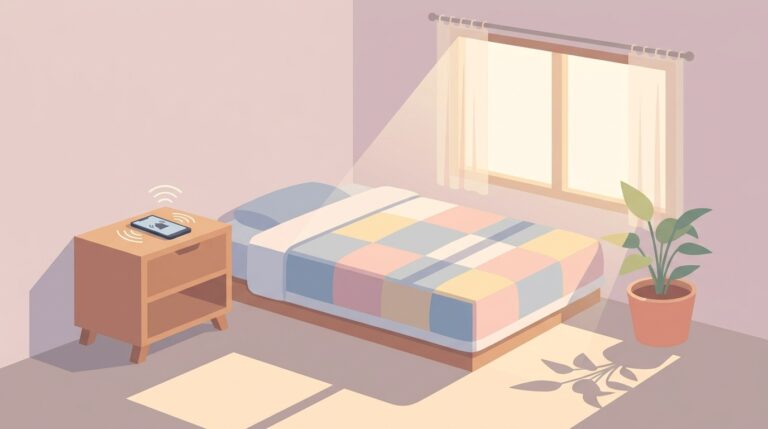
Picture this classic K-Drama scene: it’s 6:30 AM, and the main character is fast asleep, tangled in a fluffy blanket. Suddenly, their phone buzzes relentlessly with the iconic, upbeat rhythm of a default Samsung tune, followed by five different alarms set at two-minute intervals (6:32, 6:34, 6:36…). When that still fails to pull them from dreamland, their best friend or love interest calls them with a soft yet urgent: “일어났어? (Are you up?)”
If you have ever lived with Korean roommates, joined an early morning study group, or traveled across Korea on a 6:00 AM KTX train, you know how crucial the morning alarm and ‘morning call’ (모닝콜) culture is. But when you want to ask a friend to wake you up or tell your colleague that you accidentally slept right through your alarm, textbook phrases like “저는 알람을 맞추었습니다” can sound unnaturally stiff.
Today, we are bridging that gap! Based on real classroom feedback and native habits, this intermediate (B2) guide will transform you into a natural communicator who can banter about snoozing alarms, make charming wake-up call requests, and navigate Korea’s energetic morning routines with zero awkwardness.
Phase 2: 3 Core Expressions In-Depth
1. 알람 맞춰 놨어? (Allam matchwo nwasseo?)
- Pronunciation: [Al-lam mat-chwo nwat-seo?] (Sounds like: Ahl-lahm maht-chwo nwahs-saw)
- Meaning: Literal: “Did you align/fit the alarm?” / Actual: “Did you set the alarm?”
- K-Culture Moment: Heard before an early morning flight at Incheon Airport or the night before a cutthroat K-Pop concert ticketing (티켓팅) session.
- Editor’s Insight: Koreans use the verb 맞추다 (matchuda – to tune/adjust/align) rather than 설정하다 (to configure) in daily conversations. Combining it with -아/어 놓다 expresses that the completed action is currently maintained.
- Situation Spectrum:
- Casual: ✅ 알람 맞춰 놨어?
- Semi-formal: ✅ 알람 맞춰 두셨어요? (Allam matchwo dusyeosseoyo?)
- Formal: ⚠️ 알람을 설정하셨습니까? (Allameul seoljeonghasyeotseumnikka?)
- 🤔 Think About It: English speakers “set” an alarm, while Koreans “tune/match (맞추다)” it. What does this reveal about viewing the alarm as synchronizing with the flow of time?
2. 내일 아침에 모닝콜 좀 해 줘. (Naeil achime morning-call jom hae jwo.)
- Pronunciation: [Nae-il a-chim-e mo-ning-kol jom hae jwo] (Sounds like: Neh-eel ah-cheem-eh mo-ning-kohl johm heh jwo)
- Meaning: Literal: “Do a morning call for me tomorrow morning, please.” / Actual: “Could you give me a wake-up call tomorrow morning?”
- K-Culture Moment: A staple romance K-Drama line where asking for a morning call is a subtle way to start the day talking to your crush.
- Editor’s Insight: 모닝콜 is quintessential Konglish (Korean English) for “wake-up call.” Inserting the softener 좀 (jom – a bit / kindly) turns a direct command into an affectionate, friendly request.
- Situation Spectrum:
- Casual: ✅ 모닝콜 좀 해 줘.
- Semi-formal: ⚠️ 내일 모닝콜 좀 부탁드려요. (Naeil morning-call jom butakdeuryeoyo.)
- Formal: 🚫 (In business settings, use 모닝콜 서비스를 신청하다 for hotels).
- 🤔 Think About It: In many cultures, asking someone to wake you up feels like an imposition. Why is it seen as a sign of affectionate bonding (정 / Jeong) in Korea?
3. 알람 소리 못 듣고 뻗어 버렸어. (Allam sori mot deutgo ppeodeo beoryeosseo.)
- Pronunciation: [Al-lam so-ri mot deut-go ppeo-deo beo-ryeot-seo] (Focus on the tense double-p popping sound in ‘Ppeo’!)
- Meaning: Literal: “I couldn’t hear the alarm and stretched out.” / Actual: “I was completely knocked out from exhaustion and slept right through my alarm.”
- K-Culture Moment: Sent over KakaoTalk at 11:00 AM as a frantic excuse to your university group project members after pulling an all-nighter (밤샘).
- Editor’s Insight: 뻗다 (ppeodda) literally means to stretch out one’s limbs, but colloquially describes passing out from pure exhaustion. The grammar pattern -어 버리다 conveys an unintended action finished with a nuance of regret or relief.
- Situation Spectrum:
- Casual: ✅ 완전 뻗어 버렸어.
- Semi-formal: ⚠️ 너무 피곤해서 잠들어 버렸어요. (Neomu pigonhaeseo jamdeureo beoryeosseoyo.)
- Formal: 🚫 (Too colloquial for your boss!)
- 🤔 Think About It: How does this vivid physical expression (뻗다) paint a more dramatic picture of fatigue than simply saying “I overslept” (늦잠 잤어)?
Phase 3: Textbook Korean vs. Real Korean
Situation 1: Setting multiple alarms just in case
- 📖 Textbook Korean: “잠에서 깨기 위해 알람을 여러 개 설정했습니다.” (Jam-eseo kkaegi wihae allameul yeoreo gae seoljeonghaetseumnida. – I have configured multiple alarms to awaken from sleep.)
- 🗣️ Real Korean: “혹시 몰라서 알람 5분 간격으로 다 맞춰 놨어.” (Hoksi mollaseo allam obun gangyeogeuro da matchwo nwasseo. – Just in case, I set alarms in 5-minute intervals.)
- 💡 Why the difference? Native speakers frequently use 혹시 몰라서 (“just in case”) and conversational units like 5분 간격으로 (“in 5-min intervals”) to sound fluid and realistic.
Situation 2: Asking your roommate to wake you up by any means necessary
- 📖 Textbook Korean: “제가 일어나지 못하면 저를 깨워 주시기 바랍니다.” (Jega ireonaji mot-hamyeon jeoreul kkaewo jusigi baramnida. – Please awaken me if I fail to arise.)
- 🗣️ Real Korean: “나 못 일어나면 등짝 스매싱이라도 날려서 깨워 줘!” (Na mot ireonamyeon deungjjak seumaeshing-irado nallyeoseo kkaewo jwo! – If I can’t wake up, give me a back-smack wake-up!)
- 💡 Why the difference? Close friends and roommates use humorous exaggerations like 등짝 스매싱 (the affectionate “mom-style back-slap”) to emphasize how desperately they need to get up.
Phase 4: K-Culture Deep Dive & Non-Verbal Manners
4-1. 눈치 (Nunchi) & Smartphone Etiquette
- Public Transport Alarms: On early morning subway lines or KTX trains, a blaring alarm will earn you instant sharp glares (눈총). If your phone rings unexpectedly, quickly use the double-handed clasp of your phone while slightly bowing your head and mouthing: “죄송합니다” (Joesonghamnida – I am sorry).
- The Morning Call Hand Gesture: When asking a close friend for a morning call in person, press both palms together in front of your chest (손 모으기), tilting your head slightly with an earnest, cute pout (애교 / Aegyo).
4-2. Cultural Code Analysis: The “Godsaeng” (갓생) & Morning Call Culture
In South Korea’s high-octane society, the trend of living a 갓생 (Godsaeng – a compound of ‘God’ and ‘Life’, meaning an ultra-productive, diligent lifestyle) has made early mornings a badge of honor. University students and young professionals often form 모닝콜 품앗이 (Morning Call Poumasi)—mutual wake-up buddy pacts. Rather than relying solely on cold automated phone bells, hearing a friend’s voice demanding “일어나! 출석체크 해야지!” (Wake up! You need to do roll call!) builds collective accountability and deepens interpersonal bonds.
Phase 5: Real-Life Roleplay Scenario
Setting: Alex (an exchange student) and Minji (his Korean buddy) are in the dorm lounge at 11:30 PM, planning their trip to catch the 6:30 AM KTX train from Seoul to Busan.
- Minji: 🎭 (checking the train booking app on her phone) 알렉스, 우리 내일 서울역에 최소 6시까지는 가야 해. (Alex, uri naeil Seoulyeoge choeso 6-si-kkajineun gaya hae. – Alex, we need to get to Seoul Station by at least 6:00 AM tomorrow.)
- Alex: 🎭 (eyes widening in mild panic) 6시? 그러면 5시에는 일어나야겠네? (6-si? Geureomyeon 5-si-eneun ireonayagetne? – 6:00 AM? Then we should wake up by 5:00 AM?)
- Minji: 응. 너 아침에 잘 일어나는 편이야? (Eung. Neo achime jal ireonaneun pyeon-iya? – Yeah. Are you usually good at waking up in the morning?)
- Alex: 솔직히 알람 소리 잘 못 듣고 뻗는 편이라 걱정돼. (Soljikhi allam sori jal mot deutgo ppeodneun pyeon-ira geokjeongdwae. – Honestly, I tend to sleep through alarms like a log, so I’m worried.)
- Minji: 🎭 (laughing lightly) 걱정 마. 너 알람 몇 개 맞춰 놓을 건데? (Geokjeong ma. Neo allam myeot gae matchwo noheul geonde? – Don’t worry. How many alarms are you going to set?)
- Alex: 5분 간격으로 세 개 맞춰 놨어. (Obun gangyeogeuro se gae matchwo nwasseo. – I set three at 5-minute intervals.)
- Minji: 그걸로 부족할 것 같은데? 내가 내일 5시에 모닝콜 해 줄까? (Geugeollo bujokhal geot gateunde? Naega naeil 5-sie morning-call hae julkka? – That might not be enough. Shall I give you a morning call at 5:00 AM?)
- Alex: 🎭 (pressing palms together gratefully) 진짜? 모닝콜 한 번만 부탁할게! (Jinjja? Morning-call han beonman butakhalge! – Really? Please, I’d really appreciate a wake-up call!)
🔀 Interactive Choice Point
What should Alex say next if Minji asks: “만약 전화 안 받으면 어떡해?” (What if you don’t answer my call?)
- Option A: “그냥 버리고 먼저 가세요.” (Geunyang beorigo meonjeo gaseyo. – Just abandon me and go first.)
- Option B: “받을 때까지 계속 전화 걸어 줘! 문도 두드려 줘도 돼!” (Badeul ttaekkaji gyesok jeonhwa georeo jwo! Mundo dudeuryeo jwodo dwae! – Keep calling until I pick up! You can even bang on my door!)
- Option C: “알람 설정을 취소하겠습니다.” (Allam seoljeongeul chwisohagetseumnida. – I will cancel the alarm configuration.)
Feedback:
* Option A (Risk): Too cold and overly polite for a friendly trip; Minji might think you don’t want to go.
* Option B (Best! 🏆): Shows friendly banter, trust, and proactive enthusiasm to make the morning trip happen.
* Option C (Bad): Stiff textbook robot talk that kills the conversational vibe.
Phase 6: 10-Second Emotional Shadowing Drill
Practice matching the rhythm, natural pauses marked by /, and emotional milestones!
- [🥱 비몽사몽 칭얼거리며 – Drowsy & whiny]
“5분만… / 딱 5분만 더 잘게… / 진짜 5분 뒤에 일어난다…”
(Obunman… / ttak obunman deo jalge… / jinjja obun dwie ireonanda…)
“Just 5 minutes… / Just 5 more minutes of sleep… / I’m seriously getting up in 5 minutes…” -
[⏰ 다급하고 긴장되게 – Urgent & alert]
“야, / 너 알람 확실히 맞춰 놨어? / 우리 내일 첫차 놓치면 끝장이야!”
(Ya, / neo allam hwaksilhi matchwo nwasseo? / uri naeil cheotcha notchimyeon kkeutjang-iya!)
“Hey, / did you definitely set your alarm? / If we miss the first train tomorrow, we are doomed!” -
[🥺 간절하고 애교 섞어서 – Earnest & sweet]
“나 내일 중요한 시험이라 그런데, / 7시에 모닝콜 한 번만 해 주면 안 돼?”
(Na naeil jung-yohan siheom-ira geureonde, / 7-si-e morning-call han beonman hae jumyeon an dwae?)
“I have an important exam tomorrow, / could you pretty please give me a morning call at 7?”
Phase 7: K-Culture Mini Dictionary
- 모닝콜 (Morning-call) [Noun]
- Konglish for a telephone wake-up call. Used universally among friends, romantic partners, and at hotels.
- 눈꺼풀이 천근만근 (Nunkkeopuri cheongeunman-geun) [Idiom]
- Lit: “Eyelids feel like a thousand tons.” Used when you are fighting extreme drowsiness in the morning.
- 꿀잠 (Kkul-jam) [Noun]
- Compound of 꿀 (honey) + 잠 (sleep). Translates to deep, restorative “sweet sleep” where no alarms disturb you.
- 스누즈 기능 (Seunujeu gineung) [Noun]
- The snooze feature on smartphones. In casual Korean, people often say “다시 울림 (repeat alarm)” or “스누즈 눌렀어” (I hit snooze).
Phase 8: Traveler’s Survival Kit
Survival Expressions TOP 3
- “내일 아침 7시에 모닝콜 신청할 수 있나요?” (Naeil achim 7-si-e morning-call sincheonghal su innayo?)
- Pro Tip: Use this at boutique hotels or traditional Hanok stays when you want an authentic front-desk wake-up call.
- “시차 때문에 알람을 못 들었어요.” (Sicha ttaemune allameul mot deureosseoyo.)
- Pro Tip: The ultimate polite excuse for arriving a little late due to jet lag (시차).
- “진동 말고 소리로 알람 맞춰 놔!” (Jindong malgo soriro allam matchwo nwa!)
- Pro Tip: Tell this to your travel companion: “Set your alarm to sound, not just vibration!”
Editor’s Travel Note
When navigating Korean transit schedules early in the morning, make sure to enable push notifications on your mapping apps. We strongly recommend downloading 네이버 지도 길찾기 앱 to calculate exact departure times, and setting your smartphone’s “Do Not Disturb” (방해금지 모드) schedule so crucial emergency morning calls from friends still ring through loud and clear!
Phase 9: “One Step Deeper” (Cultural Reflection)
In Korean culture, time punctuality is tied closely to respect (예의 / Yeye), yet human vulnerability in waking up is treated with warmth. Asking someone for a 모닝콜 is not seen as an annoying burden; rather, it implies that you rely on them and consider them inside your inner circle (우리 / Uri). In an ultra-digital world of automated alarms, the act of a human voice calling to say “Good morning, time to conquer the day!” remains one of Korea’s most endearing micro-rituals of affection.
💬 Your Turn: Do you prefer setting 10 smartphone alarms or having a trusted friend give you a morning call? Leave your answer in Korean in the comments below!
Phase 10: FAQ & Common Mistakes
Q: Is “모닝콜 (Morning Call)” understood by everyone in Korea?
A: Yes, 100%! While native Korean has words like 깨우는 전화 (wake-up call), 모닝콜 is the standard term used across hotels, television broadcasts, K-Pop fan meetings, and everyday chats.
Q: What is the grammatical difference between 깨다 (kkaeda) and 깨우다 (kkae-uda)?
A: 깨다 is an intransitive verb meaning “to wake up” (e.g., 나 6시에 깼어 – I woke up at 6), whereas 깨우다 is a causative transitive verb meaning “to wake someone else up” (e.g., 동생을 깨웠어 – I woke my sibling up).
Q: Can I use “모닝콜 해 줘” with my Korean boss or university professor?
A: Definitely not! That is considered overly informal and personal. With superiors, you should manage your own schedule, or if at a hotel, use formal honorifics: “모닝콜 서비스를 부탁드립니다.”
🚨 Common Mistakes Alert!
- Mistake: Saying “알람을 켰어요” for setting an alarm.
- Correct Action: Say “알람을 맞췄어요” (Allameul matchweosseoyo). 켜다 means turning on a switch or screen; 맞추다 means setting the time.
- Mistake: Mixing up 늦잠 자다 (to oversleep / sleep in late on purpose) with 낮잠 자다 (to take an afternoon nap).
- Correct Action: Double check the vowels: 늦 (Late) vs 낮 (Daytime)!
- Mistake: Forgetting the particle -으로 when stating time intervals.
- Correct Action: Say “10분 간격으로 맞췄어” (at 10-minute intervals), not just 10분 간격 맞췄어.
Phase 11: Action Missions
- 🥉 Bronze Mission (Solo): Change your phone’s display language to Korean and set three recurring morning alarms labeled “갓생 살기!” (Live a Godsaeng!).
- 🥈 Silver Mission (Community): Record an audio story on Instagram or TikTok using the Shadowing Drill line: “5분만… 딱 5분만 더 잘게!”
- 🥇 Gold Mission (Real-world): Send a message to a Korean language exchange partner before an early event: “내일 혹시 모르니까 8시에 모닝콜 해 줄 수 있어?”
- 🎮 K-Culture Mission: Watch an episode of a Korean reality show (like I Live Alone / 나 혼자 산다) and spot how many alarms the celebrities set in the morning!
Phase 12: Interactive Quiz Challenge
Test your skills with these three quick challenges!
- Situational Choice: You accidentally overslept and missed an 8:00 AM breakfast meeting with your Korean buddy. How do you explain naturally?
- A) 알람 소리 못 듣고 완전 뻗어 버렸어. 미안해!
- B) 알람을 폐기 처분했습니다.
- C) 잠에서 깨어나는 기계가 고장났습니다.
- Fill in the Blanks: Complete the sentence with the correct postposition and verb form:
- “혹시 못 일어날까 봐 알람을 5분 ( ) 다 ( ) 놨어.” (Just in case, I set all alarms at 5-minute intervals.)
- True or False: Asking an acquaintance for a ‘모닝콜’ is appropriate in formal Korean corporate settings.
- [ True / False ]
👉 Click here for Answers & Explanations!
- Answer: A (알람 소리 못 듣고 완전 뻗어 버렸어.) – Natural and emotional expression of regret.
- Answer: 간격으로 (gangyeogeuro) / 맞춰 (matchwo) – 5분 간격으로 다 맞춰 놨어.
- Answer: False – 모닝콜 is a casual, intimate request between close friends, couples, or a standard service at hotels, never towards business superiors!







