

Mastering Korea’s Healthcare System: The C1 Insider Guide to Health Insurance and Benefit Coverage
Phase 1: Empathy (Narrative Immersion)
안녕하세요! 매일한글 에디터입니다 (Hello! It’s your Daily Hangul editor).
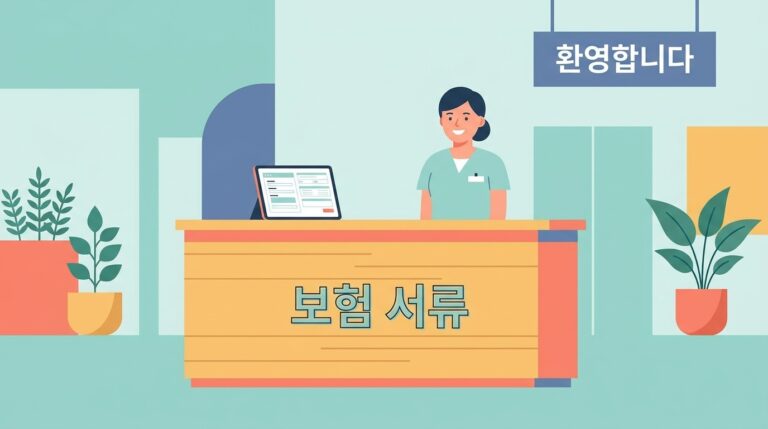
Picture this: You are standing at the bustling administration counter of a university hospital in Sinchon, Seoul. The sterile scent of antiseptic blends with the hum of automated ticket dispensers. You just finished an ultrasound scan that you worried would wipe out your entire monthly entertainment budget. The clerk looks up from her dual monitors, taps her keyboard, and asks: “실비 청구하실 서류 필요하세요? 이번 항목은 급여 적용되셨어요.” You freeze. Is this an unexpected financial disaster, or did you just benefit from Korea’s aggressive benefit expansion (보장성 강화) policies?
Navigating healthcare in a second language is universally daunting. But in Korea, where the National Health Insurance Service (NHIS) covers over 97% of the population alongside an intricate system of Geub-yeo (covered) and Bi-geub-yeo (non-covered) treatments, knowing the right medical vocabulary is the difference between paying 15,000 KRW or 250,000 KRW. Based on hundreds of real coaching sessions with advanced expats, professionals, and graduate students, this guide unpacks the linguistic and cultural mechanics of Korea’s health insurance ecosystem at a sophisticated C1 level. By the end of this masterclass, you won’t just survive clinic visits—you’ll advocate for your health and wallet like a seasoned local.
Phase 2: Top 3 Core Expressions In-Depth Breakdown
1. 건강보험 적용되나요? (Geongangboheom jeok-yongdoenayo?)
- Pronunciation: [Geon-gang-bo-heom jeok-yong-dwe-na-yo?] (Think of ‘Geon’ like ‘gun’, ‘gang’ like ‘gahng’, and ‘dwe’ rhyming with ‘sway’.)
- Meaning: Literal: “Is health insurance applied?” | Nuance: “Is this specific procedure/prescription covered under the National Health Insurance scheme?”
- K-Culture Moment: In medical dramas like Hospital Playlist (슬기로운 의사생활), patients’ families quietly ask social workers this exact question outside consultation rooms when weighing surgical options.
- Editor’s Insight: While beginners say “보험 돼요?” (Is it insured?), C1 speakers use the institutional verb 적용되다 (to be applied/eligible). It signals that you understand treatment categorizations.
- Situation Spectrum: Casual: ⚠️ | Semi-formal: ✅ | Formal: ✅
- 🤔 Think About It: In many Western systems, insurance coverage depends on private company networks. In Korea, asking if something is 적용되다 references a unified, state-mandated fee schedule. How does this reflect Korea’s collectivist approach to public health risk?
2. 비급여 항목이라 본인 부담금이 큽니다. (Bigeub-yeo hangmok-ira bon-in budamgeumi keumnida.)
- Pronunciation: [Bee-geub-yeo hang-mok-i-ra bon-in boo-dam-geum-ee keum-nee-da.] (Pronounce ‘Bi’ sharp like ‘bee’, and ‘geub’ like a short ‘gup’.)
- Meaning: Literal: “Because it is a non-benefit item, the personal burden amount is large.” | Nuance: “This treatment isn’t covered by NHIS, so you’ll have to pay for it entirely out-of-pocket.”
- K-Culture Moment: Seen in consumer advocacy programs like PD Note or clinic consultations when a doctor recommends advanced MRI techniques, manual physical therapy (도수치료), or new non-reimbursable medications.
- Editor’s Insight: Notice the institutional compound 본인 부담금 (out-of-pocket copayment). The opposite is 공단 부담금 (amount covered by the NHIS Corporation). Recognizing these terms on your itemized receipt lets you immediately verify your bill.
- Situation Spectrum: Casual: 🚫 | Semi-formal: ✅ | Formal: ✅
- 🤔 Think About It: Why does Korean medical terminology clearly dissect responsibility using terms like 본인 부담 (self-burden)? It highlights the explicit fiscal partnership between citizen and state.
3. 보장 범위가 확대되어 환급받을 수 있습니다. (Bojang beom-wiga hwakdaedoeeo hwangeupbadeul su itsseumnida.)
- Pronunciation: [Bo-jang beom-wee-ga hwak-dae-dwe-eo hwan-geup-ba-deul soo eet-seum-nee-da.] (Rhyme ‘Bojang’ with ‘glow-song’, ‘hwak’ sounds like ‘hwahk’ with an assertive stop.)
- Meaning: Literal: “Coverage scope has been expanded, so you can receive a refund.” | Nuance: “Thanks to recent healthcare benefit expansion policies, this condition is now covered, making you eligible for reimbursement.”
- K-Culture Moment: News anchors on KBS 9 O’Clock News reporting on government welfare reforms, such as expanded coverage for MRI brain scans, dental implants for seniors, or fertility treatments.
- Editor’s Insight: 환급 (refund/reimbursement) and 보장성 강화 (benefit enhancement) are high-frequency policy phrases. Use this when following up on overpaid medical bills or submitting claims to the Health Insurance Review & Assessment Service (HIRA / 심평원).
- Situation Spectrum: Casual: 🚫 | Semi-formal: ✅ | Formal: ✅
- 🤔 Think About It: Healthcare policies frequently shift between administrations in Korea. Staying informed about 보장성 allows residents to actively exercise their civic health rights.
Phase 3: Textbook Korean vs. Real Native Korean
Situation 1: Inquiring about treatment cost coverage at the reception desk
- 📖 Textbook Korean: 이 치료는 보험으로 계산할 수 있습니까? (I chiryoneun boheomeuro gyesanhal su itsseumnikka? – Can I calculate this treatment with insurance?)
- 🗣️ Real Native Korean: 이 시술은 급여 항목에 해당하나요, 아니면 비급여인가요? (I sisureun geub-yeo hangmoge haedanghanayo, animyeon bigeub-yeo-ingayo? – Does this procedure fall under covered benefits, or is it non-covered?)
- 💡 Why the difference? Textbook phrases treat insurance like a generic payment method (like cash or card). Real C1 Korean differentiates between institutional statutory classifications (급여 vs. 비급여).
Situation 2: Requesting documentation for private supplemental insurance claims
- 📖 Textbook Korean: 보험 회사에 줄 영수증을 주세요. (Boheom hoesae jul yeongsujeungeul juseyo. – Give me a receipt to give to the insurance company.)
- 🗣️ Real Native Korean: 실손보험 청구용 진료비 세부내역서랑 수납영수증 한 장씩 떼어주실 수 있나요? (Silsonboheom cheongguyong jinryobi sebunaeyeokseorang sunab-yeongsujeung han jangssik tteeojusil su 있nayo? – Could you issue an itemized medical bill and payment receipt for my private indemnity insurance claim?)
- 💡 Why the difference? Generic receipts (영수증) are rejected by private insurers. Natives specifically ask for an itemized statement (진료비 세부내역서) using the practical verb 떼다/떼어주다 (to issue/pull a certificate).
Phase 4: K-Culture Deep Dive & Non-Verbal Manners
4-1. 눈치 (Nunchi) & Non-Verbal Manners at Korean Medical Desks
- The Two-Handed ID Protocol: When handing over your Alien Registration Card (외국인등록증) or scanning your digital health ID at reception, always use two hands or support your right wrist with your left hand. Korean medical administration is fast, and this subtle respect keeps interactions smooth and pleasant.
- The Clarification Tone (조심스러운 톤): Asking whether a doctor-recommended test is 비급여 (non-covered) can feel like questioning their clinical judgment if done abruptly. Soften your inquiry with an introductory buffer: “선생님, 혹시 이 검사가 급여 적용이 되는 항목인지 여쭤봐도 될까요?” (Doctor, if I may, could I ask whether this test qualifies for standard coverage?).
4-2. Cultural Code Analysis: The Dual Healthcare Landscape
In Korean society, the concept of 의료 보장 (medical security) represents national pride alongside an interesting paradox. While the state NHIS guarantees low costs for essential treatments, Koreans are among the world’s highest subscribers to private supplemental health insurance, colloquially termed 실비 (Sil-bi) or 실손보험.
In medical K-dramas like Dr. Romantic (낭만닥터 김사부), you frequently witness ethical tensions between providing essential public medical care (필수의료) and hospital fiscal sustainability. Understanding this duality explains why Korean clinic administrative desks are extraordinarily well-equipped to issue instant itemized documentation: the entire populace routinely juggles state public coverage and private claim reimbursements.
Phase 5: Real-Life Roleplay Scenario
Setting: The administrative billing counter of a prominent ENT clinic (이비인후과) in Gangnam. Coordinator Kim stands behind the polished marble desk, reviewing digital charts.
- Coordinator Kim: 수납 도와드리겠습니다. 오늘 비염 수술 전 사전 검사 진행하셨네요. (Sunap dowadeurigetsseumnida. Oneul biyeom susul jeon sajeon geomsa jinhaenghasyeonneyo.)
🎭 Scanning the electronic health record while looking up with a welcoming nod.
“I’ll help you with the billing. You completed your pre-operative rhinitis exam today.” -
Learner (You): 네, 오늘 검사 비용 중에서 급여와 비급여 항목이 어떻게 나뉘었는지 확인할 수 있을까요? (Ne, oneul geomsa biyong jung-eseo geub-yeowa bigeub-yeo hangmogi eotteoke nanwieotneunji hwag-inhal su itsseulkkayo?)
🎭 Leaning forward slightly, speaking with polite clarity.
“Yes, could I verify how today’s examination costs are split between covered and non-covered items?” -
Coordinator Kim: 네, 후두 내시경 검사는 건강보험 적용되셨고요, 알레르기 정밀 면역 검사는 비급여 항목으로 전액 본인 부담 처리되셨습니다. (Ne, hudu naesigyeong geomsaneun geongangboheom jeok-yongdoesyeotgoyo, allereugi jeongmil myeon-yeok geomsaneun bigeub-yeo hangmog-euro jeonaek bon-in budam cheoridoesyeotsseumnida.)
🎭 Pointing with an open palm at the line items on the digital customer display.
“Yes, the laryngoscopy was covered by health insurance, whereas the advanced allergy immunotherapy profile is non-covered and charged entirely out-of-pocket.” -
Learner (You): 아, 그렇군요. 보장성 확대 정책으로 일부 알레르기 검사도 급여화되었다고 들었는데, 이 항목은 제외인가요? (A, geureokunyo. Bojangseong hwakdae jeongchaegeuro ilbu allereugi geomsado geub-yeohwadoeeotdago deureotneunde, i hangmogeun jewe-ingayo?)
🎭 Asking with genuine intellectual curiosity rather than confrontation.
“Ah, I see. I heard that under recent benefit expansion policies certain allergy tests were brought into coverage—is this particular item excluded?” -
Coordinator Kim: 맞습니다! 기본 MAST 검사는 급여 전환되었지만, 오늘 받으신 다특이항원 정밀 검사는 아직 선별급여나 비급여 단계에 해당하십니다. (Matsseumnida! Gibon MAST geomsaneun geub-yeo jeonhwandoeeotjiman, oneul badeusin dateug-ihang-won jeongmil geomsaneun ajik seonbyeolgeub-yeona bigeub-yeo dang-gye-e haedanghasimnida.)
🎭 Nodding appreciatively at your nuanced policy knowledge.
“Exactly! Standard MAST testing has transitioned to covered status, but the specialized multi-antigen test you received today remains classified as elective or non-covered.” -
Learner (You): 이해했습니다. 그럼 실비 보험 청구할 수 있게 진료비 세부내역서 발급 부탁드립니다. (Ihaehaetsseumnida. Geureom silbi boheom cheongguhal su itge jinryobi sebunaeyeokseo balgeup butakdeurimnida.)
🎭 Presenting your payment card with both hands.
“Understood. In that case, please issue an itemized medical statement so I can file a claim with my private insurance.” -
Coordinator Kim: 네, 원외처방전과 함께 세부내역서와 영수증 바로 출력해 드리겠습니다. (Ne, won-oe-cheobangjeon-gwa hamkke sebunaeyeokseowa yeongsujeung baro chullyeokhae deurigetsseumnida.)
🎭 Handing over the printed documents in a neat clinic folder.
“Certainly, I will print your itemized bill and receipt right away alongside your outpatient prescription.” -
Learner (You): 꼼꼼하게 설명해 주셔서 감사합니다! (Kkomkkomhage seolmyeonghae jusyeoseo gamsahamnida!)
🎭 Receiving documents with a courteous slight bow.
“Thank you for explaining everything so thoroughly!”
🔀 Interactive Branching Choice: What would you ask if the total bill exceeds your expectations?
- Option A: “왜 이렇게 비싸요? 돈 없으니까 깎아주세요!” (Why is it so expensive? I have no money, give me a discount!)
- ❌ Bad: Unacceptable in Korean medical culture; public healthcare pricing is non-negotiable by law.
- Option B: “이 항목 중에서 비급여 처방을 필수 급여 항목으로 대체할 수 있는 옵션이 있을까요?” (Among these items, is there an option to replace non-covered prescriptions with essential covered alternatives?)
- 🌟 Best (C1 Eloquence): Highly constructive, professional, and asks for clinically valid substitute treatments.
- Option C: “외국인은 보험 할인 안 해주는 건가요?” (Do you not give insurance discounts to foreigners?)
- ⚠️ Risk: Shows misunderstanding; NHIS treats foreign contributors identical to Korean citizens by statutory mandate.
Phase 6: 10-Second Emotional Shadowing Drill
Practice these high-impact lines using exact phrasing, pauses (/), and emotional registers:
[📋 Calm & Assertive / 차분하고 명확하게]
“혹시 / 이번 진료 항목이 / 공단 급여 대상인지 / 확인 부탁드립니다.”
(Hoksi / ibeon jinryo hangmogi / gongdan geub-yeo daesang-inji / hwag-in butakdeurimnida.)
Could you please check / if this treatment item / is eligible for NHIS coverage?-
[🤝 Professional & Inquiring / 공손하고 세련되게]
“비급여 검사는 제외하고 / 급여 적용되는 필수 검사 위주로 / 먼저 진행할 수 있을까요?”
(Bigeub-yeo geomsaneun jewe-hago / geub-yeo jeok-yongdoeneun pilsu geomsa wiju-ro / meonjeo jinhaenghal su itsseulkkayo?)
Excluding non-covered tests / could we proceed first / primarily with essential covered examinations? -
[📑 Precise & Direct / 똑부러지고 깔끔하게]
“보험 청구용 / 진료비 계산서·영수증이랑 / 세부내역서 한 부씩 / 출력해 주세요.”
(Boheom cheongguyong / jinryobi gyesanseo-yeongsujeung-irang / sebunaeyeokseo han bussik / chullyeokhae juseyo.)
Please print / one copy each of the itemized medical statement / and payment receipt / for insurance claims.
Phase 7: K-Culture Mini Dictionary
-
급여 / 비급여 (Geub-yeo / Bi-geub-yeo)
Translation: Covered Benefit / Non-Covered Service
Usage: The foundational division in Korean healthcare. 급여 has prices co-funded by NHIS (typically 20–50% copay), while 비급여 is set freely by individual clinics and paid 100% by the patient unless claimed via private insurance. -
본인부담상한제 (Bon-in-budam-sang-han-je)
Translation: Out-of-Pocket Maximum System
Usage: A progressive welfare safety net in Korea. If a patient’s annual out-of-pocket spending on covered treatments exceeds an income-tiered threshold (e.g., ~1M to ~8M KRW), the national government reimburses the surplus amount in cash. -
실손의료보험 / 실비 (Sil-son-ui-ryo-bo-heom / Sil-bi)
Translation: Private Actual-Loss Indemnity Insurance
Usage: Private insurance policies held by over 75% of Korean residents that reimburse 70–90% of both covered copayments and non-covered (비급여) medical expenses. -
진료의뢰서 (Jin-ryo-ui-roe-seo)
Translation: Medical Referral Letter
Usage: To receive NHIS coverage at tertiary general hospitals (상급종합병원 like Asan, Severance, or SNUH), patients must first obtain this formal referral document from a primary local clinic (1차 의원).
Phase 8: Survival Kit for Travelers & Expats
Top 3 Immediate Survival Phrases
-
“외국인 등록번호로 건강보험 조회해 주세요.”
(Oeguk-in deungnok-beonhoro geongangboheom joehoehae juseyo.)
Pro Tip: You don’t need a physical card! Clinics can verify active NHIS status instantly using your 13-digit Alien Registration Number. -
“원외처방전 분실했는데 재발급 가능한가요?”
(Won-oe-cheobangjeon bunsilhaetneunde jaebalgeup ganeunghan-gayo?)
Pro Tip: Hospital prescriptions must be taken to external retail pharmacies (약국). If lost, request a reprint at the clinic reception before the validity window expires. -
“진료비 상세내역서에 질병분류기호(KCD) 들어가 있나요?”
(Jinryobi sangsenaeyeokseoe jilbyeong-bulryugiho-ga deureoga itnayo?)
Pro Tip: Insurance claim reviewers require the official Korean Standard Classification of Diseases (KCD / 질병코드) to approve reimbursement.
Editor’s Travel & Expat Note
If you reside in Korea for more than six months on eligible D, E, or F visas, enrollment in the NHIS is automatic and mandatory. To monitor your premium payments, view screening eligibility, or check reimbursements, bookmark the official National Health Insurance Service English portal (NHIS) or download the “The 건강보험” mobile app. Always make sure your visa address matches your immigration record, as postal billing notices are sent strictly to your registered residence.
Phase 9: “한 발 더 깊이” (One Step Deeper: Thought Reflection)
Korea’s universal healthcare system is an institutional manifestation of traditional communal mutual aid known as 품앗이 (Pum-asi)—the historical practice of sharing intensive agricultural labor across a village. Rather than viewing insurance as an individualized financial product, Korean society treats public health risk as a shared civic covenant. While this structure maintains remarkably low copays and rapid access to specialist physicians, ongoing demographic shifts and rapid coverage expansion (보장성 강화) continue to spark vibrant national dialogues on public healthcare sustainability and resource allocation.
💬 Your Turn: How does your home country’s perspective on medical coverage compare with Korea’s unified national standard? Have you ever had to decipher medical bills in another language? Share your thoughts and stories in the comments below!
Phase 10: FAQ & Common Misconceptions
Q: Can short-term tourists on a B-2 or K-ETA visa receive NHIS coverage in Korea?
A: No. The National Health Insurance system is reserved for Korean citizens and registered foreign residents living in Korea for at least six months (or specific qualifying visa holders). Short-term tourists pay 100% out-of-pocket or rely on international travel medical insurance.
Q: Why did my friend pay only 8,000 KRW for a clinic visit, but mine cost 60,000 KRW for a similar complaint?
A: The cost disparity almost certainly stems from whether your visit included 비급여 (non-covered) treatments—such as specialized manual therapy, specific injectable vitamins, or brand-name foreign drugs not indexed on the NHIS formulary—versus purely covered standard diagnostics.
Q: Can I visit a major university hospital directly if I get sick in Seoul?
A: You can, but without a formal 진료의뢰서 (Referral Slip) from a neighborhood local clinic (1차 의료기관), you will not receive National Health Insurance coverage for the consultation, resulting in full out-of-pocket charges and hospital penalty rates.
🚨 Common Mistakes Alert (외국인 학습자 흔한 실수 TOP 3)
- Mistake: Discarding the itemized receipt (진료비 상세내역서) after paying.
➡️ Correct Action: Always ask for it on the spot; obtaining duplicate digital copies later may require an in-person clinic visit and administrative reissue fees. - Mistake: Assuming all prescribed medicines at the pharmacy (약국) are identically priced.
➡️ Correct Action: Understand that the exact same molecule can have different copay rates depending on whether it’s prescribed as a reimbursable essential drug or an elective OTC counterpart. - Mistake: Ignoring health checkup notices (국가건강검진).
➡️ Correct Action: NHIS provides free biennial general health checkups for enrolled workers and residents. Skipping scheduled screenings can occasionally lower insurance coverage percentages for certain occupational health claims.
Phase 11: Action Mission & Engagement
- 🥉 Bronze Mission (Self Practice): Read the Phase 6 Shadowing Drill out loud three times. Focus on differentiating the soft vowels in 급여 (Geub-yeo) vs. 비급여 (Bi-geub-yeo).
- 🥈 Silver Mission (Social Connection): Look at your latest Korean medical or dental receipt. Locate the two distinct columns: 급여 (본인부담 / 공단부담) and 비급여, and write out the ratio in your language notebook.
- 🥇 Gold Mission (Real-World Execution): Next time you visit a Korean pharmacy (약국) or clinic, politely inquire: “이 처방약 중에서 비급여 항목이 포함되어 있나요?” (Does this prescription contain any non-covered items?).
- 🎮 K-Culture Mission: Watch an episode of a Korean medical drama (e.g., Romantic Doctor Teacher Kim or Hospital Playlist). Listen for characters mentioning 건강보험, 특진비, or 수납 at the front desk!
Phase 12: Interactive Quiz Challenge
1. Situational Judgment Quiz
You visit an orthopedic clinic for an ankle sprain. The doctor recommends an ultrasound and shockwave therapy (체외충격파). You want to ensure you don’t face unexpected high costs. What is the most sophisticated C1 question to ask the coordinator?
* (A) 돈이 얼마나 나오는지 지금 당장 깎아주세요.
* (B) 해당 치료 항목들이 급여 대상인지, 혹은 비급여로 본인부담률이 높은지 확인 가능할까요?
* (C) 외국인 전용 보험 카드로 결제해 주십시오.
👉 Click to view Answer & Explanation
Correct Answer: (B)
Explanation: Option B accurately uses professional C1 medical terminology (급여 대상, 비급여, 본인부담률) to assess insurance eligibility politely and clearly without sounding combative.
2. Fill-in-the-Blank Quiz
Complete the sentence with the appropriate institutional term:
“정부의 건강보험 _________ 정책 덕분에 과거에는 비급여였던 MRI 검사가 급여 항목으로 전환되었습니다.”
(Thanks to the government’s healthcare [benefit expansion] policy, MRI scans that were previously non-covered have transitioned into covered benefits.)
👉 Click to view Answer & Explanation
Correct Answer: 보장성 강화 (Bojangseong ganghwa – Benefit enhancement/expansion) or 보장성 확대 (Bojangseong hwakdae).
3. True or False Korean Culture Quiz
Statement: In Korea, if your total out-of-pocket medical expenses for standard covered treatments exceed a certain limit based on your personal income bracket within one calendar year, the NHIS refunds the excess balance via the 본인부담상한제.
👉 Click to view Answer & Explanation
Correct Answer: TRUE (참)
Explanation: Yes! The Out-of-Pocket Maximum System (본인부담상한제) automatically calculates and refunds qualifying excess copayments to alleviate catastrophic medical burdens on households.







