

안녕하세요! This is your Daily Hangul editor and local cultural navigator.
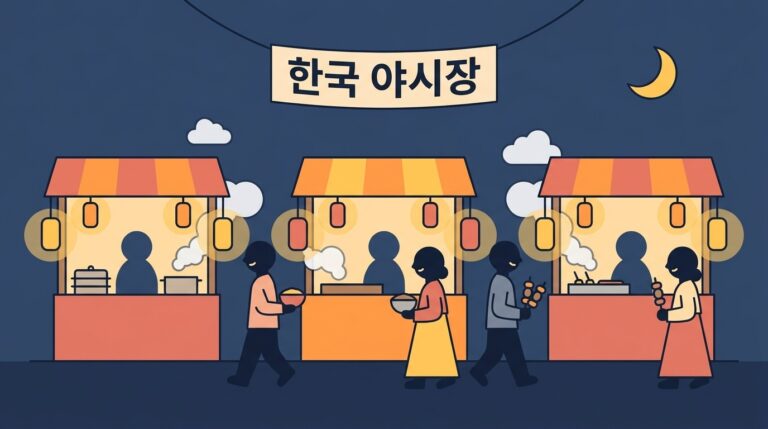
Imagine stepping into Seoul’s famous Gwangjang Market at 7 PM on a Friday. The rich aroma of sizzling mung bean pancakes (bindaetteok) fills the air, steam rises from massive pots of spicy rice cakes (tteokbokki), and the lively chatter of vendors and happy foodies echoes through the corridors. You find yourself smiling, taking in the vibrant energy, and you want to turn to your Korean friend to say, “Wow, it’s so lively and bustling here!”
Many beginner learners freeze up and search their memory for formal dictionary words like honjaphamnida (혼잡합니다 – congested) or simply stay silent. Don’t worry! Talking about a lively, crowded atmosphere in Korean is one of the easiest ways to break the ice and share genuine emotions with locals. Based on real classroom feedback and street interviews, here is your essential A2 guide to mastering market vibes with confidence.
Phase 2: Core Expressions Deep Dive
1. 사람이 진짜 많아요! (Saram-i jinjja manayo!)
- Pronunciation: [Sah-rahm-ee jeen-jjah mahn-ah-yo] (Think: “Saram” sounds like ‘salad’ starting with S-R, and “jinjja” sounds like a punchy ‘jean-jah’)
- Meaning: Literal: “People are really many!” | Natural: “There are so many people here!”
- K-Culture Moment: Seen in travel reality shows like Battle Trip or Sixth Sense whenever the cast enters a popular night market.
- Editor’s Insight: Jinjja (진짜) adds warmth and relatable emphasis. It turns a plain observation into a shared feeling.
- Situation Spectrum: Casual: ✅ | Semi-formal: ✅ | Formal: ⚠️
- 🤔 Think About It: In English, we focus on the space (“It is crowded”), whereas Korean often counts the presence of human warmth (“People are many”). How does this reflect the community-first mindset?
2. 완전 북적북적해요! (Wanjeon bukjeok-bukjeok-haeyo!)
- Pronunciation: [Wahn-jeon book-jeok-book-jeok-hae-yo] (Rhythm: “book-jeok” feels like the gentle bouncing sound of footsteps in a crowd)
- Meaning: Literal: “It is completely bustling-bustling!” | Natural: “It’s totally buzzing and bustling!”
- K-Culture Moment: Used by food vloggers on YouTube when reviewing famous street food alleys in Busan or Mangwon Market.
- Editor’s Insight: Bukjeok-bukjeok (북적북적) is an onomatopoeia/mimetic word that captures positive, dynamic crowd energy without negative stress.
- Situation Spectrum: Casual: ✅ | Semi-formal: ✅ | Formal: 🚫
- 🤔 Think About It: Why do you think Korean uses doubled sounds like bukjeok-bukjeok or tteokbokki to describe lively atmospheres?
3. 활기가 넘쳐요! (Hwalgiga neomchyeoyo!)
- Pronunciation: [Hwahl-gee-gah neom-chyeo-yo] (Sounds like ‘Hwal’ + ‘energy’ with ‘neom-chyeo’ sliding like water overflowing)
- Meaning: Literal: “Liveliness is overflowing!” | Natural: “This place is bursting with energy!”
- K-Culture Moment: The host in a morning documentary praising early morning market vendors in Noryangjin Fish Market.
- Editor’s Insight: A polished A2 phrase that vendors and older locals will love. It shows you appreciate the cultural vitality of the market.
- Situation Spectrum: Casual: ⚠️ | Semi-formal: ✅ | Formal: ✅
- 🤔 Think About It: Comparing energy to liquid that “overflows” (넘치다) creates an active, positive image. What metaphor does your language use?
Phase 3: Textbook Korean vs. Real Korean
Situation 1: Describing a Packed Food Stall
- 📖 Textbook Korean: 시장이 매우 혼잡합니다. (Sijang-i maeu honjaphamnida. – The market is very congested.)
- 🗣️ Real Korean: 와, 여기 사람 진짜 많네요! (Wa, yeogi saram jinjja man-neyo! – Wow, there are so many people here!)
- 💡 Why it’s different: Honjap sounds like a traffic broadcast report. Real speakers express spontaneous excitement using -neyo (네요).
Situation 2: Enjoying a Lively Atmosphere
- 📖 Textbook Korean: 번화한 분위기입니다. (Beonhwahan bunwig-i-imnida. – It is a flourishing atmosphere.)
- 🗣️ Real Korean: 분위기 완전 북적이고 좋아요! (Bunwigi wanjeon bukjeog-igo joayo! – The vibe is super bustling and awesome!)
- 💡 Why it’s different: Daily conversations prefer energetic descriptors like wanjeon (완전 – totally) combined with warm positive reactions (joayo).
Phase 4: K-Culture Deep Dive & Non-Verbal Manners
4-1. Nunchi & Physical Body Language in Markets
When squeezing through narrow market aisles, lower your shoulders slightly and gently say “잠시만요!” (Jamsimanyo! – Just a moment!). If sharing a tight bench at a street stall, keep your elbows close to your torso. Making brief warm eye contact with the Imo (market auntie) while saying “사람 진짜 많네요!” instantly earns you extra pickled radishes or warm soup refills.
4-2. Cultural Code: The Warmth of Market Jeong (정)
Unlike quiet convenience stores, traditional Korean markets (전통시장) thrive on vocal intimacy. Complimenting the crowd’s energy isn’t complaining about personal space; it’s celebrating the market’s prosperity and vitality alongside the vendors.
Phase 5: Real-World Roleplay Scenario
Setting: Gwangjang Market, standing near a sizzling Hotteok stall with your Korean buddy, Junho.
- Junho: 민우 씨, 오늘 시장 분위기 어때요? (Minwoo-ssi, oneul sijang bunwigi eottaeyo?) 🎭 Looking around with wide eyes at the long queue
- You: 와, 여기 사람 진짜 많네요! (Wa, yeogi saram jinjja man-neyo!) 🎭 Smiling, pointing gently at the queue
- Junho: 맞아요. 주말이라 완전 북적북적해요. (Majayo. Jumar-ira wanjeon bukjeok-bukjeok-haeyo.) 🎭 Nodding and laughing
- You: 활기가 넘쳐서 기분 좋아요! (Hwalgiga neomchyeoseo gibun joayo!) 🎭 Taking a deep breath of the delicious food aromas
- Vendor Halmeoni: 학생들, 핫떡 금방 나와! 조금만 기다려! (Haksaengdeul, hotteok geumbang nawa! Jogeumman gidaryeo!) 🎭 Flipping hotteok skillfully with spatulas
- You: 네, 할머니! 천천히 주세요. (Ne, halmeoni! Cheoncheonhi juseyo.) 🎭 Bowing slightly with a bright smile
- Junho: 저쪽 빈대떡 골목도 가볼래요? (Jeojjok bindaetteok golmokdo gabollaeyo?) 🎭 Pointing toward the inner alleyway
- You: 좋아요! 거기도 사람 많겠죠? (Joayo! Geogido saram manketjyo?) 🎭 Excitedly stepping forward
🔀 Interactive Choice Point
What would you say next to Junho as you head to the crowded alley?
- Option A: “복잡해서 짜증나요.” (Bokjaphaeseo jjajeungnayo. – It’s crowded so I’m annoyed.)
- Feedback: 🚫 Bad: Sounds negative and spoils the fun outing mood.
- Option B: “북적거리는 분위기 너무 신나요!” (Bukjeokgeorineun bunwigi neomu sinnayo! – This bustling vibe is so exciting!)
- Feedback: 🌟 Best: Shows cultural enthusiasm and keeps the conversational energy high!
- Option C: “혼잡을 회피합시다.” (Honjabeul hoepihapsida. – Let us avoid congestion.)
- Feedback: ⚠️ Risk: Grammatically awkward textbook phrasing that sounds robotic.
Phase 6: 10-Second Emotion Shadowing Drill
Read aloud along with the intonation pauses marked by /:
- [😊 Amazed and happy]
- “와! / 사람 진짜 / 많네요!” (Wa! / Saram jinjja / man-neyo!)
- [🔥 Energetic and bouncy]
- “시장 분위기가 / 완전 / 북적북적해요!” (Sijang bunwigiga / wanjeon / bukjeok-bukjeok-haeyo!)
- [✨ Polite and impressed]
- “주말이라서 / 활기가 / 넘쳐요!” (Jumar-iraseo / hwalgiga / neomchyeoyo!)
Phase 7: K-Culture Mini Dictionary
- 북적북적 (Bukjeok-bukjeok) | Bustling / Teeming | Used when describing markets, concert halls, or festival grounds packed with happy people.
- 시장 인심 (Sijang Insim) | Market Generosity | The warm extra portions (Service) or friendly chatter unique to traditional market vendors.
- 핫플 (Hat-peul) | Hot Place (Trendy spot) | Slang for popular places where crowds gather for famous food or photo spots.
- 사람 구경 (Saram Gugyeong) | People Watching | A popular Korean pastime of casually observing the crowd while enjoying street snacks.
Phase 8: Survival Kit for Travelers
Survival TOP 3 Phrases
- 여기 자리 있어요? (Yeogi jari isseoyo?) – “Is this seat taken / available?”
- Pro Tip: Useful when squeezing into market benches.
- 뭐가 제일 잘 나가요? (Mwoga jeil jal nagayo?) – “What is the most popular item here?”
- Pro Tip: Ask this to get the freshest, best-selling item instantly.
- 사람 구경하기 좋아요! (Saram gugyeonghagi joayo!) – “It’s great for people watching!”
Editor’s Travel Note
- Navigation Tip: Find hidden food alleyways by exploring verified locations on the Naver Map navigation app guide.
- Payment Manners: While major markets accept cards, carrying 1,000 KRW and 5,000 KRW cash bills or using quick transfer keeps small stall transactions speedy.
Phase 9: A Step Deeper (한 발 더 깊이)
In Western individualist contexts, a dense crowd is frequently viewed as an infringement on personal boundaries. However, in Korean community culture, a crowded market (북적이는 시장) symbolizes health, shared vitality (흥, Heung), and social warmth. When you say “북적북적해요”, you are celebrating the community’s life force.
💬 Your Turn: What is the vibe in your hometown’s local market? Is it quiet and organized, or loud and bustling? Share your thoughts below in Korean!
Phase 10: FAQ & Common Mistakes
Q: Can I use “복잡해요” (Bokjaphaeyo) instead of “북적북적해요”?
A: Bokjaphaeyo (복잡해요) means complicated or chaotic, which carries a mildly negative nuance (like feeling stressed by the crowd). Bukjeok-bukjeok (북적북적) highlights joyful liveliness!
Q: Should I use formal endings like “-습니다” in markets?
A: Market interactions are warm and friendly. Polite informal -yo (해요 style) like “사람 많네요!” sounds far more natural and endearing than stiff military-style -seumnida.
Q: What if a vendor talks fast and loud?
A: Don’t panic! Market vendors speak loudly over the noise so customers can hear. Just reply cheerfully with “네, 맛있게 해주세요!” (Yes, please make it tasty!).
🚨 Common Mistakes Warning Board
- ❌ Saying “시장이 복잡해서 싫어요.” (I hate it because it’s congested.) ➡️ ✔️ Correct Action: Say “사람이 진짜 많네요!” (There are really so many people!) to join the mood.
- ❌ Forgetting the subject marker: “사람 많아요” is natural in spoken Korean, but avoid robotic literal translations like “그것은 군중입니다” (It is a crowd).
- ❌ Shouting across stalls ➡️ ✔️ Correct Action: Step closer to the vendor and make brief eye contact before speaking.
Phase 11: Action Mission
- 🥉 Bronze Mission: Practice saying “사람 진짜 많네요!” three times in front of your mirror with a bright smile.
- 🥈 Silver Mission: Post a picture of a crowded place you visited on Instagram and caption it: “완전 북적북적해요! #DailyHangul”.
- 🥇 Gold Mission: Visit a local Korean town, Asian market, or night market, and tell the clerk or friend “여기 활기가 넘쳐요!” in real life!
- 🎮 K-Culture Mission: Watch an episode of the variety show Amazing Saturday (놀라운 토요일) and spot how often cast members comment on traditional market food stalls!
Phase 12: Interactive Quiz Challenge
- Which phrase best expresses positive bustling market energy?
- A) 혼잡해서 어지러워요.
- B) 완전 북적북적해요!
- C) 사람이 적습니다.
- Fill in the blank:
- “주말이라 시장에 활기가 ______!” (The market is overflowing with energy because it’s the weekend!)
- Hint: neom-chyeo-yo
- True or False: Bokjaphaeyo (복잡해요) is the friendliest compliment you can give to a street food vendor.
👉 Click to Reveal Quiz Answers & Explanations
- Answer: B) 완전 북적북적해요! (It accurately captures the dynamic, enjoyable bustling vibe).
- Answer: 넘쳐요 (neomchyeoyo) (활기가 넘쳐요 means energy is overflowing).
- Answer: False. Bokjaphaeyo implies chaotic/annoying crowding. Use 활기가 넘쳐요 or 사람이 정말 많네요 instead!







