

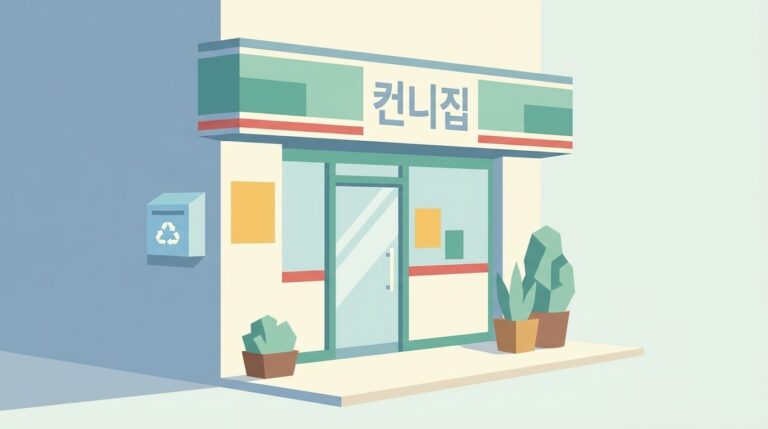
Recycling in Korea: How to Safely Dispose of Used Batteries Like a Local
Phase 1: Empathy (Story Immersion Opening)
안녕하세요! Welcome back to Daily Hangul! I’m your Korean language editor and friendly local navigator.
Picture this: You are settling into your cozy Seoul studio apartment or Airbnb. You’ve just finished binge-watching your favorite K-Drama on your laptop, and suddenly your TV remote stops working. You pop open the back, grab two dead AA batteries, and head toward the trash can. But wait! You suddenly freeze. You remember hearing that Korea has one of the strictest recycling systems in the world (bunri-sugeo, 분리수거), where tossing hazardous items into the general trash (jongnyangje bongtu, 종량제 봉투) can actually get you fined!
You look at the regular trash bag, then at your plastic bin, and panic sets in: “Where on earth do dead batteries go? Can I just throw them in the metal bin? Do I need to take them to a subway station?”
Don’t worry, you are not alone. In fact, finding the dedicated battery collection box (pye-geonjeonji sugeoham, 폐건전지 수거함) is one of the top hurdles foreign residents and travelers face in Korea. In this guide tailored for A2 learners, we’ll break down the exact phrases, cultural etiquette, and handy locations you need to recycle batteries effortlessly. Let’s make you look like a savvy local!
Phase 2: Core Expressions Deep Dive
Here are 3 essential expressions you will need when dealing with used batteries in Korea.
1. 건전지 어디에 버려요? (Geonjeonji eodie beoryeoyo?)
- Pronunciation: Geon-jeon-ji eo-di-e beo-ryeo-yo? (Sounds like: Gun-juhn-jee uh-dee-eh buh-ryuh-yo?)
- Meaning: Literal: “Where do I throw away batteries?” | Natural: “Where should I dispose of used batteries?”
- K-Culture Moment: You walk into a local neighborhood community center (Jumin Center) or convenience store holding two dead batteries and ask the friendly clerk with a polite smile.
- Editor’s Insight: The verb 버리다 (beorida) means “to throw away/discard.” Adding the polite question ending ~어디에 버려요? (eodie beoryeoyo?) turns it into the most useful survival pattern for any trash item in Korea!
- Situation Spectrum: Casual: ⚠️ (Only with close friends: 건전지 어디 버려?) | Semi-formal: ✅ (건전지 어디에 버려요?) | Formal: ✅ (건전지는 어디에 버려야 하나요?)
- 🤔 Think About It: In your home country, do people separate batteries, or do they go straight into the general trash? How does language reflect a society’s civic duties?
2. 폐건전지 수거함 있어요? (Pye-geonjeonji sugeoham isseoyo?)
- Pronunciation: Pye-geon-jeon-ji su-geo-ham iss-eo-yo? (Sounds like: Pyeh-gun-juhn-jee soo-guh-hahm ees-suh-yo?)
- Meaning: Literal: “Is there a waste battery collection box?” | Natural: “Do you have a drop-off box for old batteries?”
- K-Culture Moment: You notice a row of recycling bins in your apartment complex or subway station and ask the security guard (gyeongbiamjossi) for the exact container.
- Editor’s Insight: The prefix 폐- (pye-) means “waste/discarded.” You’ll see words like 폐가전 (discarded electronics) or 폐지 (waste paper). The noun 수거함 (sugeoham) means collection box.
- Situation Spectrum: Casual: 🚫 | Semi-formal: ✅ (폐건전지 수거함 있어요?) | Formal: ✅ (폐건전지 수거함이 어디에 있습니까?)
- 🤔 Think About It: Notice how Korean combines Chinese-character roots (폐 + 건전지 + 수거함) to create clear, official terms.
3. 여기에 넣으면 돼요? (Yeogie neoeumyeon dwaeyo?)
- Pronunciation: Yeo-gi-e neo-eu-myeon dwae-yo? (Sounds like: Yuh-gee-eh nuh-oo-myuhn dway-yo?)
- Meaning: Literal: “If I put it here, is it okay?” | Natural: “Can I put it in here?”
- K-Culture Moment: You spot a small cylindrical box near the elevator labeled “건전지” and double-check with a passing neighbor before dropping yours in.
- Editor’s Insight: The grammar pattern
~(으)면 돼요?is the gold standard for asking permission or confirming rules in daily life. Memorize this pattern—it works everywhere from buses to cafes!- Situation Spectrum: Casual: ⚠️ (여기 넣으면 돼?) | Semi-formal: ✅ (여기에 넣으면 돼요?) | Formal: ✅ (여기에 넣으면 됩니까?)
- 🤔 Think About It: Koreans love confirmation to avoid breaking shared community rules. Asking before acting is considered good manners (ye-ui).
Phase 3: Textbook Korean vs. Real Korean
Let’s compare stiff classroom phrasing with everyday spoken Korean!
Situation 1: Asking where the battery box is
- 📖 Textbook Korean: 폐건전지 전용 수거함을 찾아주십시오. (Pye-geonjeonji jeonyong sugeohameul chajajusipsio. – “Please find the dedicated waste battery collection box.”)
- 🗣️ Real Korean: 건전지 수거함 어디 있어요? (Geonjeonji sugeoham eodi isseoyo? – “Where is the battery collection box?”)
- 💡 Why the difference? In daily conversations, locals drop long formal prefixes like 폐- (pye-) and stick to clear, simple words.
Situation 2: Asking if you can drop off batteries at a store
- 📖 Textbook Korean: 이곳에 폐건전지를 폐기해도 괜찮습니까? (I gose pye-geonjeonjireul pyegihaedo gwaenchansseumnikka? – “Is it permissible to discard waste batteries here?”)
- 🗣️ Real Korean: 이거 건전지 여기에 버려도 돼요? (Igeo geonjeonji yeogie beoryeodo dwaeyo? – “Can I throw these batteries away here?”)
- 💡 Why the difference? Real Korean favors casual verbs like 버리다 (beorida, to throw away) over formal Sino-Korean nouns like 폐기 (pyegi, disposal).
Phase 4: K-Culture Deep Dive & Non-Verbal Manners
4-1. 눈치 (Nunchi) & Gestures for Recycling
When handing over old batteries at a convenience store or apartment management office:
* Two-Hand Rule (두 손): Always present small items like batteries or point toward the bin using both hands or with your right hand supported at the wrist by your left hand.
* Slight Nod (목례): A gentle bow while asking confirms respect and shows you are trying your best to follow the neighborhood’s rules.
4-2. Cultural Code: The Community “Sugeoham” Map
In Korea, batteries are never thrown in regular municipal bags because they cause toxic chemical leaks and fires in incinerators. You will find battery boxes in three main places:
1. Apartment Recycling Stations (Danji-nae Bunri-sugeo-jang): Usually near the ground-floor entrance or main waste station.
2. Local Community Centers (Jumin Center / Haengjeong Bokji Center): Many districts even have reward programs where turning in 10-20 used batteries gets you a free roll of standard trash bags or fresh new batteries!
3. Subway Stations & Bus Stops: Near the customer service center or station master room.
Phase 5: Real-Life Roleplay Scenario
Setting: You visit a local convenience store (Pyeon-ui-jeom) in Mapo-gu, Seoul. You approach Min-su, the friendly part-time store clerk.
- You: 저기요, 안녕하세요! (Jeogiyo, annyeonghaseyo!) 🎭 [Politely approaching the counter with a slight nod]
- “Excuse me, hello!”
- Min-su: 네, 어서오세요! 무엇을 도와드릴까요? (Ne, eoseooseyo! Mueoseul dowadeurilkkayo?)
- “Yes, welcome! How can I help you?”
- You: 다 쓴 건전지가 있는데요, 어디에 버려요? (Da sseun geonjeonjiga inneundeyo, eodie beoryeoyo?) 🎭 [Showing two AA batteries in your palm]
- “I have some used batteries, where should I throw them away?”
- Min-su: 아, 건전지는 일반 쓰레기에 버리시면 안 돼요. (A, geonjeonjineun ilban sseuregie beorisimyeon an dwaeyo.)
- “Ah, you shouldn’t throw batteries in the regular trash.”
- You: 네, 알아요! 폐건전지 수거함이 근처에 있어요? (Ne, arayo! Pye-geonjeonji sugeohami geuncheoe isseoyo?)
- “Yes, I know! Is there a battery drop box nearby?”
- Min-su: 매장 밖 오른쪽에 파란색 작은 함이 있어요. (Maejang bak oreunjjoge paransaek jageun hami isseoyo.) 🎭 [Pointing out the glass door]
- “There is a small blue box just outside to the right of the store.”
- You: 아, 여기에 넣으면 돼요? (A, yeogie neoeumyeon dwaeyo?) 🎭 [Looking toward the direction and confirming]
- “Ah, so I can just put them in there?”
- Min-su: 네, 거기에 쏙 넣으시면 됩니다! (Ne, geogie ssok neoeusimyeon doemnida!)
- “Yes, just drop them right in there!”
🔀 Interactive Branching Moment
What do you say after Min-su explains the location?
* Choice A: 감사합니다! 좋은 하루 보내세요! (Gamsahamnida! Joeun haru bonaeseyo!)
* 👉 Feedback [Best]: Natural, polite, and leaves a warm impression on the clerk!
* Choice B: 그냥 여기 쓰레기통에 버려주세요. (Geunyang yeogi sseuregitonge beoryeojuseyo.)
* 👉 Feedback [Bad]: Asking the clerk to put hazardous waste in their indoor trash creates an awkward and illegal burden.
* Choice C: 왜 이렇게 복잡해요? (Wae ireoke bokjaphaeyo?)
* 👉 Feedback [Risk]: Complaining about recycling complexity sounds blunt and dismissive of community manners.
Phase 6: 10-Second Emotion Shadowing Drill
Practice matching the cadence and emotional melody of a native speaker! / indicates a micro-pause.
- [😊 Friendly & Inquiring]
- 저기요, / 건전지 / 어디에 버려요?
- Jeogiyo, / geonjeonji / eodie beoryeoyo?
- [🤔 Careful & Seeking Confirmation]
- 이 파란 상자에 / 그냥 넣으면 돼요?
- I paran sangja-e / geunyang neoeumyeon dwaeyo?
- [💡 Relieved & Grateful]
- 아, 찾았다! / 정말 감사합니다!
- A, chajatda! / Jeongmal gamsahamnida!
Phase 7: K-Culture Mini Dictionary
- 분리수거 (Bunri-sugeo) | Waste Separation / Recycling
- The nationwide standard of separating plastics, vinyl, cans, paper, and food waste.
- 폐건전지 (Pye-geonjeonji) | Used / Spent Battery
- The official term written on dedicated recycling receptacles across town.
- 종량제 봉투 (Jongnyangje Bongtu) | Pay-as-you-throw Trash Bag
- Government-designated trash bags required for non-recyclable general waste.
- 주민센터 (Jumin Center) | Neighborhood Community Center
- Local administrative office where residents often exchange used batteries for trash bags.
Phase 8: Traveler’s Survival Kit
Top 3 Survival Phrases
- 1. 이거 재활용 돼요? (Igeo jaehwalyong dwaeyo?)
- Pronunciation: Ee-guh jay-hwahl-yong dway-yo?
- Pro Tip: Use this for ambiguous items like mixed plastics or lightbulbs.
- 2. 수거함이 어디 있어요? (Sugeohami eodi isseoyo?)
- Pronunciation: Soo-guh-hahm-ee uh-dee ees-suh-yo?
- Pro Tip: Great for finding clothes (eoryu sugeoham) or battery boxes.
- 3. 그냥 버리면 안 되죠? (Geunyang beorimyeon an doejo?)
- Pronunciation: Geun-yang buh-ree-myuhn ahn dway-jo?
- Pro Tip: A natural way to double check: “I can’t just throw this in regular trash, right?”
Editor’s Travel Note
- Finding Bins on Maps: Type
주민센터into the Naver Map App Download Guide to find your closest community center, or check subway station exits for recycling stations. - Small Tip: If you only have one or two dead batteries, keep them in a small zip bag until you pass by a subway station or convenience store!
Phase 9: “One Step Deeper” (Reflective Essay)
In Korea, waste management is not seen simply as a personal chore; it is viewed as a fundamental social contract (Gongdongche Uisik, 공동체 의식). Taking the extra two minutes to walk down the hall to drop a battery into its designated box reflects care for sanitation workers and neighborhood safety. When you separate trash properly in Korea, you are actively participating in the community’s mutual trust.
💬 Your Turn: Have you ever encountered a unique recycling rule while traveling abroad? Share your story in the comments below!
Phase 10: FAQ & Common Mistakes
Q: Can I throw AA or AAA batteries into the regular plastic or metal bins?
A: No! Batteries contain hazardous chemicals and must strictly go into dedicated “폐건전지” boxes or specialized electronic waste bins.
Q: Where can I find battery drop boxes if I live in a villa (small private building)?
A: Check the outer entrance gate, nearest bus stop, subway station customer desk, or walk into your local Jumin Center (주민센터).
Q: Can rechargeable power banks (보조배터리) go into the battery box?
A: Yes, lithium-ion power banks should also be placed in dedicated battery/e-waste collection boxes rather than general trash.
🚨 Common Mistakes Warning Board
- Mistake: Throwing batteries inside regular white trash bags (Jongnyangje).
- Correct Action: Keep them separate and drop them into a Sugeoham.
- Mistake: Tossing lithium batteries into the fire or open bins.
- Correct Action: Tape the contact terminals with clear tape if damaged, then drop off in the official box.
- Mistake: Calling it simply “Trash” (Sseuregi).
- Correct Action: Call it Pye-geonjeonji (폐건전지) when asking staff.
Phase 11: Action Missions
- 🥉 Bronze Mission (Solo Drill): Practice asking aloud: “건전지 어디에 버려요?” 5 times in front of the mirror.
- 🥈 Silver Mission (Social Check): Snap a photo of a cool recycling bin in your neighborhood and label it with the Korean word 수거함.
- 🥇 Gold Mission (Real Life Action): Find a real Pye-geonjeonji collection box in Korea and dispose of an old battery correctly!
- 🎮 K-Culture Mission: Next time you watch a slice-of-life K-Drama (like Hospital Playlist or Reply 1988), spot how characters handle trash separation at home!
Phase 12: Interactive Quiz Challenge
Test your knowledge before you head out!
- Which phrase correctly asks where to dispose of batteries?
- A) 건전지 먹었어요? (Geonjeonji meogeosseoyo?)
- B) 건전지 어디에 버려요? (Geonjeonji eodie beoryeoyo?)
- C) 건전지 비싸요? (Geonjeonji bissayo?)
- Fill in the blank:
- 다 쓴 배터리는 폐____ 수거함에 넣으세요. (Da sseun baeteorineun pye-____ sugeohame neoeuseyo.)
- True or False: You can throw spent smartphone power banks into the general trash bag if they are small.
👉 Click here to reveal the answers and explanations!
- Answer: B (건전지 어디에 버려요? – “Where do I throw away batteries?”)
- Answer: 건전지 (Geonjeonji) (폐건전지 수거함 means used battery collection box).
- Answer: False! Power banks contain lithium cells and must always go into dedicated battery/e-waste boxes.







