

Phase 1: Empathy (Story-Immersive Opening)
안녕하세요! 매일한글 에디터입니다.
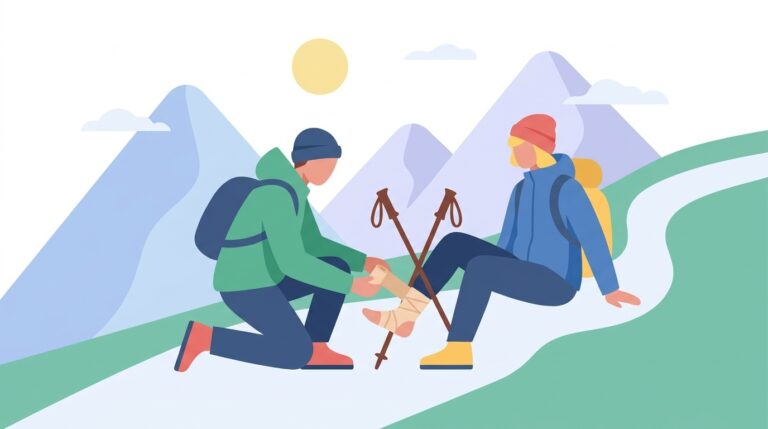
Imagine you are hiking up the majestic trails of Bukhansan in northern Seoul on a crisp autumn afternoon. The golden foliage is breathtaking, and you are taking in the panoramic skyline. Suddenly, a hiker ahead slips on a loose granite rock, landing awkwardly with an audible crunch. They clutch their ankle in agonizing pain, unable to bear weight. Surrounding hikers rush over, but amidst the panic, someone shouts for a makeshift splint and bandages. In critical moments of outdoors and urban emergencies, hesitation or miscommunication can exacerbate serious orthopedic trauma.
Whether dealing with a severe sprain (염좌) or a suspected bone fracture (골절), knowing how to deliver prompt first-aid instructions and reassure the injured person in natural, high-register Korean is a true life-saving superpower. At the C1 level, your goal is not merely to ask “Where does it hurt?” but to articulate precise anatomical instructions, coordinate emergency stabilizing maneuvers like splinting (부목 고정), and guide bystanders calmly. Based on practical feedback from advanced learners and mountain rescue protocols in Korea, this guide delivers an actionable masterclass in handling acute musculoskeletal injuries with poise and native fluency.
Phase 2: Core Expressions Deep Dive
1. 움직이지 마시고 가만히 계세요. 부목으로 고정할게요.
- Pronunciation: [Um-ji-gi-ji ma-si-go ga-man-hi gye-se-yo. Bu-mo-geu-ro go-jeong-hal-ge-yo.] (Sounds like: oom-jee-gee-jee mah-she-go gah-mahn-hee gyeh-seh-yo. boo-mo-geu-ro go-jeong-hahl-geh-yo)
- Meaning: Literal: “Do not move and stay still. I will fix it with a splint.” | Nuance: “Please remain completely still; I will immobilize the limb with a splint to prevent further injury.”
- K-Culture Moment: Frequently heard in rescue K-Dramas like Jirisan or medical thrillers like Romantic Doctor, Teacher Kim, where paramedics stabilize a fallen victim before moving them.
- Editor’s Insight: Using the honorific imperative ending
-시-combined with the reassuring future intention form-(으)ㄹ게요projects professional calm and commands authority without sounding aggressive.- Situation Spectrum: Casual 🚫 | Semi-formal ⚠️ | Formal ✅
- 🤔 Think About It: Notice how Korean first-aid commands prioritize keeping the patient motionless before explaining the procedure. How does this compare to emergency directives in your native language?
2. 골절이 의심되니 무리하게 맞추려 하지 말고 지지대부터 댈게요.
- Pronunciation: [Gol-jeo-ri ui-sim-doe-ni mu-ri-ha-ge mat-chu-ryeo ha-ji mal-go ji-ji-dae-bu-teo dael-ge-yo.] (Sounds like: gohl-juhl-ee wee-sheem-dweh-nee moo-ree-hah-geh maht-choo-ryuh hah-jee mahl-go jee-jee-dae-boo-tuh dehl-geh-yo)
- Meaning: Literal: “Since a fracture is suspected, without trying unreasonably to align it, I will place a support first.” | Nuance: “Suspecting a fracture, we shouldn’t force the bone back into place; let’s secure a rigid support alongside it first.”
- K-Culture Moment: A standard guideline quoted by Korean 119 emergency responders during mountain survival reality programs.
- Editor’s Insight: The phrase
무리하게 맞추다(to force/realign recklessly) specifically warns against amateur bone-setting, which can damage adjacent vascular and nervous pathways.- Situation Spectrum: Casual 🚫 | Semi-formal ⚠️ | Formal ✅
- 🤔 Think About It: Why is acknowledging the suspicion (
-이 의심되니) preferred in advanced medical Korean over making an absolute diagnosis before clinical X-rays?3. 혈액 순환이 통하도록 붕대를 너무 세게 조이지 않겠습니다.
- Pronunciation: [Hyeol-aek sun-hwa-ni tong-ha-do-rok bung-dae-reul neo-mu se-ge jo-i-ji an-get-seum-ni-da.] (Sounds like: hyuhl-eck soon-hwahn-ee tong-hah-doh-rok boong-deh-reul nuh-moo seh-geh joh-ee-jee ahn-get-seum-nee-dah)
- Meaning: Literal: “So that blood circulation passes, I will not tighten the bandage too strongly.” | Nuance: “I will secure the bandage firmly while ensuring distal circulation isn’t cut off.”
- K-Culture Moment: Essential hospital dialogue when orthopedic nurses or doctors verify capillary refill after applying a temporary cast or splint.
- Editor’s Insight: The connective suffix
-도록(in order to / so that) elevates the explanation to a sophisticated, goal-oriented register suitable for procedural clarity.- Situation Spectrum: Casual 🚫 | Semi-formal ⚠️ | Formal ✅
- 🤔 Think About It: How does verbalizing your medical rationale (“to preserve blood flow”) help build immediate rapport and trust during an acute crisis?
Phase 3: Textbook Korean vs. Real-world Korean
Situation A: Explaining how the injury happened
- 📖 교과서 한국어: 제 발목의 뼈가 부러진 것 같습니다. (Je bal-mok-ui ppyeo-ga bu-reo-jin geot gat-seum-ni-da. / “It seems that the bone of my ankle is broken.”)
- 🗣️ 진짜 한국어: 발을 헛디뎠는데 ‘뚝’ 하는 소리가 나면서 아예 디디질 못하겠어요. (Bal-eul heot-di-dyeot-neun-de ‘ttuk’ ha-neun so-ri-ga na-myeon-seo a-ye di-di-jil mot-ha-get-seo-yo. / “I misstepped, heard a loud snap, and now I can’t put any weight on it at all.”)
- 💡 왜 다를까?: Native speakers rarely state textbook medical conclusions directly; instead, they use vivid onomatopoeia (
뚝– snapping sound) and descriptive functional limitations (디디질 못하겠다– unable to step/tread) to describe trauma.
Situation B: Improvising materials for splinting
- 📖 교과서 한국어: 부목 도구를 찾아 결합하십시오. (Bu-mok do-gu-reul cha-ja gyeol-hap-ha-sip-si-o. / “Find splint equipment and assemble it.”)
- 🗣️ 진짜 한국어: 주변에 단단한 나뭇가지나 등산 스틱으로 덧대서 고정해 볼게요. (Ju-byeon-e dan-dan-han na-mut-ga-ji-na deung-san seu-tik-eu-ro deot-dae-seo go-jeong-hae bol-ge-yo. / “Let’s reinforce and immobilize it using a sturdy branch or trekking poles from nearby.”)
- 💡 왜 다를까?: In genuine field emergencies, native speakers use practical verbs like
덧대다(to apply as an external splint/layer) alongside everyday objects found on hiking trails.
Phase 4: K-Culture Deep-Dive & Non-Verbal Manners
4-1. 눈치 (Nunchi) & Non-Verbal Emergency Etiquette
In Korean emergency first aid, physical touch requires cautious empathy. Before touching an injured stranger, establish verbal consent immediately while maintaining steady eye contact at eye-level: “상태를 확인하기 위해 환부를 살짝 만져봐도 될까요?” (May I gently touch the injured area to check its condition?). Display non-verbal composure; panicking or shouting induces anxiety in the patient. Keep hands open and visible when approaching to signal non-threatening assistance.
4-2. Cultural Code: Hiking Culture (등산 문화) & 119 Mountain Rescue
Hiking is virtually a national pastime in South Korea. With millions traversing rocky granite peaks every weekend, Korean hiking infrastructure includes numbered emergency locator signs (국가지점번호) attached to trail posts. Korean hikers value communal solidarity (정, Jung); passing hikers will readily donate trekking poles, scarves, or cold water to assist an injured person. Knowing how to communicate with both well-meaning bystanders and dispatched 119 Mountain Rescue operatives ensures seamless cooperation.
Phase 5: Real-Life Roleplay Scenario
Setting: A rocky descent near Baegundae Peak on Bukhansan. A hiker, Min-woo (30s), has slipped and severely inverted his ankle.
Characters:
* You (C1 Responder): A composed, experienced hiker with certified first-aid knowledge.
* 민우 (Min-woo): Injured hiker trembling in severe distress.
- 민우: 으악… 발목이 완전히 꺾였어요. 너무 아파서 손도 못 대겠어요… (Euak… bal-mo-gi wan-jeon-hi kkeok-yeot-eo-yo. Neo-mu a-pa-seo son-do mot dae-get-eo-yo.)
🎭 clutching ankle, grimacing - You: 침착하세요. 우선 편안한 자세로 앉으시고, 다리를 높여 지탱해 드릴게요. (Chim-chak-ha-se-yo. U-seon pyeon-an-han ja-se-ro an-jeu-si-go, da-ri-reul nop-yeo ji-taeng-hae deu-ril-ge-yo.)
🎭 kneeling calmly beside him - 민우: 뼈가 부러진 걸까요? 일어서려고 하면 찌릿한 통증이 올라와요. (Ppyeo-ga bu-reo-jin geol-kka-yo? Il-eo-seo-ryeo-go ha-myeon jji-rit-han tong-jeung-i ol-la-wa-yo.)
🎭 breathing heavily with anxiety - You: 골절이나 심한 인대 파열 가능성이 있으니, 절대 체중을 싣지 마세요. (Gol-jeor-i-na sim-han in-dae pa-yeol ga-neung-seong-i it-seu-ni, jeol-dae che-jung-eul sit-ji ma-se-yo.)
🎭 gently gesturing to prevent him from standing - 민우: 구급대를 불렀는데 산 정상 부근이라 도착하려면 족히 한 시간은 걸린대요. (Gu-geup-dae-reul bul-leot-neun-de san jeong-sang bu-geun-i-ra do-chak-ha-ryeo-myeon jok-hi han si-gan-eun geol-lin-dae-yo.)
🎭 looking worriedly down the ridge - You: 그럼 구조대가 올 때까지 등산 스틱과 손수건으로 임시 부목을 덧대어 고정하겠습니다. (Geu-reom gu-jo-dae-ga ol ttae-kka-ji deung-san seu-tik-gwa son-su-geon-eu-ro im-si bu-mo-geul deot-dae-eo go-jeong-ha-get-seum-ni-da.)
🎭 taking out two trekking poles and triangular bandages - 민우: 네, 부탁드립니다. 너무 조이지는 않게 해 주세요. (Ne, bu-tak-deu-rim-ni-da. Neo-mu jo-i-ji-neun an-ke hae ju-se-yo.)
🎭 nodding with trust - You: 발가락 끝 감각을 수시로 확인할 테니, 저리거나 통증이 심해지면 바로 말씀하세요. (Bal-ga-rak kkeut gam-ga-geul su-si-ro hwak-in-hal te-ni, jeo-ri-geo-na tong-jeung-i sim-hae-ji-myeon ba-ro mal-sseum-ha-se-yo.)
🎭 securing the splint above and below the joint
🔀 Interactive Decision Point
How do you instruct bystanders standing nearby to optimize safety?
* Option A: “빨리 이 사람을 업고 산 아래로 내려갑시다!” (Let’s quickly carry this person down on someone’s back!)
* Option B: “주변 등산객분들, 119 위치 표지판 번호를 확인해 주시고 보온용 겉옷 좀 빌려주시겠어요?” (Fellow hikers, could you check the nearest 119 trail marker number and spare a warm jacket for thermal care?)
* Option C: “그냥 놔두면 나으니까 얼음물만 발목에 붓고 기다립시다.” (Just leave it alone and it’ll heal; let’s pour ice water on it and wait.)
Feedback:
* Option A (Risk): Moving a patient with an unstabilized fracture down steep rocks risks secondary displacement and falls.
* Option B (Best ✅): Exemplary emergency command. Utilizing national trail post codes assists rescue teams, while preventing shock and hypothermia is standard protocol.
* Option C (Bad 🚫): Direct cold-water soaking on an open or unstable injury without splinting causes tissue damage and hypothermia.
Phase 6: 10-Second Emotion Shadowing Drill
[🚨 침착하면서도 단호하게]환부 위아래 관절을 / 함께 고정해야 / 뼈가 흔들리지 않습니다. (Hwan-bu wi-a-rae gwan-jeor-eul / ham-kke go-jeong-hae-ya / ppyeo-ga heun-deul-li-ji an-seum-ni-da.)[🤝 다정하고 안심시키며]많이 놀라셨죠? / 제가 단단히 지탱하고 있으니 / 편하게 호흡하세요. (Man-i nol-la-syeot-jyo? / Je-ga dan-dan-hi ji-taeng-ha-go it-seu-ni / pyeon-ha-ge ho-heup-ha-se-yo.)[🔍 세심하게 확인하며]발가락 끝이 / 차가워지거나 / 감각이 무뎌지지는 않으신가요? (Bal-ga-rak kkeut-i / cha-ga-wo-ji-geo-na / gam-ga-gi mu-dyeo-ji-ji-neun an-eu-sin-ga-yo?)
Phase 7: K-Culture Mini Dictionary
- 부목 (Bumok) | Splint | A rigid device used to immobilize an injured extremity. In outdoor emergencies, trekking poles, tree branches, or rolled magazines serve as
임시 부목(makeshift splints). - 염좌 (Yeomjwa) | Sprain | Stretching or tearing of ligaments around a joint. Colloquially termed
발목을 삐다(to twist an ankle) in daily conversations. - 깁스 (Gipsu) | Cast / Plaster immobilizer | Derived from the German word Gips (gypsum/plaster), widely used in Korea to denote medical casts (
통깁스for full cast,반깁스for half cast/splint). - 압박붕대 (Appak-bungdae) | Compression bandage / Elastic bandage | Elastic wraps used to provide counter-pressure, reduce edema, and fasten splints securely.
Phase 8: Traveler’s Survival Kit
Top 3 Field Phrases
- “119에 산악 구조 요청해 주시고 국가지점번호 좀 읽어주세요.” (Please call 119 for mountain rescue and read the National Point Number sign.) — Pro Tip: National Point Number signs (yellow plaques on trail posts) pinpoint coordinates instantly for helicopter/foot dispatch.
- “환부를 심장보다 높게 올려 부종을 줄이겠습니다.” (I will elevate the affected limb above heart level to reduce swelling.) — Pro Tip: Elevating the extremity is crucial before applying wraps.
- “맥박과 감각이 유지되는지 계속 체크하겠습니다.” (I will continuously monitor pulse and sensation.) — Pro Tip: Demonstrates professional triage care.
Editor’s Travel Note
Before embarking on Korean hiking trails, install the localized offline map feature via the Naver Map Application. When calling emergency services via 119 in South Korea, multilingual interpretation (English, Japanese, Chinese) is automatically patched through upon request. If hiking national parks, the “National Park Smart Safety Service” app provides instant SOS coordinates.
Phase 9: A Step Deeper (Reflective Essay)
In South Korean society, the ethos of Gongdongche Uisik (공동체 의식, collective consciousness) shines brightest during roadside or mountain mishaps. Bystanders rarely record passive footage; instead, individuals step forward to offer first-aid supplies, form human shields against traffic, or relay instructions down hiking paths. When communicating in such high-stakes moments, using polite honorifics (하십시오체 or -세요) even under extreme stress maintains mutual trust and social cohesion.
💬 Your Turn: Have you ever witnessed or managed an outdoor emergency in your country? How does the balance of honorifics and urgent commands function during first-aid situations in your mother tongue? Share your thoughts below!
Phase 10: FAQ & Common Mistakes
Q: What is the difference between 염좌 (sprain) and 골절 (fracture) in conversation?
A: While 염좌 refers to ligament damage commonly described as 삠 or 접질림, 골절 indicates cracked or broken bones characterized by deformities, bone crepitus, and inability to bear weight. In initial first aid, treat severe sprains with the same splint immobilization as fractures until clinical imaging is completed.
Q: Can I use everyday hiking gear as a splint in Korea?
A: Yes. The term 임시 부목 (temporary/makeshift splint) refers to using collapsed hiking poles, firm branches, or folded cardboard padded with towels or extra jackets.
Q: How do I request an emergency helicopter in mountainous national parks?
A: When calling 119, clearly state: “산악 사고로 환자가 거동 불가 상태이며 헬기 후송(rescue helicopter transport)이 필요합니다.” Provide the trail name and the alphanumeric code on the nearest yellow trail sign.
🚨 Common Mistakes Warning Board
- Mistake: Forcibly straightening an angled limb. ➡️ Correct Action: Immobilize the limb in the position it was found (발견된 자세 그대로 부목 고정).
- Mistake: Fastening the splint directly over the fracture site. ➡️ Correct Action: Secure ties above and below the injured joint to avoid localized tissue necrosis.
- Mistake: Wrapping compression bandages so tight that toes/fingers turn cyanotic. ➡️ Correct Action: Regularly verify distal blood flow (말초 혈액 순환 확인).
Phase 11: Action Mission & Engagement
- 🥉 Bronze Mission: Practice recording the Phase 6 Shadowing Drill 3 times using natural rhythm and distinct pauses.
- 🥈 Silver Mission: Write down 3 items in your backpack that could serve as an
임시 부목(makeshift splint) and share them in the comments using Korean. - 🥇 Gold Mission: Roleplay the entire Phase 5 dialogue with a language partner or tutor, swapping roles between rescuer and patient.
- 🎮 K-Culture Mission: Watch an episode of a Korean medical or rescue drama (e.g., Hospital Playlist, Jirisan, or The First Responders) and identify whenever
부목,골절, or고정is used!
Phase 12: Interactive Quiz Challenge
1. Situation Judgment: You encounter a hiker with a suspected compound fracture where bone is protruding. What is the correct verbal action in Korean?
* A) “뼈를 억지로 밀어 넣고 붕대로 꽉 묶겠습니다.”
* B) “뼈를 건드리지 않고 깨끗한 거즈로 덮은 뒤 주변을 부목으로 고정하겠습니다.”
* C) “아무 조치도 하지 말고 환자를 걸어서 내려가게 합니다.”
2. Fill in the Blank:
“혈액 순환에 지장이 없도록 붕대를 너무 ______ 조이지 마세요.”
3. True / False Cultural Check:
In Korea, yellow markers on mountain trail posts have unique national coordinates that 119 dispatchers use for exact GPS helicopter rescues. (T / F)
Click to reveal answers & explanations
- Answer: B (Never push exposed bones back in. Cover sterilely and immobilize around the site.)
- Answer: 세게 (se-ge / strongly, tightly)
- Answer: True (National Point Number / 국가지점번호 signs provide immediate grid location to rescue teams.)






