

Phase 1: Empathy & Storytelling
안녕하세요! 매일한글 에디터입니다.
Imagine this: you’re sitting in a bustling K-BBQ alley in Euljiro on a crisp autumn evening. The sizzling aroma of aged samgyeopsal fills the air, drinks are clinking, and the vibrant hum of Seoul envelops you. Caught up in the lively conversation, you reach across the grill to grab a piece of caramelized kimchi—and in a split-second lapse of attention, the edge of your wrist brushes against the red-hot cast iron grill dome.
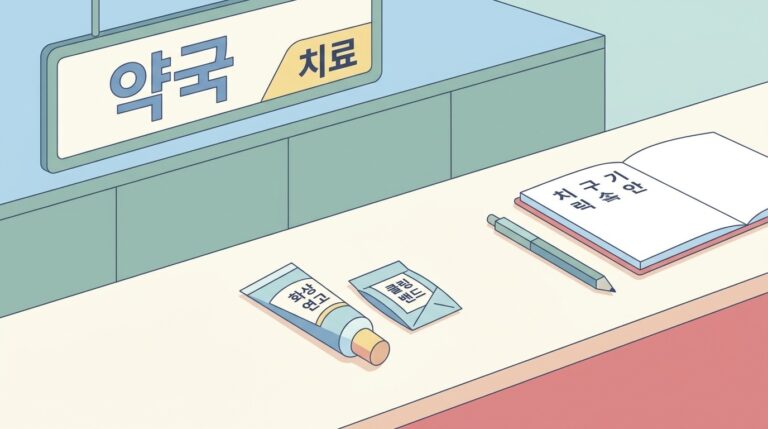
A searing, throbbing surge of heat shocks your nervous system. In that precise instant, panic sets in. While your instinct might scream in English, navigating an emergency in Korea requires culturally attuned, precise communication. Do you ask for ice? (Spoiler: you shouldn’t!) Where do you find an open pharmacy (약국) after hours, and how do you articulate the exact degree of epidermal trauma to an on-duty pharmacist to get the right burn ointment (화상 연고) rather than a generic antiseptic?
As a C2-level speaker, your objective isn’t merely to utter broken keywords like “뜨거워요” (It’s hot). You need the nuanced lexicon to articulate symptomatic severity, navigate local clinical etiquette, and handle post-incident care with native-level precision. Based on real clinical inquiries and feedback from advanced expatriates, this guide will serve as your definitive emergency protocol for burns in South Korea.
Phase 2: Deep-Dive into Core Expressions
1. 뜨거운 기름이 튀어서 데었어요. (Tteugeoun gireumi twieoseo deeosseoyo.)
- Pronunciation: [Tteu-geo-un gi-reum-i twi-eo-seo de-eoss-eo-yo] (Sounds like t’teu-guh-oon gee-reum-ee twee-uh-suh deh-uss-uh-yo)
- Meaning: Literal: “Hot oil splashed, so I got scalded/burned.” / Nuance: Clearly specifying the thermal agent (oil vs. steam vs. direct contact) to inform immediate pharmacological assessment.
- K-Culture Moment: Frequently heard in K-dramas featuring chaotic street food stalls (pojangmacha) or bustling commercial kitchen storylines like Itaewon Class when dealing with high-heat cooking accidents.
- Editor’s Insight: In Korean medical discourse, distinguishing between 데다 (thermal burn/scald from heat, steam, or liquid) and 타다 (burning/charring of a material) is critical. Saying “팔이 탔어요” colloquially implies a severe sunburn or tanning, whereas “팔을 데었어요” signals an acute thermal injury.
- Situation Spectrum: Casual: ✅ | Semi-formal: ✅ | Formal: ✅
- 🤔 Think About It: Why do you think Korean maintains distinct verbs for scalding/thermal contact (데다) versus combustion (타다), whereas English frequently groups both under “burn”?
2. 물집이 잡혔는데 터뜨려도 되나요? (Muljibi japhyeotneunde teotteuryeodo doenayo?)
- Pronunciation: [Mul-jip-i ja-pyeon-neun-de teo-tteu-ryeo-do doe-na-yo?] (Sounds like mool-jeeb-ee jah-pyun-neh-deh tuh-t’teu-ryuh-doh dway-nah-yo)
- Meaning: Literal: “A blister has formed, is it okay to burst it?” / Nuance: Inquiring about clinical aftercare protocol for second-degree burns displaying serous fluid accumulation.
- K-Culture Moment: The tense moment when a protagonist in a medical drama (like Hospital Playlist) sternly warns a patient against touching a blister to prevent secondary bacterial infection.
- Editor’s Insight: Notice the passive collocation 물집이 잡히다 (a blister takes hold/forms) rather than 물집을 만들다. Using 잡히다 indicates physiological reaction rather than volition.
- Situation Spectrum: Casual: ⚠️ | Semi-formal: ✅ | Formal: ✅
- 🤔 Think About It: In English, we say “blisters form,” but in Korean, the verb 잡히다 (to be caught/grasped) anthropomorphizes the blister as taking root. How does this reflect the Korean conceptualization of physical ailments?
3. 흉터 안 남게 바르는 화상 연고 좀 추천해 주세요. (Hyungteo an namge bareuneun hwasang yeongo jom chucheonhae juseyo.)
- Pronunciation: [Hyung-teo an nam-ge ba-reu-neun hwa-sang yeon-go jom chu-cheon-hae ju-se-yo]
- Meaning: Literal: “Please recommend a burn ointment to apply so that a scar does not remain.” / Nuance: Requesting advanced regenerative and anti-inflammatory topical treatment (e.g., trolamine or hydrogel-based ointments) aimed at cosmetic preservation.
- K-Culture Moment: Inside a bright Korean pharmacy, beauty-conscious locals explicitly prioritize minimizing hyperpigmentation or keloid scarring after minor accidents.
- Editor’s Insight: Koreans take dermatological recovery very seriously (피부 재생). Asking explicitly for 흉터 예방 (scar prevention) prompts the pharmacist to offer hydrocolloid burn dressings or silicone-based scar therapies alongside standard antibacterial ointments.
- Situation Spectrum: Casual: ⚠️ | Semi-formal: ✅ | Formal: ✅
- 🤔 Think About It: How does the societal emphasis on flawless skin in Korea shape the over-the-counter availability of sophisticated wound dressings in everyday pharmacies?
Phase 3: Textbook Korean vs. Real Korean
Situation 1: Describing the sensation of a fresh burn
- 📖 Textbook Korean: 상처 부위가 몹시 아프고 열이 납니다. (The wound area is very painful and generates heat.)
- 🗣️ Real Korean: 환부가 화끈거리고 욱신거려요. (The affected area is stinging with burning heat and throbbing.)
- 💡 Why is it different? Native speakers rely on vivid mimetic vocabulary (음성상징어) like 화끈거리다 (burning/stinging sensation) and 욱신거리다 (deep, rhythmic throbbing) to communicate physiological sensory states instantly.
Situation 2: Asking for specialized hydrocolloid burn dressings
- 📖 Textbook Korean: 화상 전용 밴드를 주십시오. (Please give me a band exclusively for burns.)
- 🗣️ Real Korean: 메디폼이나 폼 드레싱 제재 있나요? 진물이 좀 나와요. (Do you have Medifoam or foam dressing supplies? There’s some exudate/weeping.)
- 💡 Why is it different? Advanced communication involves proprietary yet genericized brand names (like Medifoam for hydrocolloid/foam dressings) and precise clinical nouns like 진물 (wound exudate/fluid) rather than generic words like 밴드 (band-aid).
Phase 4: K-Culture Deep Dive & Non-Verbal Etiquette
4-1. Nunchi & Emergency Body Language
When visiting a Korean pharmacy (약국) or emergency clinic (응급실) with an acute injury:
* Show, Don’t Just Tell: Keep the affected limb elevated and stabilized without aggressive gestures. Gently present the wound toward the pharmacist while maintaining an open posture.
* Avoid the “Ice Reflex”: In Korean clinics, requesting ice for a fresh burn is frowned upon as a clinical misstep because extreme cold can cause vasoconstriction and worsen tissue ischemia. Demonstrating awareness by mentioning you cooled it with running tap water (흐르는 미온수에 식혔어요) signals high medical competence.
4-2. Cultural Code: The Ubiquity of the Neighborhood Pharmacist (동네 약사)
In South Korea, local pharmacists act as frontline medical triage consultants. Pharmacists frequently dispense customized combinations of topical therapies, oral anti-inflammatory enzymes (소염효소제), and specialized moisture dressings. Trusting the pharmacist’s clinical recommendation rather than demanding a specific brand is a key cultural norm demonstrating mutual respect.
Phase 5: Real-Life Roleplay Scenario
Setting: A 24-hour pharmacy (심야약국) in Mapo-gu, Seoul at 11:30 PM. You enter holding a cooled burn on your forearm.
Characters:
* Pharmacist Park (박 약사): A seasoned, perceptive pharmacist in his late 50s wearing rimless glasses.
* You (C2 Korean Speaker): Calm, articulative, and seeking targeted first aid.
- 박 약사: 어서 오세요. 어디가 불편해서 오셨어요?
(Eoseo oseyo. Eodiga bulpyeonhaeseo osyeosseoyo?)
“Welcome. What brings you in tonight?”
🎭 [안경을 고쳐 쓰며 손님의 팔을 유심히 바라본다] -
You: 저, 방금 뚝배기에 손목 안쪽을 세게 데었거든요.
(Jeo, banggeum ttukbaegie sonmok anjjogeul sege deeotgeodeunyo.)
“I just severely scalded the inside of my wrist against a hot earthenware pot.”
🎭 [조심스럽게 소매를 걷어 환부를 보여주며] -
박 약사: 아이고, 벌겋게 부어올랐네요. 물집도 살짝 잡히려고 하고요. 응급 처치는 하셨어요?
(Aigo, beolgeoke bueoollanneyo. Muljipdo saljjak japhiryeogo hagoyo. Eunggeup cheochineun hasyeosseoyo?)
“Oh dear, it’s swollen and intensely red. A blister seems to be forming too. Did you do any first aid?”
🎭 [돋보기를 통해 상처 부위의 표피 상태를 관찰한다] -
You: 네, 흐르는 수돗물에 15분 정도 열감을 충분히 식히고 바로 왔습니다.
(Ne, heureuneun sudotmure sibobin jeongdo yeolgameul chungbunhi sikhigo baro watseumnida.)
“Yes, I cooled the heat sensation under running tap water for about 15 minutes and came straight here.”
🎭 [침착하고 신뢰감 있는 목소리로] -
박 약사: 아주 대처를 잘하셨네요! 얼음 직접 대시면 피부 괴사 위험이 있는데 잘하셨어요.
(Aju daecheoreul jalhasyeotneyo! Eoreum jikjeop daesimyeon pibu goesa wiheomi inneunde jalhasyeosseoyo.)
“You handled that excellently! Applying ice directly carries a risk of tissue necrosis, so you did great.”
🎭 [고개를 끄덕이며 안도하는 미소를 짓는다] -
You: 혹시 2도 화상으로 진행되지 않게 바르는 쿨링 연고나 하이드로겔 드레싱이 있을까요?
(Hoksi ido hwasangeuro jinhaengdoeji anke bareuneun kulling yeongona haideurogel deuresingi isseulkkayo?)
“Would you have a cooling burn ointment or hydrogel dressing to prevent it from worsening into a second-degree burn?”
🎭 [약장 쪽을 응시하며 차분하게 문의한다] -
박 약사: 네, 트롤아민 성분의 화상 연고 도포하시고 그 위에 이 습윤 밴드를 붙이세요. 진물이 차오르면 절대 짜내지 마시고요.
(Ne, teurol-amin seongbunui hwasang yeongo dopohasigo geu wie i seubyun baendeureul buchiseyo. Jinmuri chaoreumyeon jeoldae jjanaeji masigoyo.)
“Yes, apply this trolamine-based burn ointment, and place this hydrocolloid moisture bandage over it. If exudate builds up, do not pop it.”
🎭 [연고 박스를 열어 복약 지도 안내문을 가리킨다] -
You: 친절한 설명 감사드립니다. 소염진통제도 한 곽 같이 계산해 주세요.
(Chinjeolhan seolmyeong gamsadeurimnida. Soyeomjintongjedo han gwak gachi gyesanhae juseyo.)
“Thank you for the detailed guidance. Please also add one box of NSAID anti-inflammatory pain relievers.”
🎭 [지갑에서 결제 카드를 꺼내 정중히 건네며]
🔀 Interactive Decision Branch
What would you say if the pharmacist asked: “흉터 치료제도 지금 같이 드릴까요?” (Shall I give you scar treatment gel right now as well?)
- Choice A: “네, 지금 연고 바를 때 같이 듬뿍 섞어서 바를게요!”
- Feedback (Bad / Clinically Flawed): Active scar gels (silicone/heparin) should NOT be applied on open or fresh weeping wounds; they are meant for fully re-epithelialized skin.
- Choice B: “상처가 완전히 아물고 딱지가 떨어진 뒤에 흉터 연고를 바르는 게 맞죠? 그 단계에 다시 사러 올게요.”
- Feedback (Best / C2 Master): Demonstrates flawless linguistic articulation and precise understanding of the wound healing timeline.
- Choice C: “빨간약 바르면 흉터 안 남는다던데 빨간약 주세요.”
- Feedback (Risk / Outdated): Povidone-iodine (빨간약) can impair delicate cellular granulation in superficial thermal burns.
Phase 6: 10-Second Emotion Shadowing Drill
[🔥 고통을 참으며 다급하지만 또박또박하게]- “뜨거운 물에 / 발등을 데었는데 / 화끈거림이 가라앉지 않아요.”
(Tteugeoun mure / baldeungeul deeotneunde / hwakkeungeorimi garaanjji anayo.) - “I scalded the top of my foot with boiling water, and the burning sting won’t subside.”
- “뜨거운 물에 / 발등을 데었는데 / 화끈거림이 가라앉지 않아요.”
[🩺 침착하고 세련된 질문 어조로]- “진물이 많이 나오는데 / 드레싱을 / 얼마나 자주 교체해야 하나요?”
(Jinmuri mani naoneunde / deuresingeul / eolmana jaju gyochehaeya hanayo?) - “There is a lot of fluid leaking; how frequently should I replace the dressing?”
- “진물이 많이 나오는데 / 드레싱을 / 얼마나 자주 교체해야 하나요?”
[🙏 안도하며 감사를 표하는 온화한 톤]- “복약 지도해 주신 대로 / 연고 꾸준히 바르고 / 경과를 지켜보겠습니다.”
(Bogyak jidohae jusin daero / yeongo kkujunhi bareugo / gyeonggwareul jikyeobogetseumnida.) - “I will apply the ointment consistently as prescribed and monitor the progress.”
- “복약 지도해 주신 대로 / 연고 꾸준히 바르고 / 경과를 지켜보겠습니다.”
Phase 7: K-Culture Mini Dictionary
- 화상 연고 (Hwasang Yeongo) | Burn Ointment
- Usage: Essential over-the-counter preparation containing active tissue-regenerative agents (e.g., Trolamine, Guaiazulene, or Beta-sitosterol) tailored for thermal skin injuries.
- 습윤 드레싱 (Seubyun Deuresing) | Hydrocolloid / Moisture Dressing
- Usage: Widely standard in Korean healthcare; protects the wound microenvironment to accelerate healing without scabbing.
- 열감 (Yeolgam) | Sensation of Residual Heat
- Usage: A clinical noun denoting the post-burn thermal sensation radiating from subcutaneous tissue.
- 심야약국 (Simya Yakguk) | Late-Night / 24-Hour Pharmacy
- Usage: Designated pharmacies operating until 1 AM or around the clock across metropolitan Korean cities for urgent medication.
Phase 8: Traveler’s Survival Kit
Survival Expressions TOP 3
- “화상 환부 전용 폼 드레싱 있나요?” (Hwasang hwanbu jeonyong pom deuresing innayo?)
- Pro Tip: Use this to get high-absorbency polyurethane foam dressings if the burn forms delicate blisters.
- “파상풍 주사를 맞아야 할까요?” (Pasangpung jusareul mayaya halkkayo?)
- Pro Tip: Crucial if the burn was caused by rusty metal or contaminated barbecue grates.
- “가장 가까운 화상 전문 외과나 응급실이 어디인가요?” (Gajang gakkaun hwasang jeonmun oegwana eunggeupsiri eodiingayo?)
- Pro Tip: In severe cases, specialized burn centers (화상전문병원) provide superior care compared to general clinics.
Editor’s Travel Note
- Locating Late-Night Help: Search for open clinics and pharmacies using the E-Gen Emergency Medical Portal (응급의료포털 E-Gen) or pinpoint open 24-hour pharmacies directly via the 네이버 지도 앱 다운로드 (Naver Map App).
- Emergency Hotlines: Dial 119 for paramedic dispatch or 1339 for the Korea Centers for Disease Control emergency medical interpretation service.
Phase 9: A Step Deeper (Reflection Essay)
In Korean culture, the phrase “몸조리 잘하세요” (take mindful care of your recuperating body) reflects a deep-rooted ethos that treats physical recovery as a holistic social responsibility rather than an isolated biological event. When someone suffers an acute injury like a burn, colleagues and friends often express collective empathy (“어쩌다가 그랬어요, 흉 안 지게 관리 잘해요”), demonstrating how relational care (정, Jeong) permeates everyday interactions.
💬 Your Turn: Have you ever observed a distinct cultural attitude toward minor physical injuries or scar prevention in your home country compared to Korea? Share your thoughts in the comments below!
Phase 10: FAQ & Common Pitfalls
Q: Can I put ice or soju on a burn to disinfect and cool it in Korea?
A: Absolutely not. Applying ice damages fragile microvascular structures, while alcohol/soju irritates exposed dermis and drastically elevates infection risks. Always flush exclusively with clean, tepid-to-cool running water.
Q: What is the most common over-the-counter burn ointment brand in Korea?
A: Pharmacists commonly dispense preparations containing Guaiazulene (e.g., Azulene-S / 아줄렌), Trolamine (e.g., Biafine / 비아핀), or herbal regenerative extracts like Beta-sitosterol (e.g., Mebo / 미보연고).
Q: What should I do if a burn blister bursts on its own?
A: Do not peel away the collapsed blister skin roof. Gently cleanse the area with sterile saline solution (생리식염수), apply an antibacterial burn ointment, and seal it with a sterile hydrocolloid or foam dressing.
🚨 Common Mistakes Warning Board
- Mistake: Bursting blisters with an unsterilized sewing needle.
- Correct Action: Keep the blister membrane intact to serve as a biological barrier.
- Mistake: Using regular adhesive tape band-aids directly on torn burn skin.
- Correct Action: Use non-stick silicone dressings or hydrogels.
- Mistake: Applying scar-removal cream immediately to an active, weeping wound.
- Correct Action: Wait until the wound has fully epithelized and closed before initiating scar therapy.
Phase 11: Action Missions
- 🥉 Bronze Mission (Self-Practice): Recite the 3 core sentences in Phase 6 with proper pauses and emotional modulation using a voice recorder.
- 🥈 Silver Mission (Community Share): Write a sentence in the comments describing a mild cooking mishap using the verb 데다 and mimetic words like 화끈거리다.
- 🥇 Gold Mission (Real Application): Locate the nearest 24-hour pharmacy (심야약국) in your current Korean neighborhood using the Naver Map application and note its operating schedule.
🎮 K-Culture Challenge: The next time you watch a Korean medical or slice-of-life drama, listen closely for emergency medical terminology when characters treat minor kitchen burns!
Phase 12: Interactive Quiz Challenge
- Situational Judgment: Which of the following is the most clinically sound and linguistically natural phrase to say to a pharmacist when your skin is red and burning after touching a hot pan?
- A) 팔이 완전히 다 탔으니 소주 좀 발라주세요.
- B) 프라이팬에 데어서 열감이 심한데 화상 연고 좀 추천해 주세요.
- C) 상처에 얼음을 문지르고 밴드를 붙였습니다.
- Fill-in-the-Blank: Complete the following sentence with the correct postposition and verb form:
- “기름이 튀어서 손등에 물집이 ______ (a blister formed).”
- True or False: In Korea, putting soy sauce (간장) or toothpaste (치약) on a burn is medically endorsed in modern pharmacies.
🔍 Click here to view Answers & Explanations
- Answer: B
- Explanation: Option B accurately describes the cause (프라이팬에 데어서), the symptom (열감이 심한데), and politely requests appropriate medication (화상 연고).
- Answer: 잡혔어요 (or 잡혔는데 / 생겼어요)
- Explanation: The natural native collocation for blister development is 물집이 잡히다.
- Answer: False
- Explanation: These are dangerous folk remedies that lead to severe bacterial contamination and tissue necrosis.
- Explanation: These are dangerous folk remedies that lead to severe bacterial contamination and tissue necrosis.







