

Survived a Korean Subway Rush? Master the Slang for Total Panic: 멘붕 (Men-bung)
Phase 1: Empathy (Storytelling Opening)
안녕하세요! 매일한글 에디터입니다. (Hello! I’m your Daily Hangul editor.)
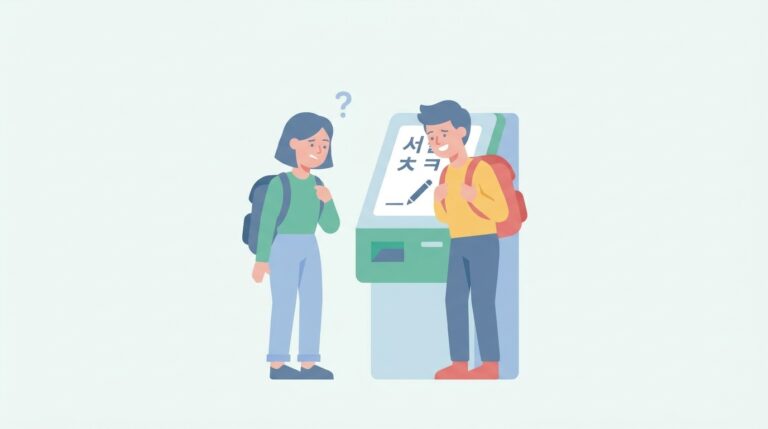
Picture this: You just landed at Incheon Airport, stepped into the bustling Seoul subway system with your giant suitcase, and suddenly realize your T-money card has zero balance right in front of a buzzing turnstile during the 8:00 AM Monday rush hour. Behind you, a queue of fast-walking locals is forming, and the machine screen starts flashing red. You freeze. Your brain goes completely blank. You know basic textbook Korean greetings, but what word describes this exact state of pure, chaotic freeze?
In Korea, everyone from university students to K-pop idols experiences this exact feeling every day, and we have one iconic, modern slang word for it: 멘붕 (Men-bung).
This isn’t a stiff dictionary word you will find in 20-year-old textbooks. It is the living heartbeat of modern Korean self-expression. By mastering this single concept and its sister phrases, you will transform from an awkward tourist into someone who can laugh off unexpected travel chaos just like a true Seoulite. Let’s conquer your first Korean slang survival lesson together!
Phase 2: 3 Core Expressions Deep-Dive
1. 멘붕 (Men-bung)
- Pronunciation: [Men-bung] (Analogy: Think of the English word ‘Men’ combined with the resonant sound of a soft bell ‘Boong’)
- Meaning: Literal: Mental Collapse (short for 멘탈 붕괴 – Men-tal Bung-goe) | Real Nuance: “Total brain freeze”, “I’m overwhelmed!”, or a lighthearted “I’m having a mini breakdown!”
- K-Culture Moment: Seen constantly on variety shows like Running Man when a member faces an impossible mission or an absurd spicy food penalty.
- Editor’s Insight: Even though “breakdown” sounds serious in English, Koreans use 멘붕 very casually for funny, minor everyday disasters—like dropping your ice cream or missing a bus by two seconds.
- Situation Spectrum:
- Casual (Friends, Peers): ✅
- Semi-formal (Co-workers of similar age): ⚠️ (Use in casual breaks)
- Formal (Boss, Professor, Official): 🚫
- 🤔 Think About It: In English, “mental breakdown” is a clinical or heavy term. Why do you think young Koreans turned “mental collapse” into a playful, cute slang word?
2. 멘탈 나가다 (Men-tal na-ga-da)
- Pronunciation: [Men-tal na-ga-da] (Analogy: ‘Mental’ + ‘Nah-Gah-Dah’, sounds like saying ‘nah, my mind went away’)
- Meaning: Literal: My mentality left the building | Real Nuance: “My brain just checked out”, “I’m losing my mind from confusion.”
- K-Culture Moment: K-pop idols say this during live streams after practicing choreography for 6 hours straight: “멘탈 나갔어요!” (Men-tal na-gat-seo-yo!)
- Editor’s Insight: If 멘붕 is the event (a noun), 멘탈 나가다 is the physical feeling of your soul leaving your body because you are so overwhelmed.
- Situation Spectrum:
- Casual: ✅
- Semi-formal: ⚠️
- Formal: 🚫
- 🤔 Think About It: Notice how Koreans use the Konglish loanword “Mental” (멘탈) as a synonym for stamina, focus, and inner grit.
3. 어떡해 (Eo-tteok-hae)
- Pronunciation: [Eo-tteok-hae] (Analogy: Sounds like ‘Uh-Dduk-Hae’ with an open ‘Uh’ sound)
- Meaning: Literal: What to do? | Real Nuance: “Oh no! What do I do?”, “Help!”
- K-Culture Moment: The classic sound effect in almost every K-drama when the main character spills coffee on their crush’s white shirt.
- Editor’s Insight: This is the natural vocal reflex that pairs with 멘붕. Whenever you’re in mental breakdown mode, murmuring “어떡해…” signals to bystanders that you need a little help!
- Situation Spectrum:
- Casual: ✅ (어떡해 / Eo-tteok-hae)
- Semi-formal: ✅ (어떡해요 / Eo-tteok-hae-yo)
- Formal: ⚠️ (어떻게 해야 합니까? / Eo-tteo-ke hae-ya ham-ni-kka?)
- 🤔 Think About It: How does a simple question (“What do I do?”) become a universal emotional cry of distress in Korean culture?
Phase 3: Textbook Korean vs Real Korean
Situation 1: You lost your subway ticket / your card won’t scan
- 📖 Textbook Korean: 당황스럽습니다. (Dang-hwang-seu-reop-seum-ni-da. – “I feel perplexed.”)
- 🗣️ Real Korean: 완전 멘붕이에요! (Wan-jeon men-bung-i-e-yo! – “I’m in total mental breakdown mode!”)
- 💡 Why different? Textbook phrases sound like formal robot scripts. Real Koreans use 완전 (Wan-jeon – completely) + 멘붕 to instantly convey relatable stress.
Situation 2: The restaurant menu is completely in handwritten Korean cursive with no pictures
- 📖 Textbook Korean: 무엇을 주문해야 할지 모르겠습니다. (Mu-eo-seul ju-mun-hae-ya hal-ji mo-reu-get-seum-ni-da. – “I do not know what I ought to order.”)
- 🗣️ Real Korean: 멘탈 나갔어요… 추천해 주세요! (Men-tal na-gat-seo-yo… chu-cheon-hae ju-se-yo! – “My brain just melted… please recommend something!”)
- 💡 Why different? Expressing your momentary confusion casually creates warmth and invites the server to help you happily.
Phase 4: K-Culture Deep Dive & Non-Verbal Manners
4-1. 눈치 (Nunchi) & Gestures during Men-bung
When Koreans say 멘붕, their body language says it before their mouth does:
* The Head Clutch: Lightly grabbing both temples or placing one flat hand over your forehead while letting out a gentle sigh (“하아…” / Haaa…).
* Eye Contact (Nunchi): If you are in public (like holding up a line), give a slight, apologetic head tilt (15-degree nod) toward people behind you. It shows you recognize their time while you sort out your 멘붕 moment.
4-2. Cultural Code Analysis: Why Koreans Love “Men-bung”
In South Korea’s fast-paced, high-efficiency society (the famous 빨리빨리 / Ppalli-ppalli culture), unexpected delays can feel intense. The term 멘붕 became popular in the 2010s across internet gaming communities and variety shows as a humorous pressure valve. By labeling a stressful situation as 멘붕, Koreans turn frustration into shared comedy, reducing tension among friends.
Phase 5: Real-Life Roleplay Scenario
- Location: A trendy self-service photo booth (인생네컷) in Hongdae, Seoul.
- Character: Min-ji (민지), your bubbly Korean university exchange buddy.
- The Conflict: The 10-second countdown timer starts, but you can’t choose your cute animal hats in time!
Turn 1: Min-ji
민지: 어? 타이머 벌써 시작했어! 빨리 모자 골라!
(Eo? Ta-i-meo beol-sseo si-jak-haet-seo! Ppal-li mo-ja gol-ra!)
"Huh? The timer already started! Pick a hat quick!"
🎭 [Pointing frantically at the timer counting down: 5... 4...]

Turn 2: You
나: 어떡해! 모자가 너무 많아!
(Eo-tteok-hae! Mo-ja-ga neo-mu man-a!)
"Oh no! What do I do! There are too many hats!"
🎭 [Fumbling with a giant plush frog headband]

Turn 3: Min-ji
민지: 3초 남았어! 아무거나 써!
(Sam-cho nam-at-seo! A-mu-geo-na sseo!)
"3 seconds left! Just put anything on!"
🎭 [Grabbing a pair of oversized sunglasses in panic]

Turn 4: You
나: 으아, 완전 멘붕이야!
(Eu-ah, wan-jeon men-bung-i-ya!)
"Aaargh, total men-bung!"
🎭 [Freezing awkwardly as the flash fires: FLASH!]

Turn 5: Min-ji
민지: ㅋㅋㅋ 사진 봐봐! 네 표정 진짜 웃겨!
(Kkk sa-jin bwa-bwa! Ne pyo-jeong jin-jja ut-gyeo!)
"Hahaha look at the photo! Your facial expression is hilarious!"
🎭 [Bursting into laughter while pointing at the preview screen]

Turn 6: You
나: 나 멘탈 나갔어 진짜...
(Na men-tal na-gat-seo jin-jja...)
"My brain seriously checked out..."
🎭 [Covering face with both hands, blushing and smiling]

Turn 7: Min-ji
민지: 그래도 귀여워! 다음 컷은 제대로 포즈 잡자!
(Geu-rae-do gwi-yeo-wo! Da-eum keot-eun je-dae-ro po-jeu jap-ja!)
"It's still super cute! Let's strike a proper pose for the next cut!"
🎭 [Giving you a friendly thumbs up]

Turn 8: You
나: 좋아, 이번엔 준비 완료!
(Jo-a, i-beon-en jun-bi wan-ryo!)
"Okay, this time I'm ready!"
🎭 [Giving a big V-sign to the camera]
🔀 Interactive Choice Point
What do you say when the photo machine prints out the funny blooper photo?
- Option A: “완전 멘붕이었지만 사진 잘 나왔다!” (Wan-jeon men-bung-i-eot-ji-man sa-jin jal na-wat-da!)
- Option B: “저는 심리적 공황 상태에 도달했습니다.” (Jeo-neun sim-ri-jeok gong-hwang sang-tae-e do-dal-haet-seum-ni-da.)
- Option C: “몰라요. 그냥 가요.” (Mol-ra-yo. Geu-nyang ga-yo.)
Feedback:
* Choice A (Best Choice): Perfect! It means “It was total men-bung, but the photo came out great!” Natural, fun, and warm.
* Choice B (Bad Choice): Grammatically robotic! It means “I have reached a state of psychological panic.” Sounds like a medical textbook.
* Choice C (Risk Choice): Too blunt (“I don’t know. Just let’s go.”). Might make your friend think you are actually annoyed.
Phase 6: 10-Second Emotion Shadowing Drill
Read aloud along with these pauses (/) and feeling markers:
[😱 Panicked and rushing]
어떡해! / 지갑이 없어졌어!
(Eo-tteok-hae! / Ji-gab-i eop-seo-jyeot-seo!)
“Oh no! / My wallet disappeared!”-
[🤯 Shocked with wide eyes]
완전 / 멘붕이에요!
(Wan-jeon / men-bung-i-e-yo!)
“Totally / in a mental breakdown!” -
[😮💨 Drained and laughing it off]
오늘 시험 보고… / 멘탈 나갔어요.
(O-neul si-heom bo-go… / men-tal na-gat-seo-yo.)
“After taking the exam today… / my brain checked out.”
Phase 7: K-Culture Mini Dictionary
- 멘붕 (Men-bung) | Mental collapse | Used whenever unexpected chaos occurs (train delay, dropped phone, ruined hair in rain).
- 멘탈 (Men-tal) | Mental strength / focus | Used in phrases like 멘탈 강하다 (strong mindset) or 멘탈 나가다 (drained).
- 당황 (Dang-hwang) | Flustered / embarrassed | The standard descriptive noun for feeling caught off guard.
- 어떡해 (Eo-tteok-hae) | What should I do? | The universal distress signal phrase for small to medium accidents.
Phase 8: Survival Kit for Travelers
Top 3 Emergency Expressions:
- 도와주세요! (Do-wa-ju-se-yo!)
- Pronunciation: [Do-wa-ju-se-yo]
- Pro Tip: Use this when your men-bung moment requires real physical assistance from station staff.
- 영어로 말씀해 주실 수 있나요? (Yeong-eo-ro mal-sseum-hae ju-sil su it-na-yo?)
- Pronunciation: [Yeong-eo-ro mal-sseum-hae ju-sil su it-na-yo?]
- Pro Tip: Softly asking if they can speak English lowers the communication pressure immediately.
- 잠시만요! (Jam-si-man-yo!)
- Pronunciation: [Jam-si-man-yo]
- Pro Tip: Meaning “Just a moment!”, this buys you 10 seconds to collect your thoughts at a counter.
Editor’s Travel Note:
When in Seoul, install the official [Naver Map navigation app guide] on your phone before boarding subways. Unlike global map apps that struggle with South Korean transit data, Naver Map tells you the exact subway carriage door number to stand at, preventing any sudden transit 멘붕!
Phase 9: “One Step Deeper” (Thought Reflection)
In Western communication, admitting you are “losing your mind” can feel like showing weakness or losing control. In Korea, however, openly declaring 멘붕 is an act of social connection. It invites others into your vulnerable moment with humor. When you say “멘붕이에요!”, Koreans around you don’t judge; they immediately soften their faces and step in to help. It reveals the warm, collective empathy (Jeong / 정) embedded deep in Korean society.
💬 Your Turn: Have you ever had a sudden 멘붕 moment while traveling or learning a new skill? Share your story in the comments below!
Phase 10: FAQ & Common Mistakes
Q: Can I say “멘붕” to my Korean boss or university professor?
A: No! 멘붕 is informal slang. In front of bosses, professors, or during formal job interviews, use polite standard words like “조금 당황했습니다” (Jo-geum dang-hwang-haet-seum-ni-da – I was a bit flustered).
Q: Is “멘붕” an offensive bad word?
A: Not at all! It is broadcast-safe slang frequently seen in subtitles on national TV channels (KBS, SBS, tvN). It carries zero vulgarity, just casual energy.
Q: What is the difference between “어떡해” and “어떻게”?
A: 어떡해 (ending in ‘해’) means “What do I do?” (a complete sentence/cry). 어떻게 (ending in ‘게’) means “How” (an adverb needing another verb, like 어떻게 가요? – How do I go?).
🚨 Common Mistakes Warning Board:
- Mistake: Saying 멘붕 at serious, tragic events (accidents, funerals).
- Correct Action: Only use it for funny, minor, or relatable inconveniences.
- Mistake: Confusing 어떡해 and 어떻게 in text messages.
- Correct Action: If shouting in panic, always type 어떡해!
- Mistake: Pronouncing 멘붕 as “Men-bong”.
- Correct Action: Round your lips for the “oo” sound: Men-bung.
Phase 11: Action Missions
- 🥉 Bronze Mission: Stand in front of your mirror, make a funny shocked face, and say “헐, 완전 멘붕!” (Heol, wan-jeon men-bung!) 3 times.
- 🥈 Silver Mission: Find your favorite K-pop or K-drama video clip where a character looks shocked, take a screenshot, and caption it with “멘붕 (Men-bung)”
- 🥇 Gold Mission: Next time you make a minor mistake in your Korean practice chat or language exchange, reply with “앗, 멘탈 나갔어요 ㅋㅋㅋ”.
- 🎮 K-Culture Mission: Watch any episode of a Korean variety show (like Running Man or Going Seventeen) and spot how many times the editors put “멘붕” in the on-screen animated subtitles!
Phase 12: Interactive Quiz Challenge
Q1. Situation Judgment
You dropped your subway pass on the platform right as the doors are closing. What is the most natural, casual reaction to whisper to yourself?
– A) 안녕하십니까? (An-nyeong-ha-sim-ni-kka?)
– B) 아, 진짜 멘붕이다… (Ah, jin-jja men-bung-i-da…)
– C) 감사합니다! (Gam-sa-ham-ni-da!)
👉 Click to view Answer & Explanation
Correct Answer: B
Explanation: 아, 진짜 멘붕이다 (Ah, jin-jja men-bung-i-da – Ah, this is truly a mental breakdown) is the ultimate native reaction to everyday mishaps. Option A means “Hello” (formal) and Option C means “Thank you”!
Q2. Fill-in-the-Blank
Complete the iconic Korean slang for ‘my sanity just left’:
“너무 피곤해서 멘탈 _________!”
(I am so tired that my mental sanity left!)
👉 Click to view Answer & Explanation
Correct Answer: 나갔어요 (na-gat-seo-yo)
Explanation: The full expression is 멘탈 나갔어요 (Men-tal na-gat-seo-yo) meaning “My brain/mentality checked out.”
Q3. True or False
멘붕 is considered a rude curse word in Korean and will get you into trouble if you say it to your friends.
👉 Click to view Answer & Explanation
Correct Answer: False (F)
Explanation: 멘붕 is friendly, playful slang used widely on TV and among peers to build empathy and laugh off chaotic moments together!







