

Phase 1: Empathy (Story Immersion Opening)
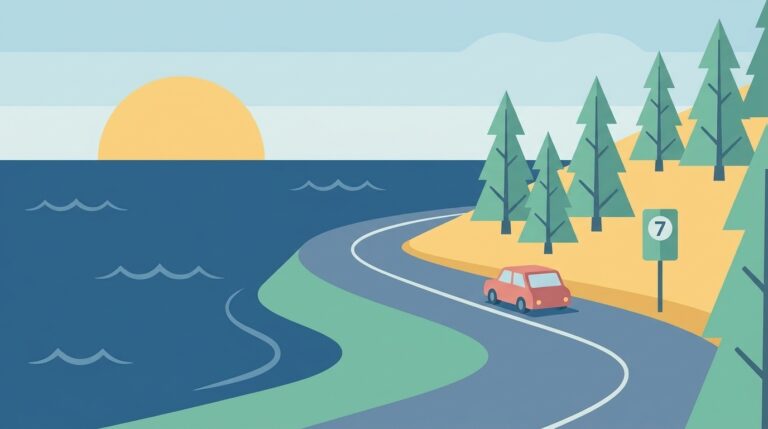
안녕하세요! 매일한글 (Daily Hangul) editor here! Imagine this: you’ve rented a car in Gangneung, the windows are rolled down, the crisp, pine-scented breeze of the East Sea fills the car, and you are cruising along National Route 7 (7번 국도)—Korea’s quintessential coastal highway. On K-dramas, this looks effortless, cinematic, and breathtaking. But suddenly, your GPS announces an unfamiliar exit, you pull into a bustling port to grab some seasonal raw fish (회), and the local vendor rapid-fires regional dialect at you. Or worse, you want to suggest an impromptu detour to a scenic rest stop (휴게소) with your Korean travel companions, but your textbook vocabulary leaves you stuck at basic, rigid sentences like “바다가 아름답습니다.”
At the C1 level, road-tripping isn’t just about reading highway signs; it’s about mastering spontaneous travel banter, appreciating poetic geographic nuances, and navigating high-context social interactions like negotiating fresh catches or chatting at scenic lookouts. Based on insights from dozens of advanced learners navigating Korea’s coastlines, this guide delivers the cultural fluidity and sophisticated vocabulary needed to make your Route 7 road trip unforgettable.
Phase 2: Deep Dive into 3 Core Expressions
1. 해안도로를 끼고 달리다 (Hae-an-do-ro-reul kki-go dal-li-da)
- Pronunciation: [Hae-an-do-ro-reul kki-go dal-li-da] (Think: Hae-ahn-doh-ro-reul like ‘road’, kki-go like ‘embracing’, dal-li-da like ‘running’)
- Meaning: Literal: To run while tucking the coastal road under one’s arm. | Real Nuance: To cruise right along the scenic coastline.
- K-Culture Moment: Frequently featured in healing travel shows like Camping Club or romantic montage scenes in seaside K-Dramas when the protagonists escape city stress.
- Editor’s Insight: The verb ‘끼다’ (to hold/flank) creates vivid, poetic spatial imagery in Korean. Saying “바다 옆으로 운전해요” sounds elementary; “해안도로를 끼고 드라이브하자” instantly elevates your Korean to native-level sophistication.
- Situation Spectrum: Casual: ✅ | Semi-formal: ✅ | Formal: ⚠️
- 🤔 Think About It: How does personifying a road as something you ‘flank’ or ‘tuck close’ reflect the Korean appreciation for blending nature intimately into travel?
2. 가슴이 뻥 뚫리다 (Gaseum-i ppeong ttul-li-da)
- Pronunciation: [Gah-seum-ee ppeong ttool-lee-dah] (Sound analogy: ppeong is the sharp popping sound of a cork or puffed grain snacks)
- Meaning: Literal: One’s chest is popped wide open. | Real Nuance: To feel an immense sense of relief and mental refreshment from a sweeping view.
- K-Culture Moment: The iconic reaction when Koreans step out at Gyeongpo Beach or Mangsang Beach and look across the horizon.
- Editor’s Insight: Korean heavily utilizes sensory sound symbolism (uiseong-eo). ‘뻥’ encapsulates the instantaneous release of pent-up urban stress (dapdapham).
- Situation Spectrum: Casual: ✅ | Semi-formal: ✅ | Formal: 🚫
- 🤔 Think About It: Does your native language link physical unclogging sounds with emotional clarity and catharsis?
3. 바가지를 쓰다 (Ba-ga-ji-reul sseu-da) / 바가지 요금 (Ba-ga-ji yo-geum)
- Pronunciation: [Bah-gah-jee-reul sseu-dah]
- Meaning: Literal: To wear a gourd bowl over one’s head. | Real Nuance: To get ripped off / overcharged at tourist hotspots.
- K-Culture Moment: Crucial when visiting local fish markets (수산시장) along Route 7 in cities like Sokcho or Samcheok.
- Editor’s Insight: Use “바가지 안 쓰려면 시세를 미리 알아봐야 해” (To avoid getting ripped off, we should check market rates beforehand). Advanced speakers use it proactively to negotiate or assess authenticity.
- Situation Spectrum: Casual: ✅ | Semi-formal: ✅ | Formal: ⚠️
- 🤔 Think About It: Why do you think historical gambling idioms evolved into modern tourist-market survival phrases in Korean?
Phase 3: Textbook Korean vs. Real Korean
Situation 1: Suggesting a spontaneous detour to a scenic overlook
- 📖 교과서 한국어 (Textbook): 경치가 좋은 곳이 있으니 잠시 정차합시다. (Gyeongchiga joeun gosi isseuni jamsi jeongchahapsida.) – “Since there is a place with a good view, let us stop temporarily.”
- 🗣️ 진짜 한국어 (Real-Life C1): 가는 길에 뷰 맛집 있는데, 잠깐 들렀다 갈까? (Ganeun gire byu matjip inneunde, jamkkan deulleotda galkka?) – “There’s a scenic gem with killer views on our way; should we pop in for a quick minute?”
- 💡 Why the difference? Modern native speakers use ‘뷰 맛집’ (literally ‘view gourmet spot’) metaphorically for photogenic vantage points, paired with the natural conversational connector ‘~다가다’.
Situation 2: Praising the drive along the coastal waves
- 📖 교과서 한국어 (Textbook): 동해안 7번 국도는 경치가 아주 훌륭합니다. (Donghaean chilbeon gukdoneun gyeongchiga aju hullyunghamnida.) – “The East Coast Route 7 scenery is very magnificent.”
- 🗣️ 진짜 한국어 (Real-Life C1): 7번 국도 드라이브 코스 진짜 예술이다. 힐링 그 자체야. (Chilbeon gukdo deuraibeu koseu jinjja yesurida. Hilling geu jacheya.) – “This Route 7 drive is pure art. It’s the definition of healing.”
- 💡 Why the difference? Calling an experience ‘예술’ (art) and combining Konglish cultural idioms like ‘힐링 그 자체’ (healing itself) demonstrates advanced colloquial expressive power.
Phase 4: K-Culture Deep Dive & Non-Verbal Manners
4-1. Nunchi & Highway Drive Etiquette
- Hazard Light Etiquette (비상깜빡이 / Bisang-kkambbaki): When driving on Korean coastal curves or sudden rest stop turnoffs, hitting your hazard lights 2-3 times is an indispensable non-verbal ‘Thank You’ or ‘Sorry’ to trailing drivers.
- Rest Stop Parking Nunchi: Highway rest areas (휴게소) along the East Sea get packed during sunrise hours. When maneuvering in tight lots, lower your driver-side window slightly and give a gentle nod (mok-insa) to attendants guiding traffic.
4-2. Cultural Code: The ‘Chabak’ (차박) & ‘Hyu-ge-so Gourmet’ Craze
- Route 7 is the mecca of 차박 (Car-camping / Chabak). Korean travelers park at designated beachfront areas like Yangyang or Uljin, open the trunk toward the sea, and enjoy freshly brewed drip coffee.
- Highway rest areas along Route 7 aren’t merely functional; they are culinary destinations featuring signature regional snacks like Sotteok-Sotteok (소떡소떡), dried squid (Pidegi 피데기), and potato balls (Al-gamja 알감자).
Phase 5: Real-Life Roleplay Scenario
Setting: You are on a scenic road trip with your Korean friend, Min-jun, driving near Samcheok along National Route 7. The sun is glistening on the horizon.
- Min-jun: 와, 날씨 진짜 완벽하다! 슬슬 출출한데 어디 들를까? (Wa, nalssi jinjja wanbyeokhada! Seulseul chulchulhande eodi deulleulkka?)
- 🎭 Tapping the steering wheel to the rhythm of the car music.
- (Translation: Wow, the weather is absolute perfection! I’m getting a bit peckish, should we stop somewhere?)
- You: 저 앞에 오션뷰 휴게소 있던데, 소떡소떡이나 먹고 갈까? (Jeo ape osyeonbyu hyugeso itdeonde, sotteoksotteogina meokgo galkka?)
- 🎭 Pointing toward the highway exit sign with a bright smile.
- (Translation: There’s an ocean-view rest stop ahead, how about we grab some sotteok-sotteok?)
- Min-jun: 대찬성! 거기 들렀다가 해안도로 끼고 쭉 내려가자. (Daechanseong! Geogi deulleotdaga haeandoro kkigo jjuk naeryeogaja.)
- 🎭 Signaling right into the rest area ramp.
- (Translation: Totally down! Let’s stop there and then cruise straight down hugging the coastal road.)
- You: 좋아. 바다 보면서 커피 한잔 마시면 가슴이 뻥 뚫릴 것 같아. (Joa. Bada bomyeonseo keopi hanjan masimyeon gaseumi ppeong ttullil geot gata.)
- 🎭 Stretching arms playfully in anticipation of the sea breeze.
- (Translation: Sounds great. Drinking coffee while looking at the sea will blow all the cobwebs away.)
- Min-jun: 저녁에는 주문진이나 묵호항 가서 회 한 접시 할까? (Jeonyeogeneun Jumunjinina Mukhohang gaseo hoe han jeopsi halkka?)
- 🎭 Glancing over with an excited foodie grin.
- (Translation: Should we head to Jumunjin or Mukho Port this evening for a plate of fresh sashimi?)
- You: 콜! 근데 수산시장 가면 바가지 안 쓰게 시세 잘 봐야 해. (Kol! Geunde susansijang gamyeon bagaji an sseuge sise jal bwaya hae.)
- 🎭 Winking with mock caution.
- (Translation: Deal! But if we go to the fish market, we need to check the prices carefully to not get overcharged.)
- Min-jun: 걱정 마. 내가 단골 초장집이랑 시세 빠삭하니까! (Geokjeong ma. Naega dangol chojangjib-irang sise ppasakhani-kka!)
- 🎭 Patting chest proudly with self-assurance.
- (Translation: Don’t worry. I know the going rates inside out and I have a regular spot!)
- You: 든든하네! 오늘 드라이브 코스 진짜 예술이다. (Deundeunhane! Oneul deuraibeu koseu jinjja yesurida.)
- 🎭 Taking a quick panoramic photo out the passenger window.
- (Translation: I feel reassured! Today’s drive course is pure art.)
🔀 Interactive Branching Choice: How do you respond when the seafood vendor offers a combo upgrade?
- Choice A: “사장님, 요즘 제철 횟감이 뭐예요? 덤으로 멍게 조금만 챙겨주세요!” (Ask for seasonal fish and charismatically request sea squirt as a freebie / Service)
- Choice B: “너무 비싼 것 같아요. 그냥 다른 곳으로 갈게요.” (Bluntly call it too expensive and walk away)
- Choice C: “가격은 상관없으니 제일 비싼 걸로 주세요.” (Say price doesn’t matter and ask for the most expensive item)
Feedback:
* Choice A (Best): 🌟 Highly culturally savvy! In coastal markets, asking for “제철 횟감” (in-season fish) and jokingly asking for “덤” (extra service) earns respect and genuine hospitality.
* Choice B (Bad): ⚠️ Overly confrontational; kills the market rapport (Jeong).
* Choice C (Risk): 🚫 High risk of getting tourist-priced without tasting the actual seasonal specialties.
Phase 6: 10-Second Emotion Shadowing Drill
Practice reading these with authentic native pitch accents and pause markers (/):
[🤩 Exhilarated and breathless]
“와 / 7번 국도 해안도로 / 진짜 예술이다! / 가슴이 뻥 뚫리네!”
(Wa / chilbeon gukdo hae-an-do-ro / jinjja yesurida! / Gaseumi ppeong ttulline!)-
[😎 Cool, witty, and decisive]
“휴게소 들러서 / 알감자 딱 때리고 / 다시 출발할까?”
(Hyugeso deulleoseo / algamja ttak ttaerigo / dasi chulbalhalkka?) -
[🧐 Cautious yet confident C1 market bargaining]
“사장님, / 요즘 오징어 시세가 어떻게 돼요? / 바가지 씌우시면 안 돼요~”
(Sajangnim, / yojeum ojingeo sisega eotteoke dwaeyo? / Bagaji ssiiusimyeon an dwaeyo~)
Phase 7: K-Culture Mini Dictionary (Coastal Travel Edition)
- 드라이브 코스 (Deu-ra-i-beu ko-seu) | Scenic Driving Route | Used in travel blogs to describe scenic road itineraries like Route 7 or Jeju Coastal Highway.
- 제철 해산물 (Je-cheol hae-san-mul) | In-Season Seafood | Essential for Korean foodies. Seasonal catches taste best and cost less (e.g., King crab in winter, Squid in summer).
- 물멍 (Mul-meong) | Water-dazing / Ocean-spacing out | Derived from Meong-ttaerida (spacing out). Spending peaceful, silent moments just gazing at waves.
- 초장집 (Cho-jang-jip) | Table-Fee Raw Fish Restaurant | Dining spots attached to fish markets where they prep raw fish bought directly from vendors for a small per-person fee.
Phase 8: Traveler’s Survival Kit for Route 7
Top 3 Highway Survival Phrases:
- “여기서 제일 가까운 IC/휴게소가 어디예요?”
(Yeogiseo jeil gakkaun aisi/hyugesoga eodiyeyo?)
Pro Tip: IC stands for Interchange (고속도로 나들목). Great for clarifying exits. - “포장해서 차 안에서 먹을 수 있게 담아주세요.”
(Pojanghaeseo cha aneseo meogeul su itge damajuseyo.)
Pro Tip: Perfect for car-picnics and snacks at scenic laybys. - “해안 쪽 창가 자리로 안내해 주실 수 있나요?”
(Hae-an jjok changga jariro annaehae jusil su innayo?)
Pro Tip: Guarantees the best ocean view tables at seaside cafes.
🚗 Editor’s Travel Note:
- Navigation Essential: Download Naver Map Route Navigation or KakaoNavi; international Google Maps does not support turn-by-turn driving directions in South Korea due to domestic map data regulations.
- Toll Pass: Ensure your rental car includes a Hi-Pass (하이패스) transponder card so you can breeze through electronic toll lanes without stopping for cash tickets.
Phase 9: Think Deeper (한 발 더 깊이)
In Western road-trip culture, the journey is often about solitude, wide-open horizons, and rugged independence. In contrast, driving Korea’s Route 7 reflects a deeply relational and holistic leisure philosophy: Chiyu (치유 – healing) through shared gastronomic discoveries. The East Coast road trip is rarely experienced purely in isolation; it is punctuated by shared pit stops at communal fish markets, collective Mul-meong gazing, and bonding over local delicacies.
💬 Your Turn: When you take a scenic road trip in your home country, is it more about finding solitary peace or sharing local food adventures with friends? Share your thoughts below in Korean!
Phase 10: FAQ & Common Pitfalls (FAQ Schema Ready)
Q: What makes National Route 7 (7번 국도) so uniquely famous compared to other Korean highways?
A: Stretching from Busan all the way up to Goseong near the DMZ, Route 7 directly skirts the coastline. Unlike modern expressways built through long mountain tunnels, Route 7 gives uninterrupted, sea-level coastal panoramas and connects historic port villages.
Q: How do I know if I’m getting a fair price at a Gangwon-do fish market?
A: Look for daily rate boards or check mobile apps like In-o-ne-su-san-sijang (인어교주해적단). Asking with C1 phrases like “오늘 물 좋은 거 뭐예요?” (What has the best quality/freshness today?) signals you understand the market culture.
Q: Can I park overnight anywhere along Route 7 for ‘Chabak’ (car camping)?
A: Not everywhere. Look for designated public beach parking lots marked for camping (차박 가능 구역). Avoid military coastal zones (철책선 부근), which have nighttime curfews.
🚨 Common Mistakes Alert:
- Mistake: Using “바다를 몰다” when trying to say ‘driving by the sea’.
Correct Action: Say “바닷길을 따라 운전하다” or “해안도로를 끼고 달리다”. - Mistake: Confusing ‘휴게소’ (Highway Rest Stop) with ‘쉼터’ (Simple roadside layby without food stalls).
- Mistake: Expecting all small coastal gas stations to be 24/7; always fill up near major hubs like Gangneung or Donghae.
Phase 11: Action Missions
- 🥉 Bronze Mission (Solo Mastery): Practice the Phase 6 shadowing drill 3 times aloud, matching the dynamic rhythm of “가슴이 뻥 뚫리다!”
- 🥈 Silver Mission (Social Connection): Search Instagram for
#7번국도드라이브and comment on a scenic photo: “해안도로 뷰 진짜 예술이네요! 가슴이 뻥 뚫려요 ✨” - 🥇 Gold Mission (Real-Life Road Warrior): On your next trip to Korea, rent a car, drive a section of Route 7, and order a snack at an ocean-view Hyugeso using textbook-free Korean!
- 🎮 K-Culture Mission: Watch an episode of a Korean coastal travel reality show (like House on Wheels) and spot when cast members use the words 힐링, 뷰 맛집, and 제철.
Phase 12: Interactive Quiz Challenge
1. Situation Judgment: You want to compliment your Korean driver on choosing an exceptionally beautiful, winding ocean road. Which phrase is the most natural C1 expression?
* A) 도로가 너무 청결합니다.
* B) 해안도로를 끼고 달리는 코스가 진짜 예술이네요!
* C) 바가지를 써서 기분이 좋습니다.
2. Fill-in-the-Blank: Looking out over the vast, sparkling East Sea at an overlook:
“오랜만에 바다 보니까 답답했던 마음이 [ ] 뚫린다!”
3. True or False: In Korea, pressing your emergency hazard lights (비상깜빡이) for 2-3 seconds after merging or stopping on coastal routes is considered rude. (T/F)
🔍 Click here to check Answer Key & Explanations!
- Answer: B – 해안도로를 끼고 달리는 코스가 진짜 예술이네요! captures native figurative flair. (A is too literal/wooden; C means you’re happy getting ripped off!)
- Answer: 뻥 (Ppeong) – Forms the idiomatic sensory expression 가슴이 뻥 뚫리다.
- Answer: False – It is the universal Korean gesture of courtesy, gratitude, and safety on the road!







