

Phase 1: Empathy (Immersive Opening)
안녕하세요! Welcome back to Daily Hangul. It’s your culture navigator and language bestie here to guide you through one of the most sophisticated conversational arts in the Korean language: reading between the lines to uncover unspoken needs and underlying wants in high-stakes negotiations.
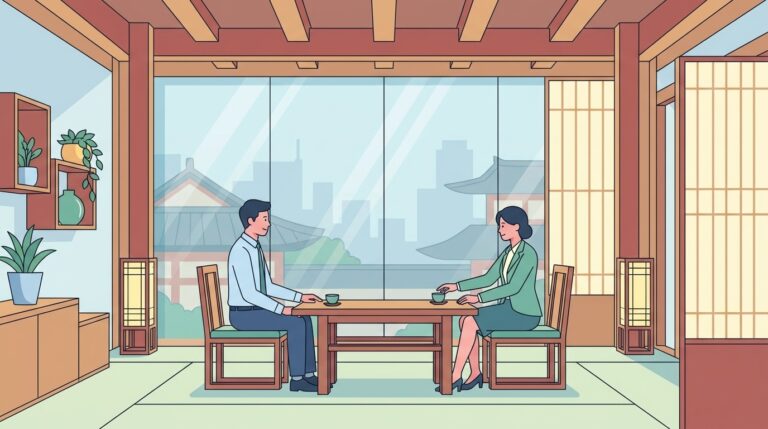
Picture this classic K-drama scenario straight out of Misaeng (Incomplete Life) or Queen of Tears: You sit in a sleek glass conference room in Teheran-ro, Gangnam. Across the table, the senior executive sips his warm iced barley tea, smiles placidly, and says: “취지는 공감합니다만, 현 단계에서는 다각적인 검토가 조금 더 필요해 보입니다.” (I empathize with the objective, but at this stage, it seems multifaceted review is needed).
If you take this literally, you might think, “Great! They agree with our goal, so I just need to send more data!” But in top-tier Korean business dynamics, that phrase often signals a diplomatic hesitation—a silent call for you to decipher what their department actually fears or craves (internal consensus, budgetary safety, or executive recognition). At a C2 mastery level, negotiating in Korean isn’t about pushing hard arguments; it’s about diagnosing hidden pain points through hyper-nuanced phrasing without making your counterpart lose face (체면, Chaemyeon). Based on feedback from our advanced executive learners, mastering these strategic diagnostic expressions will instantly elevate you from a fluent speaker to a respected dealmaker.
Phase 2: Core Expressions Deep Dive
1. 본질적으로 가장 염두에 두시는 핵심 가치가 무엇인지 여쭤봐도 되겠습니까?
- Pronunciation: [Bonjiljeog-euro gajang yeomdue dusineun haeksim gachiga mueos-inji yeojjwobwado doegessseumnikka?] (Sounds like: Bone-jeel-juck-eu-ro gah-jahng yum-doo-ae doo-she-noon heck-sheem gah-chee-gah moo-ut-in-jee yuh-jjwo-bwah-doh dwe-get-seum-nee-kkah?)
- Meaning: Literal: “May I inquire what core value you essentially keep in mind?” | Actual Nuance: “What is your absolute bottom-line non-negotiable or core concern that we must satisfy?”
- K-Culture Moment: Used by sharp corporate strategists in legal and business thrillers when cutting through procedural stalling to address the decision-maker’s true emotional or strategic priority.
- Editor’s Insight: The phrase 염두에 두다 (to keep in mind/prioritize) combined with honorific humble forms (여쭤보다) shows supreme deference while surgically pinpointing their real need without sounding confrontational.
- Situation Spectrum: Casual 🚫 | Semi-formal ⚠️ | Formal ✅
- 🤔 Think About It: How does phrasing a direct question (“What do you want?”) into an inquiry about “core values” (핵심 가치) protect the social harmony of both parties in your culture compared to Korea?
2. 실무선에서의 현실적인 고충이나 제약 사항을 조금 더 짚어주실 수 있을까요?
- Pronunciation: [Silmuseoneseoui hyeonsiljeog-in gochung-ina jeyak sahangeul jogeum deo jipeojusil su isseulkkayo?] (Sounds like: Sheel-moo-sun-eh-seo-eui hyun-sheel-juck-een go-choong-ee-nah jeh-yahk sah-hang-eul jo-geum duh jeep-uh-joo-sheel soo eet-seul-kkah-yoh?)
- Meaning: Literal: “Could you point out practical grievances or limitations at the working level a bit more?” | Actual Nuance: “Tell me what’s actually blocking you behind closed doors so I can help you solve it.”
- K-Culture Moment: Think of an experienced team leader in a corporate drama taking a client out for coffee after a stiff board meeting to uncover what the team members are quietly dreading.
- Editor’s Insight: The word 고충 (Gochung – deep hardships/grievances) displays immense empathy. You aren’t accusing them of being difficult; you’re inviting them to share their organizational pain.
- Situation Spectrum: Casual ⚠️ | Semi-formal ✅ | Formal ✅
- 🤔 Think About It: Notice how invoking 실무선 (working level) shifts responsibility away from individual obstinacy to structural realities, depersonalizing friction.
3. 겉으로 드러난 조건 외에, 이번 협상에서 반드시 챙기셔야 할 실익은 무엇인가요?
- Pronunciation: [Geot-euro deureonan jogeon oe-e, ibeon hyeopsang-eseo bandeusi chaenggisyeoya hal sirig-eun mueos-ingayo?] (Sounds like: Guht-eu-ro deu-ruh-nahn jo-gun weh-eh, ee-bun hyup-sahng-eh-suh bahn-deu-she chehng-gee-shuh-yah hahl sheel-eeg-eun moo-ut-een-gah-yoh?)
- Meaning: Literal: “Beyond the outwardly revealed conditions, what is the actual benefit you must secure in this negotiation?” | Actual Nuance: “Let’s cut past the posturing: what win do you need to take home to look good to your stakeholders?”
- K-Culture Moment: Often delivered during high-stakes 1-on-1 private alignments (물밑 작업, subterranean talks) over premium dinner settings.
- Editor’s Insight: 실익 (Sil-ik – tangible/practical benefit) distinguishes explicit contractual demands (wants) from vital underlying interests (needs).
- Situation Spectrum: Casual ⚠️ | Semi-formal ✅ | Formal ⚠️ (Requires established rapport)
- 🤔 Think About It: When is it safe to contrast “outward terms” (겉으로 드러난 조건) with “tangible internal benefits” (실익) without sounding cynical?
Phase 3: Textbook Korean vs. Native Fluency
Situation A: Asking what the other company really wants
- 📖 Textbook Korean: 무엇을 원하시는지 말씀해 주세요. (Please tell me what you want.)
- 🗣️ Real Native Korean: 저희가 어떤 부분을 보완해 드리면 의사결정에 가장 큰 도움이 되시겠습니까? (What areas could we supplement to be of greatest help in your decision-making?)
- 💡 Why It Differs: In Korean corporate culture, asking 무엇을 원하세요 sounds blunt and puts the counterparty on the spot. Framing the inquiry around how you can empower their internal decision-making process (의사결정 지원) shows sophisticated strategic deference.
Situation B: Probing for hidden objections
- 📖 Textbook Korean: 어떤 문제가 있습니까? (What problem do you have?)
- 🗣️ Real Native Korean: 혹시 내부적으로 조율하기 가장 조심스러운 대목이 있다면 편하게 귀띔해 주실 수 있을까요? (If there is a part that is most delicate to coordinate internally, could you give us a discreet hint?)
- 💡 Why It Differs: Asking “what problem do you have” creates defensiveness. Using 조심스러운 대목 (delicate point) and 귀띔하다 (to give a discreet heads-up) creates an alliance of shared confidentiality.
Phase 4: Cultural Deep Dive & Non-Verbal Nuance
4-1. Nunchi (눈치) & Posture
Uncovering needs in Korean negotiation is 70% non-verbal. When a Korean negotiator tilts their head slightly, takes a gentle inhalation through slightly parted lips, or says “글쎄요… 조금 애매한 부분이 있네요”, never push for an immediate closing. Instead, lower your tone, lean forward slightly with both forearms resting calmly on the table (never crossed arms), and show reflective listening by nodding slowly with soft eye contact.
4-2. The “Mulmit-Jageop” (물밑 작업) Phenomenon
In K-dramas and real Korean conglomerate culture alike, formal boardroom presentations (본회의) are often just ceremonial ratification platforms. The real needs and wants are uncovered during 물밑 작업 (under-the-table background groundwork) or during casual tea breaks (티타임). Advanced negotiators use these informal interstices to ask soft, exploratory questions that allow the counterpart to voice internal organizational pressures without it going on the official record.
Phase 5: High-Stakes Roleplay Scenario
Setting: A quiet private dining room in Yeouido. You (Senior Consultant) are meeting Director Park (a skeptical prospective client) after a tense procurement meeting.
- Turn 1 (Director Park): 공식 제안서는 잘 봤습니다만, 솔직히 저희 임원진을 설득하기엔 무언가 2% 부족하다는 느낌을 지울 수가 없네요. (Gongsig je-anseoneun jal bwasseumnidaman, soljighi jeohui im-wonjineul seoldeughagien mueonga i-peosenteu bujoghada-neun neukkimeul ji-ul suga eomneyo.)
🎭 Sips his tea, looking contemplative, tapping his finger lightly on the table.
(I reviewed the official proposal well, but frankly, I can’t shake the feeling that something is 2% lacking to persuade our executives.) -
Turn 2 (You): 충분히 그렇게 느끼실 수 있습니다, 박 이사님. 저희 제안 내용 중 혹시 내부 보고 시 가장 걸림돌이 될 만한 요소가 무엇이었습니까? (Chungbunhi geureohge neukkisil su isseumnida, Bak isa-nim. Jeohui je-an naeyong jung hogsi naebu bogo si gajang geollimdori doel manhan yosoga mueo-syeosseumnikka?)
🎭 Nodding with empathetic eye contact, opening your notebook subtly.
(That is entirely understandable, Director Park. Among our proposal details, what element might be the biggest stumbling block during your internal reporting?) -
Turn 3 (Director Park): 비용도 비용이지만, 신규 시스템 도입에 따른 실무진의 업무 과중과 반발을 어떻게 잠재울지가 가장 골치 아픈 대목입니다. (Biyongdo biyong-ijiman, singyu siseutem do-ibe ttareun silmujinui eommu gwajunggwa banbareul eotteohge jamjae-uljiga gajang golchi apeun daemog-imnida.)
🎭 Sighs quietly, letting down his guard.
(Cost is one thing, but how to quell the working-level staff’s workload overload and resistance from adopting a new system is the most troublesome point.) -
Turn 4 (You): 아, 결국 이사님께서는 단순한 기능 도입보다 현업 부서의 연착륙과 조직 안정성을 최우선으로 고려하고 계셨군요. (Ah, gyeolguk isa-nim-kkeseoneun dansunhan gineung do-ipboda hyeon-eop buseoui yeonchangnyuggwa jojik anjeongseongeul choe-useon-euro goryeohago gyesyeossgunyo.)
🎭 Mirroring his concern with an understanding nod.
(Ah, so ultimately, rather than mere feature adoption, you were prioritizing the soft landing and organizational stability of operational departments.) -
Turn 5 (Director Park): 바로 그겁니다. 위에서는 혁신을 외치지만 아래에서는 당장 일이 늘어난다고 아우성이니 중간에서 난감하죠. (Baro geu-geomnida. Wi-eseoneun hyeogsineul oechijiman arae-eseoneun dangjang iri neureonandago auseong-ini junggan-eseo nangamhajyo.)
🎭 Chuckles ruefully, gesturing with his palm upward.
(Exactly that. Leadership screams innovation while the staff cries out about immediate extra workload, putting me in an awkward spot in the middle.) -
Turn 6 (You): 그렇다면 기술 지원뿐 아니라 현장 전담 온보딩 TFT와 초기 업무 경감 패키지를 포함한 맞춤형 플랜을 구성해 드리면 어떨까요? (Geureotamyeon gisul jiwonppun anira hyeonjang jeondam onboding TFT-wa chogi eommu gyeong-gam paekijireul pohamhan matchumhyeong peullaeneul guseonghae deurimyeon eotteolkkayo?)
🎭 Offering a targeted solution with calm confidence.
(In that case, how about we construct a customized plan that includes not just tech support, but a dedicated on-site onboarding task force and an early workload-relief package?) -
Turn 7 (Director Park): 오, 그런 실무 안심 장치가 사전에 담긴다면 임원 회의에서 제가 훨씬 주도적으로 밀어붙일 명분이 서겠네요. (Oh, geureon silmu ansim jangchiga sajeone damgindamyeon im-won hoe-ieseo jega hwolssin judojeog-euro mireobutil myeongbuni seogettneyo.)
🎭 Leans forward with visible intrigue.
(Oh, if such operational relief mechanisms are embedded beforehand, I’d have a solid justification to push for this proactively in the board meeting.) -
Turn 8 (You): 이사님의 부담을 덜어드리고 성공적인 도입 사례를 함께 만들 수 있도록 실행 계획서를 신속히 보강해 올리겠습니다. (Isa-nim-ui budameul deor-eodeurigo seonggongjeog-in do-ip saryereul hamkke mandeul su ittgeorok silhaeng gyehoekseoreul sinsokhi boganghae olligesseumnida.)
🎭 Offering a firm, courteous closing bow.
(We will promptly reinforce and present the execution plan so we can relieve your burden and create a successful deployment case together.)
🔀 Interactive Choice Point
If Director Park had said, “We need to reconsider from square one,” what is your best strategic response?
– Option A: “왜 다시 검토하시나요? 저희 제안이 합리적이지 않습니까?” (Why are you reconsidering? Isn’t our proposal reasonable?)
– Option B: “어떤 조건이 마음에 안 드시는지 말씀해 주시면 단가를 깎아 드리겠습니다.” (Tell me what term you dislike and I’ll discount the price.)
– Option C: “전면 재검토를 염두에 두시게 된 배경이나, 추가로 충족되어야 할 선결 과제가 무엇인지 경청해도 되겠습니까?” (May I listen to the background leading to this reconsideration, or the prerequisite tasks that must be satisfied?)
Feedback:
* Option A (Bad): Highly defensive and challenges the client’s authority. Destroys rapport instantly.
* Option B (Risk): Jumping to price cuts without understanding their real need devalues your service and solves nothing if cost isn’t the root issue.
* Option C (Best!): Perfect C2 formulation. Shows respect, frames your inquiry as “attentive listening” (경청), and surfaces their hidden organizational prerequisites (선결 과제).
Phase 6: 10-Second Emotional Shadowing Drill
[🧐 진중하고 조심스럽게 / Deliberately and discreetly]- 이번 안건에서 / 양측이 상생하기 위해 / 가장 양보하기 어려운 마지노선은 / 어디쯤일까요?
(Ibeon angeon-eseo / yangcheugi sangsaenghagi wihae / gajang yangbohagi eoryeoun majinoseon-eun / eodijjeum-ilkkayo?)
- 이번 안건에서 / 양측이 상생하기 위해 / 가장 양보하기 어려운 마지노선은 / 어디쯤일까요?
[🤝 공감하며 신뢰를 주듯이 / Empathetically and reassuringly]- 말씀해 주신 이면의 우려 사항을 / 저희가 어떤 방식으로 상쇄해 드리면 / 결단에 도움이 되시겠습니까?
(Malsseumhae jusin imyeon-ui uryeo sahangeul / jeohuiga eotteon bangsik-euro sangswaehae deurimyeon / gyeoldane do-umi doeshigessseumnikka?)
- 말씀해 주신 이면의 우려 사항을 / 저희가 어떤 방식으로 상쇄해 드리면 / 결단에 도움이 되시겠습니까?
[💡 통찰력 있게 핵심을 짚으며 / Insightfully pinpointing the core]- 표면적인 예산 문제를 넘어 / 궁극적으로 기대하시는 정성적 성과가 / 무엇인지 파악하고 싶습니다.
(Pyomyeonjeog-in yesan munjeleul neomeo / gung-geukjeog-euro gidaehasineun jeongseongjeok seonggwaga / mueos-inji pa-aghago sipsumnida.)
- 표면적인 예산 문제를 넘어 / 궁극적으로 기대하시는 정성적 성과가 / 무엇인지 파악하고 싶습니다.
Phase 7: K-Culture Mini Dictionary
- 명분 (Myeongbun – Moral Justification / Legitimate Pretext)
- In Korean organizations, an executive cannot agree to your proposal simply because it is good; they need 명분—a defensible rationale to present to superiors and audit boards. Offering your counterpart a strong 명분 satisfies their deepest political want.
- 물밑 접촉 (Mulmit Jeopchok – Backchannel Contact)
- Informal communication behind the scenes to test boundaries and uncover genuine needs before official plenary negotiations.
- 마지노선 (Majinoseon – Bottom Line / Red Line)
- Derived from the Maginot Line, widely used in business Korean to denote the non-negotiable walk-away limit.
- 역지사지 (Yeokjisaji – Stepping into the Other’s Shoes)
- The quintessential negotiation mindset in Korea: solving your problem by actively resolving the structural difficulty of your counterparty.
Phase 8: Traveler & Expat Survival Kit
Even outside the boardroom, diagnosing needs versus wants is crucial in business trips and negotiations in Korea:
- Top 1: 혹시 다른 대안을 선호하시는 특별한 사유가 있으신가요? (Hoksi dareun dae-aneul seonhohasineun teukbyeolhan sayuga isseusingayo? / Is there a special reason you prefer another alternative?)
- Pro Tip: Use when a vendor or partner suddenly suggests a detour or different provider.
- Top 2: 저희 측에서 어떤 편의를 제공해 드리면 원활히 진행될 수 있을까요? (Jeohui cheug-eseo eotteon pyeon-uireul jegonghae deurimyeon wonhwalhi jinhaengdoel su isseulkkayo? / What accommodations could we provide from our side to ensure smooth progress?)
- Pro Tip: Magic key phrase to resolve bureaucratic deadlock with hotel management, venues, or business partners.
- Top 3: 상호 간의 절충점을 찾기 위해 조금 더 솔직한 의견을 나누고 싶습니다. (Sangho gan-ui jeolchungjeomeul chatgi wihae jogeum deo soljikhan uigyeoneul nanugo sipsumnida. / I’d like to share more candid views to find our mutual compromise point.)
Editor’s Business Travel Note
When heading to meetings in Seoul, ensure you have the Naver Map App download for business transit ready on your phone—it provides real-time subway transfer car recommendations so you are never late. For corporate entertainment receipts and corporate tax documentation, always ask the venue for a 세금계산서 (Tax invoice) or 법인카드 전표 (Corporate card slip).
Phase 9: A Step Deeper (Reflective Insight)
In Western negotiation theory (such as the Harvard Negotiation Project), separating the people from the problem and articulating clear positions vs. interests is practiced through explicit, objective dialogue. However, in Korean society, the person is deeply intertwined with the context. Asking someone directly to confess their hidden motives can induce acute shame (수치심) or threaten their social face (체면).
True mastery of advanced Korean negotiation lies in the art of 유도질문 (guided exploratory questioning)—framing your questions so that your counterpart feels they are upholding their dignity while revealing the organizational constraints forcing their hand. When you solve their organizational vulnerability, you win their long-term loyalty.
💬 Your Turn: Have you ever experienced a negotiation in Korea or with Korean partners where the real issue was never explicitly stated on the contract? Drop your story in the comments below! We’d love to analyze it together.
Phase 10: FAQ & Common Pitfalls
Q: 상대방이 “검토해보겠습니다”라고만 반복할 때, 진짜 니즈를 어떻게 캐내나요?
A: “검토” (Review) without a set timeline usually means there is an unspoken objection or lack of internal authorization. Try asking: “추진 과정에서 추가로 보완되어야 할 내부 검토 기준이나 보충 자료가 있다면 어떤 부분일까요?” (What internal review criteria or supplementary data might need reinforcement in this promotion process?). This invites them to hand you their checklist.
Q: 비즈니스 관계에서 “실례지만”을 너무 자주 쓰면 자신감이 없어 보이지 않나요?
A: At the C2 level, replace repetitive 실례지만 with strategic honorific hedges like “외람된 말씀이오나…” (Pardon me for speaking outside my place, but…) or “조심스럽게 여쭙건대…” (Asking with utmost discretion…). These demonstrate supreme professional poise, not weakness.
Q: 상대방의 “Wants(단순 요구)”와 “Needs(본질적 욕구)”를 구분하는 가장 좋은 질문은 무엇인가요?
A: Ask about the ultimate outcome: “이번 프로젝트가 성공적으로 마무리되었을 때, 이사님 조직에서 가장 기대하시는 정량적/정성적 그림은 무엇입니까?” (When this project finishes successfully, what quantitative/qualitative picture is most expected in your organization?).
🚨 Common Mistakes Warning Board
- Mistake: Translating “What do you really need?” directly as “진짜 필요한 게 뭐예요?”
- Correct Action: Use “가장 시급하게 해결해야 할 선결 과제는 무엇입니까?”.
- Mistake: Demanding instant answers during formal meetings.
- Correct Action: Schedule a 10-minute informal coffee alignment (물밑 티타임) right before or after the session.
- Mistake: Offering price discounts immediately when faced with hesitation.
- Correct Action: First diagnose non-price variables like delivery timelines, warranty assurance, or internal workload relief.
Phase 11: Action Mission Challenge
- 🥉 Bronze Mission (Solo Mastery): Record yourself delivering Expression #1 and Expression #2 with the exact pacing and pauses marked in Phase 6. Listen back for confident, polite cadence.
- 🥈 Silver Mission (Community Share): Write your own C2-level diagnostic question in the comments below addressing a supplier who is stalling on contract terms.
- 🥇 Gold Mission (Real-world Execution): In your next meeting or email with Korean counterparts, replace “원하는 게 무엇인가요?” with “의사결정에 가장 큰 기준이 되는 핵심 가치를 여쭤봐도 되겠습니까?” and observe the shift in their openness.
🎮 K-Culture Mission: Watch an episode of the drama Agency (대행사) or Stranger (비밀의 숲). Identify one scene where characters uncover each other’s hidden agenda over a meal or in a hallway, and note down the subtle phrasing they use!
Phase 12: Interactive Quiz Challenge
1. Situational Judgment:
Your partner company keeps delaying the final signature, citing “ambiguity in operational scope.” Which response best diagnoses their need?
– A) 계약서에 다 적혀 있는데 왜 자꾸 미루시나요?
– B) 실무선에서 운영상 가장 우려하시는 구체적인 시나리오를 공유해주시면 그에 맞춘 가이드라인을 작성해 드리겠습니다.
– C) 그러면 그냥 저희가 알아서 다 처리해 드릴 테니 서명해 주십시오.
🔍 Click to view Answer & Explanation
Correct Answer: B
Explanation: Option B validates their practical operational anxiety (실무선 우려) and offers a collaborative structural remedy (맞춤형 가이드라인) without confrontational blame.
2. Fill-in-the-Blank:
“겉으로 드러난 요구 조건 외에, 귀사에서 이번 제안을 통해 반드시 확보하셔야 할 실질적인 ( )은 무엇인지 여쭙고 싶습니다.”
🔍 Click to view Answer & Explanation
Correct Answer: 실익 (Tangible benefit / Practical interest)
Explanation: 실익 is the precise strategic term contrasting explicit posturing with genuine bottom-line gains.
3. True or False Culture Check:
In Korean business negotiation, asking direct questions about budgets and personal performance targets during the first formal plenary meeting is seen as proactive and refreshing.
🔍 Click to view Answer & Explanation
Correct Answer: False (F)
Explanation: Probing personal targets or sensitive budget bounds too abruptly in front of a larger group causes discomfort. It is far more effective to explore these through nuanced, phased inquiries or informal pre-alignments (물밑 접촉).







