

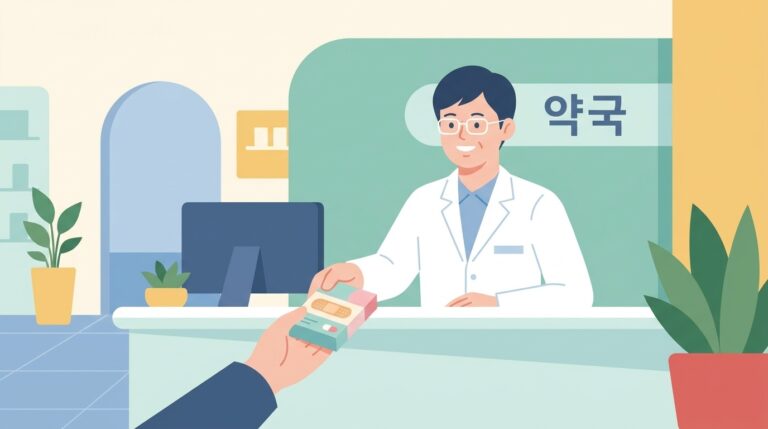
How to Ask for a Band-Aid in Korean: Your Beginner First-Aid Guide
Phase 1: 공감 (Story-Driven Opening)
안녕하세요! 매일한글 에디터입니다. (Hello! I’m your Daily Hangul editor.)
Picture this: You are exploring the bustling, neon-lit streets of Hongdae or hiking the scenic stone paths of Bukchon Hanok Village. Suddenly, your brand-new walking shoes give you a painful heel blister, or you get a minor paper cut while unwrapping K-pop souvenirs. You spot a green cross sign (약 – Pharmacy) and a convenience store, but a wave of panic hits you: “How do I ask for a simple bandage in Korean without sounding like a robot or resorting to wild hand gestures?”
If you have ever felt your heart race at the thought of speaking Korean in an urgent situation, breathe easy. You are not alone! Asking for basic medical supplies like an adhesive bandage is one of the most common hurdles for A1 learners. This guide turns that anxiety into pure confidence. Built on real feedback from hundreds of beginner students, this quick and friendly playbook will teach you the exact, natural phrases locals use so you can get healed up and back to your Korean adventure in seconds.
Phase 2: 핵심 표현 3선 심층 분석 (3 Core Expressions)
1. 반창고 주세요 (Banchanggo juseyo)
- Pronunciation: [Ban-chang-go ju-se-yo] (Sounds like “Bahn-chahng-go joo-seh-yo”)
- Meaning: Literal: “Adhesive bandage, give me please.” / Actual Nuance: “May I have a band-aid, please?”
- K-Culture Moment: In K-Dramas like Hospital Playlist or classic rom-coms, whenever a character gets a scrape, the caring friend or love interest runs to the convenience store and gently hands over a cute cartoon
반창고(banchanggo).- Editor’s Insight:
주세요(juseyo) is the golden magic key for beginners in Korea. Attach it to any noun to politely request an item.- Situation Spectrum: Casual (⚠️ with close friends, use 반창고 줘), Semi-formal (✅ 반창고 주세요), Formal (✅ 반창고 주시겠어요?)
- 🤔 Think About It: In English, we often ask “Do you have band-aids?” before asking to buy one. In Korean, jumping straight to
[Item] 주세요is completely natural and polite!2. 대일밴드 있어요? (Daeilbaendeu isseoyo?)
- Pronunciation: [Dae-il-baen-deu it-seo-yo] (Sounds like “Day-eel-band-eu eet-suh-yo?”)
- Meaning: Literal: “Is there Daeilband?” / Actual Nuance: “Do you carry Band-Aids?”
- K-Culture Moment: Just like “Band-Aid” or “Kleenex” in the West,
대일밴드(Daeilband) is a legendary Korean household brand name that became the generic term for adhesive bandages.- Editor’s Insight: While
반창고is the formal vocabulary word, asking for대일밴드at a neighborhood store instantly makes you sound like a local insider.- Situation Spectrum: Casual (✅), Semi-formal (✅), Formal (⚠️)
- 🤔 Think About It: Notice how brand names shape daily language across different cultures. What household brand names do you use as generic words in your native language?
3. 상처 났어요 (Sangcheo nasseoyo)
- Pronunciation: [Sang-cheo nat-seo-yo] (Sounds like “Sahng-chuh naht-suh-yo”)
- Meaning: Literal: “A wound has appeared.” / Actual Nuance: “I got a cut / I got hurt.”
- K-Culture Moment: Used whenever someone notices blood or a scrape. Pointing to your scratch and saying this will prompt any Korean pharmacist to immediately recommend the right ointment (
연고, yeongo).- Editor’s Insight: Korean describes physical issues as things that “occurred” or “came out” (
났다, natda) rather than saying “I hurt myself.”- Situation Spectrum: Casual (⚠️ 상처 났어), Semi-formal (✅ 상처 났어요), Formal (✅ 상처가 났습니다)
- 🤔 Think About It: Why do you think Korean uses passive expressions for injuries rather than putting the blame on “I”?
Phase 3: 교과서 한국어 vs 진짜 한국어 (Textbook vs. Real Korean)
Situation 1: Asking for a bandage at a convenience store
- 📖 교과서 한국어 (Textbook Korean): 저에게 반창고를 하나 판매해 주십시오. (Jeo-ege banchanggo-reul hana panmaehae jusipsio. / “Please sell one adhesive bandage to me.”)
- 🗣️ 진짜 한국어 (Real Korean): 사장님, 반창고 어디 있어요? (Sajangnim, banchanggo eodi isseoyo? / “Boss, where are the band-aids?”)
- 💡 왜 다를까? (Why is it different?): Textbook Korean overuses hyper-formal grammatical particles. In reality, addressing the clerk warmly as
사장님(sajangnim – store owner/boss) and dropping awkward particles is standard everyday Korean.
Situation 2: Asking for wound ointment at a pharmacy
- 📖 교과서 한국어 (Textbook Korean): 상처에 바르는 약을 원합니다. (Sangcheo-e bareuneun yageul wonhamnida. / “I desire medicine to apply on wounds.”)
- 🗣️ 진짜 한국어 (Real Korean): 여기 바르는 연고 주세요. (Yeogi bareuneun yeongo juseyo. / “Please give me ointment to put here.”)
- 💡 왜 다를까? (Why is it different?): Real Korean is contextual and concise. Koreans combine simple pointing with
주세요(juseyo) to communicate quickly and clearly.
Phase 4: K-Culture 딥다이브 & 비언어적 매너 (Culture & Manners)
4-1. 눈치 (Nunchi) & Polite Gestures
- The Two-Handed Hand-off: When receiving your band-aids or handing over your credit card/cash, always support your right forearm or wrist with your left hand, or hold the card with both hands. It shows immense respect.
- Light Bow (목례 – Mokrye): Make brief eye contact, deliver your request, and accompany your
감사합니다(gamsahamnida) with a slight 15-degree head nod.
4-2. Cultural Code: Pharmacies (약국) vs. Convenience Stores (편의점)
In Korea, basic first-aid supplies are divided:
* 편의점 (Convenience Stores – GS25, CU, 7-Eleven): Great for 24/7 emergencies. They sell standard boxes of 대일밴드 (Daeilband) and basic safety medicines (안전상비의약품).
* 약국 (Pharmacies – look for the big “약” sign): Ideal if you need specialized waterproof bandages, scar ointments like Madecassol (마데카솔) or Fucidin (후시딘), and hydrocolloid acne/blemish patches.
Phase 5: 실전 롤플레이 시나리오 (Practical Roleplay)
Setting: A cozy neighborhood pharmacy in Insadong. You walk in while holding a finger that got scraped against a souvenir box.
Characters: You (Traveler) & Friendly Pharmacist (약사님, Yaksanil)
- You: 안녕하세요! (Annyeonghaseyo! / 🎭 Bowing slightly as you enter the pharmacy door.)
- Pharmacist: 어서 오세요! 어디 불편하세요? (Eoseo oseyo! Eodi bulpyeonhaseyo? / 🎭 Smiling and stepping behind the glass counter.)
- You: 저, 손에 상처 났어요. (Jeo, sone sangcheo nasseoyo. / 🎭 Pointing to your lightly bleeding index finger with a slightly pained look.)
- Pharmacist: 아이고, 따갑겠네요. 소독약 발라드릴까요? (Aigo, ttagapkkenneyo. Sodokyak balladeurilkkayo? / 🎭 Checking the scrape with genuine concern.)
- You: 네, 반창고도 주세요. (Ne, banchanggodo juseyo. / 🎭 Nodding politely.)
- Pharmacist: 여기 방수 반창고하고 연고 있어요. (Yeogi bangsu banchanggohago yeongo isseoyo. / 🎭 Placing a waterproof band-aid pack and ointment on the counter.)
- You: 얼마예요? (Eolmayeyo? / 🎭 Taking out your payment card with both hands.)
- Pharmacist: 오천 원입니다. (Ocheon-won-imnida. / 🎭 Handing the receipt with both hands.)
🔀 Interactive Choice: What do you say when taking your items?
- Option A:
감사합니다! 수고하세요!(Gamsahamnida! Sugohaseyo!)- Feedback (Best): Perfect! “Thank you! Keep up the good work!” is the standard friendly farewell to shopkeepers.
- Option B:
안녕!(Annyeong!)- Feedback (Bad): Too casual! This is informal talk (
반말) used only with young kids or close friends.
- Feedback (Bad): Too casual! This is informal talk (
- Option C:
사랑해요!(Saranghaeyo!)- Feedback (Risk): While funny, saying “I love you” to your pharmacist will cause cute confusion and awkward giggles!
Phase 6: 10초 감정 섀도잉 드릴 (10-Second Shadowing Drill)
Repeat these lines out loud, pausing at the / marks and mimicking the emotional cue:
[🥺 Slightly hurt & polite]저기요… / 반창고 / 있어요?
(Jeogiyo… / banchanggo / isseoyo?)[🩹 Direct & clear]반창고 / 하나 / 주세요!
(Banchanggo / hana / juseyo!)[😊 Relieved & cheerful]감사합니다! / 안녕히 계세요!
(Gamsahamnida! / Annyeonghi gyeseyo!)
Phase 7: K-Culture 미니 사전 (Mini Dictionary)
- 반창고 (Banchanggo): Adhesive bandage / plaster. The official term for any standard sticky wound cover.
- 연고 (Yeongo): Ointment / topical cream. Essential to ask for when healing cuts without scars.
- 소독약 (Sodokyak): Antiseptic / disinfectant liquid (rubbing alcohol, iodine/povidone).
- 방수 (Bangsu): Waterproof. Look for
방수 반창고if you plan to shower or visit a Korean Jjimjilbang (sauna).
Phase 8: 여행자를 위한 생존 키트 (Traveler’s Survival Kit)
Survival TOP 3 Phrases:
- 이거 주세요. (Igeo juseyo.) – “Please give me this one.” (Pro Tip: Just point at the item on the shelf!)
- 약국 어디예요? (Yakguk eodiyeyo?) – “Where is the pharmacy?” (Pro Tip: Look for signs marked with a giant red or green “약” letter).
- 얼마예요? (Eolmayeyo?) – “How much is it?” (Pro Tip: Have your card or 5,000 KRW ready).
🧳 Editor’s Travel Note:
When in Korea, Google Maps has limited walking directions. Download the Naver Map navigation app or Kakao Map transport guide and type 약국 (pharmacy) to find the nearest open location even late at night.
Phase 9: “한 발 더 깊이” (Deep Cultural Dive)
In Korean society, minor injuries trigger a unique communal warmth known as 정 (Jeong). If a colleague, classmate, or host sees you with a paper cut, they will often rush to find a 반창고 for you before you even ask. Caring for another person’s small physical discomfort is an unspoken gesture of affection and attentive social harmony.
💬 Your Turn: In your home culture, is it common to carry band-aids in your bag for others, or is medical care strictly private? Share your thoughts below!
Phase 10: FAQ & 오해 방지 (FAQ Schema)
Q: Can I buy band-aids at any convenience store in Korea?
A: Yes! All major convenience stores (CU, GS25, 7-Eleven, Emart24) stock basic 반창고 (Daeilband), sanitary pads, and basic fever reducers in their first-aid section.
Q: What is the difference between 반창고 (banchanggo) and 대일밴드 (daeilbaendeu)?
A: 반창고 is the proper Korean noun for an adhesive bandage, while 대일밴드 is a famous brand name (like Band-Aid) used interchangeably in daily conversation.
Q: How do I ask for hydrocolloid acne/pimple patches?
A: Ask for 여드름 패치 주세요 (Yeodeureum paechi juseyo) at any pharmacy or Olive Young health & beauty store.
🚨 흔한 실수 (Common Mistakes) Checklist:
- ❌ Saying “기브 미 반창고” (Broken Konglish) ➔ ✅ Correct Action: Say
반창고 주세요(Banchanggo juseyo). - ❌ Handing money with one hand disrespectfully ➔ ✅ Correct Action: Support your wrist with your left hand.
- ❌ Looking for prescription antibiotics in convenience stores ➔ ✅ Correct Action: Visit an authorized
약국(Pharmacy) for medicated treatments.
Phase 11: 액션 미션 & 참여 유도 (Action Missions)
- 🥉 Bronze Mission: Practice saying
반창고 주세요three times aloud in front of a mirror. - 🥈 Silver Mission: Save a screenshot of this guide on your phone for your upcoming Korea travel kit.
- 🥇 Gold Mission: Walk into a local Korean mart or pharmacy on your trip and buy a pack of bandages entirely in Korean!
- 🎮 K-Culture Mission: Watch an episode of a K-Drama and spot how many times characters say
주세요(juseyo) when buying things.
Phase 12: 인터랙티브 퀴즈 챌린지 (Interactive Quiz)
Q1. How do you politely say “Please give me a band-aid” in Korean?
* a) 반창고 가세요 (Banchanggo gaseyo)
* b) 반창고 주세요 (Banchanggo juseyo)
* c) 반창고 먹어요 (Banchanggo meogeoyo)
👉 Click to see the answer & explanation!
Correct Answer: b) 반창고 주세요 (Banchanggo juseyo)
Explanation: 주세요 means “please give me,” making it the right polite phrasing. 가세요 means “please go,” and 먹어요 means “to eat”!
Q2. Fill in the blank:
“손에 _______ 났어요. (I got a cut/wound on my hand.)”
👉 Click to see the answer & explanation!
Correct Answer: 상처 (Sangcheo)
Explanation: 상처 means wound or scrape. Combined with 났어요, it forms the natural phrase for getting hurt.
Q3. [True / False] In Korea, you can only buy bandages at hospitals.
👉 Click to see the answer & explanation!
Correct Answer: False!
Explanation: You can easily purchase bandages at local pharmacies (약국), convenience stores (편의점), and Olive Young stores all across Korea.







