

Phase 1: Empathy & K-Culture Story Opening
안녕하세요! 매일한글 에디터입니다. (Hello! This is your Daily Hangul editor.)
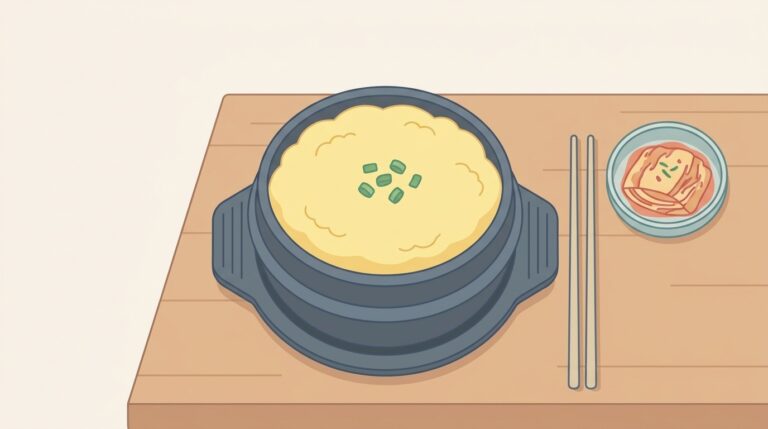
Picture this: You are sitting at a bustling Korean BBQ or spicy braised ribs (Maeun Galbijjim) restaurant in Euljiro, Seoul. The table is glowing with charcoal, the scent of sizzling meat fills the air, and your mouth is on fire from the intense chili heat. You glance around and see steaming, fluffy mounds of volcanic steamed egg (Gyeran-jjim) landing on neighboring tables—completely on the house! You want to ask the friendly owner (Imo-nim) for one, but you freeze. How do you politely ask for a complimentary side without sounding demanding or rude?
In Korea, asking for service (서비스 – free complimentary items) is an art form rooted in Jeong (warm affection) and timing. Based on real feedback from intermediate learners who struggled with sounding either too stiff or unintentionally entitled, this guide will equip you with B2-level natural phrasing, vocal nuance, and cultural intuition (Nunchi) to get that warm, fluffy steamed egg like a true local!
Phase 2: Top 3 Essential Expressions for “Gyeran-jjim Service”
1. 혹시 계란찜 서비스로 주실 수 있나요? (Hoksi gyeranjjim seobiseuro jusil su innayo?)
- Pronunciation: Hoke-shee gye-ran-jeem suh-bee-seu-ro joo-sheel soo een-nah-yo? (Rhyme Hoksi softly like a gentle “by any chance”)
- Meaning: “By any chance, could you give us steamed egg as a complimentary service?”
- K-Culture Moment: Seen frequently in K-Dramas when close friends order a large round of grilled pork belly and playfully negotiate with the restaurant owner.
- Editor’s Insight: The magic word here is 혹시 (hoksi – by chance). It instantly softens the request, signaling humility and respecting the owner’s discretion.
- Situation Spectrum: Casual ✅ | Semi-formal ✅ | Formal ⚠️
- 🤔 Think About It: Why does Korean rely heavily on softening adverbs like 혹시 compared to direct Western requests?
2. 매운 거 잘 못 먹어서 그런데, 계란찜 하나만 챙겨주세요~ (Maeun geo jal mot meogeoseo geureonde, gyeranjjim hanaman chaenggyeojuseyo~)
- Pronunciation: Mae-oon guh jal mote muh-guh-suh geu-reohn-deh, gye-ran-jeem ha-na-mahn chaeng-gyuh-joo-seh-yo~
- Meaning: “I can’t handle spicy food well, so could you please hook us up with a steamed egg~?”
- K-Culture Moment: Classic line used by Maepjjiri (spicy food weaklings) when ordering Maeun Galbijjim or spicy chicken feet (Dakbal).
- Editor’s Insight: Using 챙겨주세요 (take care of / look after us with) instead of plain 주세요 adds warmth, treating the owner like an affectionate guardian.
- Situation Spectrum: Casual ✅ | Semi-formal ✅ | Formal 🚫
- 🤔 Think About It: How does expressing personal vulnerability (e.g., struggling with spice) build rapport in Korean dining?
3. 저희 많이 시켰는데 계란찜 서비스 부탁드려요! (Jeohi mani sikyeonneunde gyeranjjim seobiseu butakdeuryeoyo!)
- Pronunciation: Juh-hee mah-nee shee-kyuhn-neun-deh gye-ran-jeem suh-bee-seu boo-tahk-deu-ryuh-yo!
- Meaning: “We ordered a lot, so we’d love a complimentary steamed egg if possible!”
- K-Culture Moment: The staple phrase during lively team dinners (Hoeshik) when the table is crowded with multiple orders of braised meats and drinks.
- Editor’s Insight: The connective ending -는데 (-neunde) gently presents your justification (“we ordered a lot”) before delivering the cheerful favor.
- Situation Spectrum: Casual ✅ | Semi-formal ✅ | Formal ⚠️
- 🤔 Think About It: How does commercial loyalty translate into mutual community perks in street dining culture?
Phase 3: Textbook Korean vs. Real Korean
- Situation 1: Inquiring about free side dishes
- 📖 교과서 한국어: 무료 계란찜을 제공해 주실 수 있습니까? (Can you provide complimentary steamed egg?)
- 🗣️ 진짜 한국어: 사장님, 혹시 계란찜 서비스 돼요? (Owner, by any chance is steamed egg possible as service?)
- 💡 왜 다를까? Textbook Korean sounds like a written legal contract. Real Koreans use concise, colloquial phrasing like 서비스 돼요? with a warm smile.
- Situation 2: Checking if the dish that just arrived is complimentary
- 📖 교과서 한국어: 이것은 추가 요금이 없는 음식입니까? (Is this food without additional charge?)
- 🗣️ 진짜 한국어: 어머, 사장님 이거 서비스예요? (Oh my, owner, is this on the house?)
- 💡 왜 다를까? Koreans express delight with interjections like 어머 (Oh my), acknowledging the host’s generosity instantly.
Phase 4: K-Culture Deep Dive & Non-Verbal Manners
4-1. Nunchi & Body Language
- Eye Contact & Smile: Never yell “서비스 주세요!” across the room. Wait until the server or owner brings a dish to your table, make pleasant eye contact, and use a slight 15-degree head tilt.
- The Two-Handed Gesture: When the steamed egg arrives in its bubbling hot earthenware pot (Ttukbaegi), receive it by placing both hands near the plate rim and bow slightly saying “감사합니다! 잘 먹겠습니다!”
4-2. Cultural Code: The Concept of ‘Service’ (서비스)
In Western dining, asking for free food can be perceived as stingy or offensive. In Korea, however, Service is a reciprocal dance of Jeong (정). When you order main dishes (like spicy braised short ribs) or several bottles of drinks, owners love rewarding customers. Steamed egg (Gyeran-jjim) is the golden standard of service because it soothes the stomach against fiery spice.
Phase 5: Real-Life Roleplay Scenario
- Setting: A bustling spicy braised rib restaurant in Hongdae on Friday night.
- Characters: You (Hungry foodie) & Imo-nim (Friendly restaurant owner).
- You: 사장님, 매운 갈비찜 2인분하고 당면 사리 추가해 주세요! 🎭 (Smiling while pointing at the menu)
(Sajangnim, maeun galbijjim i-inbun-hago dangmyeon sari chugahae juseyo!)
“Owner, two servings of spicy braised ribs and extra glass noodles, please!” - Imo-nim: 네~ 맵기는 보통으로 해드릴까? 🎭 (Noting down the order swiftly)
(Ne~ maepgineun botong-euro haedeurilkka?)
“Sure~ Shall I make the spice level medium for you?” - You: 네! 그런데 저희가 매운 걸 잘 못 먹어서요. 혹시 계란찜 서비스로 조금만 주실 수 있나요? 🎭 (Looking hopeful with polite palms pressed together)
(Ne! Geureonde jeohiga maeun geol jal mot meogeoseoyo. Hoksi gyeranjjim seobiseuro jogeumman jusil su innayo?)
“Yes! But we can’t handle spicy food very well. By any chance, could you hook us up with a small steamed egg?” - Imo-nim: 아이고, 매운 거 못 먹어? 알겠어, 내가 보글보글 맛있게 하나 해줄게! 🎭 (Laughing warmly)
(Aigo, maeun geo mot meogeo? Algesseo, naega bogeulbogeul masitge hana haejulge!)
“Oh dear, you can’t eat spicy? Alright, I’ll bubble up a delicious one for you!” - You: 우와, 정말요? 사장님 최고예요! 감사합니다! 🎭 (Clapping softly in genuine joy)
(Uwa, jeongmalyo? Sajangnim choegoyeyo! Gamsahamnida!)
“Wow, really? You’re the best, owner! Thank you!” - Imo-nim: 자, 뜨거우니까 조심해서 먹어! 뚝배기 조심하고! 🎭 (Placing a sizzling, fluffy egg pot down)
(Ja, tteugeounikka josimhaeseo meogeo! Ttukbaegi josimhago!)
“Here, it’s scorching hot so eat carefully! Watch the earthenware pot!” - You: 대박… 비주얼 대박이네요. 맛있게 잘 먹겠습니다! 🎭 (Taking out spoon eagerly)
(Daebak… bijueol daebagineyo. Masitge jal meokgetseumnida!)
“Amazing… the visual is incredible. We will eat well!” - Imo-nim: 맛있게 먹고 부족하면 또 말해~ 🎭 (Pats your shoulder warmly)
(Masitge meokgo bujokhamyeon tto malhae~)
“Enjoy your meal, and let me know if you need anything else~”
🔀 Interactive Decision Branch
What do you say when the spicy ribs taste hotter than expected and you want one more bowl of rice?
* Choice A: “이모, 너무 매워요! 계란찜 또 공짜로 줘요!” (Imo, it’s too spicy! Give another steamed egg for free!)
* Choice B: “사장님, 공깃밥 하나 추가해 주시고, 덜 맵게 먹는 꿀팁 있을까요?” (Owner, one extra rice please, and do you have any pro-tips to eat it less spicy?)
* Choice C: “음식이 너무 매워서 못 먹겠으니 환불해 주세요.” (This food is too spicy to eat, give me a refund.)
- Detailed Feedback:
- Choice A (Bad / Rude): Demanding free food twice disrupts Jeong and sounds entitled.
- Choice B (Best / High EQ): Highly polite! Asking for advice engages the owner, who will likely bring extra broth or side dishes willingly.
- Choice C (Risk / Social Disaster): Korean restaurants do not refund customized spice orders; this creates unnecessary confrontation.
Phase 6: 10-Second Emotion Shadowing Drill
- [😊 Politeness & Gentle Inquiry]
- 혹시 / 계란찜 / 서비스로 주실 수 있나요? /
- Hoksi / gyeranjjim / seobiseuro jusil su innayo? /
- [🥺 Playful Vulnerability & Pleading Tone]
- 제가 맵찔이라서 그런데, / 계란찜 하나만 챙겨주세요~ /
- Jega maepjjiriraseo geureonde, / gyeranjjim hanaman chaenggyeojuseyo~ /
- [🎉 Heartfelt Delight & Gratitude]
- 우와 사장님, / 이거 서비스예요? / 진짜 감사합니다! /
- Uwa sajangnim, / igeo seobiseuyeyo? / jinjja gamsahamnida! /
Phase 7: K-Culture Mini Dictionary
- 서비스 (Seobiseu) | Noun | Complimentary food or drink offered by shopkeepers to show appreciation.
- 뚝배기 (Ttukbaegi) | Noun | Traditional unglazed Korean earthenware pot that retains sizzling heat for stews and steamed dishes.
- 폭탄계란찜 (Poktan-gyeranjjim) | Noun | “Volcano” steamed egg with an overflowing, souffle-like dome texture created by rapid high-heat steaming.
- 맵찔이 (Maepjjiri) | Slang/Noun | A person with low spice tolerance (playful, self-deprecating term used among friends).
Phase 8: Survival Kit for Travelers
- Top 3 Emergency Dining Phrases:
- 계란찜 하나 추가해 주세요. (Gyeranjjim hana chugahae juseyo.) – “Please add one order of steamed egg (paid).”
- 덜 맵게 해주실 수 있나요? (Deol maepge haejusil su innayo?) – “Could you make it less spicy?”
- 서비스 정말 감사드립니다! (Seobiseu jeongmal gamsadeurimnida!) – “Thank you so much for the complimentary service!”
- 💡 Editor’s Travel Note:
When hunting for authentic steamed rib restaurants in Seoul, check user photo reviews via the 네이버 지도 앱 다운로드 to see if Poktan-gyeranjjim is served as a default complimentary banchan or paid side dish!
Phase 9: “A Step Deeper” (Reflective Essay)
Korean dining tables reflect community solidarity. When an owner gives you a bowl of Gyeran-jjim, it is not just free food; it is an unspoken gesture saying, “I see you enjoying my food, and I care about your comfort.” This reciprocal affection softens the boundary between merchant and customer.
💬 Your Turn: Does your home country have an equivalent of Service food, or is dining strictly transactional? Share your thoughts in the comments below!
Phase 10: FAQ & Avoiding Misunderstandings
Q: Can I demand ‘service’ as soon as I sit down before ordering?
A: Absolutely not. ‘Service’ is granted at the owner’s discretion, usually after placing a generous order or ordering alcoholic drinks. Asking upfront sounds demanding.
Q: Is Gyeran-jjim always free in Korean restaurants?
A: No. Upscale dining or specialized eateries charge between 3,000 to 5,000 KRW on their regular menu. Always ask politely with “혹시…”.
Q: What should I do if the owner politely declines?
A: Simply smile and say: “아, 네! 그럼 하나 주문할게요!” (Oh, I see! Then I’ll order one!). It keeps the mood cheerful.
🚨 Common Mistakes Alert
- ❌ Mistake 1: Shouting “공짜로 줘요!” (Give it to me for free!). -> Correct Action: Use “서비스로 주실 수 있나요?”.
- ❌ Mistake 2: Expecting service at self-order kiosk restaurants. -> Correct Action: Kiosks are automated; service is customary in sit-down dining with table service.
- ❌ Mistake 3: Leaving the complimentary dish untouched. -> Correct Action: Always eat enthusiastically to show gratitude to the cook!
Phase 11: Action Missions
- 🥉 Bronze Mission: Practice saying “혹시 계란찜 서비스로 주실 수 있나요?” 5 times with a gentle smile in front of the mirror.
- 🥈 Silver Mission: Post an Instagram story of your favorite Korean food using the hashtag
#매일한글 #KFoodKorean. - 🥇 Gold Mission: Next time you visit a Korean restaurant with friends, order spicy food and successfully ask the server for complimentary Gyeran-jjim!
- 🎮 K-Culture Mission: Watch an episode of a Korean street-food variety show (e.g., Street Food Fighter or Sixth Sense) and spot when customers say “서비스예요?”.
Phase 12: Interactive Quiz Challenge
Q1. Which word should you add at the beginning of your request to sound most polite and non-demanding?
* A) 빨리 (Ppalli)
* B) 혹시 (Hoksi)
* C) 무조건 (Mujogeon)
Q2. Fill in the blank:
* “매운 거 잘 못 먹어서 그런데, 계란찜 하나만 ______주세요!”
Q3. True or False:
* In Korean restaurants, asking for ‘service’ is treated the exact same as demanding a financial discount.
👉 Click to view Answer & Explanation
- Q1 Answer: B) 혹시 (Hoksi)
- Explanation: Hoksi translates to ‘by any chance’, making the favor gentle and considerate.
- Q2 Answer: 챙겨 (chaenggyeo)
- Explanation: 챙겨주세요 implies caring for someone by providing food warmly.
- Q3 Answer: False
- Explanation: ‘Service’ is an affectionate hospitality gesture (Jeong), not a contractual monetary demand.
- Explanation: ‘Service’ is an affectionate hospitality gesture (Jeong), not a contractual monetary demand.







