

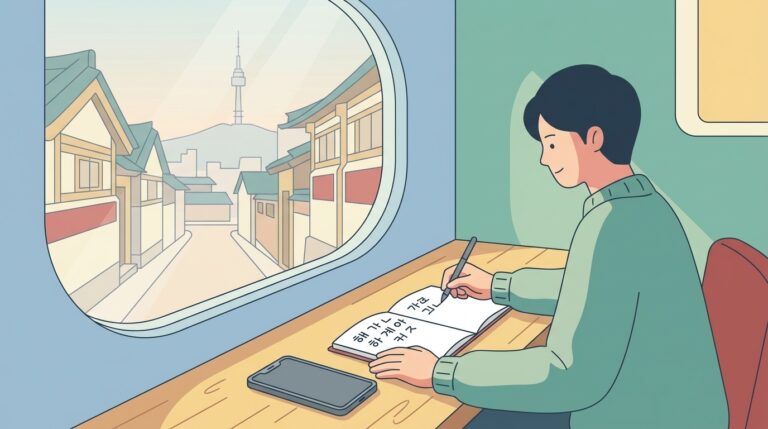
C2 Korean Masterclass: Beating Digital Dementia with High-Level Discourse
Phase 1: Empathy & Storytelling
안녕하세요! 매일한글 (Daily Hangul) Editor here! Have you ever stood in the middle of a bustling cafe in Seongsu-dong, tapped your KakaoPay on the kiosk, and then completely blanked on your best friend’s six-digit door code or even your own Korean phone number? You frantically reach for your smartphone, only to realize the screen is dead. That sudden jolt of helpless panic—that is what Koreans casually term 디지털 치매 (Digital Dementia).
In South Korea, one of the most hyper-connected societies in the world, over-reliance on algorithms and predictive text has sparked a major cultural conversation around cognitive resilience and digital detoxing. For advanced (C2) learners, mastering this topic goes far beyond knowing tech jargon; it is about navigating nuanced philosophical debates on cognitive agency, using idioms that critique algorithmic dependency, and articulating introspective thoughts like a native intellectual. Based on countless mentoring sessions with senior learners and expatriate professionals, here is your definitive C2 guide to dissecting digital habits in sophisticated Korean.
Phase 2: Deep Dive into 3 Core Expressions
1. 뇌를 비우다 (Noe-reul bi-uda)
- Pronunciation: [Noe-reul bi-uda] (Sounds like nweh-reul bee-oo-da — think of ‘emptying out a basket’)
- Meaning: Literal: ‘To empty one’s brain’ vs. Pragmatic: ‘To shut off cognitive processing’ or ‘To experience mental blankness due to automation’
- K-Culture Moment: Often heard on healing variety shows like Three Meals a Day or self-development podcasts when guests discuss taking a break from screen-induced cognitive overload.
- Editor’s Insight: While beginners say “생각이 안 나요” (I can’t think of it), C2 speakers say “스마트폰 때문에 저도 모르게 뇌를 비우고 사나 봐요” to critically reflect on cognitive lethargy.
- Situation Spectrum: Casual: ✅ | Semi-formal: ✅ | Formal (Debate/Essay): ⚠️ (Use ‘사유(思惟)의 부재’ or ‘인지적 나태’ in academic papers)
- 🤔 Think About It: Does your native language distinguish between intentional mindful meditation (‘emptying the mind’) and unintentional digital-induced cognitive atrophy?
2. 깜빡깜빡하다 (Kkamppak-kkamppakhada)
- Pronunciation: [Kkam-ppak-kkam-ppak-ha-da] (Think of a flickering neon sign: kkam-ppak mimics the rapid flashing)
- Meaning: Literal: ‘To blink or flicker continuously’ vs. Pragmatic: ‘To experience frequent, transient memory lapses’
- K-Culture Moment: In modern K-dramas, busy tech entrepreneurs sigh at their monitors saying, “요즘 자꾸 정신이 깜빡깜빡하네” when failing to recall appointments.
- Editor’s Insight: It is a mimetic verb. Pairing it with abstract cognitive faculties elevates your speech from childish forgetfulness to poetic self-deprecation.
- Situation Spectrum: Casual: ✅ | Semi-formal: ✅ | Formal: ⚠️
- 🤔 Think About It: Why do Korean onomatopoeia and mimetic words carry so much emotional nuance regarding human biological vulnerability?
3. 디지털 디톡스에 돌입하다 (Dijiteol ditokseu-e doriphada)
- Pronunciation: [Di-ji-teol di-tok-seu-e do-rip-ha-da] (do-rip sounds crisp and decisive, like stepping over an operational threshold)
- Meaning: Literal: ‘To plunge into a digital detox’ vs. Pragmatic: ‘To initiate an active, disciplined regimen to unplug and regain cognitive focus’
- K-Culture Moment: Trending among Korean MZ productivity YouTubers who record “No Smartphone 24-Hour Challenges” in quiet Hanok stays in Jeonju.
- Editor’s Insight: The Sino-Korean verb ‘돌입하다’ (突入) transforms a mundane lifestyle choice into a resolute, strategic maneuver.
- Situation Spectrum: Casual: ⚠️ | Semi-formal: ✅ | Formal: ✅
- 🤔 Think About It: How does borrowing English loanwords like ‘디톡스’ combined with formal Sino-Korean predicates shape modern Korean sociolects?
Phase 3: Textbook Korean vs. Real Native Korean
Scenario 1: Forgetting a phone number
- 📖 Textbook Korean: “저는 스마트폰이 없으면 친구의 전화번호를 기억할 수 없습니다.” (Jeoneun seumateuponi eopseumyeon chingu-ui jeonhwabeonhoreul gieokhal su eopseumnida.)
- 🗣️ Real Native Korean (C2): “기기에만 의존하다 보니, 손가락만 움직일 뿐 당최 번호가 머릿속에 안 떠오르네요.” (Gigi-eman uijonhada boni, songgarakman umjigil ppun dangchoe beonhoga meorissoge an tteo-oreuneyo.)
- 💡 Cultural Context: C2 Korean utilizes discourse markers like ‘당최’ (at all / in the world) and metaphorical contrasts between physical automation and cerebral recall.
Scenario 2: Suggesting an active mental exercise
- 📖 Textbook Korean: “기억력을 좋게 하기 위해 두뇌 훈련을 합시다.” (Gieongnyeogeul joke hagi wihae dunoe hullyeoneul hapsida.)
- 🗣️ Real Native Korean (C2): “디지털 치매 예방 차원에서라도 오늘은 내비게이션 끄고 공간 감각을 좀 일깨워볼까요?” (Dijiteol chimae yebang cha-woneseorado oneureun naebigeisyeon kkeugo gonggan gamgageul jom ilkkaewobolkkayo?)
- 💡 Cultural Context: Highly articulate speakers frame exercises with pragmatic suffixes like ‘-차원에서’ (in terms of / for the sake of) and evocative verbs like ‘일깨우다’ (to awaken/reinvigorate).
Phase 4: K-Culture Deep Dive & Non-Verbal Manners
4-1. Nunchi & Mindful Non-Verbal Manners
In South Korea’s hyper-digital meeting rooms or social dinners (hoeshik), glancing repeatedly at a smartwatch or phone is a subtle breach of Nunchi (눈치), signaling emotional absence. When actively trying to demonstrate respect and mental engagement without devices:
* Maintain relaxed eye contact (시선 맞춤) and interject with active empathetic noddings (고개 끄덕임).
* If you must write down a note, use an analog notepad (아날로그 수첩) in front of senior colleagues; it portrays a grounded, deliberate intellect unaffected by digital distraction.
4-2. Cultural Phenomenon: The ‘Dopamine Detox’ Culture in Seoul
From the “Text-hip” (텍스트 힙) book club boom in Yeonhui-dong to silent reading cafes where phones are locked away in wooden boxes, younger Koreans are countering algorithmic burnout. Engaging in this cultural movement is not merely about health; it represents high cultural capital (문화 자본).
Phase 5: Live Roleplay Scenario
Setting: A minimalist tea house in Bukchon. Min-jun (a tech lead feeling cognitive fatigue) meets Sophia (a C2-level foreign strategist).
- Turn 1 (Min-jun): 소피아 씨, 요즘 들어 자주 가던 식당 이름도 가물가물하고 머리가 굳어가는 느낌이에요. (Sophia-ssi, yojeum deureo jaju gadeon sikdang ireumdo gamul-gamulhago meoriga gudeoganeun neukkim-ieyo.)
🎭 [이마를 짚으며 깊은 한숨을 쉰다 / Massages his temple with a sigh] - Turn 2 (Sophia): 맞아요, 저도 지도 앱 없이는 익숙한 길도 헤매는 제 모습을 보고 덜컥 겁이 나더라고요. (Majayo, jeodo jido aep eopsineun iksukan gildo hemaeneun je moseubeul bogo deolkeok geobi nadeoragoyo.)
🎭 [찻잔을 내려놓으며 진지하게 공감한다 / Places tea cup down, nodding in deep agreement] - Turn 3 (Min-jun): 이게 바로 말로만 듣던 디지털 치매 증상인가 봐요. 알림에 휘둘리느라 깊이 생각할 틈이 없어요. (Ige baro malloman deutdeon dijiteol chimae jeungsang-inga bwayo. Allime hwidullineura gipi saenggakhal teumi eopseoyo.)
🎭 [스마트폰을 뒤집어 화면을 가린다 / Turns phone face-down decisively] - Turn 4 (Sophia): 기술의 편의성에 매몰되다 보면 뇌의 자생력을 잃기 십상이죠. 의식적인 훈련이 필요해요. (Gisurui pyeon-uiseong-e maemol-doeda bomyeon noe-ui jasaengnyeogeul ilki sipsang-ijyo. Uisikjeogin hullyeoni piryohaeyo.)
🎭 [차분하고 단호한 어조로 말한다 / Speaks in a calm, intellectual tone] - Turn 5 (Min-jun): 자생력이라… 구체적으로 어떤 훈련을 하고 계신가요? (Jasaengnyeogira… Guchejeogeuro eotteon hullyeoneul hago gyesingayo?)
🎭 [호기심 어린 눈빛으로 몸을 앞으로 기울인다 / Leans forward inquisitively] - Turn 6 (Sophia): 전 퇴근길에 의도적으로 오프라인 지도를 그리거나, 하루 일과를 손글씨 일기로 복기해 봐요. (Jeon toegeun-ggire uidojeogeuro opeurain jidoreul geurigona, haru ilgwareul son-geulssi ilgiro bokgihae bwayo.)
🎭 [가방에서 가죽 다이어리를 살짝 보여주며 미소 짓는다 / Shows leather notebook with a subtle smile] - Turn 7 (Min-jun): 일기를 복기(復棋)한다고요? 바둑에서 쓰는 그 복기 말씀이시죠? 참 신선한 접근이네요. (Ilgireul bokgihandagoyo? Baduk-eseo sseuneun geu bokgi malsseum-isijyo? Cham sinseonhan jeopgeun-ineyo.)
🎭 [감탄하며 고개를 끄덕인다 / Nods in impressed realization] - Turn 8 (Sophia): 네, 흩어진 기억을 스스로 재구성하는 과정 자체가 뇌 신경망을 자극하니까요. (Ne, heuteojin gieogeul seuseuro jaeguseonghaneun gwajeong jachega noe singyeongmang-eul jageukhannikkayo.)
🎭 [확신에 찬 눈빛으로 미소를 건넨다 / Smiles with intellectual conviction]
🔀 Interactive Choice:
How should Sophia close the conversation to invite Min-jun to join a digital-free study circle?
* Option A: “민준 씨도 폰 끄고 저랑 뇌 훈련이나 하러 가실래요?”
(Feedback: Risk – A bit too informal/blunt for an intellectual exchange).
* Option B: “괜찮으시다면 이번 주말에 스마트폰 없이 온전히 사유하는 독서 모임에 함께 동참해보시는 건 어떨까요?”
(Feedback: Best – Sophisticated, inviting, and uses refined lexicon like ‘사유하다’ and ‘동참하다’).
* Option C: “기억력을 위해 약국에서 영양제를 사드시는 게 좋겠어요.”
(Feedback: Bad – Abruptly dismisses the cognitive conversation and shifts to clinical advice).
Phase 6: 10-Second Emotional Shadowing Drill
- Drill 1:
[😔 자조 섞인 목소리로 / Self-deprecating & reflective]
“편리함에 취해 / 내비게이션 없이는 / 집 앞 골목길도 / 헷갈리는 지경에 이르렀다니.”
(Pyeonrihame chwihae / naebigeisyeon eopsineun / jip ap golmokgildo / hetgallineun jigyeonge ireureottani.) -
Drill 2:
[💡 지적이면서도 당찬 어조로 / Intellectual & firm]
“단순 암기를 넘어 / 능동적으로 사유하는 습관만이 / 인지 저하를 막는 / 유일한 방패입니다.”
(Dansun amgireul neomeo / neungdongjeogeuro sayuhaneun seupgwanmani / inji jeohareul mangneun / yuilhan bangpae-imnida.)
Phase 7: K-Culture Mini Dictionary
- 복기하다 (Bokgihada): Lit. ‘To replay a Baduk/Go match step by step.’ Pragmatic: To mentally review and deconstruct past events, actions, or knowledge to train recall and prevent mental lapses.
- 뇌섹남/뇌섹녀 (Noesaeknam / Noesaeknyeo): Lit. ‘Brain-sexy man/woman.’ Describes an individual whose intellectual agility, critical thinking, and sharp wit make them charismatic.
- 도파민 디톡스 (Dopamin Ditokseu): Dopamine Detox. The deliberate abstinence from high-stimulation digital media (Shorts, Reels) to reset attentional capacity.
- 암묵지 (Ammukji): Tacit knowledge. Deep intuitive knowledge embedded through physical experience rather than quick digital lookups.
Phase 8: Traveler’s Cognitive Survival Kit
- Survival Phrase 1: “배터리가 방전되어서 그런데, 광화문 방향을 아날로그 식으로 설명해주실 수 있을까요?” (My battery died; could you give me spatial directions to Gwanghwamun the old-fashioned way?)
- Survival Phrase 2: “스마트폰 주문 키오스크 대신 대면으로 주문해도 괜찮을까요?” (May I order in person with you instead of using the kiosk?)
- Survival Phrase 3: “머릿속에 각인될 수 있도록 주요 랜드마크 위주로 길을 알려주세요.” (Please explain the route using major landmarks so I can firmly etch it in my memory.)
Editor’s Travel Note: When navigating Korean subway systems, resist checking your phone at every interchange. Download the 네이버 지도 앱 다운로드 to memorize transfer station names in Korean beforehand, forcing your brain to decode Hangul directional signage directly.
Phase 9: A Step Deeper (Reflection)
In contemporary Korean society, the boundary between biological self and digital extension is exceptionally blurred. Historically, Korean scholarly traditions (like the Joseon Seonbi philosophy) celebrated rigorous contemplation and the tactile art of calligraphy (Seoye). Today’s struggle against digital dementia is not merely a modern medical concern, but a cultural quest to reclaim humanity’s contemplative depth from rapid automation.
💬 Your Turn: How does your cultural background perceive the balance between tech convenience and autonomous memory? Leave a comment in advanced Korean below!
Phase 10: FAQ & Common Mistakes
Q: Is ‘디지털 치매’ an official medical diagnosis in Korea?
A: No, it is a popular sociological/cultural metaphor rather than a clinical pathology. When speaking formally in academic contexts, use ‘디지털 과의존으로 인한 인지 기능 저하’ (Cognitive decline due to digital over-reliance).
Q: What is the difference between ‘건망증’ and ‘디지털 치매’?
A: ‘건망증’ refers to general age-related or stress-induced absentmindedness. ‘디지털 치매’ specifically pinpoints cognitive atrophy stemming from outsourcing memory to digital storage.
Q: How can I sound sophisticated without sounding arrogant when discussing this topic?
A: Ground your discourse in self-reflection using humble, introspective predicates such as “~에 경각심을 느끼고 있습니다” (I feel a sense of vigilance regarding…) rather than lecturing others.
🚨 Common Mistakes Warning Board:
- ❌ 저 치매 걸렸어요 (I have dementia – overly alarming & inappropriate) ➔ ✅ 요즘 깜빡깜빡하는 게 디지털 치매 증상 같아요. (I seem to be experiencing digital-induced lapses).
- ❌ 뇌를 삭제했어요 (Slang that sounds awkward in polite intellectual discussions) ➔ ✅ 스마트폰에 의존하느라 사유하는 법을 잊고 있었네요.
- ❌ Mixing up ‘기억력 감퇴’ (Natural memory decline) with ‘기억 상실’ (Amnesia/total memory loss).
Phase 11: Action Mission
- 🥉 Bronze Mission (Solo): Write down 3 phone numbers of family members or friends on a sticky note entirely from memory in Korean Sino-numbers.
- 🥈 Silver Mission (Social): Post a short reflection on Instagram or Threads using the hashtag
#디지털디톡스stating one analog routine you did today. - 🥇 Gold Mission (Real Life): Navigate from a subway exit to a destination without unlocking your smartphone once, decoding solely the Hangul street signs.
- 🎮 K-Culture Mission: Watch an episode of a Korean brain-puzzle variety show like The Devil’s Plan or Problematic Men and note down 2 expressions used when contestants explain their cognitive deduction.
Phase 12: Interactive Quiz Challenge
📝 Question 1 (Situational Choice): Click to reveal answer
Q: You want to gracefully explain to a colleague why you carry a paper planner instead of using a phone calendar. Which sentence is most natural for a C2 speaker?
- A) 스마트폰 사기 싫어서 이거 씁니다.
- B) 손으로 직접 적는 행위가 기억을 환기하고 뇌를 깨우는 데 도움이 되더라고요.
- C) 폰으로 쓰면 머리가 바보가 돼요.
Answer: B
Explanation: ‘기억을 환기하다’ (evoke memory) and ‘뇌를 깨우다’ (awaken the brain) reflect high-level stylistic discourse, whereas A and C are too colloquial and unpolished.
📝 Question 2 (Fill in the Blank): Click to reveal answer
Q: Fill in the blank with the appropriate Sino-Korean term:
“알고리즘의 편리함에 매몰되기보다 스스로 생각을 정리하는 ( )의 과정이 절실하다.”
- A) 사유 (思惟 – Contemplation / Critical Thought)
- B) 결제 (Payment)
- C) 복사 (Copying)
Answer: A (사유)
Explanation: ‘사유의 과정’ (the process of contemplative thinking) is the quintessential C2 collocation used when discussing cognitive autonomy.
📝 Question 3 (True / False): Click to reveal answer
Q: In Korean business culture, looking at your smartwatch every 3 minutes while your partner speaks is considered proactive multitasking. (True / False?)
Answer: False
Explanation: It breaches Nunchi (눈치) and signifies cognitive disconnection or disinterest toward the speaker.







