

Master Korean Dry Cleaners: How to Fix a Missing Button Like a Local
Phase 1: Empathy (Story Opening)
안녕하세요! (Hello!) It’s your Daily Hangul editor and cultural navigator. Picture this: you just landed in Seoul, ready to explore Hongdae’s hip cafes or take stylish photos in Ikseon-dong. You slip into your favorite jacket, only to hear a tiny pop—a button rolls across the floor and under the bed.
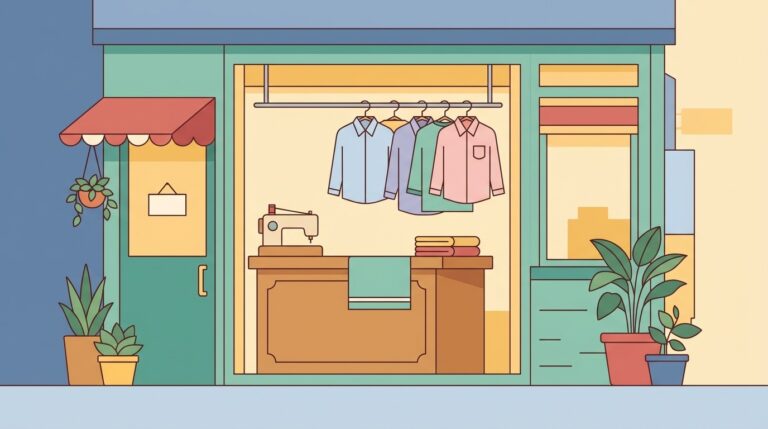
Panic sets in: How do I ask someone in Korea to sew this back on without speaking fluent Korean? Don’t worry! Walking into a neighborhood Setakso (세탁소 – Dry Cleaners) is one of the warmest local experiences you can have. Based on feedback from hundreds of our beginner learners, this simple A1-level guide will give you the exact words, body language, and confidence to get your clothes fixed in minutes!
Phase 2: Top 3 Essential Expressions
1. 단추가 떨어졌어요 (Danchuga tteoleojyeosseoyo)
- Pronunciation: [Dan-chu-ga tteo-reo-jyeo-ssso-yo] (Sounds like “Dan-chew-gah tuh-ruh-jyeo-so-yo”)
- Meaning: Literal: “Button fell off” | Real Nuance: “A button came off (and I need help).”
- K-Culture Moment: You often hear this in K-dramas when a character rushes into an alteration shop right before a blind date or job interview.
- Editor’s Insight: The verb 떨어지다 (tteoleojida) means to fall or drop. In Korean, simply stating the problem gently implies you are asking for help.
- Situation Spectrum: Casual ⚠️ | Semi-formal (Polite) ✅ | Formal ✅
- 🤔 Think About It: In English, we often say “I lost a button” (putting focus on ‘I’). Why do you think Korean focuses on the button itself (단추가) falling?
2. 단추 달아 주세요 (Danchu dara juseyo)
- Pronunciation: [Dan-chu da-ra ju-se-yo] (Like “Dan-chew dah-rah joo-seh-yo”)
- Meaning: Literal: “Please attach the button” | Real Nuance: “Please sew this button back on.”
- K-Culture Moment: Used whenever you hand over an item with a loose or separated button to a friendly tailor.
- Editor’s Insight: 달다 (dalda) means to attach or sew on, and ~주세요 (juseyo) is the golden magic phrase in Korea meaning “please give/do for me.”
- Situation Spectrum: Casual 🚫 | Semi-formal (Polite) ✅ | Formal ✅
- 🤔 Think About It: Adding ~주세요 softens any request instantly into a respectful everyday interaction.
3. 언제 찾으러 와요? (Eonje chajeureo wayo?)
- Pronunciation: [Eon-je cha-jeu-reo wa-yo?] (Like “Uhn-jeh chah-jeu-ruh wah-yo?”)
- Meaning: Literal: “When do I come to find it?” | Real Nuance: “When should I pick it up?”
- K-Culture Moment: Essential when scheduling pick-ups at neighborhood services across Seoul.
- Editor’s Insight: The verb 찾다 (chatda) means ‘to find’ or ‘to claim.’ Beginners love this short, natural phrase!
- Situation Spectrum: Casual ⚠️ | Semi-formal (Polite) ✅ | Formal ✅
- 🤔 Think About It: Notice how Korean uses the concept of “coming to find” instead of the English “pick up.”
Phase 3: Textbook Korean vs. Real Korean
- Situation 1: Requesting a button repair
- 📖 Textbook: 단추를 수선해 주실 수 있습니까? (Danchureul suseonhae jusil su isseumnikka? – Could you please repair this button?)
- 🗣️ Real Korean: 단추 달아 주세요. (Danchu dara juseyo. – Please sew the button on.)
- 💡 Why is it different? While the textbook sentence is grammatically flawless, it sounds overly stiff and robotic for a cozy neighborhood shop.
- Situation 2: Asking for the completion time
- 📖 Textbook: 세탁물을 언제 수령할 수 있습니까? (Setakmureul eonje suryeonghal su isseumnikka? – When may I receive the laundry?)
- 🗣️ Real Korean: 언제 찾으러 와요? (Eonje chajeureo wayo? – When can I pick it up?)
- 💡 Why is it different? 수령 (suryeong) is formal administrative vocabulary. Everyday Koreans use the conversational verb 찾다 (chatda).
Phase 4: K-Culture Deep Dive & Non-Verbal Manners
4-1. Nunchi (눈치) & Body Language
When you enter a neighborhood dry cleaner (세탁소), greeting the owner with a gentle bow and saying “안녕하세요!” (Annyeonghaseyo) sets a warm tone. Hold your garment with both hands and point directly to where the button was. If you still have the loose button, hand it over placed neatly in the palm of your hand or in a small pouch.
4-2. The Soul of Neighborhood Setakso (동네 세탁소)
Unlike commercial automated lockers, traditional Korean neighborhood dry cleaners are community hubs run by master tailors (often called 사장님, Sajangnim). Many have operated in the same alleyway for decades. Minor button fixes are often done on the spot within 5 minutes or ready by the next afternoon for just 1,000 to 3,000 KRW!
Phase 5: Real-Life Roleplay Scenario
- Setting: A warm, steam-filled neighborhood dry cleaner in Mapo-gu, Seoul.
- Characters: You (Traveler) & Mr. Kim (Friendly Shop Owner)
-
Turn 1 (You): 안녕하세요, 사장님! (Annyeonghaseyo, sajangnim! – Hello, boss!) 🎭 [Bow slightly and smile]
- Turn 2 (Mr. Kim): 네, 어서 오세요! 무슨 일이세요? (Ne, eoseo oseyo! Museun iriseyo? – Yes, welcome! What brings you in?) 🎭 [Puts down the steam iron]
- Turn 3 (You): 셔츠 단추가 떨어졌어요. (Syeocheu danchuga tteoleojyeosseoyo. – My shirt button fell off.) 🎭 [Point to the missing spot on the collar]
- Turn 4 (Mr. Kim): 아, 단추 가지고 있어요? (A, danchu gajigo isseoyo? – Ah, do you have the button with you?) 🎭 [Inspects the shirt fabric]
- Turn 5 (You): 네, 여기 있어요. 단추 달아 주세요. (Ne, yeogi isseoyo. Danchu dara juseyo. – Yes, here it is. Please sew it on.) 🎭 [Hand the button over with two hands]
- Turn 6 (Mr. Kim): 금방 돼요. 10분 뒤에 와요! (Geumbang dwaeyo. Sip-bun dwie wayo! – It’ll be quick. Come back in 10 minutes!) 🎭 [Nods with a friendly smile]
- Turn 7 (You): 정말요? 감사합니다! 얼마예요? (Jeongmalyo? Gamsahamnida! Eolmayeyo? – Really? Thank you! How much is it?) 🎭 [Reach for your wallet]
- Turn 8 (Mr. Kim): 2천 원이에요. (I-cheon won-ieyo. – It is 2,000 won.) 🎭 [Takes a needle from the magnetic cushion]
🔀 Interactive Choice Point
What should you do if you lost the original button completely?
* Option A: Say “단추 없어요. 비슷한 걸로 달아 주세요.” (I don’t have it. Please attach a similar one.)
* Option B: Shake your head in silence and point frantically at other buttons.
* Option C: Leave the shop immediately without saying anything.
- Feedback:
- Option A (Best): Perfect! The tailor will gladly pick a matching spare button from their vintage collection.
- Option B (Risk): They will understand you have an issue, but it might cause confusion about matching colors.
- Option C (Bad): You miss out on a quick, affordable 2-minute fix!
Phase 6: 10-Second Emotion Shadowing Drill
Practice these lines out loud with feeling! Pay attention to the pauses (/):
[🥺 Slightly troubled & polite]단추가 / 떨어졌어요. (Danchuga / tteoleojyeosseoyo.)[🙏 Hopeful & friendly]예쁘게 / 달아 주세요. (Yeppeuge / dara juseyo.)[😊 Bright & curious]언제 / 찾으러 와요? (Eonje / chajeureo wayo?)
Phase 7: K-Culture Mini Dictionary
- 단추 (Danchu): Button. Essential for shirts, coats, and jackets.
- 수선 (Suseon): Clothing alteration / repair (e.g., 바지 수선 = pants hemming).
- 세탁소 (Setakso): Neighborhood dry cleaners / laundry and alteration shop.
- 영수증 (Yeongsujeung): Receipt / claim slip given when dropping off laundry items.
Phase 8: Survival Kit for Travelers
- Survival Phrase 1: 이거 수선돼요? (Igeo suseondwaeyo? – Can this be altered/repaired?) — Pro Tip: Show any broken zipper or tear while saying this.
- Survival Phrase 2: 오늘 돼요? (Oneul dwaeyo? – Can it be done today?) — Pro Tip: Great for quick tourist emergencies.
- Survival Phrase 3: 카드 돼요? (Kadeu dwaeyo? – Do you take credit cards?) — Pro Tip: Neighborhood shops prefer small cash (1,000–3,000 KRW) or account transfers for minor button repairs.
-
Editor’s Travel Note: To locate the nearest alteration spot, download the [Naver Map app for Korea travel] and search for the keyword
세탁소or옷수선. Having 2,000–5,000 KRW cash in your wallet ensures hassle-free payment for mini repairs.
Phase 9: One Step Deeper
In many fast-paced modern cities, people discard clothes over a loose thread. However, Korea’s Setakso culture maintains a proud heritage of master craftsmanship, valuing sustainability and neighborly care. The shop owner isn’t just fixing a button; they are restoring your favorite garment with personal pride.
💬 Your Turn: Have you ever needed an emergency clothing fix while traveling abroad? Share your story in the comments below!
Phase 10: FAQ & Common Mistakes
Q: Can I get a button sewn on if I lost the original button?
A: Yes! Most Korean cleaners have large collections of spare buttons. Simply say, “비슷한 단추 있어요?” (Do you have a similar button?).
Q: How long does a simple button repair take?
A: If the owner isn’t busy, it takes under 5 minutes. During busy hours, they may ask you to return in an hour or the next day.
Q: Can I pay with an international credit card?
A: While legally accepted, minor repairs under 3,000 KRW are traditionally paid in cash or via local Korean bank transfer. Keeping small bills handy is recommended.
🚨 Common Mistakes Warning Board
- Saying “단추 고쳐 주세요” (Fix the button): While understood, Koreans naturally say “단추 달아 주세요” (Attach the button).
- Handing items with one hand: Always use two hands when giving clothes to the elder tailor to show good manners.
- Forgetting to check the pick-up day: Don’t forget to confirm with “내일 와요?” (Should I come tomorrow?) before leaving.
Phase 11: Action Missions
- 🥉 Bronze Mission: Stand in front of your mirror and practice saying “단추가 떨어졌어요!” 3 times smoothly.
- 🥈 Silver Mission: Write down “단추 달아 주세요” in your travel notebook or smartphone notes app.
- 🥇 Gold Mission: Spot a real 세탁소 sign on your next walk in Korea and read the Korean letters out loud!
- 🎮 K-Culture Mission: Watch a scene in your favorite K-drama where characters visit an alteration shop and listen for the word 수선 (suseon) or 세탁 (setak).
Phase 12: Interactive Quiz Challenge
1. Situation Question: You enter a dry cleaner and want to politely ask them to sew a button on your jacket. What should you say?
* A) 단추 사세요 (Danchu saseyo)
* B) 단추 달아 주세요 (Danchu dara juseyo)
* C) 단추 버려 주세요 (Danchu beoryeo juseyo)
👉 Click to Reveal Answer & Explanation
- Correct Answer: B) 단추 달아 주세요
- Explanation: ‘달아 주세요’ means ‘please attach/sew on’. Option A means ‘please buy a button’, and Option C means ‘please throw away the button’!
2. Fill in the Blank:
“언제 ______ 와요?” (When should I come pick it up?)
👉 Click to Reveal Answer & Explanation
- Correct Answer: 찾으러 (chajeureo)
- Full Sentence: 언제 찾으러 와요? (Eonje chajeureo wayo?)
3. True or False: In Korea, simple button sewing repairs usually cost more than 50,000 KRW.
👉 Click to Reveal Answer & Explanation
- Correct Answer: False (X)
- Explanation: A minor button fix is very economical, usually costing between 1,000 and 3,000 KRW (approx. $1–$2 USD).






