

Phase 1: Empathy (Story-Driven Opening)
안녕하세요! 매일한글 에디터입니다.
Imagine this: You are having an unforgettable night in Hongdae or Itaewon. The barbecue was mouthwatering, the somaek (soju + beer bomb) flowed endlessly, and you shouted “Jjan!” (Cheers) with Korean friends until 2 AM. But as you step out into the chilly night breeze, the world starts spinning, and your head feels heavy. You know tomorrow’s sightseeing itinerary will be ruined unless you act fast.
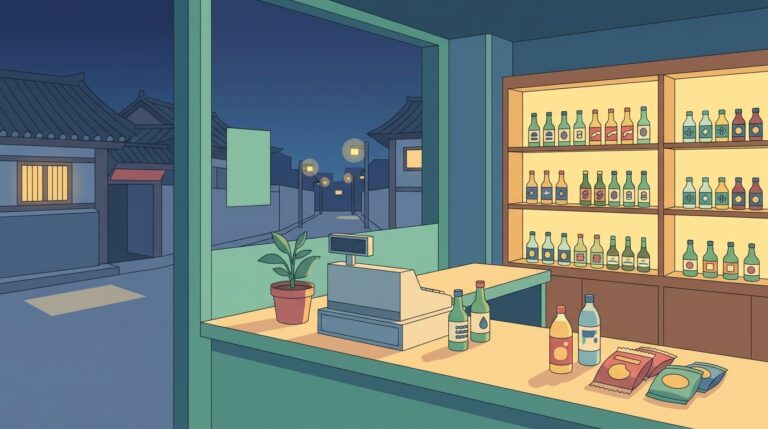
You stumble into a bright 24-hour convenience store (CU, GS25, or 7-Eleven). You face a towering refrigerator stocked with dozens of colorful glass bottles and pocket jelly packs labeled with unfamiliar Korean letters. Which one actually works? How do you ask the cashier for the strongest hangover remedy without sounding like a robotic textbook?
Navigating Korea’s famous drinking culture requires mastering the art of the recovery. Based on feedback from hundreds of our B1 learners, this comprehensive guide will equip you with authentic, natural expressions and insider convenience store tactics to conquer any Korean hangover like a seasoned local.
Phase 2: 3 Core Expressions Deep Dive
1. 숙취 해소제 어디에 있어요? (Sukchwi haesoje eodie isseoyo?)
- Pronunciation: sook-chwee hae-so-jeh uh-dee-eh ee-ssuh-yo? (Rhymes with “sook-tree”)
- Meaning: Direct: “Where is the hangover reliever?” | Nuance: A polite, direct question to locate the entire hangover recovery shelf in a store.
- K-Culture Moment: Frequently heard in K-dramas right after a boisterous hoesik (company dinner), when a thoughtful junior colleague sneaks out to the nearest convenience store to buy drinks for their team.
- Editor’s Insight: Sukchwi (숙취) means “hangover,” and haesoje (해소제) means “relief agent.” You can use this for bottled tonics, pills, or jelly sticks.
- Situation Spectrum: Casual ⚠️ | Semi-formal ✅ | Formal ✅
- 🤔 Think About It: In many Western cultures, hangover remedies are taken the morning after. Why do Koreans prioritize buying sukchwi haesoje before going to sleep or even before round 1?
2. 술 깨는 데 뭐가 제일 잘 나가요? (Sul kkaeneun de mwoga jeil jal nagayo?)
- Pronunciation: sool kkae-neun deh mwo-gah jeh-eel jal nah-gah-yo? (Think “cool cane” for sul kkaen)
- Meaning: Direct: “For sobering up, what goes out the best?” | Nuance: “What is your most popular/effective hangover cure?”
- K-Culture Moment: Used by seasoned nightlife lovers asking the convenience store clerk (alba-saeng) to recommend top-tier drinks like Condition, Morning Care, or Dawn 808.
- Editor’s Insight: Jal nagada (잘 나가다) literally translates to “goes out well,” but idiomatically means “is a bestseller/popular item.”
- Situation Spectrum: Casual ✅ | Semi-formal ✅ | Formal ⚠️
- 🤔 Think About It: How does asking for what is “popular” (jal naganeun geot) reflect Korea’s trend-sensitive consumer culture compared to asking for an ingredient-based medical recommendation?
3. 이거 마시면 숙취에 좋아요? (Igeo masimyeon sukchwie joayo?)
- Pronunciation: ee-guh mah-see-myun sook-chwee-eh joh-ah-yo?
- Meaning: Direct: “If I drink this, is it good for a hangover?” | Nuance: “Will this help with my hangover?”
- K-Culture Moment: When holding an unfamiliar herbal pouch or pocket-sized jelly (like Sangkwaehwan) and verifying its effectiveness with a Korean friend or clerk.
- Editor’s Insight: Using
~에 좋다(~e joayo) is the ultimate everyday Korean pattern to ask if food or medicine is beneficial for a specific health condition.- Situation Spectrum: Casual ✅ | Semi-formal ✅ | Formal ⚠️
- 🤔 Think About It: Notice the soft, non-confrontational nuance of
~좋아요?rather than demanding a clinical guarantee.
Phase 3: Textbook Korean vs. Real Korean
Situation 1: Asking if a hangover drink is effective
- 📖 교과서 한국어 (Textbook): 이 음료수가 저의 두통과 숙취를 치료해 줍니까? (I eumryosuga jeoui dutong-gwa sukchwireul chiryo-hae jumnikka? – Does this beverage cure my headache and hangover?)
- 🗣️ 진짜 한국어 (Real Spoken): 이거 술 깨는 데 효과 직빵이에요? (Igeo sul kkaeneun de hyogwa jikppang-ieyo? – Does this work instantly for sobering up?)
- 💡 왜 다를까?: Native speakers rarely say “cure” (chiryo) for hangovers. Instead, they use lively slang like 직빵 (jikppang = immediate/instant effect) when looking for potent relief.
Situation 2: Checking promotional 2+1 deals at convenience stores
- 📖 교과서 한국어 (Textbook): 두 개를 구매하면 한 개를 무료로 제공합니까? (Du gaereul gumaehamyeon han gaereul muryoro jegonghamnikka? – If I purchase two, do you provide one for free?)
- 🗣️ 진짜 한국어 (Real Spoken): 이거 투 플러스 원(2+1) 행사 상품이에요? (Igeo tu peulleoseu won haengsa sangpum-ieyo? – Is this a 2+1 promotional item?)
- 💡 왜 다를까?: Korean convenience stores constantly run “1+1” (One-plus-One) and “2+1” deals on hangover drinks. Native speakers simply say “투플러스원” (tu-peul-leo-seu-won).
Phase 4: K-Culture Deep Dive & Non-Verbal Manners
4-1. Nunchi & Convenience Store Etiquette
- The Pre-emptive Courtesy (선물 센스): In Korean drinking etiquette, if you step out to the convenience store to buy a hangover tonic for yourself, nunchi dictates buying a few extra for your drinking buddies or senior colleagues (seonbae). Handing someone a chilled hangover drink before round 2 (2-cha) earns you immense respect.
- Two-Handed Payment (두 손 매너): Even when groggy, hand your credit card or cash to the clerk using both hands (or with your left hand lightly touching your right forearm). It shows polite composure despite the alcohol.
4-2. Cultural Code: The Evolution of Hangover Cures
Korean hangover relief has evolved beyond greasy food or hot soup (haejangguk). It is now a multi-billion won wellness sector. You will encounter three main categories:
1. Traditional Herbal Tonics: Legendary drinks like Condition (컨디션) and Dawn 808 (여명808) with oriental raisin tree (hutgae) extract.
2. Pill & Yeast Packets: Compact mini-balls like Sangkwaehwan (상쾌환) taken with water before drinking.
3. Jelly Sticks & Gummies: Sweet, fruit-flavored sticks designed for younger crowds to enjoy casually between soju shots.
Phase 5: Real-Life Roleplay Scenario
Setting: 2:30 AM at a bustling GS25 convenience store in Gangnam after a lively dinner.
Characters: You (slightly dizzy learner) and Min-woo (a friendly part-time night-shift clerk).
- Turn 1 (You): 🎭 (Stumbling slightly, scanning the drinks aisle) 저기요, 죄송한데 숙취 해소제 어디에 있어요? (Jeogiyo, joesonghande sukchwi haesoje eodie isseoyo? – Excuse me, where are the hangover drinks?)
- Turn 2 (Min-woo): 🎭 (Pointing toward the front counter) 아, 카운터 바로 옆 온장고랑 매대에 있어요! (A, kaunteo baro yeop onjanggorang maedae-e isseoyo! – Ah, they are on the display right next to the counter and in the warming cabinet!)
- Turn 3 (You): 🎭 (Looking at the colorful bottles) 종류가 진짜 많네요. 술 깨는 데 뭐가 제일 잘 나가요? (Jongryuga jinjja manneyo. Sul kkaeneun de mwoga jeil jal nagayo? – There are so many kinds. Which one is the most popular for sobering up?)
- Turn 4 (Min-woo): 🎭 (Recommending a gold bottle) 내일 출근하셔야 하면 컨디션 골드나 여명808이 효과 직빵이에요. (Naeil chulgeunhasyeoya hamyeon keondisyeon goldeuna yeomyeong-pal-gong-pari hyogwa jikppang-ieyo. – If you have work tomorrow, Condition Gold or Dawn 808 has an instant effect.)
- Turn 5 (You): 🎭 (Holding up a jelly packet) 오, 이건 젤리 형태네요? 이것도 효과 좋아요? (O, igeon jelli hyeongtaeneyo? Igeotdo hyogwa joayo? – Oh, this one is in jelly form? Is this effective too?)
- Turn 6 (Min-woo): 🎭 (Smiling) 네, 상쾌환 스틱인데 맛있고 먹기 편해서 젊은 분들이 많이 사요. 지금 2+1 행사 중이에요! (Ne, sangkwaehwan seutiginde masitgo meokgi pyeonhaeseo jeolmeun bundeuri mani sayo. Jigeum tu-peulleoseu-won haengsa jung-ieyo! – Yes, it’s Sangkwaehwan stick. It’s tasty and convenient, so young people buy it a lot. It’s on a 2+1 deal right now!)
- Turn 7 (You): 🎭 (Picking three sticks with a grin) 그럼 친구들이랑 나눠 먹게 이거 세 개 주세요. (Geureom chingudeurirang nanwo meokge igeo se gae juseyo. – Then please give me three of these so I can share with my friends.)
- Turn 8 (Min-woo): 🎭 (Scanning barcodes) 네, 행사 할인 적용되셨습니다. 속 편안한 밤 되세요! (Ne, haengsa harin jeok-yong-doesyeotseumnida. Sok pyeon-an-han bam doeseyo! – Yes, promotional discount applied. Have a soothing night!)
🔀 Interactive Choice Point
You realize you also need cold water, but you don’t know which brand has the 1+1 deal.
* Option A: 물도 원플러스원(1+1) 하는 거 있어요? (Muldo won-peul-leo-seu-won haneun geo isseoyo?)
* Option B: 제일 싼 물 주세요. (Jeil ssan mul juseyo.)
* Option C: 저 물 공짜로 줄 수 있나요? (Jeo mul gongjjaro jul su innayo?)
- Feedback:
- Option A (Best): Perfect! Inquiring about current promotional deals using natural retail terminology.
- Option B (Bad): A bit blunt and grammatically rigid for a self-service convenience store shelf.
- Option C (Risk): Culturally awkward. Convenience stores never give out free bottled water without a system promo.
Phase 6: 10-Second Emotion Shadowing Drill
Practice matching your rhythm and pause points (/) to express the realistic emotions:
[😵 속이 울렁거리고 힘겹게 - Nauseous and exhausted]
저기요… / 숙취 해소제 / 어디에 있어요? / 속이 너무 쓰려요.
(Jeogiyo… / sukchwi haesoje / eodie isseoyo? / sogi neomu sseuryeoyo.)-
[💡 반갑고 호기심 가득하게 - Curious and interested]
이거 젤리 스틱도 / 술 깨는 데 / 효과 좋아요? / 신기하네요!
(Igeo jelli seutikdo / sul kkaeneun de / hyogwa joayo? / sing-gihaneyo!) -
[🤝 든든하고 다정하게 - Caring and friendly]
지금 투 플러스 원(2+1)이니까 / 우리 하나씩 / 나눠 마시자!
(Jigeum tu peulleoseu won-inikka / uri hanassik / nanwo masija!)
Phase 7: K-Culture Mini Dictionary
- 숙취 해소제 (Sukchwi Haesoje): Hangover cure/tonic. Essential general term covering drinks, jelly sticks, and pills sold at pharmacies and convenience stores.
- 행사 상품 (Haengsa Sangpum): Promotional items. Indicates products eligible for “1+1” (buy one get one free) or “2+1” deals marked with tags on shelves.
- 술 깨다 (Sul Kkaeda): To sober up / metabolize alcohol. Used in common phrases like “술 좀 깨고 가자” (Let’s sober up a bit before going).
- 해장 (Haejang): Hangover recovery ritual, commonly referring to hangover soup (haejangguk) or spicy noodles eaten the next morning.
Phase 8: Traveler’s Survival Kit
TOP 3 Survival Phrases:
- 온장고에 있는 걸로 주세요. (Onjanggo-e inneun geollo juseyo.)
- Pro Tip: In winter, hangover tonics are kept warm in a heated glass cabinet (온장고).
- 빨대 하나만 챙겨주세요. (Ppaldae hanaman chaeng-gyeojuseyo.)
- Pro Tip: Tonic bottles can be downed quickly with a mini straw while walking to your hotel.
- 봉투 필요 없어요, 그냥 들고 갈게요. (Bongtu piryo eopseoyo, geunyang deulgo galgeyo.)
- Pro Tip: Plastic bags incur a 50~100 KRW charge by Korean law; save money by carrying items in hand.
Editor’s Travel Note:
When looking for the closest 24/7 convenience store in Korea late at night, Google Maps often lacks real-time updates. Make sure to download and search using 네이버 지도 앱 다운로드 to find open stores within 100 meters. Cashless payments via Apple Pay, foreign Visa/Mastercard credit cards, and T-Money transport cards are accepted nationwide.
Phase 9: Deep Dive into Korean Society
In South Korea, drinking is rarely an isolated, solitary leisure activity; it is deeply rooted in hoe-sik (company dinners) and bonding rituals that build interpersonal solidarity (jeong). However, high drinking frequency comes with an equally high social standard for next-day professional accountability.
Showing up to work fresh and functional after a night of heavy drinking is seen as the ultimate mark of discipline. Thus, the booming market for hangover drinks isn’t merely about personal comfort—it is a social survival tool designed to help you care for your peers and preserve your reputation the morning after.
💬 Your Turn: Have you ever tried a Korean hangover drink or pill packet before? What is the most unique hangover cure from your home country? Share your stories in the comments below!
Phase 10: FAQ & Common Mistakes
Q: What is the difference between Condition (컨디션) and Dawn 808 (여명808)?
A: Condition has a sweeter, smoother herbal taste made primarily from oriental raisin tree (hutgae). Dawn 808 is brewed from traditional herbal roots with a distinct earthy, tea-like medicinal flavor and is considered heavier and more potent by older generations.
Q: When is the optimal time to take Korean hangover remedies?
A: For best results, Koreans drink a tonic or take pills like Sangkwaehwan 30 minutes before drinking alcohol. If you forgot, taking one immediately before sleep and another the next morning guarantees maximum recovery.
Q: Can I buy these remedies at regular pharmacies instead of convenience stores?
A: Yes! Korean pharmacies (yakguk) sell pharmaceutical-grade hangover ampoules (often mixed with liver support tonics in a small cup) which are extremely potent for severe hangovers.
🚨 Common Mistakes Warning Board
- ❌ Mistake 1: Grabbing an energy drink (like Bacchus or Hot6) thinking it cures hangovers.
- 👉 Correct Action: Energy drinks contain high caffeine which dehydrates you faster. Look specifically for the word 숙취 (sukchwi) or check the hutgae (헛개) logo.
- ❌ Mistake 2: Expecting the clerk to bring promotional items for you.
- 👉 Correct Action: In Korea, 1+1 and 2+1 means you must bring all 2 or 3 items to the register yourself before checkout.
- ❌ Mistake 3: Drinking carbonated soda (cider) on an empty, irritated stomach.
- 👉 Correct Action: Pair your hangover remedy with ion sports drinks (Pocari Sweat/Toreta) or warm barley tea.
Phase 11: Action Missions
- 🥉 Bronze Mission (Solo Speaking): Practice pronouncing “숙취 해소제 어디에 있어요?” 5 times in front of the mirror with natural speed.
- 🥈 Silver Mission (Social Connection): Take a photo of a Korean drink or menu and post it on your Instagram Story with the caption: “술 깨는 데 뭐가 제일 좋아요?”
- 🥇 Gold Mission (Real Field Experience): Visit a Korean supermarket or local convenience store, locate the 2+1 promotion tag, and complete a purchase using only Korean phrases.
- 🎮 K-Culture Mission: Watch a contemporary K-drama dinner scene (such as in Business Proposal or Hospital Playlist) and spot whether characters hand each other hangover jelly sticks before drinking!
Phase 12: Interactive Quiz Challenge
1. Situation Judgment: You are in a convenience store with two friends after drinking soju. You want to buy a hangover cure that has a buy-2-get-1-free promotion. What should you ask the cashier?
* A) 물 두 병만 공짜로 주시면 안 돼요?
* B) 이거 2+1(투 플러스 원) 행사 상품 맞아요?
* C) 제일 비싼 약 하나만 결제해 주세요.
2. Fill-in-the-Blank: Complete the sentence meaning “What is the most popular item for sobering up?”
술 ______ 데 뭐가 제일 잘 나가요?
(Hint: 깨는 / 마시는 / 먹는)
3. True or False: In Korea, hangover relief jelly sticks and tonics are only allowed to be consumed the morning after drinking.
* (True / False)
🔍 Click to Reveal Answers and Explanations
- Answer: B | Explanation: “이거 2+1 행사 상품 맞아요?” accurately verifies if the promotional deal applies to the items you chose.
- Answer: 깨는 (kkaeneun) | Explanation: The phrase 술 깨는 데 specifically means “for sobering up / metabolizing alcohol.”
- Answer: False | Explanation: Koreans frequently take hangover relief before or during drinking sessions for pre-emptive liver support!







