

Phase 1: Empathy (Storytelling Opening)
안녕하세요! 매일한글 에디터입니다. (Hello! This is your Daily Hangul editor.)
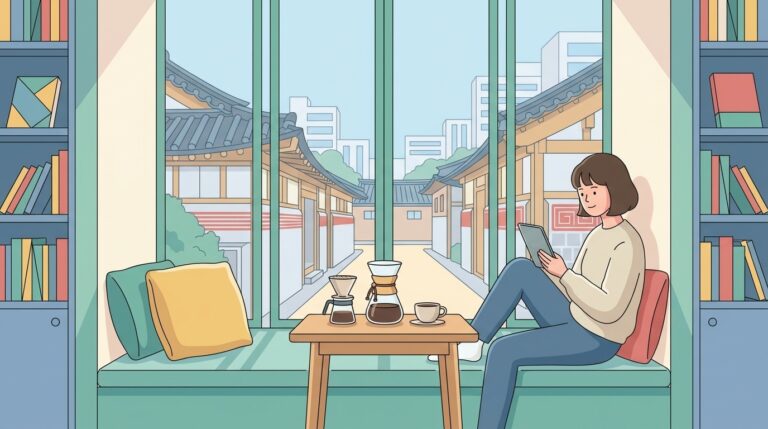
Imagine walking into a minimalist cafe in Yeonnam-dong or taking a seat on the quiet Seoul Metro Line 9 during morning rush hour. You look around, and instead of hefty paperbacks, you notice locals holding sleek, matte-screen gadgets—effortlessly flipping through Han Kang’s latest novel or trending Korean web fiction with a subtle thumb flick. Inspired, you decide to dive into Korean literature to sharpen your C1-level fluency, but the moment you start browsing Korean tech forums, you hit a wall of intimidating terminology: 열린 서재 (Open Android OS), 리디페이퍼 (Ridi Paper), 크레마 사운드 (Crema Sound), 교보 sam (Kyobo SAM), and 물리키 (Physical page-turn buttons).
Which device truly handles Korean typography best? Should you pick a platform-locked e-reader or an open-platform tablet to switch between Millie’s Library (밀리의 서재) and Aladin? As someone who has tested nearly every Korean e-reader released over the last decade and guided hundreds of advanced learners through Korean literary analysis, I built this masterclass for you. By mastering natural comparative critique and nuanced evaluation vocabulary, you will not only choose the ideal reading companion but also discuss literary tech like an articulate Seoul insider.
Phase 2: Top 3 Core Expressions Deep-Dive
1. 호불호가 갈리다 (ho-bul-ho-ga gal-li-da)
- Pronunciation: [Ho-bool-ho-ga gal-li-da] (Think: ‘Whole-bull-ho’ rolling smoothly into ‘gal-lee-da’)
- Literal Meaning: Likes and dislikes are divided
- Actual Nuance: “It’s a polarizing choice / Opinions are sharply split.”
- K-Culture Moment: Used extensively on YouTube tech teardowns when discussing e-ink refresh rates or the absence of physical buttons on modern e-readers.
- Editor’s Insight: At the C1 level, avoid simplistic words like “좋거나 나빠요”. Use this phrase to gracefully analyze subjective specs (e.g., screen warm light tone or brand ecosystem).
- Situation Spectrum:
- Casual: ✅ (“이 리더기는 디자인 면에서 호불호가 좀 갈려.”)
- Semi-formal: ✅ (“물리키 유무에 따라 사용자 간에 호불호가 갈립니다.”)
- Formal: ✅ (“해당 기기의 반응 속도에 대해서는 다소 호불호가 갈리는 편입니다.”)
- 🤔 Think About It: Koreans value community consensus, so explicitly identifying where consensus fractures (호불호) shows high analytical tact.
2. 취향을 타다 (chwi-hyang-eul ta-da)
- Pronunciation: [Chwi-hyang-eul ta-da] (Sounds like ‘Chee-hyang’ riding a wave: ‘ta-da’)
- Literal Meaning: To ride on one’s taste
- Actual Nuance: “It heavily depends on personal preference / It caters to niche tastes.”
- K-Culture Moment: Frequently spotted in book club reviews (독서 모임) when deciding whether matte e-ink screens beat vivid iPad displays for night reading.
- Editor’s Insight: In English, you might say “To each their own.” In Korean, using the verb 타다 (to ride/be sensitive to) reflects how certain experiences shift depending on an individual’s personal palate.
- Situation Spectrum:
- Casual: ✅ (“화면 질감은 워낙 취향을 타니까 직접 만져봐.”)
- Semi-formal: ✅ (“전자책 뷰어 인터페이스는 개인 취향을 많이 타는 편이에요.”)
- Formal: ⚠️ (Better: ‘개인적 선호도에 따른 편차가 큽니다.’)
- 🤔 Think About It: Notice how Korean uses physical verbs (타다) for abstract compatibility with aesthetic sensations.
3. 가성비와 휴대성을 저울질하다 (ga-seong-bi-wa hyu-dae-seong-eul jeo-ul-jil-ha-da)
- Pronunciation: [Ga-seong-bi-wa hyu-dae-seong-eul jeo-ool-jil-ha-da]
- Literal Meaning: To weigh cost-effectiveness and portability on a balance scale
- Actual Nuance: “To deliberate between price-performance ratio and lightweight portability.”
- K-Culture Moment: Essential vocabulary for tech comparison videos on Naver Tech Blogs and IT podcasts.
- Editor’s Insight: 저울질하다 adds sophisticated imagery of deliberate balancing before making an intellectual investment.
- Situation Spectrum:
- Casual: ⚠️ (Slightly bookish for pure slang, but fine among peers)
- Semi-formal: ✅ (“입문용 기기를 고를 때는 가성비와 휴대성을 잘 저울질해야 해요.”)
- Formal: ✅ (“소비자들은 보통 기기의 가성비와 휴대성을 다각도로 저울질합니다.”)
- 🤔 Think About It: Reflects the savvy modern Korean consumer mindset of meticulously comparing specs before buying.
Phase 3: Textbook Korean vs. Real Korean
Situation 1: Highlighting exceptional battery life & light weight
- 📖 교과서 한국어: “이 전자책 리더기는 무게가 가볍고 배터리가 오래 유지됩니다.” (This e-reader is light and its battery lasts long.)
- 🗣️ 진짜 한국어: “이 기기는 배터리가 깡패인 데다가 워낙 가벼워서 출퇴근길 손목 지킴이로 딱이에요.” (The battery on this thing is an absolute beast, and it’s so light that it’s a true wrist-saver for daily commutes.)
- 💡 왜 다를까?: Advanced natives use vivid metaphors like 깡패 (slang for unmatched/overpowered spec) and compound benefits like 손목 지킴이 to convey dramatic daily convenience.
Situation 2: Discussing app platform lock-in vs. versatility
- 📖 교과서 한국어: “다른 회사의 전자책 앱을 설치할 수 있는 제품을 추천합니다.” (I recommend a product where you can install other companies’ e-book apps.)
- 🗣️ 진짜 한국어: “특정 플랫폼에 묶이기 싫으시면 무조건 열린 서재 지원되는 기기로 가셔야 후회가 없어요.” (If you don’t want to get locked into a single platform, you definitely must go for a device with Open Library support.)
- 💡 왜 다를까?: Native readers rely on domain-specific idioms such as 플랫폼에 묶이다 (ecosystem lock-in) and 열린 서재 (open sideloading firmware) when giving practical buying advice.
Phase 4: K-Culture Deep Dive & Non-Verbal Manners
4-1. 눈치 (Nunchi) & Device Testing Gestures
When visiting offline electronics showcase lounges or bookstore digital corners (like Kyobo Book Centre Gwanghwamun or Bandi & Luni’s pop-ups):
* The Refresh Tap (잔상 확인 노크): Instead of aggressively swiping, Korean e-reader enthusiasts gently double-tap the screen bezel to inspect 잔상 (ghosting artifacts) and test front-light warmth without obstructing other shoppers.
* The Two-Finger Weight Test: Koreans hold the device with their thumb and index finger at a 45-degree angle to gauge if one-handed reading on crowded subways is realistic.
4-2. Culture Code: “Bookstagram” & Reading Subscriptions
Korea boasts one of the world’s most hyper-competitive e-book subscription ecosystems. The rivalry between 밀리의 서재 (Millie), 리디북스 (Ridi), and 교보 sam shapes which hardware readers buy. Furthermore, the aesthetics of reading on an e-ink display is central to the 독서 계정 (Bookstagram) subculture on Instagram, where readers showcase digital quotes alongside aesthetic cups of drip coffee.
Phase 5: Real-world Roleplay Scenario
Setting: A stylish e-reader demo lounge inside a large bookstore in Gwanghwamun. Min-jun, a seasoned tech-book specialist, is helping Sarah, a C1 Korean learner looking for her first device.
- 민준: 🎭 (화면을 부드럽게 넘기며) “고객님, 주로 어떤 서점 플랫폼을 자주 이용하세요?”
(Min-jun: [Gently turning the digital page] Which bookstore platform do you use most frequently?) - 사라: 🎭 (기기를 찬찬히 살펴보며) “저는 교보문고랑 리디북스를 둘 다 쓰는데, 기기 호환성이 제일 고민돼요.”
(Sarah: [Examining the device carefully] I use both Kyobo and Ridi, so hardware compatibility is my main dilemma.) - 민준: 🎭 (고개를 끄덕이며 전용기를 가리킨다) “그렇다면 전용기보다는 APK 설치가 자유로운 범용기로 가시는 게 훨씬 안전해요.”
(Min-jun: [Nodding and pointing to a dedicated reader] In that case, going for an open OS universal reader rather than a dedicated device is much safer.) - 사라: 🎭 (기기를 한 손으로 들어보며) “아, 그런데 범용기는 배터리 소모가 빠르다는 평이 많아서 호불호가 갈리지 않나요?”
(Sarah: [Lifting the device with one hand] Ah, but universal readers often have reviews saying battery drain is fast, so aren’t opinions sharply split?) - 민준: 🎭 (미소를 지으며 밝기 조절바를 보여준다) “맞아요. 다만 이번 신제품은 백라이트 최적화가 잘 돼서 가성비와 휴대성을 저울질해 봤을 때 가장 무난한 선택지입니다.”
(Min-jun: [Smiling, showing the brightness adjustment bar] Spot on. However, this new model has well-optimized backlighting, making it the most sensible pick when weighing value against portability.) - 사라: 🎭 (물리키 버튼을 눌러보며) “딸깍거리는 물리키 키감도 중요한데, 이건 취향을 많이 타겠네요.”
(Sarah: [Clicking the physical page button] The tactile click of physical keys is also key, and this seems very subject to personal taste.) - 민준: 🎭 (공감하듯 맞장구치며) “정확한 지적이세요! 이동 중에 한 손으로 조작하기엔 물리키만 한 게 없거든요.”
(Min-jun: [Agreeing with empathy] Exactly right! For one-handed operation on the move, nothing beats physical keys.) - 사라: 🎭 (확신에 찬 눈빛으로) “좋아요. 장단점이 뚜렷하니 제 독서 루틴에 맞춰서 이 모델로 결정할게요!”
(Sarah: [With a confident look] Great. The pros and cons are distinct, so I’ll go with this model tailored to my reading routine!)
🔀 Interactive Decision Point
How should Sarah finalize her purchase inquiry with advanced nuance?
* Option A: “이 모델로 주세요. 할인 같은 건 없나요?” (Basic transaction)
* Option B: “열린 서재 세팅할 때 런처 최적화 팁도 혹시 따로 안내받을 수 있을까요?” (Best: Demonstrates deep technical literacy and natural Korean phrasing)
* Option C: “그냥 종이책이 나은 것 같은데 다음에 올게요.” (Risk: Abrupt dismissal after a deep consultation)
- Feedback:
- Choice A (Fair): Clear, but misses the opportunity to engage at a C1 register.
- Choice B (Best!): Perfect! Asking about launcher optimization (런처 최적화) shows superior linguistic and cultural fluency.
- Choice C (Bad/Risk): While honest, it ends an insightful discussion abruptly without practicing key comparative vocabulary.
Phase 6: 10-Second Emotion Shadowing Drill
Practice reading these with authentic native inflection and emotional delivery. The slashes (/) indicate natural breath pauses.
- [🧐 Analytical & Discerning]
- “스펙만 놓고 보면 / 압도적인데, / 실사용 후기에서는 / 배터리 때문에 / 호불호가 갈리네요.”
- ([Analyzing calmly] On paper the specs are overwhelming, / but in real-life reviews, / opinions divide sharply over battery life.)
- [🤩 Enthusiastic Recommendation]
- “이 정도 무게에 / 열린 서재 지원이면 / 가성비와 휴대성을 / 둘 다 잡은 셈이죠!”
- ([With vibrant confidence] With this feather-light weight / and open OS support, / you’re hitting both value and portability!)
- [😌 Reflective Bookworm Tone]
- “화면의 흑백 질감이나 / 폰트 렌더링은 / 워낙 개인 취향을 타니까 / 실물을 꼭 보셔야 해요.”
- ([Warmly advising] Monochrome screen texture / and font rendering / depend entirely on personal taste, / so you must see it in person.)
Phase 7: K-Culture Mini Dictionary
- 열린 서재 (Yeol-lin Seo-jae) | Open Library (Android Sideloading Ecosystem)
- Usage: Refers to Korean e-readers that allow installing third-party APKs (Aladin, Kyobo, Millie, Ridi) instead of restricting users to one proprietary bookstore.
- 물리키 (Mul-li-ki) | Physical Page-turn Buttons
- Usage: A beloved hardware feature among serious Korean commuters who prefer tactile buttons over touchscreen swipes while holding strap handles on the subway.
- 잔상 제거 (Jan-sang Je-geo) | Ghosting Refresh/Flashing
- Usage: Essential technical phrase describing how cleanly an e-ink display clears residual text artifacts.
- 벽돌이 되다 (Byeok-dol-i Doe-da) | To get bricked (Device firmware failure)
- Usage: Tech community idiom describing an e-reader freezing permanently during custom font or root installation.
Phase 8: Traveler & Expat Survival Kit
Top 3 On-the-Ground Tech Phrases
- “혹시 이 기기에 외부 폰트나 외부 뷰어 APK 설치가 가능한가요?”
- (Rom: Hok-si i gi-gi-e oeb-u pon-teu-na oeb-u byu-eo APK seol-chi-ga ga-neung-han-ga-yo?)
- Pro Tip: Ask this at tech shops to confirm if you can read foreign EPUBs or install international dictionary fonts.
- “조명 색온도 조절이랑 잔상 리프레시 주기 설정 좀 만져봐도 될까요?”
- (Rom: Jo-myeong saek-on-do jo-jeol-i-rang jan-sang ri-peu-re-si ju-gi seol-jeong jom man-jyeo-bwa-do doel-kka-yo?)
- Pro Tip: Perfect polite phrasing when hands-on testing demo units in Kyobo Book Centre.
- “케이스랑 액정보호필름 포함된 패키지 구성은 얼마인가요?”
- (Rom: Ke-i-seu-rang aek-jeong-bo-ho-pil-reum po-ham-doen pae-ki-ji gu-seong-eun eol-ma-in-ga-yo?)
- Pro Tip: In Korea, e-readers are frequently bundled with sleep covers and matte films.
Editor’s Travel Note
- App Downloads: Before buying a hardware reader, test apps on your phone via the Kyobo Book Centre app download and the Ridi Books official viewer to see which user interface matches your Korean reading flow.
- Local Tip: Korean e-ink screens are famously fragile—often termed 설탕 액정 (sugar crystal screens). Always buy a hard flip cover (플립 케이스) before riding the crowded Seoul subway!
Phase 9: “One Step Deeper” (Reflective Essay)
In South Korea’s hyper-digitalized society, the resurgence of e-ink reading reflects a fascinating cultural phenomenon known as 디지로그 (Digilog)—the intentional fusion of digital convenience with analog nostalgia. While Korea’s high-speed lifestyle demands instant cloud syncing across devices, Korean readers fiercely preserve the tactile warmth of reading by customizing vintage Hangul fonts (바탕체) and discussing the physical texture of matte screens. Evaluating an e-reader in Korea is therefore not merely a technical comparison; it is an intimate aesthetic dialogue about curating one’s mental sanctuary in a fast-paced metropolis.
💬 Your Turn: Which matters more in your daily reading routine: the boundless freedom of an open OS (열린 서재) or the pure, distraction-free simplicity of a dedicated reader (전용기)? Share your thoughts below in Korean!
Phase 10: FAQ & Common Pitfalls
Q: Can I read English or foreign-language books on Korean e-readers like Crema or Kyobo SAM?
A: Yes! Most modern Korean devices run on modified Android with 열린 서재 (Open Library), allowing you to install the Kindle APK, Kobo, or foreign dictionary apps without region-locking issues.
Q: What is the main difference between Ridi Paper and Crema devices?
A: Ridi Paper is generally a closed/dedicated device optimized purely for the Ridi ecosystem with superior build quality and swift page turns, whereas the Crema line is typically an open-platform reader that lets you install apps from competing bookstores.
Q: Why do Koreans place so much emphasis on ‘물리키’ (physical buttons)?
A: Winter in Korea is freezing, and commuting by public transit requires gloves or standing with one hand on a subway handle. Physical buttons let you flip pages easily without touching the cold screen or making large thumb swipes.
🚨 Common Mistakes Warning Board
- Mistake: Saying “이 리더기는 성능이 높아요” when talking about responsiveness.
- Correct Action: Say “이 기기는 구동 속도가 쾌적해요” or “반응 속도가 빠릿해요.”
- Mistake: Confusing 전용기 (locked ecosystem device) with 범용기 (open Android device).
- Correct Action: Always double check whether the model supports sideloading before recommending it.
- Mistake: Using stiff textbook words like “장점과 단점이 있습니다” in casual reviews.
- Correct Action: Use “장단점이 뚜렷하다” or “일장일단이 있다” for natural C1 elegance.
Phase 11: Action Mission & K-Culture Challenge
- 🥉 Bronze Mission (Solo Practice): Record a 30-second voice memo comparing your current phone screen with an e-ink display using the phrase “취향을 타다” and “호불호가 갈리다”.
- 🥈 Silver Mission (Community Engagement): Go to a Korean book forum or social media hashtag (
#전자책리더기or#북스타그램) and leave a natural Korean comment asking: “밀리의 서재 위주로 볼 때 가성비 좋은 기기 추천해 주실 수 있나요?” - 🥇 Gold Mission (Real-world Mastery): Visit an electronics shop or write a mock product review of your favorite reading tool in 3 complex Korean sentences using all three Phase 2 core expressions.
- 🎮 K-Culture Mission: Search YouTube for “전자책 리더기 비교 추천” (E-reader comparison recommendation) and spot how many times creators use the terms 깡패, 물리키, and 열린 서재 in the first 5 minutes!
Phase 12: Interactive Quiz Challenge
1. Situational Judgment
Your friend wants an e-reader to read both Kyobo library loans and Ridi romance web novels. Which phrase best articulates your expert recommendation?
* A) “무조건 리디 전용기를 사세요.”
* B) “여러 플랫폼을 넘나들려면 열린 서재가 지원되는 범용기를 고르는 게 현명해요.”
* C) “전자책은 눈이 아프니까 그냥 종이책을 사세요.”
👉 Click to reveal Answer & Explanation
Correct Answer: B
Explanation: Using 여러 플랫폼을 넘나들다 (to move across multiple platforms) and 열린 서재가 지원되는 범용기 shows sophisticated C1 situational awareness.
2. Fill-in-the-Blank Challenge
Complete the sentence with the most natural C1 comparative expression:
“화면의 차가운 톤과 따뜻한 톤은 사용자마다 워낙 (____________) 때문에 조명 색온도 조절 기능이 필수적입니다.”
👉 Click to reveal Answer & Explanation
Correct Answer: 취향을 타기 (또는 호불호가 갈리기)
Explanation: 취향을 타다 (depends on personal taste) or 호불호가 갈리다 fits seamlessly into this analytical sentence structure.
3. True or False Korean Culture Check
- Question: In Korea, the term ‘설탕 액정’ refers to e-reader screens that have a glossy, candy-like sweet finish.
👉 Click to reveal Answer & Explanation
Correct Answer: False (X)
Explanation: 설탕 액정 (sugar screen) is humorous slang indicating that e-ink screens are as fragile as crystallized sugar and can break easily if dropped without a protective case!






