

Phase 1: Empathy (Story-Immersive Opening)
안녕하세요! 매일한글 에디터입니다.
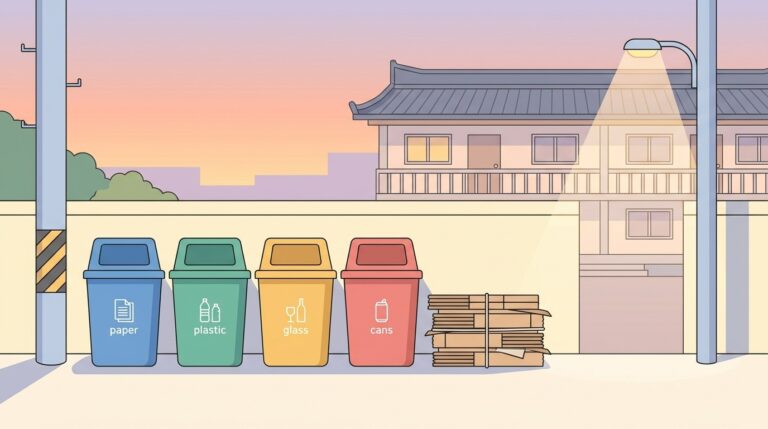
Picture this: You’ve just unpacked your last suitcase in your charming new studio apartment in Mapo-gu, Seoul. After a long week of setting up Wi-Fi and cooking your first celebratory meal of home-delivered Tteokbokki, you have a mountain of plastic containers, cardboard boxes, and beverage cans stacked in your entryway. Confidently, you grab the bags and head downstairs on a Thursday afternoon, only to freeze before the towering row of color-coded bins.
Suddenly, the friendly building manager (Gyeongbi ajeossi) waves his hands frantically from across the parking lot: “총각/아가씨! 오늘 재활용 버리는 날 아니에요! (Today isn’t recycling day!)” You look around and notice the clean, empty yard, the silent CCTV cameras, and your heart sinks. In Korea, taking out the trash isn’t just about putting things in a bin—it operates on a strict, neighborhood-specific schedule where throwing out plastics on the wrong weekday can earn you stern glares or even a municipal fine.
Mastering the language around recycling schedules (분리수거 요일) is one of the biggest milestones in transitioning from a wide-eyed tourist to a savvy, local resident. This guide is built directly on real feedback from intermediate learners who wanted to navigate apartment life smoothly, communicate respectfully with neighbors, and master authentic B2-level natural speech.
Phase 2: Deep Dive into 3 Core Expressions
1. 분리수거 요일이 언제예요? (한글)
- Pronunciation: [Bun-ri-su-geo yo-il-i eon-je-ye-yo?] (Think: Boon-ree-soo-gaw yo-ill-ee un-jeh-yeyo?)
- Meaning: Literal: “When is the separate collection day of the week?” / Nuance: “Which days are we allowed to put out recycling?”
- K-Culture Moment: Heard constantly in K-Dramas (like Reply 1988 or modern slice-of-life series Because This Is My First Life) when roommates draft house rules or introduce themselves to neighbors.
- Editor’s Insight: While textbook Korean often mentions 쓰레기 배출일 (waste discharge date), real locals say 분리수거 요일. You can attach 혹시 (by any chance) at the start to sound effortlessly polite.
- Situation Spectrum: Casual: ⚠️ | Semi-formal: ✅ | Formal: ✅
- 🤔 Think About It: In many Western countries, bins stay in the driveway for weekly pickup. Why does Korea enforce specific evening time windows (배출 시간) alongside set days?
2. 종량제 봉투에 담아서 버려야 해요. (한글)
- Pronunciation: [Jong-nyang-je bong-tu-e da-ma-seo beo-ryeo-ya hae-yo.] (Think: Jong-nyang-jeh bong-too-eh dah-mah-saw buh-ryuh-yah heh-yo.)
- Meaning: Literal: “You must put it into a volume-rate bag and throw it away.” / Nuance: “You need to dispose of general waste in the official government-metered trash bag.”
- K-Culture Moment: Every protagonist who moves into a One-room (studio) gets instructed on buying local district-specific bags at the nearest convenience store.
- Editor’s Insight: 종량제 refers to the Pay-As-You-Throw system established in 1995. Non-recyclables and food waste must go into designated color bags depending on your specific district (Gu).
- Situation Spectrum: Casual: ⚠️ | Semi-formal: ✅ | Formal: ✅
- 🤔 Think About It: How does tying the cost of waste bags directly to volume incentivize eco-conscious consumption?
3. 투명 페트병은 라벨을 떼고 따로 배출해 주세요. (한글)
- Pronunciation: [Tu-myeong pe-teu-byeong-eun ra-bel-eul tte-go tta-ro bae-chul-hae ju-se-yo.] (Think: Too-myung peh-teu-byung-eun lah-bell-eul tteh-go ttah-ro beh-chool-heh joo-seh-yo.)
- Meaning: Literal: “For clear PET bottles, peel the label and discharge them separately.” / Nuance: “Please remove the plastic wrap labels from clear drink bottles and put them in the designated clear bottle bin.”
- K-Culture Moment: Visible on signboards in every modern apartment complex and featured in eco-conscious reality shows like Three Meals a Day.
- Editor’s Insight: Clear PET bottles are processed into high-grade textile fibers in Korea. Mixing them with colored plastics or leaving vinyl labels on is considered a faux pas.
- Situation Spectrum: Casual: 🚫 | Semi-formal: ✅ | Formal: ✅
- 🤔 Think About It: Notice the word 배출하다 (to discharge/put out) instead of just 버리다 (to throw away). What does this shift in vocabulary say about civic responsibility?
Phase 3: Textbook Korean vs. Real-Life Korean
Situation 1: Asking when to take out recycling
- 📖 교과서 한국어 (Textbook): 쓰레기를 버리는 날은 화요일입니다. (The day to throw away trash is Tuesday.)
- 🗣️ 진짜 한국어 (Real-Life): 분리수거는 화요일 저녁에 내놓으시면 돼요. (You can put out the recycling on Tuesday evenings.)
- 💡 왜 다를까? (Why the difference?): In reality, Koreans specify the precise time window (저녁에) and use the soft directive verb 내놓다 (to put out) rather than the generic 버리다.
Situation 2: Asking if an item is recyclable or general waste
- 📖 교과서 한국어 (Textbook): 이 플라스틱을 재활용할 수 있습니까? (Can this plastic be recycled?)
- 🗣️ 진짜 한국어 (Real-Life): 이거 플라스틱류로 들어가요, 아니면 일반 쓰레기예요? (Does this count under plastics, or is it general trash?)
- 💡 왜 다를까? (Why the difference?): Intermediate native speakers categorize waste using the suffix ~류 (category/type) and contrast it directly with 일반 쓰레기 (general waste).
Phase 4: K-Culture Deep Dive & Non-Verbal Manners
4-1. 눈치 (Nunchi) & Recycling Yard Etiquette
- The Flattening Ritual: When disposing of delivery cardboard boxes, always remove plastic tape and shipping address stickers, then fold the boxes completely flat before stacking. Leaving intact boxes takes up communal volume and triggers unspoken neighbor disapproval.
- Rinse Before Discharge: Clear takeout coffee cups or ramen containers must be rinsed thoroughly with water. Throwing away sauce-stained plastic containers violates the Clean Recycling standard.
- Eye Contact & Polite Greetings: If you meet the building manager (경비원님) at the recycling station, a gentle 30-degree bow paired with “수고 많으십니다! (Thank you for your hard work!)” establishes immediate goodwill.
4-2. Cultural Code Analysis: The Communal Station
In Korean residential culture (especially in villas and high-rise apartments), the recycling zone is an active social crossroad. It showcases the Korean concept of 공동체 의식 (communal consciousness). Proper waste separation is viewed as a direct reflection of personal character and civic courtesy toward fellow residents.
Phase 5: Real-World Roleplay Scenario
- Setting: The shared garbage disposal area behind a multi-family villa on a breezy Tuesday evening.
- Characters: You (Intermediate resident) & Mr. Kim (The friendly, diligent building manager, 60s).
- You: 🎭 Holding a large clear bag filled with rinsed bottles and folded cardboard boxes.
안녕하세요, 반장님! 분리수거 오늘 저녁에 내놓는 거 맞죠?
(Annyeonghaseyo, banjangnim! Bunrisugeo oneul jeonyeoge naenonneun geo matjyo?)
“Hello, Building Manager! It’s correct to put out recycling tonight, right?” -
Mr. Kim: 🎭 Smiles warmly while holding a broom.
네, 맞아요! 화요일이랑 목요일 저녁 7시부터 다음 날 아침 8시까지예요.
(Ne, majayo! Hwayoirang mogyoil jeonyeok ilgopsibuteo daeum nal achim yeodeolsikkajiyeyo.)
“Yes, that’s right! It’s from 7 PM on Tuesdays and Thursdays until 8 AM the next morning.” -
You: 🎭 Pointing to an empty delivery box with tape on it.
택배 박스는 테이프를 다 떼고 납작하게 접어서 쌓아두면 될까요?
(Taekbae bakseuneun teipeureul da ttego napjakhage jeobeoseo ssaadumyeon doelkkayo?)
“Should I remove all the tape, fold the delivery boxes flat, and stack them up?” -
Mr. Kim: 🎭 Nods approvingly.
어휴, 역시 잘 아시네! 송장 스티커랑 테이프만 떼서 종이류에 두면 돼요.
(Eohyu, yeoksi jal asine! Songjang seutikeorang teipeuman tteseo jong-iryue dumyeon dwaeyo.)
“Wow, you know the drill! Just peel off the shipping invoice and tape, then place it with the paper.” -
You: 🎭 Hesitating while holding a colored delivery soup container.
그런데 이건 양념이 좀 물들었는데, 일반 쓰레기로 버려야 하나요?
(Geureonde igeon yangnyeomi jom muldeureonneunde, ilban sseuregiro beoryeoya hanayo?)
“By the way, this container is stained with sauce. Should I throw it into the general trash?” -
Mr. Kim: 🎭 Inspecting the container.
기름기나 고추장 얼룩이 안 지워지는 건 종량제 봉투에 넣으셔야 해요.
(Gireumgina gochujang eollugi an jiwojineun geon jongnyangje bongtue neoeusyeoya haeyo.)
“If the grease or red pepper paste stains don’t wash off, you must put it in the volume-rate bag.” -
You: 🎭 Nodding and placing it into the blue general waste bag.
그렇군요! 투명 페트병은 라벨 떼고 전용 수거함에 넣을게요.
(Geureokgunyo! Tumyeong peteubyeongeun rabel ttego jeonyong sugeohame neo-eulgeyo.)
“Got it! I will peel the labels off clear PET bottles and put them into the dedicated collection bin.” -
Mr. Kim: 🎭 Giving a thumbs up.
아주 완벽해요! 깨끗하게 버려줘서 고마워요.
(Aju wanbyeokhaeyo! Kkaekkeuthage beoryeojwoseo gomawoyo.)
“Spot on! Thank you for sorting everything so cleanly.”
🔀 Interactive Choice Point
You found an old frying pan you want to discard. How do you ask Mr. Kim?
- Option A: “반장님, 프라이팬은 고철류로 분리수거하면 되나요?” (Manager, can I sort this frying pan under scrap metals?)
- Option B: “이거 그냥 아무 데나 던져도 되죠?” (Can I just throw this anywhere?)
- Option C: “프라이팬 종량제 봉투에 쑤셔 넣으면 안 돼요?” (Can’t I just shove this frying pan into the general trash bag?)
Feedback:
* Option A (Best!): Professional and natural intermediate Korean. Demonstrates correct category vocabulary (고철류 – scrap metal).
* Option B (Bad): Disrespectful and violates local community etiquette.
* Option C (Risk): Frying pans can tear standard trash bags and cannot be processed as regular incinerated waste.
Phase 6: 10-Second Emotion Shadowing Drill
[😊 Politeness & Inquiry]
저기요, / 분리수거 요일이 / 화요일 맞나요?
(Jeogiyo, / bunrisugeo yo-iri / hwayo-il mannayo?)-
[💡 Realization & Compliance]
아, / 라벨을 떼서 / 비닐류에 따로 / 넣어야 하는군요!
(A, / rabereul tteseo / binillyue ttaro / neoeoya haneungunyo!) -
[🙏 Gratitude & Warmth]
알려주셔서 감사합니다! / 다음부터는 / 시간 맞춰서 내놓을게요.
(Allyeojusyeoseo gamsahamnida! / daeumbuteoneun / sigan matchwoseo naenoheulgeyo.)
Phase 7: K-Culture Mini Dictionary
- 종량제 봉투 (Jongnyangje Bongtu) | Volume-rate garbage bag | The official prepaid trash bags issued by local district offices (Gu-cheong). Must be purchased within your specific residential jurisdiction.
- 분리배출 (Bunri Baechul) | Separate discharge / sorting | The formal administrative and practical term for separating recyclables into correct bins according to material.
- 음식물 쓰레기 (Eumsikmul Sseuregi) | Food waste | Organic waste that can generally be turned into animal feed. (Rule of thumb: If an animal cannot eat it—like bones, eggshells, or peach pits—it is general trash, not food waste).
- 대형 폐기물 스티커 (Daehyeong Pyegimul Seutikeo) | Bulky waste disposal sticker | Official permit sticker purchased at community centers or via district apps to discard furniture, mattresses, or large home appliances.
Phase 8: Traveler & Resident Survival Kit
- Top 1: “종량제 봉투 10리터짜리 두 장만 주세요.” ([Jongnyangje bongtu sip-riteo-jjari du jangman juseyo.] – Please give me two 10-liter volume garbage bags.)
- Top 2: “음식물 쓰레기 카드는 어디서 충전하나요?” ([Eumsikmul sseuregi kadeuneun eodiseo chungjeonhanayo?] – Where do I top up the food waste RFID card?)
- Top 3: “박스 테이프 떼고 버려야 돼요?” ([Bakseu teipeu ttego beoryeoya dwaeyo?] – Do I need to remove the box tape before throwing it out?)
Editor’s Travel Note:
Download Naver Map app on mobile to search for your local 주민센터 (Community Service Center) or nearby supermarkets selling official 종량제 봉투. Remember that garbage bags purchased in Gangnam-gu cannot be used in Mapo-gu!
Phase 9: Think Deeper (한 발 더 깊이)
Korea’s meticulous waste separation system is more than environmental policy; it is a manifestation of Jeong (정) and shared civic duty. In dense urban landscapes, individual diligence directly alleviates the burden on sanitation workers and neighbors. By taking the extra thirty seconds to strip a plastic label or wash out a container, you actively participate in maintaining harmony (화합) within your shared community.
💬 Your Turn: What is the waste disposal routine like in your home country? Have you ever experienced culture shock over Korean recycling rules? Share your thoughts below!
Phase 10: FAQ & Common Mistakes
Q: Can I throw away pizza boxes or fried chicken boxes with paper recycling?
A: No. Paper stained with food oils, cheese, or sauces cannot be recycled. You must discard stained sections into the regular 종량제 봉투 (general waste bag).
Q: What time should I put out my recycling bins?
A: Most residential areas permit disposal strictly between sunset (around 7:00 PM) and early morning (around 8:00 AM) on designated days to keep streets clean during daytime.
Q: Are chicken bones and clamshells considered food waste?
A: No! Hard items such as bones, nutshells, shellfish shells, onion peels, and tea bags are classified as general waste (일반 쓰레기).
🚨 Common Mistakes Alert Board
- Using bags from another district: 🚫 Using a Seocho-gu bag in Yongsan-gu. ➔ Action: Always buy bags at the convenience store right next to your home.
- Leaving colored bottle caps on clear PET bottles: 🚫 Crushing bottles without peeling labels. ➔ Action: Remove vinyl wrap labels and plastic caps, compress the bottle, and discard into clear PET bins.
- Discharging during daytime: 🚫 Leaving waste bags on the curb at 2 PM. ➔ Action: Wait until evening (일몰 후) on designated weekdays.
Phase 11: Action Missions
- 🥉 Bronze Mission (Solo Practice): Stand in your kitchen and categorize 5 household items out loud in Korean (e.g., “이건 캔류, 이건 비닐류!”).
- 🥈 Silver Mission (Social Sharing): Take a photo of your neatly flattened boxes or separated clear bottles and share it on Instagram with the hashtag
#매일한글 #분리배출완료. - 🥇 Gold Mission (Real-world Challenge): Go to your local convenience store and naturally purchase waste bags: “사장님, 일반 종량제 20리터 한 묶음 주세요!”
- 🎮 K-Culture Mission: Spot a recycling scene in a contemporary K-Drama and identify whether the characters are separating glass, cans, or vinyl!
Phase 12: Interactive Quiz Challenge
Q1. Which of the following items can go directly into food waste (음식물 쓰레기)?
(A) Chicken bones
(B) Leftover cooked white rice
(C) Clam shells
(D) Used green tea bag
🔍 Click to reveal answer & explanation
Answer: (B) Leftover cooked white rice
Explanation: Cooked rice is soft, organic, and biodegradable for animal feed. Bones, hard shells, and tea bags belong in general waste (일반 쓰레기).
Q2. Fill in the blank:
“투명 페트병은 비닐 ______을/를 떼고 배출해야 합니다.”
(A) 뚜껑 (Cap)
(B) 라벨 (Label)
(C) 손잡이 (Handle)
(D) 상자 (Box)
🔍 Click to reveal answer & explanation
Answer: (B) 라벨 (Label)
Explanation: Removing vinyl labels (라벨을 떼다) is mandatory for clear plastic PET bottle recycling across Korea.
Q3. True or False:
You can put out recycling bags on the street at any time of day as long as it is the correct weekday.
🔍 Click to reveal answer & explanation
Answer: False (X)
Explanation: Most neighborhoods in Korea require waste to be put out only during evening/night hours (typically 7:00 PM – 8:00 AM) to maintain daytime street sanitation.







