

How to Order Tteokbokki and Fried Snacks Like a True Local
Phase 1: Empathy & Immersion
안녕하세요! Welcome back to Daily Hangul! I’m your Korean study bestie and local culture navigator.
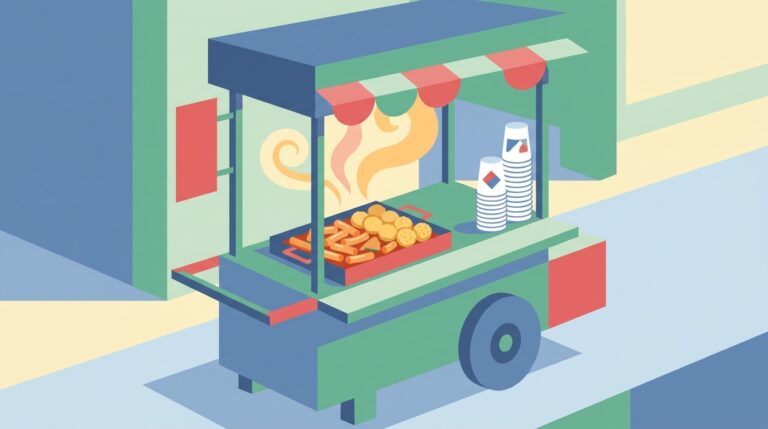
Picture this: You are standing under the vibrant orange canopy of a bustling Seoul street food cart (pojangmacha) on a chilly evening. The bubbling aroma of sweet and spicy gochujang sauce fills the air, alongside the golden, sizzling crackle of freshly fried twigim (fried snacks). You’re hungry, excited, and ready to dive into the iconic world of Korean street food—just like you’ve seen in countless K-Dramas. But suddenly, your mind freezes. How do you ask for a single portion? Can you dip the fried squid into that spicy tteokbokki sauce without sounding weird? What if the vendor asks if you want broth, and you don’t know what to reply?
Don’t worry! Many of our beginner learners tell us they felt intimidated by fast-paced street food stalls and ended up pointing silently. Today, we’re unlocking simple, foolproof A2-level Korean phrases so you can order tteokbokki and fried snacks with complete confidence, enjoy complimentary warm broth, and savor Seoul’s tastiest bites like a real insider.
Phase 2: 3 Key Expressions Breakdown
1. 떡볶이 1인분 주세요 (Tteokbokki il-in-bun ju-se-yo)
- Pronunciation: [Tteok-bok-ki il-in-bun ju-se-yo] (Sounds like “Ttok-bo-key eel-een-boon joo-seh-yo”)
- Meaning: “One serving of tteokbokki, please.” (Literal: Tteokbokki 1 portion give please)
- K-Culture Moment: You’ll hear this in nearly every romantic comedy drama where the main leads stop by a pojangmacha after work to destress.
- Editor’s Insight: 1인분 (il-in-bun) means “one portion.” For street food, 1인분 is typically generous and perfect for one person.
- Situation Spectrum: Casual ✅ | Semi-formal ✅ | Formal ⚠️
- 🤔 Think About It: In English, we say “an order of…” or “a plate of…”. Korean uses “person portions” (인분, in-bun) as the standard counting unit for food.
2. 튀김 떡볶이 국물에 묻혀주세요 (Twigim tteokbokki gungmure mutyeo-juseyo)
- Pronunciation: [Twi-gim tteok-bok-ki gung-mu-re mu-tyeo-ju-se-yo] (Sounds like “Twee-geem ttok-bo-key goong-moo-reh moo-chyeo-joo-seh-yo”)
- Meaning: “Please dip/coat the fried snacks in tteokbokki sauce.” (Literal: Fried snacks in tteokbokki broth coat give please)
- K-Culture Moment: Classic variety shows often feature guests debating: “Sauced twigim (범벅, beombeok)” vs. “Crispy dry twigim (찍먹, jjikmeok)”.
- Editor’s Insight: If you prefer your fried snacks crispy, you can say “따로 주세요” (Ttaro juseyo – “Please give them separately”).
- Situation Spectrum: Casual ✅ | Semi-formal ✅ | Formal 🚫
- 🤔 Think About It: Street vendors love custom requests! Asking for sauce coating shows you understand authentic Korean street food flavor pairings.
3. 국물 좀 더 주실 수 있어요? (Gungmul jom deo jusil su isseoyo?)
- Pronunciation: [Gung-mul jom deo ju-sil su i-sseo-yo?] (Sounds like “Goong-mool jom duh joo-sheel soo ee-ssuh-yo?”)
- Meaning: “Could I have a little more broth, please?”
- K-Culture Moment: Grabbing a steaming paper cup of warm fishcake broth (eomuk gungmul) while chatting in the cold night air.
- Editor’s Insight: The word “좀 (jom)” means “a little / please” and instantly softens your request, making it sound very polite and natural.
- Situation Spectrum: Casual ✅ | Semi-formal ✅ | Formal ✅
- 🤔 Think About It: Broth is almost always free and refillable at street stalls. Koreans use warm broth both as an appetizer and a spicy palate cleanser!
Phase 3: Textbook Korean vs. Real Native Korean
- Situation 1: Ordering a combo of food
- 📖 Textbook Korean: 떡볶이와 튀김을 주문하겠습니다. (Tteokbokkiwa twigimeul jumunhagetseumnida. – I will order tteokbokki and fried food.)
- 🗣️ Real Native Korean: 떡볶이 1인분이랑 튀김 섞어서 주세요! (Tteokbokki il-in-bun-irang twigim seokkeoseo juseyo! – One portion of tteokbokki and mixed fried snacks, please!)
- 💡 Why is it different? Nobody uses formal “주문하겠습니다” at a street stall. Using “~랑 (and)” and “섞어서 (mixed)” creates a friendly, casual connection.
- Situation 2: Asking for the bill / Paying
- 📖 Textbook Korean: 계산서를 주십시오. (Gyesanseoreul jusipsio. – Please give me the bill.)
- 🗣️ Real Native Korean: 이모님, 얼마예요? (Imo-nim, eolmayeyo? – Auntie, how much is it?)
- 💡 Why is it different? Street stalls don’t have printed receipts or checks. You simply ask the friendly vendor directly for the total amount.
Phase 4: K-Culture Deep Dive & Non-Verbal Manners
4-1. Nunchi & Street Stall Gestures
- Self-Service Fish Cake Broth: Look for paper cups and a ladle near the boiling fishcake (eomuk) vat. It is customary to politely pour your own warm broth while waiting for your order.
- Point with Open Palm: When selecting your fried snacks (sweet potato, squid, seaweed roll), gently point using an open palm or use the provided tongs and metal tray rather than poking with fingers.
- Clear Your Spot: When finished, stack your small paper plate or wooden skewers neatly near the trash bin or pass them back to the vendor with both hands.
4-2. Cultural Code: The Pojangmacha Comfort Food
Street food stalls, known as Bunsikjib or Pojangmacha, represent the ultimate comfort and equality in Korean society. From high-school students studying late for exams to corporate executives in suits, everyone stands shoulder to shoulder around the same steaming counter. The spicy kick of red pepper paste combined with savory deep-fried snacks is Korea’s go-to antidote for daily stress.
Phase 5: Real-Life Roleplay Scenario
- Location: A cozy, bustling street stall in Myeongdong with steam billowing into the evening air.
- Characters: You (Hungry Traveler) & Auntie Vendor (Friendly, fast-paced street food master).
-
Turn 1 (Auntie): 어서 와요! 뭐 줄까?
(Eoseo wayo! Mwo julkka? / Welcome! What can I get for you?)
🎭 Wiping the clean counter with a warm smile. - Turn 2 (You): 안녕하세요! 떡볶이 1인분 주세요.
(Annyeonghaseyo! Tteokbokki il-in-bun juseyo. / Hello! One serving of tteokbokki, please.)
🎭 Smiling brightly and holding up one finger politely. - Turn 3 (Auntie): 튀김도 같이 줄까? 김말이랑 오징어 맛있어!
(Twigimdo gachi julkka? Gimmallirang ojingeo masisseo! / Want fried snacks too? Seaweed rolls and squid are delicious!)
🎭 Pointing with metal tongs at the crispy fried display. - Turn 4 (You): 네! 튀김도 1인분 섞어서 떡볶이 국물에 묻혀주세요.
(Ne! Twigimdo il-in-bun seokkeoseo tteokbokki gungmure mutyeo-juseyo. / Yes! Please mix 1 portion of fried snacks and coat them in tteokbokki sauce.)
🎭 Nodding enthusiastically. - Turn 5 (Auntie): 오케이, 범벅으로 해줄게! 오뎅 국물은 종이컵에 떠서 마셔~
(Okei, beombeog-euro haejulge! Odeng gungmureun jongikeobe tteoseo masyeo~ / Okay, sauced combo it is! Grab paper cups and help yourself to fish cake broth~)
🎭 Skillfully chopping fried snacks with large scissors into the sauce bowl. - Turn 6 (You): 감사합니다! 국물 진짜 따뜻하고 맛있네요.
(Gamsahamnida! Gungmul jinjja ttatteuthago masinneyo. / Thank you! The broth is really warm and tasty.)
🎭 Sipping from the paper cup using both hands. - Turn 7 (Auntie): 많이 먹어요! 더 필요하면 말하고!
(Mani meogeoyo! Deo piryohamyeon malhago! / Enjoy! Let me know if you need more!)
🎭 Handing over the loaded plate with wooden skewers. - Turn 8 (You): 잘 먹겠습니다!
(Jal meokgetseumnida! / I will enjoy this meal!)
🎭 Taking the plate with a slight head bow.
🔀 Interactive Choice Point
You’ve finished eating and want to pay. What do you say?
- Option A: “이모님, 얼마예요? 계좌이체나 카드 돼요?” (Imo-nim, eolmayeyo? Gyejwa-iche-na kadeu dwaeyo? – Auntie, how much is it? Do you take bank transfer or card?)
- 👉 Feedback: Best! Friendly title (Imo-nim), clear inquiry, and acknowledging standard street payment methods.
- Option B: “야! 돈 받아라!” (Ya! Don badara! – Hey! Take money!)
- 👉 Feedback: Bad! Extremely rude and offensive slang. Never shout ‘야’ at vendors.
- Option C: “저기요, 영수증이랑 카드 결제기 주십시오.” (Jeogiyo, yeongsujeung-irang kadeu gyeoljegi jusipsio. – Excuse me, please provide the receipt and card terminal.)
- 👉 Feedback: Risk! Too stiff and demanding for an informal outdoor street stall.
Phase 6: 10-Second Emotion Shadowing Drill
Practice these natural rhythm chunks out loud:
[😊 Cheerful and energetic]
떡볶이 1인분 / 국물 많이 / 주세요!
(Tteokbokki il-in-bun / gungmul mani / juseyo!)
“One portion of tteokbokki / with lots of sauce / please!”-
[🤤 Craving and mouth-watering]
튀김 바삭하게 / 떡볶이 소스에 / 묻혀주세요!
(Twigim basakhage / tteokbokki soseu-e / mutyeo-juseyo!)
“Make the fried snacks crispy / and in tteokbokki sauce / dip them please!” -
[🥰 Warm and appreciative]
이모님, / 오뎅 국물 / 진짜 맛있어요!
(Imo-nim, / odeng gungmul / jinjja masisseoyo!)
“Auntie, / this fish cake soup / is truly delicious!”
Phase 7: K-Culture Mini Dictionary
- 분식 (Bunsik)
Literal: Flour-based food. Refers broadly to casual, inexpensive Korean comfort food like tteokbokki, kimbap, ramyeon, and dumplings. - 김말이 (Gimmari)
Glass noodle seaweed roll. Deep-fried glass noodles wrapped in crisp nori seaweed; the undisputed #1 dipping partner for tteokbokki. - 범벅 (Beombeok)
Smothered mix. A slang term for mixing fried foods, blood sausages (sundae), and dumplings directly into spicy tteokbokki red sauce on one plate. - 이모님 (Imo-nim)
Literal: Respected maternal aunt. A polite, endearing, and universally accepted title used to address middle-aged female restaurant or street food owners.
Phase 8: Traveler’s Street Survival Kit
Survival Phrases TOP 3
- 포장해 주세요 (Pojang-hae juseyo) – “Please pack it to go / Takeout please.”
- Pro Tip: Street food can be packed in heat-resistant bags so you can enjoy it in your hotel or picnic by the Han River.
- 덜 맵게 해주실 수 있어요? (Deol maepge hae-jusil su isseoyo?) – “Could you make it less spicy?”
- Pro Tip: If you have low spice tolerance, this phrase saves your tongue from fiery street chili!
- 현금만 돼요? (Hyeongeum-man dwaeyo?) – “Is it cash only?”
- Pro Tip: Many small carts accept transit cards (T-Money) or cash, though modern stalls in tourist areas often take credit cards.
Editor’s Travel Note
- Navigation Essential: Download the Naver Map Korean Navigation App before heading to famous street food alleys in Gwangjang Market or Dongdaemun.
- Payment Tip: Always carry small cash notes (1,000 KRW and 5,000 KRW bills) or have your loaded transit T-Money card ready for quick, effortless transactions.
Phase 9: A Step Deeper (Reflection)
In Korean food culture, calling an unfamiliar food cart vendor “이모 (Aunt)” or “삼촌 (Uncle)” turns a cold financial transaction into a warm familial encounter. It bridges the gap between strangers instantly. This reflects the deep-rooted Korean value of Jeong (정)—an affectionate, communal bond shared through hospitality and hearty food.
💬 Your Turn: In your home country, do you have special nicknames or friendly terms you use when ordering casual street food? Share your cultural stories in the comments below!
Phase 10: FAQ & Common Mistakes
Q: Can I drink the fish cake broth before my tteokbokki is served?
A: Yes, absolutely! Grabbing a paper cup and sipping warm broth while waiting is completely standard practice in Korea and free of charge.
Q: How do I choose which fried snacks (twigim) I get?
A: Most stalls offer a tray and metal tongs. Pick 4–5 pieces you like (e.g., sweet potato, shrimp, gimmari) onto the tray and hand it to the vendor. They will re-fry them on the spot so they are piping hot.
Q: What if I can’t eat spicy food at all?
A: Look for Gungjung Tteokbokki (soy sauce royal tteokbokki) or focus on delicious skewers of Mul-eomuk (mild fish cake skewers in savory broth)!
🚨 Common Mistakes Alert
- Throwing skewers in the main sauce pot: 🚫 Never double-dip your food or skewers into the shared community soy sauce brush. Use the provided small spoon/brush to apply sauce to your own plate.
- Using stiff honorifics: 🚫 Avoid overly formal book phrases like “주문하려 합니다”. Keep it natural with “~주세요 (juseyo)”.
- Blocking other customers: 🚫 Street stalls have tight standing room. Step slightly sideways after taking your plate so others can reach the broth and skewers.
Phase 11: Action Mission
- 🥉 Bronze Mission: Stand in front of a mirror and practice saying: “떡볶이 1인분하고 튀김 섞어주세요!” three times with a confident smile.
- 🥈 Silver Mission: Share a photo of your favorite spicy snack on Instagram/X and caption it with the Korean word:
#분식 #떡볶이 #DailyHangul. - 🥇 Gold Mission: Visit a local Korean supermarket, K-Town restaurant, or food stall and order fried snacks using “국물에 묻혀주세요” in real life!
🎮 K-Culture Mission: Watch an episode of a drama like Weightlifting Fairy Kim Bok-joo or Hospital Playlist and spot how the characters enjoy street food together!
Phase 12: Interactive Quiz Challenge
1. Situation Quiz: You want 1 serving of spicy rice cakes and want the vendor to coat your fried seaweed rolls in the red sauce. What do you say?
* A) 떡볶이 포장하고 튀김 따로 주세요.
* B) 떡볶이 1인분에 튀김 국물 묻혀서 같이 주세요.
* C) 영수증 하나 주세요.
2. Fill-in-the-Blank:
* “Could you please give me a little more fishcake broth?”
* ➡️ “오뎅 국물 _____ 더 주실 수 있어요?”
3. True or False:
* In traditional Korean pojangmacha, hot fishcake broth (eomuk gungmul) usually costs extra money per cup.
🔍 Click here to reveal the Quiz Answers & Explanations!
-
Answer: B
Explanation: “국물 묻혀서 같이 주세요” directly requests the sauce-coating combination! A means to keep them separate for takeout. -
Answer: 좀 (jom)
Explanation: “좀” acts as a polite softener meaning “a little / please” in everyday requests. -
Answer: False (X)
Explanation: Fish cake broth is complimentary when ordering at street stalls! You can ladle it into paper cups freely.







