

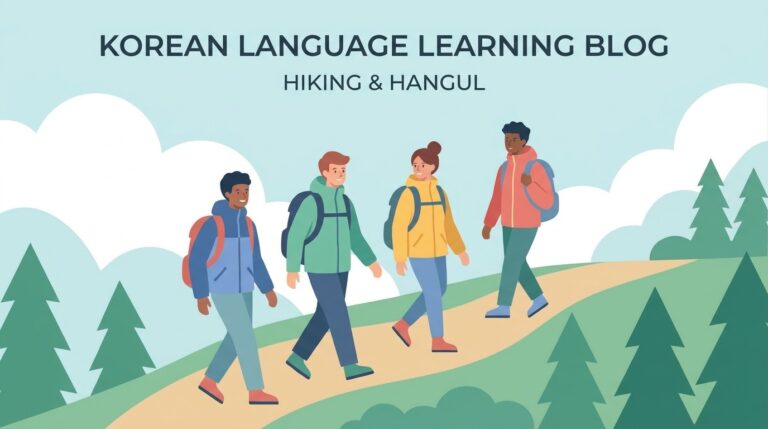
Join Our Mountain Crew! Master the Art of Korean Hiking Club Invitations
Phase 1: Empathy (Immersive Story Opening)
안녕하세요! 매일한글 (Daily Hangul) Editor here! Have you ever seen a Korean drama or variety show where colleagues head straight to a lush mountain trail at 7 AM on a Saturday, fully decked out in matching neon windbreakers, high-tech trekking poles, and stylish bucket hats? That is the legendary Korean hiking culture in full swing!
Imagine you are chatting with a Korean coworker or language partner at a cozy café in Seoul. Suddenly, their eyes light up, and they lean in with a huge smile: “Are you free this weekend? Do you want to join our hiking club?” Panic sets in! You might wonder: “Wait, is this a casual walk or an intense military march? How do I accept politely without sounding awkward, or decline gently without hurting their feelings?”
Joining a 등산 동호회 (Deungsan Donghohoe – Hiking Club) is one of the fastest and most authentic ways to make deep Korean friendships and experience real local food culture (yes, the famous mountaintop makgeolli and pajeon!). Based on real feedback from intermediate Korean learners who felt tongue-tied during weekend invites, this guide will equip you with natural, B1-level conversational skills to handle hiking invitations like a native.
Phase 2: Core Expressions Deep Dive
1. 이번 주말에 등산 동호회 같이 갈래요?
- Pronunciation: [I-beon ju-mal-e deung-san dong-ho-hoe ga-chi gal-lae-yo?] (Sounds like: ee-beon joo-mahl-eh deung-sahn dong-ho-hweh gah-chee gahl-leh-yo)
- Meaning: Literal: “Shall we go to the hiking club together this weekend?” | Actual Nuance: “Hey, would you like to join my weekend hiking crew? It’s fun and welcoming!”
- K-Culture Moment: Seen frequently in slice-of-life K-dramas where a friendly coworker tries to break the ice with a new team member.
- Editor’s Insight: The verb ending
-(으)ㄹ래요?expresses a soft, friendly suggestion rather than a demanding invitation.- Situation Spectrum: Casual: ✅ | Semi-formal: ✅ | Formal: ⚠️ (Use
가시겠어요?for corporate seniors)- 🤔 Think About It: In your culture, do people invite acquaintances to outdoor clubs right away, or do they wait until they are close friends?
2. 초보자도 쉽게 갈 수 있는 코스예요.
- Pronunciation: [Cho-bo-ja-do swip-ge gal su it-neun ko-seu-ye-yo.] (Sounds like: cho-boh-jah-doh sheep-geh gahl soo eent-neun koh-soo-yeh-yoh)
- Meaning: Literal: “It is a course that even beginners can go easily.” | Actual Nuance: “Don’t worry, it’s totally beginner-friendly!”
- K-Culture Moment: Used by seasoned hikers to comfort a nervous newbie who is afraid of steep granite peaks like Bukhansan.
- Editor’s Insight: The word
초보자(beginner) combined with-도(even) lowers emotional barriers instantly.- Situation Spectrum: Casual: ✅ | Semi-formal: ✅ | Formal: ✅
- 🤔 Think About It: Why is reassurance such an essential part of Korean group hobby culture?
3. 정상에서 먹는 막걸리가 진짜 최고예요!
- Pronunciation: [Jeong-sang-e-seo meong-neun mak-geol-li-ga jin-jja choe-go-ye-yo!]
- Meaning: Literal: “The makgeolli eaten at the summit is really the best!” | Actual Nuance: “The post-hike feast at the top makes every drop of sweat totally worth it!”
- K-Culture Moment: The classic climax of any Korean hiking trip: sipping rice wine with crispy savory pancakes (pajeon) at the base or summit.
- Editor’s Insight: In Korea, hiking is half about exercise and half about culinary reward (뒷풀이, dwit-puri).
- Situation Spectrum: Casual: ✅ | Semi-formal: ✅ | Formal: ⚠️
- 🤔 Think About It: Does your native language have expressions linking strenuous physical activity directly to delicious shared meals?
Phase 3: Textbook Korean vs. Real Korean
Situation 1: Expressing Interest in Joining
- 📖 교과서 한국어 (Textbook): 저는 등산 동호회에 가입하고 싶습니다. (Jeo-neun deung-san dong-ho-hoe-e ga-ip-ha-go sip-seum-ni-da. – I wish to register for the mountaineering club.)
- 🗣️ 진짜 한국어 (Real-Life): 저도 꼭 껴주세요! 기대돼요! (Jeo-do kkok kkeo-ju-se-yo! Gi-dae-dwae-yo! – Please count me in! I’m so excited!)
- 💡 Why is it different? The verb
끼다(to join/squeeze in) used as껴주세요creates immediate warmth and camaraderie, whereas가입하다sounds like filling out insurance paperwork.
Situation 2: Politely Declining Due to Low Stamina
- 📖 교과서 한국어 (Textbook): 저는 체력이 부족하여 등산을 거절하겠습니다. (Jeo-neun che-ryeog-i bu-jok-ha-yeo deung-san-eul geo-jeol-ha-get-seum-ni-da. – Since my stamina is deficient, I will reject the hike.)
- 🗣️ 진짜 한국어 (Real-Life): 제가 완전 ‘등린이’라 민폐 끼칠까 봐 걱정돼요. (Je-ga wan-jeon ‘deung-rin-i’-ra min-pye kki-chil-kka bwa geok-jeong-dwae-yo. – I’m a total mountain newbie, so I worry I might slow everyone down!)
- 💡 Why is it different? Slang like
등린이(Hiking + Kid = Hiking Newbie) breaks the tension with self-deprecating humor while showing cultural awareness.
Phase 4: K-Culture Deep Dive & Non-Verbal Manners
4-1. Nunchi & Body Language
- Eye Contact & Modesty: When invited to a club, touch your chest lightly with both hands if feeling flattered, and tilt your head slightly with a polite smile. Avoid flat refusals like “No, I hate climbing”; instead, use softening gestures and open palms.
- Sharing Treats (간식 나눔): Bringing mini energy bars, peeled cucumbers (오이), or candies to share during the hike is the ultimate non-verbal sign of being a considerate team member.
4-2. Cultural Code: The Post-Hike “Dwit-puri” (뒷풀이)
In Korea, hiking is rarely a solitary sport—it is a communal celebration of nature and food. The hike technically concludes at the base of the mountain (하산길), where rows of restaurants serve 도토리묵 (acorn jelly salad), 파전 (green onion pancake), and chilled 막걸리 (rice wine). Joining a club means participating in this bonding ritual where workplace hierarchies melt away.
Phase 5: Real-Life Roleplay Scenario
Setting: Friday afternoon at a vibrant tech office in Pangyo. Min-jun, an enthusiastic outdoor club leader, walks over to Sarah’s desk.
- 민준: 사라 씨, 이번 주말에 특별한 계획 있어요? (Sarah, do you have any special plans this weekend?)
🎭 Leaning forward with a bright, welcoming grin - 사라: 아직 특별한 건 없어요. 왜요, 민준 씨? (Nothing special yet. Why do you ask, Min-jun?)
🎭 Tilting head curiously with a warm smile - 민준: 이번 주 일요일에 우리 사내 등산 동호회 관악산 가는데, 같이 갈래요? (Our company hiking club is going to Gwanaksan this Sunday. Would you like to come along?)
🎭 Showing photos of the mountain trail on his phone - 사라: 관악산이요? 저 완전 ‘등린이’인데 괜찮을까요? (Gwanaksan? I’m a complete mountain newbie, will I be okay?)
🎭 Laughing shyly while scratching the back of her head - 민준: 걱정 마세요! 초보자도 쉽게 갈 수 있는 쉬운 코스로 잡았어요. (Don’t worry! We picked an easy trail that even beginners can hike comfortably.)
🎭 Waving hand reassuringly - 사라: 와, 다행이네요! 준비물은 뭐가 필요해요? (Wow, what a relief! What gear or supplies do I need to bring?)
🎭 Taking out a notepad eagerly - 민준: 편한 운동화랑 물 한 병만 챙겨오시면 돼요. 하산하고 파전 먹을 배도 준비하시고요! (Just bring comfy sneakers and a water bottle. And bring an appetite for pajeon after we descend!)
🎭 Giving a cheerful thumbs-up - 사라: 좋아요! 저도 꼭 껴주세요. 일요일에 봬요! (Sounds great! Count me in. See you on Sunday!)
🎭 Nodding with two hands clasped in enthusiasm
🔀 Interactive Branching Point
If you were Sarah, how would you respond to Min-jun’s invite?
* Option A: “저도 꼭 껴주세요! 맛있는 간식 챙겨갈게요!” (Count me in! I’ll bring tasty snacks!)
* 🏆 Best: Displays peak enthusiasm and immediate group readiness.
* Option B: “저는 등산은 싫고 뒤풀이 파전만 먹으러 가면 안 돼요?” (I hate hiking, can I just join for the pancake feast?)
* ⚠️ Risk: Funny if said to close friends, but might seem slightly cheeky to a club organizer.
* Option C: “안 가요. 힘든 거 싫어해요.” (I won’t go. I dislike hard physical effort.)
* 🚫 Bad: Too blunt and breaks the conversational harmony (기분).
Phase 6: 10-Second Emotion Shadowing Drill
- [😊 Enthusiastic & Bright] 저도 / 꼭 / 껴주세요! / 완전 기대돼요! (Count me in / for sure! / I’m totally excited!)
- [🥺 Playful & Self-deprecating] 제가 / 완전 ‘등린이’라서 / 조금 천천히 가도 될까요? (Since I’m a total / hiking beginner / could we go a bit slow?)
- [😋 Anticipating delicious food] 하산하고 먹는 / 파전이랑 막걸리 / 벌써 기대돼요! (The pajeon and makgeolli / after coming down / I’m already craving them!)
Phase 7: K-Culture Mini Dictionary
- 등린이 (Deung-rin-i) | Hiking Beginner | A trendy portmanteau of 등산 (hiking) and 어린이 (child). Used to humble yourself pleasantly when joining an outdoor group.
- 정상 정복 (Jeong-sang Jeong-bok) | Conquering the Summit | Reaching the highest peak of the mountain and snapping the iconic certification photo at the peak stone marker (정상석).
- 하산 (Ha-san) | Descending the Mountain | Walking down the trail, which signals that the social feast (뒤풀이) is right around the corner.
- 오운완 (O-un-wan) | Today’s Workout Complete | Acronym for ‘오늘 운동 완료’. Essential hashtag when posting your hiking proof shot on Instagram!
Phase 8: Traveler’s Survival Kit
Top 3 Survival Expressions
- 사진 한 장만 찍어주실 수 있나요? (Could you take a picture of me, please? – Essential at the summit!)
- 여기서 정상까지 얼마나 더 가야 해요? (How much further is it to the summit from here?)
- 먼저 지나가셔도 괜찮아요! (You can pass ahead of me first! – Great trail courtesy!)
Editor’s Travel Note
Before heading out, make sure to check trail maps and hiking difficulty rankings via the Naver Map official application. Seoul mountains like Inwangsan (인왕산) and Achasan (아차산) are directly connected to subway lines and are ideal for beginner club outings. Wear sturdy shoes, and carry a T-money transportation card for the bus ride back from the trail base!
Phase 9: A Step Deeper (Reflection)
In Korean society, mountains are not obstacles to conquer in isolation; they are communal spaces where social boundaries dissolve. When climbing steep steps, total strangers exchange energetic shouts of “힘내세요!” (Cheer up!). Joining a hiking club is less about athletic competition and more about the shared rhythm of breathing fresh air and enjoying communal meals together.
💬 Your Turn: Have you ever joined a sports or outdoor social club in your home country? What is the quintessential post-activity food in your culture? Share with us in the comments below!
Phase 10: FAQ & Common Mistakes
Q: What should I wear if I don’t own professional Korean hiking gear?
A: You don’t need expensive gear right away! A breathable athletic t-shirt, comfortable track pants, and sneakers with decent grip are more than enough for beginner trails like Namsan or Inwangsan.
Q: Is it mandatory to drink makgeolli at the post-hike dinner?
A: Not at all! You can easily say “저는 술을 못 마셔서 사이다 마실게요!” (I can’t drink alcohol, so I’ll have cider/soda!) and enjoy the food just as much.
Q: Can I join hiking clubs through local mobile apps?
A: Yes! Apps like 소모임 (Somoim) or Meetup have dedicated groups for international and local hikers of all skill levels.
🚨 Common Mistakes Alert
- Mistake: Calling the group 등산 파티 (Hiking Party) instead of 등산 동호회/소모임.
- Correct Action: Use 등산 모임 or 동호회.
- Mistake: Declining abruptly with “등산 안 가요.” (I won’t go hiking.)
- Correct Action: Soften it: “이번 주는 일정이 있어서 아쉽지만 다음 모임 때 꼭 갈게요!”
- Mistake: Forgetting to bring extra trash bags.
- Correct Action: Korean trails follow strict Leave-No-Trace rules; always carry your trash down.
Phase 11: Action Mission
- 🥉 Bronze Mission: Practice saying
저도 꼭 껴주세요!out loud 5 times using your best smiling tone. - 🥈 Silver Mission: Post an outdoor photo on your Instagram story with the caption: “이번 주말 등산 갈 사람? ⛰️ #오운완”.
- 🥇 Gold Mission: Find a Korean friend or tandem partner and ask them: “이번 주말에 가벼운 산으로 등산 같이 갈래요?”.
- 🎮 K-Culture Mission: Watch an episode of variety shows like I Live Alone (나 혼자 산다) or Running Man where cast members hike, and spot when they shout “정상이다!”.
Phase 12: Interactive Quiz Challenge
1. [Situational Judgement] Your Korean acquaintance invites you to their weekend hiking club, but you have no hiking experience. What is the most natural reply?
* (A) 저는 프로 등산가입니다.
* (B) 제가 완전 등린이라 쉬운 코스면 가고 싶어요!
* (C) 등산은 귀찮으니 밥만 사주세요.
2. [Fill in the Blank] Fill in the missing word for beginner-friendly reassurance:
* “초보자도 ______ 갈 수 있는 코스예요.” (Easily)
3. [True / False] In Korean hiking culture, bringing small snacks (간식) to share with club members along the trail is considered thoughtful etiquette. ( O / X )
🔍 Click here to view Answers & Explanations
- Answer: (B)
- Explanation: Using
등린이acknowledges your beginner status with humor while warmly accepting the invitation.
- Explanation: Using
- Answer: 쉽게 (swip-ge)
- Explanation:
쉽게means “easily”, creating the phrase “a course that even beginners can easily walk.”
- Explanation:
- Answer: O (True)
- Explanation: Sharing light treats like fruits, chocolates, and cucumbers during trail breaks is a quintessential Korean bonding habit!
- Explanation: Sharing light treats like fruits, chocolates, and cucumbers during trail breaks is a quintessential Korean bonding habit!







