

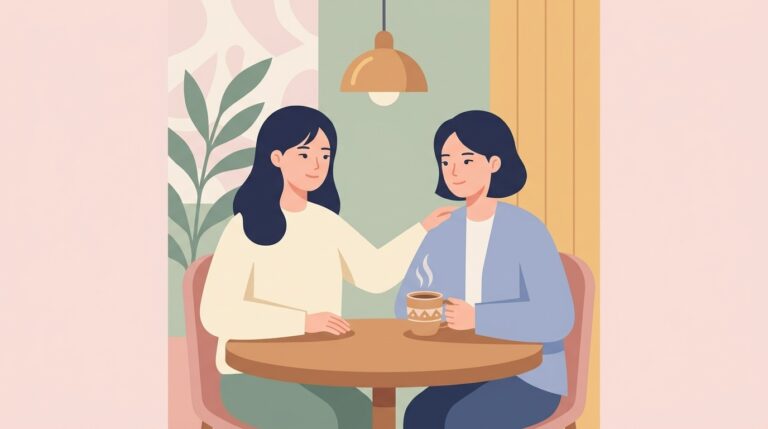
How to Comfort a Friend Who Failed an Exam in Korean
Phase 1: Empathy (Story-Driven Opening)
안녕하세요! This is your Daily Hangul editor. Have you ever watched a scene in a K-drama where a character stares blankly at a civil service exam or college entrance test result on their smartphone screen, while their best friend silently places a warm cup of coffee or a plate of spicy tteokbokki right in front of them?
In South Korea, academic and certification exams—like the CSAT (수능) or major hiring tests (공채)—carry tremendous emotional weight. When your Korean friend or study buddy falls short of passing an exam, simply translating “Don’t worry, you will be fine!” word-for-word into Korean can sound surprisingly robotic, distant, or even dismissive. As someone who has spent ten years coaching learners through Korean emotional etiquette, I created this B1-level guide based on real feedback from international students living in Seoul. Today, you will master the heartfelt nuances, unspoken gestures, and culturally warm phrases that make your Korean friend feel truly understood.
Phase 2: 3 Key Expressions Deep Dive
1. 수고 많았어, 진짜 고생했어. (Su-go man-at-eo, jin-jja go-saeng-haet-eo)
- Pronunciation: [soo-goh mahn-ah-sseo, jin-jjah goh-sang-hat-eo] (Sounds like soo-go + man + ah-t-uh)
- Meaning: “You put in so much effort, you really endured a lot.”
- K-Culture Moment: Seen frequently in university dorms or 24-hour study cafes (스터디 카페) right after final exam week.
- Editor’s Insight: Koreans value process and shared suffering (고생) over empty optimism. Acknowledging their effort validates their pain immediately.
- Situation Spectrum: Casual ✅ | Semi-formal ⚠️ (수고 많으셨어요) | Formal 🚫
- 🤔 Think About It: Why does Korean culture value praising effort (고생/수고) before discussing future solutions?
2. 너무 자책하지 마, 넌 최선을 다했잖아. (Neo-mu ja-chaek-ha-ji ma, neon choe-seon-eul da-haet-jan-ah)
- Pronunciation: [noh-moo jah-chaek-hah-jee mah, nohn chweh-sohn-eul dah-hat-jah-nah]
- Meaning: “Don’t blame yourself too hard, you did your absolute best.”
- K-Culture Moment: Friends sitting on the Han River bank, eating convenience store ramen after a disappointing job interview.
- Editor’s Insight: The grammar
-잖아reminds the listener of a shared truth they are temporarily forgetting: their own worth and hard work.- Situation Spectrum: Casual ✅ | Semi-formal ⚠️ | Formal 🚫
- 🤔 Think About It: How does reminding someone of what they did right change the atmosphere compared to giving advice?
3. 오늘은 다 잊고 맛있는 거 먹으러 가자. 내가 쏠게! (O-neul-eun da it-go mas-it-neun geo meog-eu-reo ga-ja. Nae-ga ssol-ge!)
- Pronunciation: [oh-neul-eun dah eet-goh mah-sheet-neun guh muhg-eu-ruh gah-jah. neh-gah ssohl-geh!]
- Meaning: “Forget everything for today and let’s go eat something delicious. It’s on me!”
- K-Culture Moment: The classic post-exam comforting trope: healing bruised pride over sizzling pork belly (삼겹살) or fried chicken.
- Editor’s Insight: In Korea, sharing a meal and treating someone (쏜다) is the ultimate physical manifestation of emotional support (정, Jeong).
- Situation Spectrum: Casual ✅ | Semi-formal ⚠️ | Formal 🚫
- 🤔 Think About It: In your culture, what is the default social ritual when someone receives disappointing news?
Phase 3: Textbook Korean vs Real Korean
Situation 1: Saying “Cheer Up”
- 📖 교과서 한국어: 기운을 내세요. 다음에는 잘할 수 있을 거예요. (Gi-un-eul nae-se-yo. Da-eum-e-neun jal-hal su iss-eul geo-ye-yo.)
- 🗣️ 진짜 한국어: 털어내자! 다음 기회에 박살 내면 돼. (Teol-eo-nae-ja! Da-eum gi-hoe-e bak-sal nae-myeon dwae.)
- 💡 왜 다를까? Textbook Korean sounds like an official counselor. Close friends use colorful, dynamic verbs like 털어내다 (shake it off) and 박살 내다 (smash/crush it) to ignite confidence.
Situation 2: Asking if They Are Okay
- 📖 교과서 한국어: 당신은 괜찮습니까? (Dang-sin-eun gwaen-chan-seum-ni-kka?)
- 🗣️ 진짜 한국어: 마음 많이 쓰이지? 속상한 거 다 알아. (Ma-eum manh-i sseu-i-ji? Sok-sang-han geo da al-a.)
- 💡 왜 다를까? Directly asking “당신” sounds unnatural or confrontational. Real friends acknowledge inner turmoil with emotive expressions like 마음이 쓰이다 (to be weighing on one’s mind) and 속상하다 (heartbroken/upset).
Phase 4: K-Culture Deep Dive & Non-verbal Manners
4-1. Nunchi (눈치) & Non-verbal Etiquette
- Don’t Ask for Scores: Never ask “몇 점으로 떨어졌어?” (How many points did you miss it by?). Let them share scores only if they bring it up first.
- Physical Touch: A gentle pat on the shoulder (어깨 토닥이기) or sitting side-by-side rather than direct, intense eye contact relieves visual pressure.
- Pacing: Allow silence. Korean comforting often involves companionable silence (침묵의 공감) before jumping into cheerleading.
4-2. Comfort Food Culture: The Healing Meal
In Korea, food is emotional medicine (소울 푸드). Friends will order spicy dishes like 떡볶이 (tteokbokki) or 닭발 (spicy chicken feet) to “burn away stress” (스트레스 풀다), followed by sweet desserts to soothe the mood.
Phase 5: Real-Life Roleplay Scenario
Setting: A quiet cafe near Sinchon station. Ji-ho (지호) is staring at his laptop with red eyes after checking the Level 6 TOPIK / certification results.
- You: 지호야, 결과 나왔어? 표정이 왜 그래… (Ji-ho-ya, gyeol-gwa na-wat-eo? Pyo-jeong-i wae geu-rae…)
🎭 (Gently sitting down opposite him, speaking softly) - Ji-ho: 응… 이번에도 몇 점 차이로 안 됐네. 몇 달 동안 잠도 못 잤는데 허무하다. (Eung… i-beon-e-do myeot jeom cha-i-ro an dwaen-ne. Myeot dal dong-an jam-do mot jat-neun-de heo-mu-ha-da.)
🎭 (Sighing and closing the laptop screen) - You: 아… 진짜 속상하겠다. 너 밤새워 공부한 거 내가 다 봤잖아. (A… jin-jja sok-sang-ha-get-da. Neo bam-sae-wo gong-bu-han geo nae-ga da bwat-jan-ah.)
🎭 (Placing a warm hand over his wrist) - Ji-ho: 솔직히 다 포기하고 싶어. 나만 제자리걸음인 것 같아. (Sol-jik-hi da po-gi-ha-go sip-eo. Na-man je-ja-ri-geol-eum-in geot gat-a.)
🎭 (Looking down with slumped shoulders) - You: 무슨 소리야. 네 실력이 부족해서가 아니라 시험 운이 조금 없었던 거야. (Mu-seun so-ri-ya. Ne sil-ryeok-i bu-jok-hae-seo-ga a-ni-ra si-heom un-i jo-geum eop-seot-deon geo-ya.)
🎭 (Speaking firmly yet warmly) - Ji-ho: 위로해 줘서 고마워. 그래도 기분이 쉽게 안 풀리네. (Wi-ro-hae jwo-seo go-ma-wo. Geu-rae-do gi-bun-i swip-ge an pul-ri-ne.)
🎭 (Giving a faint, tired smile) - You: 오늘은 책 다 덮고 맛있는 거 먹자. 내가 삼겹살 쏠 테니까 소주 한잔하자! (O-neul-eun chaek da deop-go mas-it-neun geo meok-ja. Nae-ga sam-gyeop-sal ssol te-ni-kka so-ju han-jan-ha-ja!)
🎭 (Packing his notebook into his bag with a bright smile) - Ji-ho: 고맙다, 진짜. 네 덕분에 힘이 난다. 가자! (Go-map-da, jin-jja. Ne deok-bun-e him-i nan-da. Ga-ja!)
🎭 (Standing up with relieved posture)
🔀 Interactive Choice Branch
What would you say next to wrap up the conversation?
* Option A: “그러게 내가 평소에 더 열심히 하라고 했잖아.” (See, I told you to study harder earlier.)
* Option B: “털어버리자! 오늘은 머리 비우고 푹 쉬는 거야.” (Let’s shake it off! Today you just empty your head and rest well.)
* Option C: “바로 내일부터 다음 시험 스터디 플랜 다시 짜자.” (Let’s remake your study timetable tomorrow morning right away.)
- Feedback:
- Option A [Bad]: Ruins the friendship instantly by adding blame to a wounded friend.
- Option B [Best]: Empathetic, natural, and prioritizes mental recovery over immediate pressure.
- Option C [Risk]: Well-intentioned, but too overwhelming when their emotions are raw.
Phase 6: 10-Second Emotion Shadowing Drill
Read aloud focusing on natural pauses (/) and emotional tone indicators:
[🥺 깊은 공감과 위로]진짜 속상하겠다… / 너 정말 열심히 / 준비했잖아.
(Jin-jja sok-sang-ha-get-da… / neo jeong-mal yeol-sim-hi / jun-bi-haet-jan-ah.)[💪 단호하고 든든하게]너무 자책하지 마. / 네 실력 문제 / 전혀 아니야!
(Neo-mu ja-chaek-ha-ji ma. / Ne sil-ryeok mun-je / jeon-hyeo a-ni-ya!)[😊 유쾌하고 활기차게]오늘만 슬퍼하고 / 털어내자! / 맛있는 거 먹으러 가자, / 내가 쏠게!
(O-neul-man seul-peo-ha-go / teol-eo-nae-ja! / Mas-it-neun geo meog-eu-reo ga-ja, / nae-ga ssol-ge!)
Phase 7: K-Culture Mini Dictionary
- 멘붕 (Men-bung) [Mental Breakdown]
A portmanteau of ‘Mental’ and ‘붕괴’ (collapse). Used humorously or casually when an exam score or sudden event leaves someone paralyzed with shock. - 토닥토닥 (To-dak-to-dak) [Pat-pat]
Onomatopoeia for gently patting someone’s back or shoulder to comfort them. Often used alone in text messages as a warm hug emoji equivalent. - 한턱내다 / 쏘다 (Han-teok-nae-da / Sso-da) [To treat / To buy someone a meal]
Everyday slang for paying for a meal or drink. Crucial for showing care when lifting a friend’s mood. - 액땜 (Aek-ttaem) [Preventing bad luck through a minor misfortune]
The Korean belief that undergoing a small failure now shields you from a greater catastrophe in the future. Friends often say “이번 시험은 액땜한 셈 치자!” (Let’s consider this failure as warding off bad luck!).
Phase 8: Survival Kit for Travelers & Expats
TOP 3 Survival Phrases
- 힘내, 내가 항상 응원해! (Him-nae, nae-ga hang-sang eung-won-hae!) – Cheer up, I’m always rooting for you!
- 속상해하지 마, 넌 할 수 있어. (Sok-sang-hae-ha-ji ma, neon hal su iss-eo.) – Don’t be sad, you can do this.
- 잠깐 쉬어가도 괜찮아. (Jam-kkan swi-eo-ga-do gwaen-chan-a.) – It’s totally okay to take a short break.
Editor’s Travel & Life Note
If your study buddy is feeling down, avoid crowded tourist hubs. Instead, take them to a cozy cafe or riverside spot. You can easily find scenic and calm spots by checking 네이버 지도 앱 다운로드 to search for nearby peaceful walking routes (산책로) and private booth restaurants (룸식당).
Phase 9: “A Step Deeper” (Cultural Reflection)
In South Korea’s high-pressure meritocracy, exam outcomes are often mistakenly conflated with personal worth. Because of this societal climate, comfort in Korean is rarely about giving intellectual advice or pointing out study flaws. Instead, true comfort lies in affirming the person’s humanity independently of their test score. Offering a warm meal, saying 수고했어, and physically standing beside them acts as a buffer against social pressure.
💬 Your Turn: How do people in your hometown comfort someone who failed a crucial milestone? Share your language’s comforting expressions in the comments below!
Phase 10: FAQ & Common Mistakes
Q: Is it rude to say “화이팅 (Fighting)” to someone who just failed?
A: Yes, it can sometimes feel burdensome if said immediately after bad news. “화이팅” asks them to fight again right now. Prioritize “수고했어” (You worked hard) first to acknowledge their fatigue before cheering them on.
Q: What is the difference between 위로 (Comfort) and 격려 (Encouragement)?
A: 위로 (Wi-ro) focuses on healing emotional pain and validating past struggles, whereas 격려 (Gyeok-ryeo) focuses on inspiring future action. Always offer 위로 first, and save 격려 for later.
Q: Can I use “괜찮아요” to an older senior (선배)?
A: To an older peer or senior who failed an exam, avoid casual speech. Use “선배님, 너무 상심하지 마세요. 정말 고생 많으셨습니다.” (Sunbae-nim, please don’t be too heartbroken. You really put in so much effort.)
🚨 Common Mistakes TOP 3
- Mistake: Asking “왜 틀렸어?” (Why did you get it wrong?)
Correct Action: Say “문제가 너무 까다로웠지?” (The exam questions were tricky, right?). - Mistake: Saying “다음엔 더 공부해.” (Study harder next time.)
Correct Action: Say “너 준비 진짜 열심히 했잖아.” (You prepared so diligently). - Mistake: Forgetting honorifics when consoling a colleague.
Correct Action: Stick to polite verb endings like-셨어요and-세요.
Phase 11: Action Missions
- 🥉 Bronze Mission (Self-Practice): Shadow the Phase 6 expressions 3 times in front of a mirror with genuine facial expressions.
- 🥈 Silver Mission (Social Connection): Send a KakaoTalk message to a Korean friend with “토닥토닥, 오늘 하루도 고생 많았어!”
- 🥇 Gold Mission (Real Life): Take a study partner or friend out for coffee and console them in Korean using at least two phrases learned today.
- 🎮 K-Culture Mission: Watch a contemporary youth K-Drama episode and spot how friends comfort each other when receiving bad news.
Phase 12: Interactive Quiz Challenge
- Which phrase is the MOST empathetic response right after a friend fails a test?
- A) 다음엔 잠을 줄이고 공부해.
- B) 진짜 고생 많았어, 너 최선을 다했잖아.
- C) 나는 한 번에 붙었는데 아쉽네.
- Fill in the blank: “오늘은 시험 생각 다 잊고 맛있는 거 먹자. 내가 ____! (It’s on me!)”
-
True / False: In Korean etiquette, it is polite to ask for the exact score immediately so you can help them analyze their weaknesses.
👉 Click here to reveal Answers & Explanations!
- Answer: B (진짜 고생 많았어, 너 최선을 다했잖아.)
Explanation: A is critical and C is boastful. B validates their hard work. - Answer: 쏠게 (or 쏜다)
Explanation: “내가 쏠게” is the standard colloquial phrase for treating someone to food/drinks. - Answer: False
Explanation: Asking for specific scores right after failure violates Nunchi and hurts the friend’s feelings.







