

Phase 1: Empathy & Storytelling Opening
안녕하세요! 매일한글 에디터입니다.
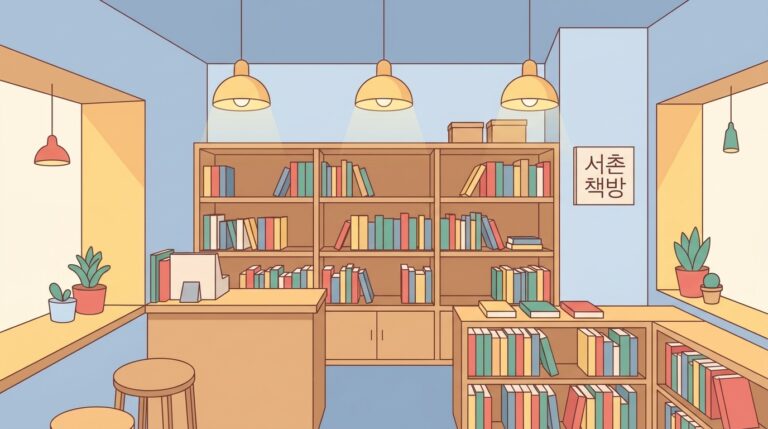
Picture this: You are wandering through the quiet, sun-drenched alleys of Seochon or Mangwon-dong in Seoul. Tucked away between a vintage record cafe and a quiet pottery workshop, you spot a discreet wooden sign leading into an independent bookstore (동네책방). As you push the door open, the fragrant aroma of brewed drip coffee blends with the crisp scent of fresh paper. The curator sits quietly behind a wooden desk, surrounded by hand-written curation notes (북큐레이션 메모) pinned to carefully selected indie editions.
You want to ask the owner for a profound recommendation that matches your specific emotional state, or discuss how deeply a certain essay moved you. But suddenly, your mind freezes. Textbook phrases like “이 책은 재미있어요” (This book is fun) or “좋은 책 추천해 주세요” (Please recommend a good book) feel far too elementary and flat for this nuanced, aesthetic space. How do native Korean bibliophiles articulate subtle literary nuances, discuss prose style, and connect with boutique curators on a C1 level?
Don’t worry. Based on real feedback from our advanced learners and seasoned Korean book lovers, this guide will elevate your literary Korean from basic conversationalist to an articulate cultural insider.
Phase 2: Core 3 Expressions In-Depth
1. 제 취향과 결이 맞는 책을 찾고 있어요.
- Pronunciation: Je chwihyang-gwa gyeori manneun chaegeul chatgo isseoyo. (Sound metaphor: Gyeol sounds like the English word “gyre” + “uhl”, evoking the gentle flowing grain of wood).
- Meaning: Literal: “I am looking for a book whose grain aligns with my taste.” / Real Nuance: “I’m searching for a book that resonates closely with my aesthetic sensibilities and emotional wavelength.”
- K-Culture Moment: Commonly heard in artsy lifestyle vlogs, K-Drama literary scenes (like When the Weather Is Fine), or intimate book club salons in Yeonhui-dong.
- Editor’s Insight: The Korean concept of 결 (Gyeol) originally refers to the grain of wood or fabric texture. In modern Korean cultural discourse, it describes someone’s underlying vibe, emotional temperament, or aesthetic frequency. Saying “결이 맞다” shows an exceptionally high level of cultural nuance.
- Situation Spectrum: Casual: ⚠️ | Semi-formal: ✅ | Formal: ✅
- 🤔 Think About It: In English, we often say “it resonates with me” or “it’s my cup of tea.” How does visualizing taste as an intrinsic “grain” (결) change the way you perceive emotional compatibility with art?
2. 문체가 담백하면서도 폐부를 찌르더라고요.
- Pronunciation: Munchega dambaekhamyeonseodo pyebureul jjireudeoragoyo. (Pronounce dambaek like “dahm-baek”, pyebu like “pyeh-boo”).
- Meaning: Literal: “The prose style is unembellished, yet it pierces the inner lungs/heart.” / Real Nuance: “The writing style is delightfully clean and minimalistic, yet it strikes a profoundly visceral emotional chord.”
- K-Culture Moment: Used by Korean book columnists, literary critics, and sophisticated readers reviewing bestselling Korean reflective essays (e.g., works by Kim Young-ha or Han Kang).
- Editor’s Insight: 담백하다 means clean, subtle, and free of artificial excess (often used for food, but frequently applied to prose and personality). Pair it with 폐부를 찌르다 (to strike one’s core/lungs), and you instantly sound like an articulate literary reviewer.
- Situation Spectrum: Casual: ⚠️ | Semi-formal: ✅ | Formal: ✅
- 🤔 Think About It: Notice how Korean sensory vocabulary smoothly bridges culinary taste (담백하다) with emotional and literary perception.
3. 다 읽고 나서도 여운이 꽤 오래 남네요.
- Pronunciation: Da ikgo naseodo yeouneui kkwae orae namneyo. (Yeoun rhymes softly with “yeo-woon”).
- Meaning: Literal: “Even after finishing the reading, the trailing resonance lingers quite long.” / Real Nuance: “The book left a deep, haunting aftertaste that I just can’t stop thinking about.”
- K-Culture Moment: The quintessential reaction shared after watching an award-winning indie film or finishing a poetic novella over a rainy weekend in Korea.
- Editor’s Insight: 여운 (Yeoun) represents the lingering resonance or echo after sound fades or an experience ends. Native speakers prize 여운 as the highest hallmark of quality storytelling.
- Situation Spectrum: Casual: ✅ | Semi-formal: ✅ | Formal: ✅
- 🤔 Think About It: Does your native language have a specific noun dedicated solely to the emotional echo left behind by a work of art?
Phase 3: Textbook Korean vs. Real Korean
Situation 1: Asking the Bookstore Owner for a Hidden Gem
- 📖 교과서 한국어 (Textbook): “사장님, 여기서 제일 인기 있는 책이 무엇입니까? 추천해 주세요.” (Owner, what is the most popular book here? Please recommend it.)
- 🗣️ 진짜 한국어 (Real Native C1): “사장님, 요즘 사장님이 유독 아끼시는 숨은 보석 같은 책이 있을까요?” (Owner, is there a hidden gem among these shelves that you personally hold dear lately?)
- 💡 왜 다를까?: Independent bookshops thrive on subjective curation, not commercial bestseller rankings. Asking for the owner’s personal 애정작 (cherished piece) flatters their taste and opens up rich dialogue.
Situation 2: Expressing That a Book Comforted You
- 📖 교과서 한국어 (Textbook): “이 책은 내용이 아주 감동적이고 제 기분이 좋아졌습니다.” (This book’s content is very touching and my mood became better.)
- 🗣️ 진짜 한국어 (Real Native C1): “활자가 지친 마음을 가만히 보듬어 주는 듯한 위로를 받았어요.” (I felt comforted, as if the printed words were gently soothing my weary heart.)
- 💡 왜 다를까?: Advanced Korean often uses figurative expressions like 보듬다 (to caress/embrace tenderly) and 활자 (printed type) rather than generic adjectives like 좋다 or 감동적이다.
Phase 4: K-Culture Deep Dive & Non-Verbal Manners
4-1. Nunchi (눈치) & Bookstore Etiquette
Korean independent bookstores are sacred, tranquil cultural sanctuaries. Here is how to navigate them with impeccable Nunchi:
* The Decibel Level: Always speak in soft, low undertones (소곤소곤). Never take loud phone calls inside.
* Physical Touch: Handle sample books (견본도서 / 샘플북) with care. Avoid creasing the spine (책등) or folding page corners.
* The Blind Book Etiquette: Many indie shops sell “Blind Date with a Book” packages wrapped in brown kraft paper with handwritten clues. Never peel or peek into the wrapping before purchasing!
4-2. Cultural Code: The Rise of Dongne Chaekbang (동네책방)
Unlike mega-chains (like Kyobo Book Centre), Korean Dongne Chaekbang are personalized reflection hubs. Curators curate books around hyper-specific themes: feminist literature, poetry, architectural photography, or melancholy night essays. Koreans visit these spaces not just to purchase goods, but for mental healing (마음 챙김) and literary escapism.
Phase 5: Real-Life Roleplay Scenario
Setting: ‘Geul-boda Bom’ (글보다 봄), a serene indie bookshop in Seochon. Soft lo-fi music plays; sunlight streams through wooden window frames. Curator Min-seo is organizing hand-bound poetry booklets.
- 민서 (Min-seo): 어서 오세요. 천천히 둘러보시고, 궁금한 점 있으시면 언제든 편하게 말씀해 주세요.
(Eoseo oseyo. Cheoncheonhi dulleobosigo, gunggeumhan jeom isseusimyeon eonjedeun pyeonhage malsseumhae juseyo.)
“Welcome. Please take your time looking around, and feel free to ask if you have any questions.”
🎭 따뜻한 미소를 지으며 차를 한 잔 건넨다. -
학습자 (You): 감사합니다. 서점 분위기가 정말 아늑하네요. 혹시 사장님, 요즘 제 마음에 쉼을 줄 만한 책을 찾고 있는데, 추천해 주실 수 있나요?
(Gamsahamnida. Seojeom bunwigiga jeongmal aneukhaneyo. Hoksi sajangnim, yojeum je maeume swimeul jul manhan chaegeul chatgo inneunde, chucheonhae jusil su innayo?)
“Thank you. The atmosphere here is truly cozy. Owner, I’m looking for a book that can give my mind a restful pause these days—could you perhaps recommend one?”
🎭 큐레이션 서대를 진지한 눈빛으로 바라보며 -
민서 (Min-seo): 마침 일상에 지친 분들께 권해드리는 산문집이 한 권 있어요. 문체가 담백해서 술술 읽히지만, 문장마다 여운이 꽤 짙답니다.
(Machim ilsange jichin bundeulkke gwonhaedeorineun sanmunjibi han gwon isseoyo. Munchega dambaekhaeseo sulssul ilkhijiman, munjangmada yeouneui kkwae jitdamnida.)
“I actually have an essay collection I often recommend to those weary from daily routine. The prose is clean and flows effortlessly, yet the resonance in every sentence runs quite deep.”
🎭 책 한 권을 조심스럽게 꺼내어 건네며 -
학습자 (You): 표지부터 제 취향과 결이 딱 맞을 것 같아요. 이 작가님의 문체는 어떤 편인가요?
(Pyojibuteo je chwihyang-gwa gyeori ttak majeul geot gatayo. I jakganimeui muncheneun eotteon pyeon-ingayo?)
“Just from the cover, it feels like its grain perfectly aligns with my taste. How would you describe this author’s prose style?”
🎭 책장을 조심스레 넘겨 첫 장을 훑어보며 -
민서 (Min-seo): 화려한 수식어 없이도 폐부를 찌르는 힘이 있어요. 읽다 보면 밑줄 긋고 싶은 구절이 참 많으실 거예요.
(Hwaryeohan susigeo eopsido pyebureul jjireuneun himi isseoyo. Ikda bomyeon mitjul geutgo sipeun gujeori cham maneusil geoyeyo.)
“It has the power to strike straight to the core without flamboyant modifiers. As you read, you’ll find plenty of passages you’ll want to underline.”
🎭 끄덕이며 책 뒤편의 손글씨 추천사를 가리킨다. -
학습자 (You): 그런 문체 정말 애정합니다. 오늘 밤에 차 한잔 곁들이며 일독해 봐야겠네요. 이 책으로 데려갈게요!
(Geureon munche jeongmal aejeonghamnida. Oneul bame cha hanjan gyeotdeurimyeo ildokhae bwayagetneyo. I chaegeuro deryeogalgeyo!)
“I adore that kind of style. I must read it cover-to-cover tonight over a cup of tea. I’ll take this one home!”
🎭 밝은 표정으로 책을 소중히 품에 안으며
🔀 Interactive Branching Point
The curator mentions the book is written by an independent local indie author. What do you say?
* Choice A: “이런 독립출판물만의 날것의 매력과 온기가 참 좋아요. 작가님의 세계관을 온전히 느낄 수 있겠네요.”
* Choice B: “대형 서점 베스트셀러보다 왜 이렇게 비싸요? 할인 안 되나요?”
* Choice C: “그냥 표지가 예뻐서 인스타 감성용으로 딱이네요!”
Feedback:
* Choice A (Best! ⭐⭐⭐): Flawless C1 cultural insight! You acknowledge 독립출판물 (indie publishing) and 날것의 매력 (raw charm). The curator will likely gift you a commemorative postcard.
* Choice B (Bad! ❌): Extreme cultural taboo. Independent bookshops adhere strictly to the fixed book price system (도서정가제). Asking for discounts in a boutique space ruins the vibe.
* Choice C (Risk! ⚠️): Calling a literary masterpiece merely “Instagram aesthetic (인스타 감성)” may sound slightly shallow to a passionate curator.
Phase 6: 10-Second Emotion Shadowing Drill
Practice reading these out loud with natural cadence and emotion:
[✨ 눈을 반짝이며 호기심 가득하게]
“사장님, / 요즘 사장님이 유독 아끼시는 / 숨은 보석 같은 책이 있을까요?”-
[🌿 차분하고 깊은 감동을 담아]
“문체가 참 담백한데도, / 이상하게 마음 한구석을 / 묵직하게 건드리네요.” -
[💖 진심 어린 찬사를 전하며]
“제 취향과 / 결이 꼭 맞는 공간을 발견해서 / 오늘 하루가 정말 특별해졌어요.”
Phase 7: K-Culture Mini Dictionary
- 동네책방 (Dongnae Chaekbang): Indie/neighborhood bookstore. Unlike commercial chains, these reflect the owner’s distinct personality and curation.
- 북큐레이션 (Buk-kyureisyeon): Book curation. The art of selecting, arranging, and annotating books under meaningful conceptual themes.
- 밑줄 긋기 (Mitjul Geutgi): Underlining passages. Highly celebrated in Korean reading culture as a ritual of mental bonding with the author.
- 활자 중독 (Hwalja Jungdok): Print/text addiction. A self-deprecating, affectionate term for bookworms who cannot go a day without reading something.
Phase 8: Travel Kit for Book Explorers
Top 3 Survival Phrases
- “책갈피나 북마크도 같이 구매할 수 있나요?” (Chaelgalpina bungmakeudo gachi gumaehal su innayo?) — Can I purchase bookmarks together with this?
- “선물용으로 포장 부탁드려도 될까요?” (Seonmulyongeuro pojang butakdeoryeodo doelkkayo?) — Could I kindly request gift wrapping for this?
- “서점 내부 사진 촬영을 조심스럽게 해도 괜찮을까요?” (Seojeom naebu sajin chwallyeongeul josimseureopge haedo gwaenchanheulkkayo?) — Would it be okay if I discreetly take a few photos inside the bookstore?
Editor’s Travel Note
- Mapping Hidden Bookshops: Don’t rely on generic search engines. Open the Naver Map App and search for
독립서점(Independent Bookstores) or동네책방in areas like Seochon (서촌), Yeonhui-dong (연희동), and Euljiro (을지로). - Local Payment Tip: Most small bookshops happily take international credit cards, but having mobile payments (Apple Pay where supported, or Korean local cards) makes micro-purchases of indie zines seamless.
Phase 9: “One Step Deeper” (Cultural Reflection)
In Korean culture, reading has shifted from a competitive academic pursuit (공부) to an intimate form of self-care (쉼과 돌봄). When Koreans say their taste has a certain “결 (Gyeol)”, they are honoring the idea that our souls possess distinct textures that deserve gentle alignment rather than rigid conformity. Independent bookstores in Seoul are essentially physical sanctuaries for these individual textures to rest without judgment.
💬 Your Turn: What kind of literary “grain” (결) do you gravitate toward? Do you prefer minimalist essays (담백한 산문) or emotionally lingering fiction (여운이 긴 소설)? Share your thoughts below in Korean!
Phase 10: FAQ & Common Mistakes
Q: Can I sit and read for hours without buying a book in an indie bookshop?
A: Unlike large chain stores with extensive reading benches, small indie bookshops rely heavily on modest book sales to survive. If the shop also operates as a book-cafe (북카페), order a beverage; if it is purely a bookstore, purchasing at least one book or curated stationery item before settling down is considered good etiquette.
Q: What is the difference between 산문집 and 수필?
A: While both refer to non-fiction essays, 수필 (Supil) is the traditional textbook term for personal essays. In contemporary publishing, 산문집 (Sanmunjip) or simply 에세이 (Essay) is the far more fashionable, sophisticated term used on book covers and in conversation.
Q: How do I compliment the curator’s taste respectfully in Korean?
A: You can say: “서점의 큐레이션 감각이 정말 탁월하세요.” (Your curation sensibility for this bookstore is truly exceptional.)
🚨 Common Mistakes Alert Board
- ❌ Mistake 1: Saying “이 책 진짜 재밌어요, 강추!” to a bookstore owner in a quiet literary salon.
👉 Correct Action: Use refined phrases: “문장이 유려하고 여운이 깊게 남는 수작이에요.” (It’s a masterwork with flowing prose and lingering depth). - ❌ Mistake 2: Snapping photos with a loud shutter sound while other patrons are reading.
👉 Correct Action: Switch your camera to silent mode, or politely ask the owner before taking wide-angle interior shots. - ❌ Mistake 3: Asking for major commercial discounts (할인해 주세요).
👉 Correct Action: Independent shops in Korea abide by standard legal price regulations. Appreciate their curation by paying the list price.
Phase 11: Action Missions
- 🥉 Bronze Mission (Solo Practice): Record yourself reading Phase 6’s Emotion Shadowing Drill with accurate intonation and natural pauses.
- 🥈 Silver Mission (Social Connection): Write a 2-sentence micro-review of your favorite book on Instagram or Threads using 결이 맞다 and 여운이 남다.
- 🥇 Gold Mission (Real Life): Visit an independent bookstore (or an online Korean bookstore) and ask the curator for a recommendation using: “제 취향과 결이 맞을 만한 책을 찾고 있어요.”
- 🎮 K-Culture Mission: Watch a scene from the literary K-Drama When the Weather Is Fine (날씨가 좋으면 찾아가겠어요) and spot how characters talk about poetry and winter reading.
Phase 12: Interactive Quiz Challenge
Q1. Situational Judgment
You want to ask the indie bookstore curator for a book that is stylistically clean, not exaggerated, yet delivers a profound emotional impact. Which phrase should you use?
(A) “제일 시끄럽고 자극적인 베스트셀러 주세요.”
(B) “문체가 담백하면서도 폐부를 찌르는 책이 있을까요?”
(C) “사진 찍기 좋은 두꺼운 책 아무거나 추천해 주세요.”
Q2. Fill in the Blank
“다 읽고 난 뒤에도 가슴속에 맴도는 깊은 ( )이/가 정말 인상적인 소설이었어요.” (Hint: The lingering resonance left after an aesthetic experience)
Q3. True or False Cultural Quiz
In Korean indie bookstores, peeling open the brown wrapper of a “Blind Book” to check the title before paying is considered standard and polite behavior. (True / False)
🔍 Click to Reveal Answers & Explanations
- Q1 Answer: (B)
Explanation: (B) uses the sophisticated C1 pairing 담백하다 (clean/unembellished) and 폐부를 찌르다 (striking the core/lungs). (A) asks for sensationalist bestsellers, and (C) treats books merely as photo props. - Q2 Answer: 여운 (Yeoun)
Explanation: 여운 represents the deep, lingering emotional aftertaste after reading or watching something touching. - Q3 Answer: False
Explanation: Blind date books (블라인드 북) are curated surprises meant to be unwrapped only after purchase based solely on the handwritten keyword hints on the wrapper.







