

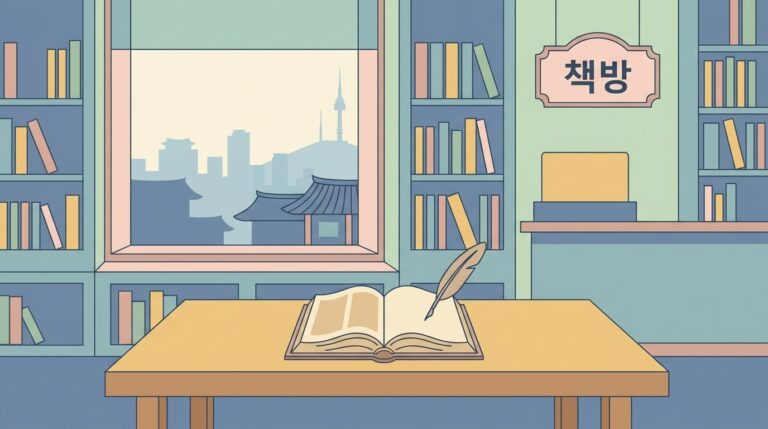
Phase 1: Empathy (Story-Driven Opening)
안녕하세요! 매일한글 에디터입니다. Have you ever sat in a trendy book cafe in Hyehwa or joined a Korean university literature seminar, only to feel paralyzed when the conversation turns to profound literary analysis? You understand the complex themes of Shakespeare’s great tragedies in English—Hamlet’s existential dread, Macbeth’s blind ambition, Othello’s destructive jealousy, and King Lear’s tragic downfall. Yet, when trying to articulate these subtle, philosophical layers in Korean, you find yourself trapped behind simplistic elementary phrases like “이 책은 슬퍼요” (This book is sad).
Many of our advanced C1 learners express this exact frustration: “I want to critique classical literature with the intellectual depth and nuance I have in my native language, but I lack the sophisticated literary discourse markers native Koreans use.” This guide bridges that gap. Grounded in real seminar discourse and K-Drama screenwriting critiques, here is your essential masterclass on dissecting Shakespeare’s four great tragedies with refined, native-level Korean rhetoric.
Phase 2: In-Depth Analysis of 3 Core Expressions
1. 인간의 나약함과 비극적 결함 (Ingan-ui nayak-ham-gwa bigeuk-jeok gyeol-ham)
- Pronunciation: [In-gan-eui na-yak-ham-gwa bi-geuk-jeok gyeol-ham] (Sounds like in-gahn-eui nah-yahk-hahm-gwah bee-geuk-jeok gyul-hahm)
- Meaning: Literal: “Human weakness and tragic flaw” | Real Nuance: The classic literary term for hamartia; analyzing how an inevitable character defect drives catastrophic destiny.
- K-Culture Moment: Often cited in sophisticated K-Drama character analysis videos on YouTube when dissecting antiheroes in masterpieces like My Mister or The Glory.
- Editor’s Insight: Use this phrase to immediately elevate an intellectual debate. It moves the discussion from mere plot summary to deep character psychology.
- Situation Spectrum: Casual ⚠️ | Semi-formal ✅ | Formal ✅
- 🤔 Think About It: In English literary criticism, we often say ‘tragic flaw’ casually. How does framing it alongside ‘human weakness’ (인간의 나약함) soften or humanize moral failure in Korean philosophy?
2. 실존적 고뇌에 휩싸이다 (Siljon-jeok gonoe-e hwip-ssa-i-da)
- Pronunciation: [Sil-jon-jeok go-noe-e hwip-ssa-ee-da] (Think of seal-john-juck go-noh-eh sweep-sigh-dah)
- Meaning: Literal: “To be enveloped in existential agony” | Real Nuance: Expressing intense intellectual or moral paralysis, exactly like Hamlet’s “To be or not to be” dilemma.
- K-Culture Moment: Used by film critics when analyzing characters experiencing identity crises in psychological thriller webtoons and arthouse cinema.
- Editor’s Insight: The passive verb form ‘휩싸이다’ conveys an overpowering wave of emotion that completely submerges the character.
- Situation Spectrum: Casual 🚫 | Semi-formal ✅ | Formal ✅
- 🤔 Think About It: Why does Korean use physical enveloping metaphors (휩싸이다) to depict abstract intellectual suffering?
3. 파국으로 치닫다 (Paguk-euro chidat-da)
- Pronunciation: [Pa-guk-eu-ro chi-dat-da] (Pronounced pah-gook-eu-ro chee-daht-dah)
- Meaning: Literal: “To rush frantically toward a catastrophe” | Real Nuance: Unstoppable momentum toward total ruin and doom (as seen in Macbeth and Othello).
- K-Culture Moment: A staple phrase used by Korean theater critics in reviews to describe the tension in Act 5 of intense stage plays.
- Editor’s Insight: The prefix ‘치-‘ amplifies the verb, indicating an uncontrollable, accelerating plunge toward disaster.
- Situation Spectrum: Casual ⚠️ | Semi-formal ✅ | Formal ✅
- 🤔 Think About It: Notice how this phrase focuses on dynamic inevitability rather than just the final aftermath.
Phase 3: Textbook Korean vs. Real Native Korean
Situation 1: Describing King Lear’s self-deception and downfall
- 📖 Textbook Korean: 리어왕은 아첨에 속아서 모든 것을 잃게 되었습니다. (King Lear was deceived by flattery and lost everything.)
- 🗣️ Real Native Korean: 리어왕은 달콤한 아첨에 눈이 멀어 끝내 파멸을 자초하고 말았죠. (Blind to the truth by sweet flattery, King Lear ultimately brought about his own destruction.)
- 💡 왜 다를까?: Native C1 discourse favors vivid idioms like ‘눈이 멀다’ (to be blinded) and rhetorical agency markers like ‘자초하다’ (to bring upon oneself) over flat passive structures.
Situation 2: Critiquing Lady Macbeth’s unchecked ambition
- 📖 Textbook Korean: 레이디 맥베스는 욕심이 너무 많아서 미쳤습니다. (Lady Macbeth had too much greed, so she went crazy.)
- 🗣️ Real Native Korean: 맥베스 부인의 맹목적인 야망이 결국 광기와 파멸로 이어진 셈이죠. (Lady Macbeth’s blind ambition essentially spiraled into madness and ruin.)
- 💡 왜 다를까?: Advanced humanities discussions avoid childish terms like ‘욕심’ and ‘미치다’, substituting academic equivalents like ‘맹목적인 야망’ (blind ambition) and ‘광기’ (madness).
Phase 4: K-Culture Deep Dive & Non-Verbal Etiquette
4-1. 눈치 (Nunchi) & Non-Verbal Etiquette in Academic Discussions
In Korean literary circles and seminars (합평회), asserting a strong critical opinion requires a delicate balance of confidence and intellectual humility (겸양). When delivering a sharp rebuttal against someone’s interpretation of Othello, avoid direct hand-pointing. Keep an open-palm gesture, maintain steady yet respectful eye contact, and precede your critique with hedging expressions such as “물론 그 말씀도 일리가 있습니다만…” (While your point is certainly valid…). Nodding gently while listening demonstrates scholarly respect before you offer an alternative textual reading.
4-2. Cultural Code: The Shakespearean Blueprint in K-Drama Melodramas
Korean screenwriting heavily reinterprets Shakespearean tragic tropes. The tragic revenge spiral of Hamlet fuels K-Dramas like Reborn Rich and The Penthouse, while the devastating domestic suspicion of Othello echoes through modern marriage melodramas like The World of the Married. When you analyze classic plays through the lens of modern Korean storytelling, you unlock profound cultural insights into how modern Koreans process grief (한, Han) and karmic retribution (인과응보).
Phase 5: Real-World Roleplay Scenario
Setting: A quiet indie humanities bookshop and salon near Daehangno (대학로), Seoul. You are discussing Shakespeare’s tragedies with Min-seo, a Korean literary reviewer.
- 민서 (Min-seo): 셰익스피어의 4대 비극 중에서 교수님께선 왜 유독 <햄릿>을 최고로 꼽으실까요? (Why do you think the professor ranked Hamlet as the pinnacle among the four tragedies?)
🎭 턱을 괴고 호기심 어린 눈빛으로 묻는다. - You (Learner): 아무래도 햄릿이 겪는 실존적 고뇌가 현대인들에게도 큰 울림을 주기 때문 아닐까요? (Isn’t it because Hamlet’s existential agony still deeply resonates with modern people?)
🎭 차분하게 찻잔을 내려놓으며 답한다. - 민서 (Min-seo): 맞아요. 복수를 망설이는 우유부단함 속에 인간의 나약함이 고스란히 묻어나죠. *(Exactly. In his indecisiveness to enact revenge, human vulnerability is fully revealed.)
🎭 고개를 끄덕이며 공감한다. - You (Learner): 반면에 <맥베스>는 멈출 수 없는 욕망 탓에 순식간에 파국으로 치닫는 속도감이 압도적이에요. *(In contrast, Macbeth is overwhelming in how rapidly it rushes toward catastrophe due to unstoppable desire.)
🎭 손으로 긴박한 흐름을 표현하며 말한다. - 민서 (Min-seo): 흥미롭네요! 그렇다면 <오셀로>의 비극을 부른 결정적인 원인은 무엇이라고 보시나요? *(Fascinating! Then what do you consider the decisive trigger of Othello’s tragedy?)
🎭 기대감에 찬 표정으로 바라본다. - You (Learner): 이아고의 교묘한 계략도 있지만, 결국 내면의 불안과 의구심이라는 비극적 결함이 파멸을 자초한 것이죠. *(While Iago had crafty schemes, ultimately the tragic flaw of internal insecurity and suspicion brought on his downfall.)
🎭 진지하고 깊이 있는 어조로 설명한다. - 민서 (Min-seo): 통찰력이 대단하시네요! 고전 문학을 한국어로 이렇게 깊이 있게 논하다니 감탄스럽습니다. *(What remarkable insight! I am truly amazed at how deeply you discuss classic literature in Korean.)
🎭 두 손을 모으며 진심으로 감탄한다. - You (Learner): 좋게 평가해 주셔서 감사합니다. 함께 이야기 나누니 작품의 의미가 더 와닿네요. *(Thank you for the kind words. Discussing it together makes the meaning of the work touch home even more.)
🎭 미소를 띠며 가볍게 목례한다.
🔀 Interactive Choice Point
If Min-seo asks your final verdict on King Lear’s tragedy, what is your best response?
– Option A: 리어왕은 그냥 바보 같아서 불쌍해요. (King Lear is just foolish so he’s pitiful.)
Feedback (Bad): Too simplistic for a C1 level discussion; undermines the tragic gravitas.
– Option B: 권력에 대한 집착과 진실을 외면한 오만이 비극의 본질이라고 생각합니다. (I believe the essence of the tragedy lies in obsession with power and arrogance that ignored truth.)
Feedback (Best!): Flawless C1 analytical syntax with high-level vocabulary.
– Option C: 리어왕 얘기는 너무 슬퍼서 더 이상 말하고 싶지 않아요. (King Lear’s story is too sad, so I don’t want to talk about it.)
Feedback (Risk): Shuts down an engaging scholarly conversation abruptly.
Phase 6: 10-Second Emotion Shadowing Drill
[🧐 진지하고 학구적으로]
“햄릿의 우유부단함은 / 단순한 나약함이 아니라 / 인간 존재에 대한 본질적 고뇌에서 비롯된 것입니다.”[⚡ 긴장감과 비장함을 담아]
“맥베스의 맹목적인 권력욕은 / 결국 돌이킬 수 없는 / 파국으로 치닫게 만들었죠.”[🥺 안타까움과 깊은 공감을 실어]
“진실을 외면한 대가는 / 너무나도 가혹했고, / 끝내 뼈아픈 파멸을 자초하고 말았습니다.”
Phase 7: K-Culture Mini Dictionary
- 카타르시스 (Katareusiseu) | Catharsis | The emotional release and purification experienced at the climax of a tragic play or a heartbreaking drama finale.
- 파멸 (Pamyeol) | Total Ruin / Destruction | Used frequently in literary critique and investigative journalism to denote self-inflicted ethical or existential downfall.
- 필연성 (Pilyeon-seong) | Inevitability / Determinism | Essential literary terminology to debate whether a character’s demise was predetermined by fate.
- 반면교사 (Ban-myeon-gyo-sa) | Negative Example / Learning from Others’ Mistakes | An everyday idiomatic four-character idiom (사자성어) drawn from classics, teaching that tragic figures serve as moral warnings for our own lives.
Phase 8: Traveler’s Survival Kit for Humanities Enthusiasts
- Survival Phrase 1: 인문학 관련 도서 추천해 주실 수 있나요? (In-mun-hak gwan-ryeon do-seo chu-cheon-hae ju-sil su in-na-yo? – Could you recommend books related to the humanities?)
Pro Tip: Perfect for exploring independent bookshops in Yeonnam-dong or Seochon. - Survival Phrase 2: 이 연극의 연출 의도를 더 알고 싶어요. (I yeon-geuk-ui yeon-chul ui-do-reul deo al-go sip-eo-yo. – I’d love to know more about the directorial vision of this play.)
Pro Tip: Use during post-play Q&A sessions (관객과의 대화) in Daehangno theaters. - Survival Phrase 3: 비극적인 결말이 주는 여운이 참 기네요. (Bi-geuk-jeok-in gyeol-mal-i ju-neun yeo-un-i cham gi-ne-yo. – The lingering resonance of this tragic ending lasts so long.)
Pro Tip: A sophisticated conversational icebreaker after watching a show. -
Editor’s Travel Note: When visiting Seoul’s theater district, install the Interpark Ticket App to book Daehangno indie plays, and navigate classic book cafes using the Naver Map Navigation App.
Phase 9: “Stepping Deeper” (Thought Provoking Question)
In Western classical tragedy, heroic downfall often pivots around individual hubris and defying divine decree. In contrast, Korean traditional narrative art (like Pansori and classic folk tales) often reinterprets tragedy through collective sorrow (한, Han) and communal reconciliation (흥 and 해원). When Koreans read Shakespeare, they frequently focus on the societal breakdown and emotional wounds inflicted on surrounding innocent characters.
💬 Your Turn: Which of Shakespeare’s four great tragedies do you feel best mirrors the complex moral dilemmas of modern society, and what Korean expression from today’s lesson captures it best? Share your thoughts below!
Phase 10: FAQ & Common Mistakes
Q: Can I use ‘파국’ (catastrophe) in light, everyday conversational settings?
A: No, ‘파국’ carries heavy gravitas. Using it for minor inconveniences like burning toast sounds overly theatrical or sarcastic. Reserve it for critical project failures, messy breakups, or narrative climaxes.
Q: What is the exact difference between ‘고뇌’ (gonoe) and ‘고통’ (gotong)?
A: ‘고통’ refers to general mental or physical pain (e.g., headaches, grief). ‘고뇌’ specifically denotes deep, agonized intellectual dilemma and moral deliberation—ideal for Hamlet.
Q: How do I express “anti-hero” in Korean academic discourse?
A: You can use ‘안티히어로’ or the sophisticated descriptive term ‘결함 있는 주인공’ (flawed protagonist).
🚨 Common Mistakes Warning Board
- Mistake: Saying “맥베스는 나쁜 욕심이 있어요” in literary discussions.
Correct Action: Use “맥베스는 과도한 야망에 사로잡혀 있습니다.” (Macbeth is gripped by excessive ambition). - Mistake: Confusing ‘자초하다’ (bring upon oneself) with ‘초래하다’ (cause/result in).
Correct Action: Use ‘자초하다’ when the subject actively causes their own downfall (e.g., 파멸을 자초하다). - Mistake: Pronouncing ‘비극적’ as [bee-geuk-jeok] without proper tensification.
Correct Action: Pronounce it naturally as [비극쩍 / Bi-geuk-tjeok].
Phase 11: Action Mission
- 🥉 Bronze Mission (Solo Drill): Read Hamlet’s core monologue theme aloud 3 times using the Emotion Shadowing Drill in Phase 6.
- 🥈 Silver Mission (Social Share): Write a 2-sentence review of your favorite drama or book on Instagram/Threads using the phrase “실존적 고뇌” and tag #DailyHangul.
- 🥇 Gold Mission (Real-world Application): Join a Korean language exchange or book club and use “파국으로 치닫다” during a movie critique.
- 🎮 K-Culture Mission: Watch an episode of a dramatic K-Drama (like Reborn Rich) and spot moments where the plot rushes toward catastrophe (파국).
Phase 12: Interactive Quiz Challenge
Question 1 (Contextual Judgment): Which phrase best describes Othello’s catastrophic spiral driven by Iago’s manipulation?
(A) 맹목적인 사랑과 의구심으로 파멸을 자초함
(B) 리어왕처럼 달콤한 칭찬만 좋아함
(C) 소소한 일상에서 행복을 발견함
Question 2 (Fill in the Blank): 햄릿은 죽음과 삶의 갈림길에서 깊은 ________ 고뇌에 휩싸였다.
Question 3 (True/False): In Korean humanities discussions, it is customary to use blunt, casual speech (반말) to make literary arguments sound sharper. (T/F)
👉 Click here to reveal Answers & Explanations!
- Q1 Answer: (A)
Explanation: Othello’s flaw is tragic jealousy and insecurity leading to self-destruction (파멸을 자초함). - Q2 Answer: 실존적 (Existential)
Explanation: ‘실존적 고뇌’ is the standard philosophical collocation for existential dilemma. - Q3 Answer: False
Explanation: Scholarly discussions in Korea adhere strictly to refined formal registers (하십시오체 or polished 해요체) paired with respectful non-verbal etiquette.







