

Master Korean Slang: What Does ‘갑분싸 (Gap-bun-ssa)’ Actually Mean?
Phase 1: Empathy & K-Culture Opening
안녕하세요! Welcome back to Daily Hangul! I’m your Korean culture navigator and language buddy.
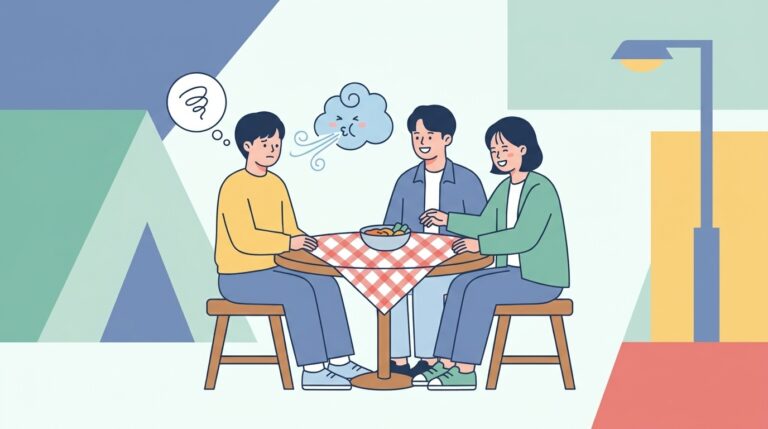
Picture this: You are hanging out with your Korean friends at a cozy pocha in Hongdae. Everyone is laughing over crispy fried chicken and cold drinks. You decide it’s your moment to shine. You drop a joke you heard in a K-variety show—only to be met with dead silence. The laughter cuts off like a light switch. Your friend slowly sips their drink, blinks twice, and mutters under their breath: “와… 갑분싸…”
If you have ever felt that cold breeze of an awkward silence after saying something unintentionally weird in Korean, you are not alone! That exact moment is what Koreans call 갑분싸 (Gap-bun-ssa). It is one of the most widely used modern slang acronyms in Korea.
Learning textbook Korean is great, but understanding trendy abbreviations like 갑분싸 is what truly unlocks real conversations, variety shows, and K-Dramas. In this guide, backed by years of tutoring international learners, we will break down how to recognize, use, and even save yourself from a 갑분싸 moment with natural confidence.
Phase 2: Core Expressions Deep Dive
1. 갑분싸 (Gap-bun-ssa)
- Pronunciation: [gap-bun-ssa] (Sounds like gahp-boon-sah with a snappy, tense ‘ss’ at the end)
- Meaning: Literal: 갑자기 분위기 싸해짐 (Suddenly the atmosphere gets cold/awkward) | Actual: “Buzzkill”, “Awkward silence”, or “Mood killer”
- K-Culture Moment: Seen constantly in subtitles on variety shows like Running Man or Knowing Bros with cold wind sound effects (휘이잉~) when a cast member’s joke falls completely flat.
- Editor’s Insight: 싸하다 (ssa-hada) describes a chilly sensation. In social contexts, it paints a visual of warm social energy freezing over in one second.
- Situation Spectrum: Casual ✅ | Semi-formal ⚠️ | Formal 🚫
- 🤔 Think About It: Does your language have a single word that describes an abrupt drop in collective room temperature due to an awkward remark?
2. 분위기 메이커 (Bun-wi-gi Me-i-keo)
- Pronunciation: [bun-wi-gi me-i-keo] (boon-wee-gee may-ee-kur)
- Meaning: Literal: Atmosphere maker | Actual: “Life of the party” / “Mood maker”
- K-Culture Moment: K-Pop idol groups always assign a designated 분위기 메이커 who keeps the team energetic during long live broadcasts and variety shoots.
- Editor’s Insight: This is the exact antidote to 갑분싸. If someone causes a 갑분싸, the 분위기 메이커 steps in with witty banter to restore the vibe.
- Situation Spectrum: Casual ✅ | Semi-formal ✅ | Formal ⚠️
- 🤔 Think About It: In Korean group culture, keeping group harmony (화합) is vital. Why do you think having a specific role for mood-making is so valued in Korea?
3. 정적 (Jeong-jeok)
- Pronunciation: [jeong-jeok] (jung-juhk – rhymes with ‘duck’)
- Meaning: Literal: Stillness / Silence | Actual: “Dead silence” / “Awkward pause”
- K-Culture Moment: Used in webtoons and YouTube captions whenever two characters stare at each other after an embarrassing confession.
- Editor’s Insight: While 갑분싸 is modern slang, 정적 is a standard noun. You will often hear “3초간 정적…” (3 seconds of silence…) before people burst into laughter.
- Situation Spectrum: Casual ✅ | Semi-formal ✅ | Formal ✅
- 🤔 Think About It: Compare how Western comedy often embraces awkward deadpan humor versus how Korean shows immediately highlight silence with sound effects to defuse tension.
Phase 3: Textbook vs. Real Korean
Scenario A: Describing an awkward moment
- 📖 교과서 한국어: 분위기가 매우 어색해졌어요. (Bun-wi-gi-ga mae-u eo-saek-hae-jyeo-sseo-yo. / The atmosphere became very awkward.)
- 🗣️ 진짜 한국어: 완전 갑분싸 됐잖아! (Wan-jeon gap-bun-ssa dwaet-ja-na! / It totally killed the mood!)
- 💡 왜 다를까?: Textbook Korean relies on descriptive adjectives (어색하다), whereas natural youth speak uses lively compound slang (갑분싸 되다) to add dramatic humor.
Scenario B: Trying to recover the mood
- 📖 교과서 한국어: 다른 주제로 이야기합시다. (Da-reun ju-je-ro i-ya-gi-hap-si-da. / Let us speak about another topic.)
- 🗣️ 진짜 한국어: 아 분위기 왜 이래~ 딴 얘기 하자! (A bun-wi-gi wae i-rae~ ttan yae-gi ha-ja! / Ah, why is the vibe like this? Let’s change the subject!)
- 💡 왜 다를까?: Korean social bonding relies on casual self-awareness rather than formal meeting-style transitions.
Phase 4: K-Culture Deep Dive & Non-Verbal Cues
4-1. 눈치 (Nunchi) & The Art of Room Reading
When a 갑분싸 happens in Korea, words aren’t the only thing communicating. Watch out for these non-verbal cues:
1. The Eye Dart (눈치 보기): People look at each other sideways without turning their heads to gauge how offended or stunned others are.
2. The Fake Cough (헛기침): A gentle “에헴 (e-hem)” or throat clearing to fill the vacuum of silence.
3. Hand Wave (손사래): Quickly waving a hand in front of your chest to indicate “Just kidding! Forget I said that!”
4-2. Cultural Code: Acronym Culture (줄임말)
Shortened words in Korea are not just lazy speech; they are social glue. From TMI to 갑분싸, 복세편살 (Live comfortably in a complex world), creating 3-4 syllable acronyms represents belonging to contemporary digital culture. Using them correctly shows you understand modern conversational rhythm.
Phase 5: Real-Life Roleplay Scenario
Setting: A casual chicken & beer spot near Sinchon. You are with your Korean university classmate, Minho (민호), and a new friend, Sujin (수진).
- 민호: 야, 이번 주말에 다 같이 등산 갈래? 아침 6시에 출발하자!
(Ya, i-beon ju-ma-re da ga-chi deung-san gal-rae? A-chim yeo-seot-si-e chul-bal-ha-ja!)
🎭 (신나서 맥주잔을 들며)
“Hey, you guys want to go hiking this weekend? Let’s leave at 6 AM!” -
수진: …
(…)
🎭 (정색하며 물컵을 내려놓음)
“…” -
나 (You): 헐, 민호야… 완전 갑분싸다.
(Heol, Min-ho-ya… wan-jeon gap-bun-ssa-da.)
🎭 (민망한 듯 웃으며)
“Whoa, Minho… total mood killer.” -
민호: 어? 주말 등산… 별로야?
(Eo? Ju-mal deung-san… byeol-ro-ya?)
🎭 (당황해서 긁적거리며)
“Huh? Weekend hiking… not a good idea?” -
수진: 주말 6시에 일어나는 사람이 세상에 어디 있어!
(Ju-mal yeo-seot-si-e il-eo-na-neun sa-ram-i se-sang-e eo-di iss-eo!)
🎭 (어이없다는 듯 빵 터지며)
“Who on earth wakes up at 6 AM on a weekend!” -
민호: 아 미안, 내가 분위기 망쳤네. 맥주나 마시자!
(A mi-an, nae-ga bun-wi-gi mang-chyeot-ne. Maek-ju-na ma-si-ja!)
🎭 (건배 제안을 하며)
“Ah my bad, I ruined the vibe. Let’s just drink beer!” -
나 (You): 그래, 짠 하자!
(Geu-rae, jjan ha-ja!)
🎭 (웃으며 잔을 부딪친다)
“Yeah, cheers!” -
수진: 다음엔 등산 얘기 금지야!
(Dae-um-en deung-san yae-gi geum-ji-ya!)
🎭 (장난스럽게 손가락질하며)
“No talking about hiking next time!”
🔀 Interactive Choice Point
Imagine Minho makes another ultra-corny dad joke (아재개그) right after this. What do you say?
- Option A: “민호야, 한번만 더 하면 우리 집에 간다? 갑분싸 장인이네!”
Feedback: Best! Playful teasing that acknowledges the ruined vibe without being genuinely rude. - Option B: “선생님, 그런 말은 예의가 아닙니다.”
Feedback: Bad. Overly formal and stern. This creates an actual 갑분싸 rather than defusing one. - Option C: “… (아무 말도 안 하고 핸드폰만 본다)”
Feedback: Risk. Prolonged cold silence might make Minho genuinely hurt or embarrassed.
Phase 6: 10-Second Emotion Shadowing Drill
Practice these with rhythm and realistic feeling! (/ indicates micro-pause)
[😮 약간 놀라면서 장난스럽게]
헐 / 갑자기 분위기 / 왜 이래? (Heol / gap-ja-gi bun-wi-gi / wae i-rae?)-
[🤣 민망함을 웃음으로 넘기며]
아 / 내가 말하고도 / 완전 갑분싸네! (A / nae-ga mal-ha-go-do / wan-jeon gap-bun-ssa-ne!) -
[🥳 분위기를 띄우며]
자 자 / 분위기 바꾸고 / 건배하자! (Ja ja / bun-wi-gi ba-kku-go / geon-bae-ha-ja!)
Phase 7: K-Culture Mini Dictionary
- 아재개그 (A-jae-gae-geu) | Dad Joke | Punny, low-effort jokes typically associated with middle-aged men; the primary cause of 갑분싸.
- TMI (Too Much Information) | TMI / 불필요한 정보 | Used in Korean everyday speech when someone shares unnecessary personal details that halt conversation.
- 눈치 빠르다 (Nun-chi bba-reu-da) | Quick-witted / Intuitive | The ability to immediately sense shifts in atmosphere and prevent awkward social mistakes.
- 수습하다 (Su-seup-ha-da) | To salvage / clean up a mess | Frequently used as “분위기 수습하다” meaning to fix or rescue an awkward atmosphere.
Phase 8: Traveler’s Survival Kit
Top 3 Survival Phrases
- “분위기 좋은 카페 추천해 주세요.” (Bun-wi-gi jo-eun ka-pe chu-cheon-hae ju-se-yo.) – Pro Tip: Use this to ask locals for aesthetic, vibe-heavy spots!
- “농담이에요!” (Nong-dam-i-e-yo!) – Pro Tip: If you say something by mistake that causes silence, immediately smile and say this.
- “제가 잘 몰라서 실례했어요.” (Je-ga jal mol-ra-seo sil-rye-haess-eo-yo.) – Pro Tip: A polite, humble way to apologize in semi-formal settings.
Editor’s Travel Note
When navigating Korean social dining spots, download the 네이버 지도 앱 (Naver Map) to search for trending hotspots tagged with #분위기맛집 (Atmosphere Restaurant). If you ever get caught in an awkward situation at a restaurant, a polite smile and humble body language resolve 99% of misunderstandings instantly!
Phase 9: A Step Deeper (Reflection)
Korean communication is deeply rooted in high-context culture. Unlike low-context cultures where every intention is explicitly spelled out in words, Korean interactions rely heavily on shared context, atmosphere (분위기), and unspoken understanding (눈치). Slang like 갑분싸 exists because Koreans are acutely sensitive to the emotional temperature of the collective group. A single misplaced word impacts everyone’s shared mood.
💬 Your Turn: Have you ever experienced a sudden 갑분싸 moment while speaking another language? How did you break the ice? Share your story in the comments below!
Phase 10: FAQ & Common Mistakes
Q: Can I use ‘갑분싸’ with my boss or Korean professor?
A: Absolutely not! 갑분싸 is strictly casual youth slang. Using it with seniors or bosses sounds disrespectful. Instead, describe the situation politely using standard Korean like “분위기가 조금 무거워졌습니다” (The mood became a bit heavy).
Q: What is the opposite of ‘갑분싸’?
A: While there isn’t an exact single slang antonym, people often use “분위기 하드캐리” (Hard-carrying the mood) or “텐션 업 (Tension up)” when someone elevates the excitement of the group.
Q: How do I pronounce the double consonant ‘싸’ in 갑분싸?
A: Tense your vocal cords and release the ‘s’ with tight pressure, similar to the crisp ‘s’ sound in the English word “psycho” or “hiss”.
🚨 Common Mistakes Alert
- Mistake: Using 갑분싸 in a genuinely tragic or serious moment. -> Correct Action: Only use it when the ruined vibe is lighthearted, funny, or trivially awkward.
- Mistake: Pronouncing it like gap-bun-sa (soft ‘s’). -> Correct Action: Make the final syllable punchy: 싸 (ssa)!
- Mistake: Taking a 갑분싸 remark as a personal attack. -> Correct Action: Koreans often shout “갑분싸!” playfully to tease a friend and restart the conversation.
Phase 11: Action Missions
- 🥉 Bronze Mission (Solo): Stand in front of a mirror and recite the 3 Emotion Shadowing lines from Phase 6 with exaggerated facial expressions.
- 🥈 Silver Mission (Social): Leave a comment below using the word 갑분싸 in your own sample sentence!
- 🥇 Gold Mission (Real Life): Watch an episode of a Korean variety show (e.g., Running Man) and spot the visual or audio sound effect that appears during a 갑분싸 moment.
🎮 K-Culture Mission: Search the hashtag #갑분싸 on Instagram or YouTube Shorts to observe how creators reenact hilarious everyday awkward scenarios.
Phase 12: Interactive Quiz Challenge
Test your skills before you go!
1. Situation Judgment: You are eating dinner with your Korean partner’s parents for the first time. The room goes quiet after a comment. Should you say “어머, 완전 갑분싸네요!”?
* A) Yes, it will break the ice.
* B) No, it is disrespectful casual slang for formal elder settings.
2. Fill in the Blank:
갑분싸 is a short abbreviation of: 갑자기 [____] 싸해짐.
3. True or False:
In Korean culture, highlighting an awkward silence with a funny slang word can actually help defuse social tension among close friends. (True / False)
👉 Click here to reveal the answers & explanations!
- Answer: B | 갑분싸 is slang and should never be used with elders or in-laws!
- Answer: 분위기 (Atmosphere/Vibe) | Full phrase: 갑자기 분위기 싸해짐.
- Answer: True | Among peers, pointing out the awkwardness humorously (갑분싸) lightens the mood and gets everyone laughing again.







