

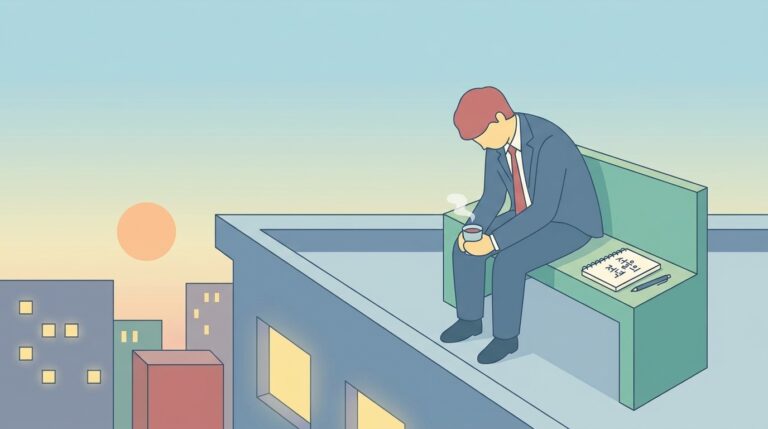
Phase 1: Empathy & Narrative Immersion
안녕하세요! This is your editor from Daily Hangul.
Imagine this scenario: It is 8:45 PM on a chilly Tuesday in Teheran-ro, Gangnam. The fluorescent lights inside the towering office complex hum softly as you stare blankly at your monitor screen. You have just survived your third sprint-review meeting of the day, swallowed your cold convenience store triangular gimbap (samgak-gimbap) in under six minutes, and your KakaoTalk notification chime sounds like a personal alarm siren. You are not just physically fatigued; you feel emotionally hollowed out—a state Korean professionals frequently call beon-a-ut (burnout) or jik-jang-in u-ul-jeung (workplace depression).
If you have ever felt trapped under the invisible pressure of hierarchical expectations, unrelenting overtime, and the unspoken rule to maintain relentless cheerfulness (gabin or social persona), you are definitely not alone. When navigating the complex terrain of mental health in a Korean workplace, textbook phrases like “저는 슬픕니다” (I am sad) or “일이 많습니다” (There is a lot of work) sound painfully detached and unnatural. To genuinely communicate your psychological boundaries, seek empathetic allyship from trusted colleagues (donggiyo), and advocate for your emotional well-being without committing professional suicide, you need refined, nuanced Korean at the C1 level. Today, let us master the authentic linguistic tools to talk about stress, resilience, and emotional healing like a seasoned Seoulite.
Phase 2: Core Expressions Deep Dive
1. 번아웃이 와서 멘탈이 완전히 털렸어요
- Pronunciation: [Beon-a-us-i wa-seo men-tal-i wan-jeon-hi teol-lyeoss-eo-yo] (Sounds like: bun-out-ee wah-soh men-tahl-ee wahn-jun-hee tul-lyuss-uh-yo)
- Meaning: Literal: “Burnout came, and my mentality was completely shaken off/emptied.” ➔ Nuance: “I am experiencing severe burnout and my mental bandwidth is completely drained/wrecked.”
- K-Culture Moment: Seen frequently in realistic office K-Dramas like Misaeng or My Liberation Notes, when exhausted junior managers collapse onto a rooftop bench during a clandestine coffee break.
- Editor’s Insight: Men-tal (mental state/resilience) and teol-li-da (to be shaken down/emptied out) combine into a vivid modern idiom expressing total psychological depletion without sounding clinically alarmist.
- Situation Spectrum: Casual: ✅ | Semi-formal (trusted peer/mentor): ✅ | Formal Boardroom: 🚫
- 🤔 Think About It: In English, we often say “I am burnt out” focusing on the subject. Korean says “Burnout arrived (번아웃이 왔다)”—how does treating emotional states as external visitors shift personal accountability?
2. 요즘 숨이 턱 끝까지 차오르는 느낌이에요
- Pronunciation: [Yo-jeum sum-i teok kkeun-kka-ji cha-o-reu-neun neu-kkim-i-e-yo] (Sounds like: yo-joom soom-ee tawk kkeut-kkah-jee chah-oh-roo-noon noo-kkeem-ee-eh-yo)
- Meaning: Literal: “These days, it feels like my breath rises right up to the tip of my chin.” ➔ Nuance: “Lately, I feel so overwhelmed that I am constantly gasping for air/pushed to my absolute limit.”
- K-Culture Moment: When a character in a healing drama admits to a mentor or therapist that the relentless pace of corporate life is suffocating them.
- Editor’s Insight: This visceral physical metaphor conveys chronic anxiety and unsustainable workload elegantly, invoking deep empathy from Korean listeners who prize grit but respect genuine vulnerability.
- Situation Spectrum: Casual: ✅ | Semi-formal (1-on-1 performance review): ✅ | Formal Announcement: ⚠️
- 🤔 Think About It: Why do Korean emotional expressions frequently tether psychological distress to physical somatic sensations (throat, breath, chest tightness)?
3. 나를 갉아먹는 관계와 일에서 한 발짝 물러서려고요
- Pronunciation: [Na-reul galg-a-meong-neun gwan-gye-wa il-e-seo han bal-jjak mul-leo-seo-ryeo-go-yo]
- Meaning: Literal: “I intend to step back one step from relationships and work that gnaw away at me.” ➔ Nuance: “I am setting boundaries and stepping back from toxic dynamics and draining tasks to protect my sanity.”
- K-Culture Moment: Popularized in bestselling Korean healing essays (like I Want to Die but I Want to Eat Tteokbokki or Although I Am an Adult, I Am Still Hesitant).
- Editor’s Insight: Galg-a-meok-da (to gnaw/erode away) articulates the insidious, cumulative toll of microaggressions and perfectionism. It shows mature self-awareness rather than impulsive whining.
- Situation Spectrum: Casual: ✅ | Semi-formal / Counseling: ✅ | Formal: ⚠️
- 🤔 Think About It: How does phrasing self-care as “stepping back one step (한 발짝 물러서다)” align with Eastern philosophies of harmony and pacing?
Phase 3: Textbook Korean vs. Real Korean
Situation 1: Telling a close colleague you are emotionally depleted and need a breather
- 📖 교과서 한국어: “저는 업무 스트레스 때문에 우울증이 걸렸습니다. 휴식이 필요합니다.” (I caught depression because of work stress. I need a rest.) — Sounds rigid, overly medical, and creates awkward tension.
- 🗣️ 진짜 한국어: “요즘 계속 과부하가 걸려서 잠깐 숨고르기 좀 해야 할 것 같아요.” (Lately, I’ve been on severe overload, so I think I need to catch my breath for a bit.)
- 💡 왜 다를까?: Native speakers soften mental health disclosures using technical metaphors like gwa-bu-ha (system overload) and poetic physical cues like sum-go-reu-gi (breath-pacing) to avoid putting coworkers in an awkward emotional position.
Situation 2: Politely declining an optional after-work drinking session (Hoesik) due to mental exhaustion
- 📖 교과서 한국어: “저는 피곤하므로 오늘 회식에 참석하지 않겠습니다.” (Since I am tired, I will not attend today’s company dinner.) — Sounds rebellious and abruptly antisocial.
- 🗣️ 진짜 한국어: “팀장님, 오늘은 컨디션 난조로 먼저 들어가서 재충전 좀 하겠습니다. 다음엔 꼭 함께할게요!” (Team lead, I’m experiencing a bit of a condition dip today, so I’ll head home to recharge. I’ll definitely join next time!)
- 💡 왜 다를까?: Using professional euphemisms like keon-di-syeon nan-jo (condition malfunction/dip) and emphasizing jae-chung-jeon (recharging) preserves interpersonal rapport while protecting your evening peace.
Phase 4: K-Culture Deep Dive & Non-Verbal Manners
4-1. Nunchi & Mindful Non-Verbal Protocol in Korean Workplaces
When discussing mental strain with senior managers (Seonbae or Timjangnim), body language carries 70% of the conversation’s success. Avoid direct, intense eye contact while describing emotional distress, as unblinking gazes can be misinterpreted as confrontation. Lower your gaze slightly at a 45-degree angle to signal introspection. Use a slightly hushed, composed tone rather than dramatic sighs. If a colleague shares their burnout with you, practice active empathetic nodding (Gogae-kkeutuk-im) and offer warm canned coffee with both hands—a timeless Korean gesture signaling solidarity.
4-2. Cultural Code: The Rise of “God-Saeng” vs. “Quiet Quitting” (갓생과 쉼의 미학)
In contemporary South Korea, the extreme drive for God-saeng (living a productive, god-tier lifestyle filled with 5 AM routines and side projects) has triggered an equally powerful counter-cultural movement: Maeum-chaeng-gim (mindfulness) and Munheong-haem (the art of zoning out, such as bul-meong fire-gazing or sup-meong forest meditation). Recognizing that sustained high performance requires deliberate detachment is transforming modern Korean workplace culture.
Phase 5: Real-World Roleplay Scenario
Setting: A quiet rooftop café in Yeouido, Seoul. 6:30 PM. Rain patters against the glass. You are sitting with Min-woo, a supportive senior colleague (seonbae) who noticed your recent silence.
- 민우 (Min-woo): “지수 씨, 요새 부쩍 얼굴이 수척해졌네. 프로젝트 때문에 많이 버거워?”
(Ji-soo, your face looks noticeably thinner lately. Is the project weighing on you too much?)
🎭 Leaning forward, holding a warm mug, speaking in a warm, low register. -
You: “솔직히 말씀드리면, 요즘 번아웃이 심하게 와서 멘탈이 좀 흔들리고 있어요.”
(To be honest, I’ve had serious burnout lately, and my mental state has been shaking.)
🎭 Lowering your eyes slightly, tapping fingers gently against the table. -
민우 (Min-woo): “그랬구나… 늘 완벽하게 해내려다 보니까 혼자 끙끙 앓았네.”
(I see… Because you always try to do everything perfectly, you’ve been suffering in silence alone.)
🎭 Nodding sympathetically with a soft sigh. -
You: “숨이 턱 끝까지 차오르는데도, 제 역할을 못 해낼까 봐 두려웠던 것 같아요.”
(Even when I felt suffocated to my limit, I think I was terrified of not pulling my weight.)
🎭 Taking a calm, deliberate breath before speaking honestly. -
민우 (Min-woo): “회사는 마라톤이야. 단거리 질주하다가 쓰러지면 누구 손해겠어? 지금 지수 씨한테 필요한 건 쉼표야.”
(Work is a marathon. If you sprint and collapse, who loses? What you need right now is a comma/pause.)
🎭 Offering a gentle, encouraging smile. -
You: “네, 선배님. 이제는 저를 갉아먹는 압박감에서 한 발짝 물러서서 마인드 컨트롤을 해보려고요.”
(Yes, Seonbae. Now I want to take a step back from the self-destructive pressure and practice mental balance.)
🎭 Straightening posture with determined yet serene eyes. -
민우 (Min-woo): “좋은 생각이야. 이번 주 금요일 연차 내고 훌쩍 근교로 드라이브라도 다녀와. 업무는 내가 커버할 테니까.”
(Great thinking. Take annual leave this Friday and take a drive out of town. I’ll cover your tasks.)
🎭 Patting the table reassuringly. -
You: “그렇게 말씀해 주시니 가슴이 한결 가벼워지네요. 정말 감사합니다, 선배님.”
(Hearing you say that makes my heart feel so much lighter. Thank you truly, Seonbae.)
🎭 Slightly bowing head with genuine gratitude.
🔀 Interactive Decision Branch
What would you say next if Min-woo asked if you needed help redistributing your core deliverables tomorrow morning?
* Option A: “선배님이 제 일 다 맡아주시면 제가 편하게 쉴 수 있을 것 같습니다.” ➔ [Risk] Too blunt; sounds like dumping your entire workload onto a supportive colleague.
* Option B: “내일 주간 회의 때 우선순위가 낮은 보고서 일정만 조금 조율할 수 있도록 도와주시면 정말 든든할 것 같습니다.” ➔ [Best] Shows professional ownership, clear boundaries, and polite appreciation.
* Option C: “아니에요, 괜찮습니다. 제가 밤을 새워서라도 다 끝내겠습니다.” ➔ [Bad] Perpetuates toxic martyrdom and cancels out the entire vulnerability session.
Phase 6: 10-Second Emotion Shadowing Drill
Practice matching native intonation, pauses (/), and emotional micro-cues:
[🥺 지치고 솔직하게 / Weary & vulnerable]
“솔직히 말하면 / 요즘은 출근길 지하철에서부터 / 숨이 턱 막히는 기분이에요.”
(Sol-jik-hi mal-ha-myeon / yo-jeum-eun chul-geun-gil ji-ha-cheol-e-seo-bu-teo / sum-i teok mak-hi-neun gi-bun-i-e-yo.)-
[🌿 단호하지만 차분하게 / Firm yet peaceful]
“남들의 기대치에 맞추느라 / 제 자신을 갉아먹는 일은 / 이제 그만두려고요.”
(Nam-deul-ui gi-dae-chi-e mat-chu-neu-ra / je ja-sin-eul galg-a-meong-neun il-eun / i-je geu-man-du-ryeo-go-yo.) -
[😌 안도하며 감사하는 톤 / Relieved & grateful]
“선배님 덕분에 / 엉켰던 마음이 / 한결 가벼워지고 정리가 됐어요.”
(Seon-bae-nim deok-bun-e / eong-kyeoss-deon ma-eum-i / han-gyeol ga-byeo-wo-ji-go jeong-ri-ga dwaess-eo-yo.)
Phase 7: K-Culture Mini Dictionary
- 현타 (Hyeon-ta) [Hyeon-sil Ja-gak Time]: The sudden, sobering awakening to reality following intense stress, disillusionment, or vain effort. Frequently used when overtime work feels pointless.
- 소확행 (So-hwak-haeng): Small but certain happiness. Finding mental healing in everyday micro-pleasures, like a warm bakery pastry after work.
- 마음 챙김 (Mae-um Chaeng-gim): Mindfulness and emotional self-care. The practice of observing one’s thoughts without judgment in high-pressure environments.
- 월요병 (Wol-yo-byeong): “Monday sickness/blues.” The pervasive dread experienced before returning to the corporate grind at the start of the week.
Phase 8: Traveler’s & Expat Survival Kit
Top 3 Survival Phrases for Mental Restoration
- “조용한 1인석 자리 있나요?” (Do you have a quiet single-seater table?) — Use in Seoul’s independent healing cafes.
- “템플스테이 예약 확인하러 왔습니다.” (I am here to check in for my templestay reservation.) — Essential for weekend mountain monastery retreats.
- “오늘은 온전히 혼자만의 시간이 좀 필요해요.” (Today, I wholly need some solo time.) — Perfect for boundary setting with friends.
Editor’s Travel Note: Finding Inner Peace in Korea
When burnout strikes while living or working in Korea, step away from commercial districts. Download the Naver Map app to search for secluded “Book Cafes” (Buk-kape) around Seochon or forested walking trails (Dulle-gil) in Bukhansan. For true digital detoxes, booking an overnight temple stay via the official Templestay official reservation portal provides serene tea ceremonies, meditation, and temple cuisine that resets stressed nervous systems.
Phase 9: A Step Deeper (한 발 더 깊이)
Korean culture has long celebrated In-nae (endurance) and collective duty, encapsulated in historical adages that glorify enduring suffering in silence. However, modern Korean society is undergoing a profound epistemic shift. Language has evolved to redefine self-preservation not as weakness, but as necessary maintenance. When you express burnout in Korean today, you are engaging in a modern cultural revolution that honors individual psychological boundaries while sustaining communal warmth.
💬 Your Turn: Have you ever experienced a moment at work where setting a boundary felt harder than working overtime? Share your thoughts below in Korean or English!
Phase 10: FAQ & Common Pitfalls
Q: Is it socially acceptable to mention going to mental health counseling (상담) to colleagues in Korea?
A: While mental health awareness is rapidly improving, discretion is still standard etiquette. It is best to share therapy or counseling (sim-ni sang-dam) only with intimately trusted peers. In broader office contexts, refer to it gently as keon-di-syeon gwal-li (condition management) or ri-fresh (refreshment).
Q: What is the difference between “피곤해요” (Pi-gon-hae-yo) and “지쳤어요” (Ji-chyeoss-eo-yo)?
A: Pi-gon-hae-yo describes physical tiredness (lack of sleep, physical exertion). Ji-chyeoss-eo-yo conveys deep emotional, psychological, and spiritual exhaustion. Use ji-chyeo-ss-eo-yo when expressing mental fatigue.
Q: Can I use “멘붕” (Men-bung) in a formal workplace meeting?
A: No. Men-bung (mental breakdown) is strictly casual slang among peers. In formal reviews or meetings with leadership, use sim-ri-jeok bu-dam-gam (psychological burden) or gwa-bu-ha (overload).
🚨 Common Mistakes Alert
- ❌ Mistake 1: Saying “저는 미쳤어요” when you mean “I’m stressed out.” (This literally means “I am criminally insane/crazy.”) ➔ Correct: “스트레스가 극에 달했어요” (My stress has reached its peak).
- ❌ Mistake 2: Using informal half-talk (Banmal) like “멘탈 털림” to your supervisor. ➔ Correct: “요즘 정신적으로 소진이 심합니다” (I am severely depleted mentally lately).
- ❌ Mistake 3: Saying “일하기 싫어요” (I hate working) during reviews. ➔ Correct: “업무 효율을 위해 완급 조절이 필요한 시점입니다” (It is time for pacing control to sustain work efficiency).
Phase 11: Action Mission
- 🥉 Bronze Mission (Solo Practice): Stand in front of your mirror and record yourself shadowing the 3 Phase 6 Shadowing Drill sentences with realistic facial emotion.
- 🥈 Silver Mission (Social Connection): Leave a comment on an Instagram or YouTube post of your favorite Korean healing vlog using the term 마음 챙김 (Maeum-chaeng-gim).
- 🥇 Gold Mission (Real Life Application): The next time someone asks “요즘 어때요?” (How are you these days?), replace the habitual “괜찮아요” (I’m fine) with a nuanced C1 phrase: “잠깐 숨고르기 하면서 재충전 중이에요!”
🎮 K-Culture Mission: Watch an episode of the drama Doctor Slump or Daily Dose of Sunshine and spot when characters use somatic metaphors to describe emotional pain!
Phase 12: Interactive Quiz Challenge
1. [Situation Judgment] Your manager notices you staying late every night and asks if you are overwhelmed. Which response shows C1-level professional boundary management without sounding aggressive?
* (A) “왜 저한테만 일을 많이 시키는지 모르겠습니다.”
* (B) “업무량이 다소 누적되어 있어서, 우선순위 조정을 통해 완급을 조절하고 싶습니다.”
* (C) “우울증에 걸려서 내일부터 출근 못 합니다.”
2. [Fill in the Blank] Fill in the blank with the natural idiom meaning “pushed to the edge of breath/overwhelmed”:
“최근 업무가 몰려서 숨이 ( ) 끝까지 차오르는 기분이에요.”
3. [True / False] In modern Korean corporate culture, phrases like 소확행 and 숨고르기 reflect an emerging linguistic focus on mental health balance.
* (True / False)
🔍 Click here to reveal Answers & Explanations!
- Answer: (B)
- Explanation: Option (B) demonstrates refined professional phrasing (wan-geup jo-jeol = pacing control; u-seon-sun-wi = prioritization). Option (A) is confrontational, and (C) is inappropriate.
- Answer: 턱 (Teok)
- Explanation: “숨이 턱 끝까지 차오르다” literally means your breath has reached your chin, vividly depicting intense chronic pressure.
- Answer: True
- Explanation: Modern Korean workplace discourse increasingly validates self-care and micro-healing concepts alongside dedication to professional duties.
- Explanation: Modern Korean workplace discourse increasingly validates self-care and micro-healing concepts alongside dedication to professional duties.







