

Navigating Mentorship & Academic Support in Multicultural Korea
Phase 1: Empathy & Storytelling Opening
안녕하세요! 매일한글 에디터입니다. (Hello! This is your Daily Hangul editor.)
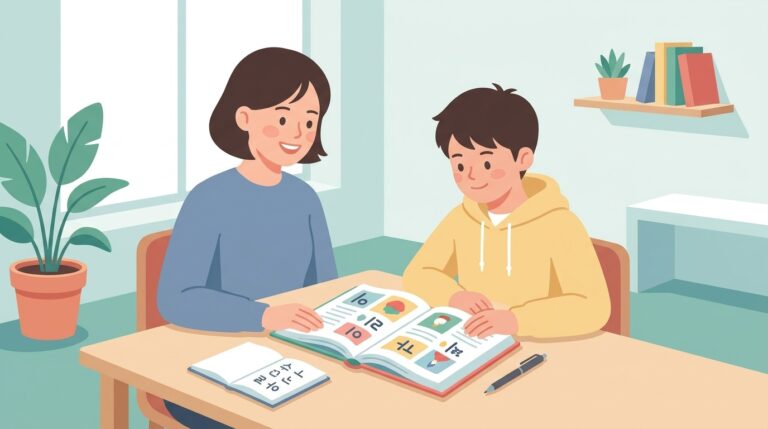
Imagine walking into a quiet study room at a local Community Welfare Center (주민센터) on a crisp autumn evening. You meet Minwoo, a bright fifth-grader whose mother is from Vietnam and father is Korean. Despite his sharp analytical mind, Minwoo sits frozen in front of a social studies textbook, paralyzed not by a lack of intelligence, but by the dense, Sino-Korean vocabulary (한자어) that even native adults sometimes stumble upon. In Korean society, where hyper-competitive education (교육열) begins early, children from multicultural families (다문화 가정) often face a unique, silent barrier: subtle academic deceleration (학습 부진) driven by language exposure gaps at home.
Whether you are an expat volunteering as a mentor, an educator, or simply someone who wants to understand modern Korean family dynamics, mastering high-level empathetic Korean is essential. This guide is crafted for C2-level communicators, drawing from real classroom observations and linguistic fieldwork to help you bridge emotional, cultural, and linguistic divides with unmatched sophistication.
Phase 2: Core Expressions Deep Dive
1. 마음의 문을 열다 (Maeum-ui mun-eul yeolda)
- Pronunciation: [Mae-um-ui mun-eul yeol-da] (Sounds like “May-oom-ee moon-ool yul-dah”)
- Meaning: Literal: “To open the door of one’s mind/heart” ➔ Real Nuance: To overcome emotional defense mechanisms and build deep psychological rapport.
- K-Culture Moment: Frequently heard in heartfelt healing K-dramas (like Our Blues) when a mentor or neighbor patiently gains the trust of a guarded youth.
- Editor’s Insight: In educational mentoring, academic improvement never precedes emotional safety. This idiom carries profound warmth and intentional patience.
- Situation Spectrum: Casual ✅ | Semi-formal ✅ | Formal ✅
- 🤔 Think About It: In your native tongue, do you describe building trust as opening an architectural “door” (문) or breaking down a “wall”? How does this spatial metaphor shape how we approach vulnerability?
2. 든든한 버팀목이 되어주다 (Deundeunhan beotimmog-i doeeojuda)
- Pronunciation: [Deun-deun-han beo-tim-mog-i doe-eo-ju-da] (Sounds like “Doon-doon-hahn buh-teem-moke-ee dway-uh-joo-dah”)
- Meaning: Literal: “To become a sturdy prop/support pillar” ➔ Real Nuance: To serve as an unwavering emotional anchor and practical guide during turbulent times.
- K-Culture Moment: A staple phrase in graduation speeches and documentary specials highlighting social impact mentors supporting marginalized youth.
- Editor’s Insight: 버팀목 (prop/strut) comes from traditional architecture. It implies preventing someone from collapsing under external pressure without overshadowing their presence.
- Situation Spectrum: Casual ⚠️ | Semi-formal ✅ | Formal ✅
- 🤔 Think About It: Why does Korean culture place such immense semantic value on collective structural support rather than individual self-sufficiency?
3. 문해력을 길러주다 (Munhaeryeog-eul gilleojuda)
- Pronunciation: [Mun-hae-ryeog-eul gil-leo-ju-da] (Sounds like “Moon-hay-ryuk-ool geel-luh-joo-dah”)
- Meaning: Literal: “To cultivate literacy competence” ➔ Real Nuance: To empower a learner with critical reading comprehension, context decoding, and expressive autonomy.
- K-Culture Moment: Prominently featured on educational panels (e.g., EBS documentaries) analyzing modern scholastic achievement gaps.
- Editor’s Insight: While 읽기 능력 simply means reading ability, 문해력 (literacy) reflects cultural and cognitive fluency—a crucial topic in multicultural education discussions today.
- Situation Spectrum: Casual 🚫 | Semi-formal ✅ | Formal ✅
- 🤔 Think About It: How does mastering nuanced socio-academic vocabulary determine a child’s social mobility in high-context societies?
Phase 3: Textbook Korean vs. Real Korean
Scenario 1: Addressing Academic Delays Without Stigmatizing
- 📖 Textbook Korean: “이 아이는 학습 부진을 겪고 있으므로 보충 수업이 필요합니다.” (This child is experiencing learning deficiency, so supplementary lessons are necessary.)
- 🗣️ Real Korean: “진도를 따라가는 데 조금 버거워하는 부분이 있어서, 옆에서 차근차근 호흡을 맞춰주고 있어요.” (He finds keeping up with the curriculum pace a bit overwhelming, so we are pacing ourselves step-by-step together.)
- 💡 Why the Difference?: High-context Korean ethics avoid labeling a student as “deficient” (부진). Instead, advanced speakers use relational metaphors (호흡을 맞추다 – synchronizing breathing/pace) to preserve dignity and boost motivation.
Scenario 2: Reframing Bicultural Identity Positively
- 📖 Textbook Korean: “한국 사회에 빨리 동화되어야 합니다.” (You must assimilate into Korean society quickly.)
- 🗣️ Real Korean: “두 가지 언어와 문화를 품고 있다는 건, 나중에 남들이 넘볼 수 없는 특별한 자산이 될 거야.” (Embracing two languages and cultures will become an unmatched, invaluable asset for you down the road.)
- 💡 Why the Difference?: Modern Korean discourse has shifted away from unidirectional assimilation (동화) toward bicultural empowerment (이중언어 및 다문화 감수성 자산화).
Phase 4: K-Culture Deep Dive & Non-Verbal Manners
4-1. Nunchi (눈치) & Non-Verbal Mentoring Etiquette
- Eye Level Alignment (눈높이 맞추기): In Korean mentorship, bending your knees or lowering your chair to physically align your gaze with a shy student softens the traditional hierarchical teacher-student power dynamic.
- Attentive Nodding with Pauses (경청의 미학): When a multicultural child struggles to retrieve Sino-Korean academic terms, never finish their sentences impatiently. Maintaining steady, soft eye contact while nodding slowly signals psychological safety.
4-2. Cultural Code Analysis: The Evolution of Multicultural Family Centers (가족센터)
In contemporary Korea, the shift from traditional mono-cultural pride to embracing a globalized populace is embodied in nationwide Family Support Centers. Through mentorship initiatives depicted in shows like EBS DocuPrime, volunteer university students and expats act not as strict authority figures (선생님), but as supportive older siblings (멘토 멘티 관계 or 친한 형/누나), bridging the socio-educational gap with cultural humility.
Phase 5: Real-World Roleplay Scenario
Setting: An after-school study room at a Seoul Community Center. Mentor Jisoo is reviewing social studies homework with Minwoo, an 11-year-old student whose mother is Filipino.
- 지수 (Jisoo): 민우야, 오늘 배운 단원 중에서 혹시 설명이 와닿지 않거나 헷갈렸던 부분 있었어?
(Minwoo-ya, oneul baeun danwon jung-eseo hoksi seolmyeong-i wadaj-ji ankkeona hetgallyeotdeon bubun isseosseo?)
“Minwoo, was there any part from today’s unit where the explanation didn’t really click or felt confusing?”
🎭 [Gently leaning forward with a warm smile, pointing softly at the workbook] -
민우 (Minwoo): 음… ‘지속 가능한 발전’이라는 말이 교과서에 계속 나오는데, 무슨 뜻인지 잘 모르겠어요.
(Eum… ‘jisok ganeunghan baljeon’-iraneun mar-i gyogwaseo-e gyesok naoneunde, museun tteus-inji jal moreugesseoyo.)
“Um… the term ‘sustainable development’ keeps appearing in the textbook, but I don’t really get what it means.”
🎭 [Scratching the back of his head, looking down at his desk with hesitation] -
지수 (Jisoo): 아, 한자어가 섞여 있어서 처음에 들으면 꽤 낯설게 느껴질 수 있어. 우리 쉬운 일상 이야기로 빗대어볼까?
(A, hanjaeoga seokkyeo isseoseo cheo-eum-e deureumyeon kkwae natseolge neukkyeojil su isseo. Uri swiun ilsang iyagiro bitdaeeobolkka?)
“Ah, because it’s mixed with Sino-Korean roots, it can sound quite unfamiliar at first. Shall we draw an analogy to an everyday story?”
🎭 [Validating his confusion without judgment, nodding encouragingly] -
민우 (Minwoo): 네! 교과서 글씨만 보면 머리가 하얘져요.
(Ne! Gyogwaseo geulssiman bomyeon meoriga hayaejyeoyo.)
“Yes! Whenever I just look at textbook texts, my mind goes completely blank.”
🎭 [Releasing a quiet sigh of relief] -
지수 (Jisoo): 충분히 그럴 수 있어. 지금 숲에서 나무를 전부 베어버리면 미래에는 어떻게 될까?
(Chungbunhi geureol su isseo. Jigeum sup-eseo namureul jeonbu beeobeorimyeon mirae-eneun eotteoke doelkka?)
“That’s completely understandable. If we cut down all the trees in the forest right now, what would happen in the future?”
🎭 [Drawing a simple tree diagram with a pencil] -
민우 (Minwoo): 다음 세대 사람들은 쓸 나무가 없어져요.
(Daeum sede saramdeureun sseul namuga eopseojyeoyo.)
“People in the next generation won’t have any trees left to use.”
🎭 [Eyes lighting up as comprehension strikes] -
지수 (Jisoo): 바로 그거야! 미래를 해치지 않으면서 오래오래 이어가는 것, 이게 바로 ‘지속 가능’이야. 민우 이해력 진짜 뛰어난데?
(Baro geugeoya! Miraereul haechiji aneumyeonseo orae-orae ieoganeun geot, ige baro ‘jisok ganeung’iya. Minwoo ihaeryeok jinjja ttwieonande?)
“Exactly! Continuing long into the future without harming what’s to come—that’s ‘sustainability.’ Your comprehension is seriously impressive!”
🎭 [Giving a proud thumbs-up and maintaining high enthusiasm] -
민우 (Minwoo): 와, 그렇게 생각하니까 쏙쏙 이해돼요. 선생님이랑 하니까 공부가 재미있어요!
(Wa, geureoke saenggakhani-kka ssok-ssok ihaedwaeyo. Seonsaengnim-irang hanikka gongbuga jaemiisseoyo!)
“Wow, thinking of it that way makes it click instantly. Studying with you is actually fun!”
🎭 [Grinning broadly, sitting up straight with renewed confidence]
🔀 Interactive Decision Point
How would you conclude this mentoring session to solidify Minwoo’s self-esteem?
* Option A: “오늘 배운 개념들을 엄마한테도 집에서 가르쳐드려 볼래? 민우가 멋진 선생님이 되는 거야.” (Feedback: Best Choice 🌟 — Empowers the child as an active teacher at home, strengthening bicultural family connection and deep retention.)
* Option B: “시험 점수가 잘 나와야 하니까 다음 시간까지 이 단원 단어 전부 외워와.” (Feedback: Bad Choice ❌ — Re-imposes rote test pressure, shutting down the newly discovered joy of learning.)
* Option C: “너는 다문화 가정이라 어휘가 부족할 수밖에 없으니 남들보다 두 배로 해야 해.” (Feedback: Critical Risk ⚠️ — Reinforces a deficit mindset and identity stigma, severely damaging rapport.)
Phase 6: 10-Second Emotion Shadowing Drill
- Sentence 1: [😊 Warmly encouraging and building immediate rapport]
천천히 읽어도 괜찮아, / 우리가 함께 / 하나씩 짚어가면 되니까.
(Cheoncheonhi ilgeodo gwaenchana, / uriga hamkke / hanassik jipeogamyeon doenikka.)
“It’s completely fine to read slowly; / we can take it / step by step together.” -
Sentence 2: [💪 Confidently instilling pride and bicultural identity]
두 가지 문화를 이해하는 건 / 세상 누구도 쉽게 가질 수 없는 / 민우만의 특별한 날개야.
(Du gaji munhwareul ihaehaneun geon / sesang nugudo swipge gajil su eopneun / Minwoo-man-ui teukbyeolhan nalgaeya.)
“Understanding two cultures / is a unique pair of wings / that belongs solely to you.”
Phase 7: K-Culture Mini Dictionary
- 문해력 (Mun-hae-ryeok) | Literacy & Critical Text Comprehension
Usage: Used extensively in educational contexts to address the gap between simply pronouncing Hangul and truly digesting conceptual knowledge. - 눈높이 교육 (Nun-nop-i Gyo-yuk) | Customized / Eye-level Education
Usage: Adapting one’s pedagogical style and vocabulary directly to the mentee’s emotional and cognitive stage. - 버팀목 (Beo-tim-mok) | Bedrock / Structural Support Pillar
Usage: Figuratively applied to mentors, parents, or social programs that uphold vulnerable individuals through adversity. - 다문화 감수성 (Da-mun-hwa Gam-su-seong) | Multicultural Sensitivity & Competence
Usage: A key sociopolitical term representing an individual’s empathy and open-mindedness toward ethnic and cultural diversity in modern Korea.
Phase 8: Resident & Mentor Survival Kit
Top 3 Survival Phrases for Volunteers & Mentors:
- “어려운 낱말이 나오면 언제든 손들고 물어봐도 돼.” (Whenever a difficult word comes up, you can raise your hand and ask anytime.)
Pro Tip: Normalizes asking questions without shame. - “틀려도 전혀 상관없어, 과정 자체가 멋진 도전이니까.” (It doesn’t matter at all if you get it wrong; the process itself is a wonderful challenge.)
Pro Tip: Dismantles performance anxiety in perfectionist classroom cultures. - “지난주보다 어휘 표현이 훨씬 풍부해졌네!” (Your vocabulary expression has become so much richer than last week!)
Pro Tip: Focuses praise on tangible longitudinal growth rather than innate talent.
🧭 Editor’s Field Note:
If you are engaging in community volunteering or supporting multicultural families in Korea, consider consulting the National Multicultural Family Support Portal Danuri for bilingual educational materials and resources. For local navigation to district community centers (가족센터), prioritize the Naver Map Application to check public transit routes and localized educational facility hubs.
Phase 9: “One Step Deeper” (Societal Insight)
In South Korea, academic terminology acts as a powerful gatekeeper of cultural capital. Because standard curricula heavily incorporate Sino-Korean compound roots (한자어), children whose home environments lack sustained exposure to complex academic dialogue can experience an invisible glass ceiling. True linguistic mentorship in Korea is not mere grammar drill; it is an act of democratic inclusion. When we validate a child’s bicultural heritage as a superpower rather than a deficit, we transform the classroom from a site of alienation into a landscape of shared belonging.
💬 Your Turn: Have you ever mentored someone from a different cultural background, or learned a complex subject in your non-native language? How did empathy change your learning trajectory? Share your story in the comments below!
Phase 10: FAQ & Common Mistakes
Q: Why do multicultural children in Korea struggle with school subjects even if they speak Korean fluently?
A: Basic Interpersonal Communicative Skills (BICS) develop quickly through peer interaction, but Cognitive Academic Language Proficiency (CALP)—rich in dense Sino-Korean roots (한자어)—requires deliberate contextual scaffolding often missing if parents are non-native speakers.
Q: Is it considered rude to ask a mentee about their parent’s native country?
A: It depends on the framing. Avoid probing questions that treat them as “foreign” (외국인 취급). Instead, focus on celebrating cultural elements naturally when the mentee brings them up.
Q: What is the most effective way to explain difficult abstract nouns to young learners?
A: Use sensory metaphors (비유), concrete real-world illustrations, and visual sketches before linking them back to the formal textbook terminology.
🚨 Common Mistakes Alert (흔한 실수 TOP 3)
- Mistake: Over-simplifying speech into baby talk (유아어).
Correct Action: Maintain clear, grammatically pristine Korean while unpacking conceptual vocabulary with relatable analogies. - Mistake: Speaking louder instead of speaking clearer.
Correct Action: Articulate final consonants (받침) precisely and slow down cadence slightly. - Mistake: Viewing the student through a lens of “pity” (동정).
Correct Action: Approach them as an empowered bilingual-in-training with limitless potential.
Phase 11: Action Missions & Community Challenge
- 🥉 Bronze Mission: Record yourself practicing the Phase 6 Shadowing Drill with accurate intonation and emotional warmth.
- 🥈 Silver Mission: Write a short 3-sentence encouraging note in Korean for an imaginary mentee overcoming a tough exam.
- 🥇 Gold Mission: In your next real conversation with a Korean speaker, intentionally deploy the idiom 든든한 버팀목이 되다 or 문해력을 기르다 in appropriate context.
- 🎮 K-Culture Mission: Watch an episode of a Korean documentary or family variety show and identify how mentors utilize 눈높이 언어 (eye-level language).
Phase 12: Interactive Quiz Challenge
1. Situational Judgment: Which phrase best reassures a student hesitating over an unfamiliar academic term?
* A) “왜 아직도 이 쉬운 단어를 몰라?”
* B) “모르는 단어가 나오는 건 아주 자연스러운 거야. 같이 뜻을 풀어보자.”
* C) “사전 찾아보고 열 번씩 써와.”
2. Fill in the Blank: “멘토는 아이가 스스로 일어설 수 있도록 든든한 (____)이 되어주어야 한다.”
3. True or False: 문해력 (Munhaeryeok) refers strictly to the mechanical ability to read letters aloud without understanding context. (T/F)
👉 Click to view Answers & Cultural Explanations
- Answer: B — Validating the normality of vocabulary acquisition builds psychological safety.
- Answer: 버팀목 (Support pillar / Bedrock) — Essential idiom representing steady, non-intrusive support.
- Answer: False — 문해력 encompasses deep textual decoding, contextual inference, and analytical comprehension, far beyond phonetic reading.







