

Phase 1: Empathy & Storytelling Opening
안녕하세요! Welcome back! It’s your favorite Korean bestie and Daily Hangul editor. Today, we’re stepping into the sunlit world of modern Korean interior design—specifically, the art of Planterior (플랜테리어)!
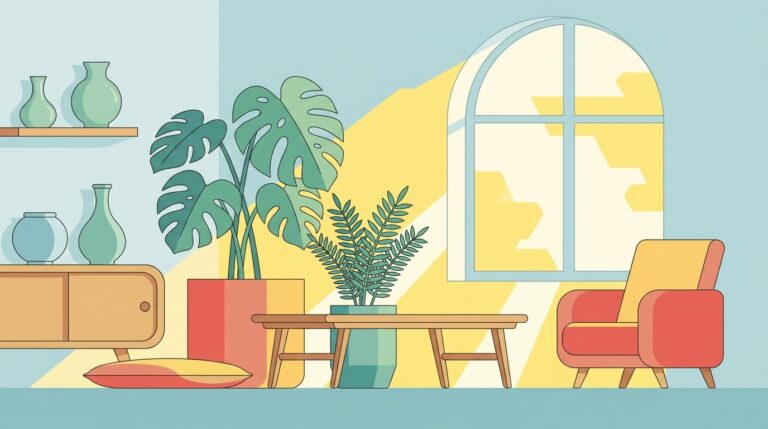
Picture this: You enter a sleek apartment in Seongsu-dong or a aesthetic cafe in Yeonnam-dong. You see tall Monstera leaves catching the soft afternoon light, trailing ivy cascading down floating oak shelves, and vibrant moss frames decorating minimalist concrete walls. You want to describe this exact aesthetic in natural, sophisticated Korean, but standard textbook phrases like “식물을 방에 놓으세요” (Place plants in the room) feel way too dry for your C1-level fluency.
Don’t worry! Styling living spaces with companion plants (반려식물) is a major lifestyle trend in urban Korea. By mastering the nuanced vocabulary used by real interior stylists, plant parents, and architectural vloggers, you won’t just talk about plants—you will capture the entire mood, spatial harmony, and emotion of a space. Based on feedback from our advanced learners, this guide is crafted to elevate your Korean expression to a native level of sophistication. Let’s green up your vocabulary!
Phase 2: Deep Dive into Key Expressions
1. 공간감을 살리다 (Gong-gan-gam-eul sal-li-da)
- Pronunciation: [Gong-gan-gam-eul sal-li-da] (Sounds like gong-gahn-gahm-eul sahl-lee-dah)
- Meaning: Literally “to revive the sense of space,” meaning to enhance or maximize the spatial depth and visual harmony of a room.
- K-Culture Moment: Commonly heard on Korean home-transformation YouTube channels (like Today’s House / 오늘의집) when a designer uses tall, slender plants like Ficus lyrata to emphasize vertical ceiling height.
- Editor’s Insight: At the C1 level, avoid just saying “예쁘게 꾸미다” (decorate nicely). Use 공간감을 살리다 when explaining how furniture or plant placement accentuates dimensions without creating clutter.
- Situation Spectrum:
- Casual: ⚠️ (Slightly formal/artistic for casual chatter, but great when discussing house decor)
- Semi-formal: ✅ (Perfect for interior vlogs, blogs, and aesthetic discussions)
- Formal: ✅ (Used in professional interior design consultations)
- 🤔 Think About It: In your native culture, do you describe interior decor by focusing on physical items, or by the atmosphere and space created between them?
2. 초록집사 (Cho-rok-jip-sa)
- Pronunciation: [Cho-rok-jip-sa] (Sounds like cho-rok-jeep-sah)
- Meaning: Literally “Green Butler,” referring affectionately to an affectionate plant parent who lovingly cares for indoor foliage.
- K-Culture Moment: Used frequently on Instagram captions (
#초록집사일상) or lifestyle K-Dramas where a character affectionately talks to their potted plants after a long workday. - Editor’s Insight: Derived from Cat Butler (고양이 집사), this term shows how Koreans view indoor plants not merely as decor, but as living companions (반려식물) that require mindful care.
- Situation Spectrum:
- Casual: ✅ (Extremely trendy and warm)
- Semi-formal: ✅ (Great for lighthearted social media or casual interviews)
- Formal: 🚫 (Use ‘식물 재배자’ or ‘플랜테리어 전문가’ in formal research settings)
- 🤔 Think About It: How does changing the term from “plant owner” to
Frequently Asked Questions (FAQ)
Q: What does "공간감을 살리다 (Gong-gan-gam-eul sal-li-da)" mean in Korean and how do you pronounce it?
A: In Korean, "공간감을 살리다 (Gong-gan-gam-eul sal-li-da)" is pronounced [Gong-gan-gam-eul sal-li-da] and means: Literally "to revive the sense of space," meaning to enhance or maximize the spatial depth and visual harmony of a room.
Q: What does "초록집사 (Cho-rok-jip-sa)" mean in Korean and how do you pronounce it?
A: In Korean, "초록집사 (Cho-rok-jip-sa)" is pronounced [Cho-rok-jip-sa] and means: Literally "Green Butler," referring affectionately to an affectionate plant parent who lovingly cares for indoor foliage.







