

안녕하세요! 매일한글 에디터입니다.
Have you ever had one of those exhausting days in Seoul where everything seems overwhelming—a tough exam, back-to-back work calls, or endless studying? Your shoulders are tense, and all you want is a private space to scream your lungs out without anyone judging you. Enter the magnificent world of the Korean “Coin Noraebang” (코인 노래방, affectionately nicknamed 코노 – Kono).
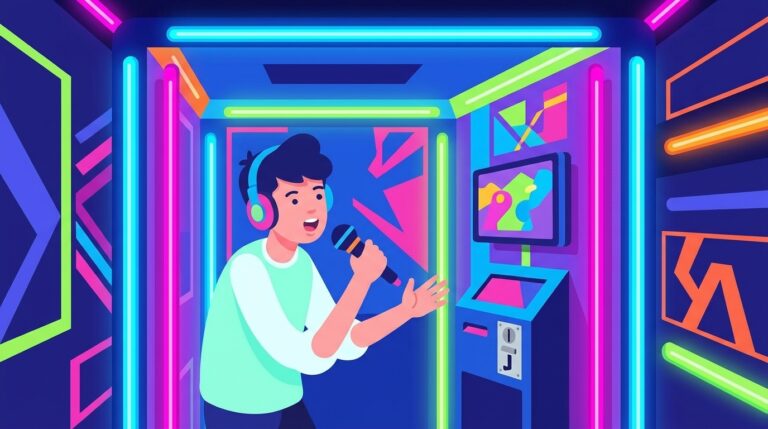
For just 1,000 KRW (about a dollar), you step into a cozy, neon-lit soundproof booth equipped with a high-tech karaoke machine, grab two sanitized microphone covers, and belt out your favorite K-pop anthems. But if you walk into a Kono only knowing formal textbook grammar, you might feel a bit lost when navigating song numbers, service time, or selecting high-energy tunes.
Don’t worry! As a 10-year Korean culture navigator, I’ve gathered authentic feedback from language learners who transitioned from standing awkwardly to singing like true K-drama leads. In this guide tailored for intermediate B2 learners, you’ll master essential expressions, subtle cultural manners, and real-life slang so you can de-stress like a real Seoulite!
Phase 2: Core Expressions Deep Dive
1. 스트레스가 싹 풀려요 (Seuteureseuga ssak pullyeoyo)
- Pronunciation: [seu-teu-rae-seu-ga ssak pool-ryeo-yo] (Rhymes with “ssak” as in a quick visual sweep sound)
- Meaning: Literal: “Stress unlocks completely.” / Actual: “My stress completely melted away!”
- K-Culture Moment: In modern K-Dramas, office workers often head to a Kono after a stressful day, singing high-pitched rock ballads like Buzz’s “Thorn” and shouting “스트레스 싹 풀린다!” afterwards.
- Editor’s Insight: The key word here is ‘싹’ (ssak), an adverb indicating a clean, complete disappearance. Using ‘싹’ elevates your B2 Korean by making your expression sound effortlessly native.
- Situation Spectrum: Casual ✅ | Semi-formal ✅ | Formal ⚠️
- 🤔 Think About It: In English, we say “I blew off steam,” emphasizing energy release. Why do Koreans use ‘풀다’ (to untie/unravel), framing stress as a tight knot inside the mind?
2. 서비스 시간 좀 주세요 (Seobeiseu sigan jom juseyo)
- Pronunciation: [seh-bee-seu see-gan jom joo-seh-yo] (“Seobeiseu” sounds like the English word “service”)
- Meaning: Literal: “Please give me some service time.” / Actual: “Could you throw in a few extra free songs/minutes?”
- K-Culture Moment: At traditional Noraebang counters with live managers, asking playfully for ‘서비스’ is an art form. If you’ve been singing passionately, the friendly owner might add 10 or 20 bonus minutes to your machine!
- Editor’s Insight: ‘서비스’ in Korea doesn’t mean waitstaff service; it specifically refers to free bonus items, extra food, or additional singing time provided complimentary by the business.
- Situation Spectrum: Casual ✅ | Semi-formal ✅ | Formal 🚫
- 🤔 Think About It: How does the concept of ‘Jeong’ (정 – warmth/affection) influence commercial transactions in Korea compared to strict pay-per-service models in western countries?
3. 목이 다 쉴 때까지 부르자 (Mogi da swil ttaekkaji bureuja)
- Pronunciation: [mog-ee da swil ttae-kka-jee boo-reu-ja] (“swil” rhymes with “wheel”)
- Meaning: Literal: “Let’s sing until our throats are totally hoarse.” / Actual: “Let’s sing our hearts out until we lose our voices!”
- K-Culture Moment: Said right before picking the final, hardest high-note song at 11:50 PM with your best friends, usually followed by furious tambourine shaking.
- Editor’s Insight: ‘쉬다’ usually means “to rest,” but when applied to ‘목’ (throat/voice), ‘목이 쉬다’ means to become hoarse. This double meaning reflects deep exertion followed by natural rest.
- Situation Spectrum: Casual ✅ | Semi-formal ⚠️ | Formal 🚫
- 🤔 Think About It: Why is physical exertion through group singing celebrated as a bonding ritual among close peers in Korea?
Phase 3: Textbook Korean vs. Real Korean
Situation 1: Reserving songs on the karaoke machine
- 📖 교과서 한국어: 노래를 예약해 주세요. (Noraereul yeyakhaejuseyo. – “Please reserve the song.”)
- 🗣️ 진짜 한국어: 이 노래 예약 좀 찍어 줘! / 우선예약 눌러! (I norae yeyak jom jjigeo jwo! / Useon-yeyak nulleo! – “Tag this song in the queue! / Hit priority reserve!”)
- 💡 왜 다를까?: Native Koreans use dynamic verbs like ‘찍다’ (to punch/stamp) or ‘누르다’ (to press) when handling touchscreen remote controls, and frequently use ‘우선예약’ (priority reservation) when they can’t wait to sing next!
Situation 2: Commenting on someone’s high-note performance
- 📖 교과서 한국어: 노래를 아주 잘 부르시네요. (Noraereul aju jal bureusineyo. – “You sing very well.”)
- 🗣️ 진짜 한국어: 와, 고음 미쳤다! 가창력 대박이다! (Wa, go-eum micheotda! Gachangnyeok daebagida! – “Woah, those high notes are crazy! Your vocal prowess is insane!”)
- 💡 왜 다를까?: Formal praise can sound like a stiff interview comment. In a Kono setting, emotional slang like ‘미쳤다’ (crazy/insane) and ‘대박이다’ (awesome/epic) builds genuine intimacy and excitement.
Phase 4: K-Culture Deep Dive & Non-verbal Manners
4-1. Nunchi & Gestures
- The Tambourine Rhythm (템포 맞추기): Never shake the tambourine off-beat during a melancholic ballad; save intense, overhead tambourine shakes for fast dance tracks or high-energy songs.
- Mic Hygiene Etiquette (마이크 덮개 쉬우기): Always grab a sanitary mic cover (마이크 덮개) at the entrance and put it on before singing. Leaving a bare mic demonstrates poor ‘눈치’ (Nunchi – situational awareness).
- Interjection Protocol (추임새): When your friend is singing, don’t sit silently staring at your phone! Nod along, chime in with light interjections like “좋다~!” (Nice~!) or “그렇지!” (That’s it!), and clap warmly after the score pops up.
4-2. Culture Code Analysis
The evolution of Noraebang reflects Korea’s rapid lifestyle shift. Traditional Noraebangs were large room-based group venues meant for corporate company dinners (회식) and late-night social gatherings. However, the rise of “Coin Noraebang” (코노) catered to the growing ‘Honjok’ (혼족 – solo living culture) and budget-conscious youth. It transformed singing from a formal social obligation into a quick, private 15-minute emotional therapy session where anybody can drop 1,000 KRW to release tension between classes or after work.
Phase 5: Real Roleplay Scenario
Setting: You and your Korean classmate, Minjun (민준), enter a modern neon Coin Noraebang in Hongdae after finishing a brutal B2 Korean midterm exam.
Character: Minjun (민준) – Energetic college friend who loves upbeat rock ballads and acts as your Kono guide.
- Turn 1 (민준): 와, 오늘 시험 진짜 매웠다! 우리 코노 가서 스트레스 좀 풀까?
(Wa, oneul sieom jinjja maewotda! Uri kono gaseo seuteureseu jom poolkka?)
[English: Wow, today’s exam was seriously tough! Shall we go to Kono and blow off some stress?]
🎭 Action: Rubbing his temples with a tired sigh, then suddenly smiling brightly. -
Turn 2 (You): 좋은 생각이야! 나 오늘 고음 지르고 싶어.
(Joheun saenggagiya! Na oneul go-eum jireugo sipeo.)
[English: Great idea! I want to belt out some high notes today.]
🎭 Action: Clenching your fist with determination. -
Turn 3 (민준): 나이스! 입구에서 마이크 덮개 두 개 챙기고 들어가자. 몇 곡 부를래?
(Naiseu! Ipgueseo maikeu deopgae du gae chaenggigo deureogaja. Myeot gok bureullae?)
[English: Nice! Let’s grab two mic covers at the entrance and head in. How many songs do you want to sing?]
🎭 Action: Grabbing sanitary covers from the counter dispenser. -
Turn 4 (You): 천 원에 세 곡이니까, 일단 사천 원 넣고 열두 곡 찍자!
(Cheon wone se goginigka, ildan sacheon won neohgo yeoldu gok jjigja!)
[English: Since it’s 3 songs for 1,000 won, let’s put in 4,000 won first and queue up 12 songs!]
🎭 Action: Feeding crisp thousand-won bills into the machine slot. -
Turn 5 (민준): 좋아! 네가 첫 곡 입력해. 태진 리모컨 사용법 알지?
(Joha! Nega cheot gok imryeokhae. Taejin rimokon sayongbeop alji?)
[English: Awesome! You register the first song. You know how to use the TJ remote, right?]
🎭 Action: Handing you the large remote control. -
Turn 6 (You): 그럼! 가사 검색하고 ‘우선예약’ 누르면 되지?
(Geureom! Gasa geomsaekhago ‘useon-yeyak’ nureumeon doeji?)
[English: Of course! I search the lyrics and press ‘Priority Reserve’, right?]
🎭 Action: Confidently typing song initials into the keypad. -
Turn 7 (민준): 역시 스마트해! 준비됐으면 템포 올리고 탬버린 흔들어!
(Yeoksi seumateuhae! Junbidwaesseumeon tempo olligo taembeorin heundeureo!)
[English: Smart as expected! Once ready, raise the tempo and shake the tambourine!]
🎭 Action: Handing you a plastic tambourine while laughing. -
Turn 8 (You): 오늘 목이 다 쉴 때까지 달려보자!
(Oneul mogi da swil ttaekkaji dallyeoboja!)
[English: Let’s run this until my voice is totally shot today!]
🎭 Action: Raising the microphone high like a rockstar.
🔀 Interactive Branching Point
Minjun asks: “다음 곡으로 신나는 댄스 곡 넣을까, 아니면 슬픈 발라드 넣을까?” (Should we queue an exciting dance track next, or a sad ballad?)
- Option A: “당연히 100% 댄스 곡이지! 탬버린 치면서 춤추자!” (Best Choice)
- Result: Best! Minjun beams with enthusiasm, grabs another tambourine, and you both turn the small booth into a concert venue. Your stress drops to zero!
- Option B: “음… 슬픈 발라드 불러서 눈물 좀 흘릴래.
- Result: Bad. The upbeat momentum instantly dies down, and Minjun awkwardly sips his water while trying to figure out when to tap the tambourine.
- Option C: “노래 부르지 말고 그냥 쉬자.”
- Result: Risk! Why enter a paid coin singing room just to sit quietly? Minjun looks confused and asks if you are feeling unwell.
Phase 6: 10-Second Emotion Shadowing Drill
[😊 기쁘고 신나게]
오늘 / 코노에서 / 스트레스 / 싹 / 풀었어!
(Oneul / kono-eseo / seuteureseu / ssak / pureosseo!)
“I completely cleared my stress at Kono today!”-
[🔥 의욕에 차서]
이번 곡은 / 내가 / 고음 / 지르는 / 타임이야!
(Ibeon gogeun / naega / go-eum / jireuneun / taim-iya!)
“This song is my time to hit the high notes!” -
[🥺 아쉽고 애교 섞어서]
사장님, / 서비스 시간 / 조금만 / 더 주시면 / 안 돼요?
(Sajangnim, / seobeiseu sigan / jogeumman / deo jusimyeon / an dwaeyo?)
“Boss, couldn’t you give us just a tiny bit more bonus service time?”
Phase 7: K-Culture Mini Dictionary
- 코노 (Kono) | Coin Noraebang | Shortened slang for ‘코인 노래방’. Used everyday among youth: “오늘 수업 끝나고 코노 콜?” (Up for Kono after class today?).
- 떼창 (Ttechang) | Sing-along / Mass Chanting | Combining ‘떼’ (crowd) + ‘창’ (singing). Refers to a whole group or audience belting out lyrics together synchronously.
- 우선예약 (Useon-yeyak) | Priority Reservation | Button on Korean karaoke remotes that skips the line and places your song next immediately.
- 육성 (Yukseong) | Natural Voice | Singing using your natural unamplified vocal voice without heavy mic effects.
Phase 8: Survival Kit for Travelers
Top 3 Survival Expressions
- 마이크 덮개 어디에 있어요? (Maikeu deopgae eodie isseoyo? – Where are the microphone covers?)
- Pro Tip: Use this at the counter if you don’t see the sanitary cover tray at the entrance!
- 취소 버튼 누르면 돼요? (Cwisogeon nureumeon dwaeyo? – Do I press the cancel button?)
- Pro Tip: Press ‘취소’ twice if you picked the wrong song number by accident!
- 현금 없는데 카드 결제 돼요? (Hyeongeum eopsneunde kadeu gyeolje dwaeyo? – I don’t have cash, can I pay by card?)
- Pro Tip: Modern Konos accept cards/Kakao Pay at kiosk terminals, but older ones are cash-only!
Editor’s Travel Note
Before venturing out, use the Naver Map application to search for “코인노래방” near major subway exits (like Sinchon or Gangnam). Most coin rooms operate 24/7 with automated kiosks. Keep a few 1,000 KRW bills in hand just in case, though 90% now feature touchscreen kiosks equipped with IC credit card readers!
Phase 9: One Step Deeper
In many Western cultures, dramatic vocal expressions are often reserved for stage performers or private showers. However, in Korea, Noraebang functions as an essential emotional safety valve embedded within a dense, fast-paced society. The shared catharsis of ‘떼창’ (sing-along) strips away hierarchical status, age barriers, and academic pressure. Singing together—or even alone in a tiny 1-meter booth—is not merely entertainment; it is an act of communal mental detox where screaming high notes is fully sanctioned and celebrated.
💬 Your Turn: What’s your ultimate go-to K-pop or international song when you need to relieve stress at a karaoke booth? Share your favorite tracks in the comments below!
Phase 10: FAQ & Common Mistakes
Q: Can foreigners visit Coin Noraebangs alone without knowing complex Korean?
A: Absolutely! Coin Noraebangs (코노) are built for solo visitors (혼족). Most machines (TJ / Keumyoung) have English, Japanese, and Chinese search modes on the remote control. Simply select your language or enter the song title in English.
Q: How much does a typical Coin Noraebang cost in Seoul?
A: Prices typically range from 1,000 KRW for 3 songs to around 5,000 KRW for 15-18 songs or 30 minutes of time-based play, making it one of the most affordable recreational activities in Korea.
Q: What is the difference between Time-mode (시간제) and Coin-mode (코인제)?
A: Coin-mode charges per song (e.g., 500 KRW per song), allowing you to take breaks without pressure. Time-mode charges per 30 or 60 minutes, which is ideal if you like skipping song intros or singing half-songs rapidly with friends.
🚨 Common Mistakes TOP 3 & Correct Actions
- Mistake: Leaving the mic on without putting on a sanitary cover.
- Correct Action: Always grab a new ‘마이크 덮개’ at the counter/kiosk before singing for hygiene!
- Mistake: Pressing ‘예약’ (Reserve) when you want to sing the song RIGHT NOW.
- Correct Action: Press ‘우선예약’ (Priority Reserve) if no song is playing and you want it to start immediately.
- Mistake: Sitting silently while your friend sings a high-energy song.
- Correct Action: Grab the tambourine and provide energetic ‘추임새’ (rhythmic support) to boost the mood!
Phase 11: Action Mission & Engagement
Action Mission 3 Steps
- 🥉 Bronze: Practice saying “스트레스가 싹 풀렸어요!” out loud 3 times using proper emotion shadowing.
- 🥈 Silver: Record a short voice note singing your favorite K-pop chorus and share it on social media with #DailyHangulKono.
- 🥇 Gold: Visit a local coin noraebang or Korean karaoke venue, order in Korean, and queue up 3 songs using remote control shortcuts!
🎮 K-Culture Mission
Watch a clip from a Korean drama (e.g., Hospital Playlist or Reply 1988) where characters visit a karaoke room. Spot whether they press ‘우선예약’ or shake tambourines, and post your observation in our community board!
Phase 12: Interactive Quiz Challenge
Question 1 (Situation Judgment): You are at a coin noraebang with a Korean friend and want to say “My stress completely melted away after singing!” Which expression should you use?
* A) 스트레스가 싹 풀렸어요!
* B) 공부가 아주 재미있어요!
* C) 목이 전혀 안 아파요.
🔍 Click to view Answer & Explanation
Answer: A) 스트레스가 싹 풀렸어요!
Explanation: ‘스트레스가 싹 풀렸어요’ means your stress has been completely released/unraveled. Option B means “Studying is fun,” and Option C means “My throat doesn’t hurt at all.”
Question 2 (Fill-in-the-Blank): To play your selected song immediately without waiting in queue, press the ‘______예약’ button on the remote control.
🔍 Click to view Answer & Explanation
Answer: 우선 (Priority) -> ‘우선예약’
Explanation: ‘우선예약’ stands for priority reservation, which jumps your song to the front of the line right away!
Question 3 (True/False Culture Quiz): True or False? In Korea, ‘서비스’ (Service) at a karaoke room means paying an extra service charge fee on your bill.
🔍 Click to view Answer & Explanation
Answer: False!
Explanation: In Korea, ‘서비스’ refers to complimentary bonus perks, such as free extra minutes added to your karaoke machine by the friendly store owner!







