

Phase 1: Welcome! Say Goodbye to Room-Description Confusion
안녕하세요! 매일한글 에디터입니다. (Hello! I’m the lead editor at Daily Hangul.)
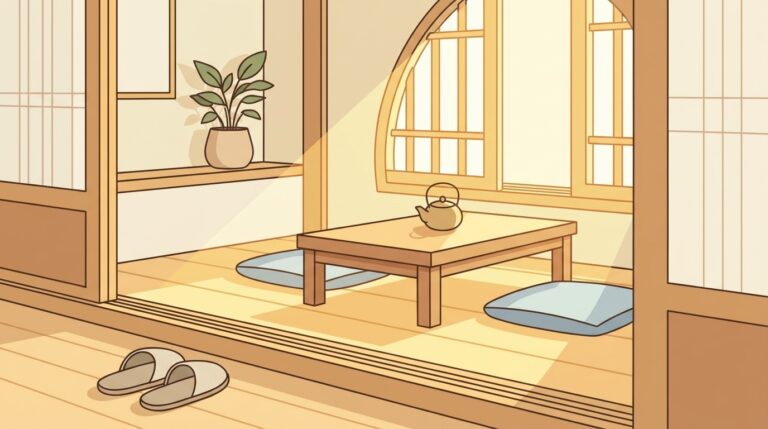
Picture this: You’ve just arrived at a gorgeous traditional Hanok stay in Seoul after a long flight. You open the wooden sliding door, step inside, and breathe a sigh of relief—the polished wooden floor is sparkling, and the white bedsheets smell like fresh laundry. You want to compliment your host immediately, but you freeze. How do you say “It’s so clean!” in natural Korean without sounding like a talking textbook?
Or picture the opposite scenario: You sit down at a popular K-BBQ spot in Hongdae, ready to grill some delicious samgyeopsal, but the table has a sticky grease spot from the previous guests. You want to politely ask for a wipe, but you aren’t sure how to say “It’s dirty” nicely without sounding rude or aggressive.
Describing whether an object or space is clean or dirty (깨끗해요 / 더러워요) is one of the most fundamental A1 skills you’ll need when traveling in Korea. Whether you’re reviewing a hotel room, ordering food at a cafe, or talking with a Korean friend, these core expressions will give you instant confidence. Based on feedback from hundreds of beginner learners, we’ve broken down these essential phrases into practical, easy-to-digest steps. Let’s dive in together!
Phase 2: Core Expression Deep Dive
1. 깨끗해요
- Pronunciation: [Gkkea-ggeat-hae-yo] (Think of the crisp, sharp sound of snapping clean kitchen scissors: “kkeat-kkeat!”)
- Meaning: It is clean / It is tidy.
- K-Culture Moment: In K-Dramas, whenever a character enters a freshly renovated apartment or steps into a luxury hotel suite, they look around with wide eyes and exhale: “와, 진짜 깨끗해요!” (Wow, it’s really clean!).
- Editor’s Insight: Beyond physical tidiness, 깨끗하다 carries positive emotional connotations of purity, freshness, and care. Korean homes are strictly shoeless spaces, so complimenting a home with “깨끗해요” is one of the highest compliments you can give your host!
- Situation Spectrum:
- Casual (Friends): 깨끗해! ✅
- Semi-formal (Staff/Host): 깨끗해요. ✅
- Formal (Business/TV): 깨끗합니다. ✅
- 🤔 Think About It: Does your native language separate the concept of “clean” and “tidy”? In Korean, 깨끗해요 covers both pure cleanliness and neat order!
2. 더러워요
- Pronunciation: [Deo-reo-wae-yo] (Sounds like “Duh-ruh”, like saying “Duh, it’s rough/dirty!”)
- Meaning: It is dirty / messy.
- K-Culture Moment: When characters in reality shows like I Live Alone (나 혼자 산다) visit a messy bachelor pad full of unwashed dishes, they cover their nose and go: “아, 너무 더러워요!” (Ah, it’s so dirty!).
- Editor’s Insight: 더러워요 is quite direct. When addressing staff at a restaurant or hotel, saying “더러워요” directly to their face might sound a bit blunt. A softer alternative for messiness is 지저분해요 (jijeobunhaeyo – messy), but 더러워요 is essential for A1 beginners to know!
- Situation Spectrum:
- Casual (Close friends): 더러워! ✅
- Semi-formal (General): 더러워요. ⚠️ (Use gently)
- Formal (Official complaints): 더럽습니다. ✅
- 🤔 Think About It: How direct are people in your culture when pointing out something dirty in public?
3. 치워 주세요
- Pronunciation: [Chi-wo ju-se-yo] (Sounds like “Cheer-war shoe-say-yo”)
- Meaning: Please clean/tidy this up.
- K-Culture Moment: At a fast-casual dining spot or cafe, if a table hasn’t been cleared yet, you can catch a staff member’s eye, point gently, and say: “여기 좀 치워 주세요~” (Please clean this spot up, please~).
- Editor’s Insight: Adding 좀 (jom – a little/please) before 치워 주세요 acts as a magical politeness cushion. “여기 좀 치워 주세요” sounds super polite and friendly!
- Situation Spectrum:
- Casual: 치워 줘! 🚫 (Only to close younger friends)
- Semi-formal: 치워 주세요. ✅
- Politeness Upgrade: 여기 좀 치워 주세요. ✅ (Recommended!)
- 🤔 Think About It: Notice how asking someone to clean something up in Korean relies on helper verbs like 주세요 (please give/do for me).
Phase 3: Textbook Korean vs. Real Native Korean
Situation 1: Expressing that a room or object is super clean
- 📖 Textbook Korean: 이 방은 매우 깨끗합니다. (i bang-eun mae-u gkkea-ggeat-ham-ni-da)
- 🗣️ Real Native Korean: 와, 여기 완전 깨끗해요! (wa, yeo-gi wan-jeon gkkea-ggeat-hae-yo!)
- 💡 Why the difference? Natives rarely use formal textbook words like 매우 in daily conversation. Instead, they love using 완진 (wan-jeon – totally/completely) or 진짜 (jin-jja – really) to add enthusiastic, friendly energy!
Situation 2: Pointing out a dirty table at a cafe
- 📖 Textbook Korean: 이 탁자는 더럽습니다. (i tak-ja-neun deo-reop-sum-ni-da)
- 🗣️ Real Native Korean: 저기요, 테이블이 조금 더러워요. (jeo-gi-yo, te-i-beul-i jo-geum deo-reo-wae-yo)
- 💡 Why the difference? Calling an object 더럽습니다 sounds like an official report. Adding 조금 (jo-geum – a little bit) softens the statement, keeping your interaction courteous and pleasant.
Phase 4: K-Culture Deep Dive & Non-Verbal Manners
4-1. Nunchi (눈치) & Gestures
When discussing cleanliness in Korea, non-verbal cues matter as much as words!
* Taking Off Shoes: When stepping onto a clean wooden floor at a guesthouse or Hanok, always remove your shoes at the entryway (현관 – hyeongwan). Stepping indoors with shoes on is considered a major taboo!
* Polite Table Gesture: If a table has crumbs, don’t wipe them onto the floor. Instead, collect them into a paper napkin or gently point to the spot while asking the staff to clean it with a soft open-palm gesture.
4-2. Culture Code: Korea’s Cleanliness Ethos
From squeaky-clean subway stations to pristine cafes, public cleanliness is a source of civic pride in Korea. Korean Airbnb hosts and hotel staff take great effort to provide pristine environments. When you tell a host “방이 정말 깨끗해요!” (The room is really clean!), their face will instantly light up with a warm, genuine smile.
Phase 5: Real-World Roleplay Scenario
Setting: You are checking into a cute boutique stay in Seoul. You meet Minjun (민준), the friendly host.
- Minjun: 안녕하세요! 방에 들어오세요. (Hello! Please come inside the room.)
- Learner: 안녕하세요! 와, 방이 정말 깨끗해요! (Hello! Wow, the room is really clean!)
- Minjun: 감사합니다! 불편한 건 없으세요? (Thank you! Is everything comfortable?)
- Learner: 🎭 [Pointing gently at the small balcony table] 저기… 테라스 테이블이 조금 더러워요. (Excuse me… the terrace table is a little dirty.)
- Minjun: 아, 죄송합니다! 제가 지금 치워 드릴게요. (Ah, I’m sorry! I will clean it up for you right now.)
- Learner: 🎭 [Smiling warmly] 네, 감사해요! (Yes, thank you!)
- Minjun: 다 치웠습니다! 이제 깨끗해요. (All cleaned up! It’s clean now.)
- Learner: 정말 감사합니다! (Thank you so much!)
🔀 Interactive Choice Point
How do you respond after Minjun finishes cleaning the table?
- Option A: “더러워요!” (It’s dirty!)
- Option B: “완전 깨끗해요, 감사합니다!” (It’s totally clean now, thank you!)
- Option C: “치워 주세요.” (Clean it up.)
Feedback:
* Option A (Bad): ❌ Re-stating that it’s dirty after he just cleaned it sounds confused or impolite.
* Option B (Best): 🎉 Perfect! Complimenting the freshly cleaned space shows great appreciation and smooth communication!
* Option C (Risk): ⚠️ Repeating the command sounds like you are ordering him around again unnecessarily.
Phase 6: 10-Second Emotional Shadowing Drill
Practice these lines out loud with the specified emotion and rhythm (/ indicates a short pause):
[😊 Delighted & Impressed]- 와! / 방이 / 완전 / 깨끗해요!
- (Wa! / bang-i / wan-jeon / gkkea-ggeat-hae-yo!)
- “Wow! The room is super clean!”
[🥺 Hesitant & Polite]- 저기요… / 여기 / 조금 / 더러워요.
- (Jeo-gi-yo… / yeo-gi / jo-geum / deo-reo-wae-yo.)
- “Excuse me… it’s a little dirty here.”
[🙏 Friendly & Requesting]- 여기 / 좀 / 치워 주세요~
- (Yeo-gi / jom / chi-wo ju-se-yo~)
- “Please clean this spot up for me~”
Phase 7: K-Culture Mini Dictionary
- 방 (Bang) | Room | Essential word when describing your hotel, Airbnb, or karaoke room (노래방).
- 수건 (Sugeon) | Towel | Crucial for hotel stays (e.g., “깨끗한 수건 주세요” = Clean towel please).
- 테이블 (Te-i-beul) | Table | Commonly used at cafes and restaurants instead of the traditional word 탁자.
- 휴지 (Hyu-ji) | Tissue / Toilet paper | Used frequently at Korean restaurants to wipe clean small spills.
Phase 8: Traveler’s Survival Kit
Survival TOP 3 Phrases
- 깨끗한 수건 주세요. (Gkkea-ggeat-han su-geon ju-se-yo.) — Please give me clean towels.
- 여기 테이블 좀 치워 주세요. (Yeo-gi te-i-beul jom chi-wo ju-se-yo.) — Please clean this table.
- 방이 진짜 깨끗해요! (Bang-i jin-jja gkkea-ggeat-hae-yo!) — The room is really clean!
Editor’s Travel Note
When traveling around Korea, finding clean restrooms or top-rated clean accommodations is super easy if you use local tools. Instead of standard foreign apps, make sure you complete your Naver Map app download to check real visitor reviews mentioning hygiene and cleanliness before booking your spots!
Phase 9: One Step Deeper
In Korean culture, clean environments reflect respect for shared spaces and communal wellbeing. The practice of removing shoes at home or keeping cafe tables tidy for the next guest comes from a deep-rooted cultural etiquette of caring for others’ comfort. By expressing “깨끗해요” with a genuine smile, you aren’t just describing a state of matter—you are honoring local manners.
💬 Your Turn: Have you ever stayed in a clean Hanok or visited a unique Korean cafe? Share your favorite experience in the comments below!
Phase 10: FAQ & Common Mistakes
Q: Is “더러워요” too rude to say in public?
A: Saying it abruptly can sound harsh. Soften it by adding 조금 (a little): “조금 더러워요” (It’s a little dirty) or request help directly with “여기 좀 치워 주세요”.
Q: What is the difference between 깨끗해요 and 지저분해요?
A: 깨끗해요 means clean. The opposite can be 더러워요 (dirty/soiled) or 지저분해요 (messy/cluttered). If items are scattered around, 지저분해요 is more accurate!
Q: Can I use 깨끗해요 to describe water or air?
A: Yes! “물이 깨끗해요” (The water is clean) and “공기가 깨끗해요” (The air is clean) are both 100% natural and common expressions.
🚨 Common Mistakes TOP 3
- ❌ Mistake: Saying “이것은 더럽다” to a restaurant staff.
- ✅ Correct Action: Use polite form: “여기 좀 더러워요, 치워 주세요.”
- ❌ Mistake: Forgetting to drop your shoes before walking into a clean indoor area.
- ✅ Correct Action: Always remove shoes at the 현관 (entryway) whenever you see indoor slippers.
- ❌ Mistake: Pronouncing 깨끗해요 as [kae-kaet-hae-yo].
- ✅ Correct Action: Put extra tension on the double ‘ㄲ’ sound: [Gkkea-ggeat-hae-yo].
Phase 11: Action Mission
- 🥉 Bronze Mission: Look around your room right now and say out loud: “제 방이 깨끗해요!” (My room is clean!) or “제 방이 더러워요!” (My room is dirty!).
- 🥈 Silver Mission: Leave a comment on this post describing your desk status using today’s target word.
- 🥇 Gold Mission: Next time you visit a Korean restaurant or hotel, compliment the space by saying: “여기 정말 깨끗해요!”
🎮 K-Culture Mission: Watch any Korean travel vlog or room tour video today. Listen closely for the word 깨끗해요 when they enter a room!
Phase 12: Interactive Quiz Challenge
Question 1: Situation Judgement
You just sat down at a cafe, but there are coffee drops on the table. What should you politely say to the barista?
* A) 방이 깨끗해요.
* B) 여기 테이블 좀 치워 주세요.
* C) 물이 더러워요.
Click for Answer & Explanation
- Correct Answer: B) 여기 테이블 좀 치워 주세요.
- Explanation: This translates to “Please clean this table up for me, please,” which is the polite way to ask for a table to be wiped down!
Question 2: Fill in the Blank
“이 방은 정말 ________!” (This room is really clean!)
* A) 더러워요
* B) 깨끗해요
* C) 치워요
Click for Answer & Explanation
- Correct Answer: B) 깨끗해요
- Explanation: 깨끗해요 means “is clean”. Choice A means dirty, and Choice C is an imperative verb meaning clean up.
Question 3: True / False Culture Quiz
True or False: In Korea, it is polite to wear outdoor shoes inside a clean traditional Hanok stay.
Click for Answer & Explanation
- Correct Answer: False!
- Explanation: You should always take off your shoes at the entryway (현관) before stepping into a Korean house or Hanok stay!







