

Surviving Post-Holiday Stress in Korea: How to Talk About Holiday Syndrome Like a Native
안녕하세요! 매일한글 에디터입니다. (Hello! I’m your Daily Hangul Editor.)
Phase 1: Empathy (K-Culture Storytelling)
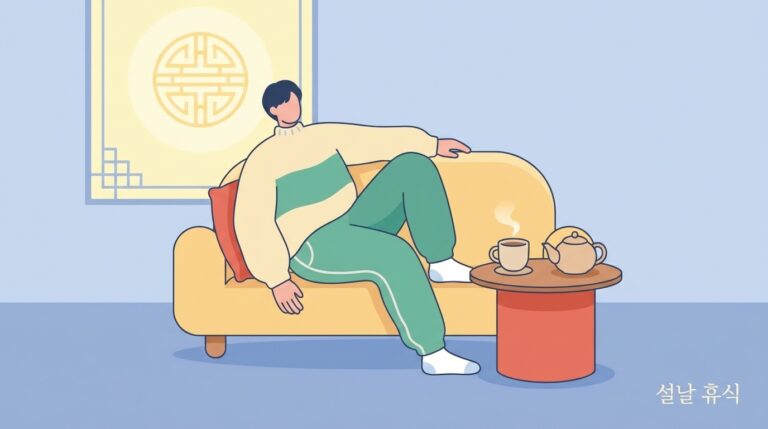
Picture this: Seollal (Korean Lunar New Year) has just ended. You spent three days bowing to elders, making hundreds of jeon (savory pancakes), and answering classic questions from relatives like, “When are you getting married?” or “How is your job hunt going?” You wake up the next day, your shoulders are stiff, and you feel completely drained. Welcome to the world of 명절 증후군 (Myeongjeol Jeung-hu-gun), or “Holiday Syndrome.”
If you have ever felt exhausted after a major holiday in Korea, you are not alone! In Korea, holiday stress is a widely recognized cultural phenomenon. Learning how to express this stress naturally won’t just improve your Korean vocabulary—it will immediately deepen your bond with Korean colleagues and friends who are feeling the exact same way. Based on real feedback from intermediate learners, this guide will give you the exact B1-level expressions to commiserate naturally and navigate post-holiday conversations with ease.
Phase 2: Core 3 Expressions Deep Dive
1. 명절 증후군 (Myeongjeol Jeung-hu-gun)
- Pronunciation: [myeong-jeol jeung-hu-gun] (Sounds like myeong-jol + jeung-hoo-goon)
- Meaning: Literal: Holiday Syndrome | Nuance: Physical and psychological fatigue caused by long travel, heavy holiday cooking, and family pressure during Lunar New Year or Chuseok.
- K-Culture Moment: Commonly seen in K-dramas where daughters-in-law bond over coffee after a stressful family gathering, complaining about post-holiday aches.
- Editor’s Insight: Use this word as a empathetic icebreaker on the first workday after Seollal. Everyone will nod in agreement!
- Situation Spectrum: Casual ✅ | Semi-formal ✅ | Formal ✅
- 🤔 Think About It: Does your culture have a specific term for post-holiday mental and physical burnout, or is family holiday stress expressed differently?
2. 피로가 쌓이다 (Piroga ssah-i-da)
- Pronunciation: [pi-ro-ga ssah-i-da] (pee-roh-gah ssah-ee-dah)
- Meaning: Literal: Fatigue accumulates | Nuance: Building up deep exhaustion over time rather than just being temporarily sleepy.
- K-Culture Moment: Used frequently in Korean health food commercials for ginseng drinks or vitamin patches.
- Editor’s Insight: Pair this with ‘요즘’ (these days) to say “요즘 피로가 쌓였어요” (Fatigue has been building up lately).
- Situation Spectrum: Casual ✅ | Semi-formal ✅ | Formal ✅
- 🤔 Think About It: In English, we say “fatigue builds up.” Notice how Korean uses the passive verb ‘쌓이다’ (to be piled up) to describe exhaustion accumulating naturally.
3. 푹 쉬다 (Puk swi-da)
- Pronunciation: [puk swi-da] (pook swee-dah)
- Meaning: Literal: Rest deeply | Nuance: Getting quality, uninterrupted, completely restful sleep or downtime.
- K-Culture Moment: Korean coworkers constantly say this to each other on Friday evening or right before a long break.
- Editor’s Insight: The mimetic word ‘푹’ adds the vivid sense of sinking deeply into a comfortable mattress.
- Situation Spectrum: Casual ✅ | Semi-formal ✅ | Formal ✅
- 🤔 Think About It: Why does Korean use sound/state adverbs like ‘푹’ so often to enrich basic verbs like ‘쉬다’ (rest)?
Phase 3: Textbook Korean vs. Real Native Korean
Situation 1: Expressing that you are tired after the holiday
- 📖 Textbook: 명절이 끝나서 너무 피곤합니다. (Myeongjeoli kkeutnaseo neomu pigonhamnida.)
- 🗣️ Real Native: 명절 끝난 뒤라 몸이 찌뿌둥해요. (Myeongjeol kkeutnan dwira mom-i jji-ppu-dung-hae-yo.)
- 💡 Why the difference?: Native speakers use sensory descriptive words like ‘찌뿌둥하다’ (to feel heavy/stiff in the body) to convey physical post-holiday aches beyond a plain “I am tired.”
Situation 2: Asking a colleague about their holiday break
- 📖 Textbook: 연휴 동안 잘 쉬었습니까? (Yeonhyu dong-an jal swieossneun-ga-yo?)
- 🗣️ Real Native: 연휴 잘 보내셨어요? 피로 좀 풀리셨어요? (Yeonhyu jal bonaesyeosseoyo? Piro jom pullisyeosseoyo?)
- 💡 Why the difference?: Asking if their ‘피로가 풀리다’ (fatigue has been unraveled/relieved) shows thoughtful care for their wellbeing after the stressful holiday season.
Phase 4: K-Culture Deep Dive & Non-verbal Manners
4-1. Nunchi & Post-Holiday Gestures
When discussing 명절 증후군 at work, tone and body language matter. A slight shoulder sigh accompanied by a light massage on your own neck while saying “아, 명절 증후군인가 봐요” signals friendly vulnerability without sounding like a toxic complainer.
4-2. The Cultural Backdrop: Jansori (잔소리) and Seollal Stress
In Korean holiday culture, stress rarely comes from just physical labor—it comes from 잔소리 (unsolicited nagging). Relatives often bombard young adults with personal questions about marriage, salary, and career. Understanding this helps you empathize when a Korean friend says they need a full day of solitude after Seollal!
Phase 5: Real-Life Roleplay Scenario
Setting: On Monday morning after Seollal, you bump into your Korean colleague, Minjun, near the office coffee machine.
- Minjun: 민우 씨, 연휴 잘 보내셨어요? (Min-woo, did you have a good holiday break?)
- You: 네, 잘 보냈어요. 하지만 명절 뒤라 조금 피곤하네요. (Yes, I did. But since it’s after the holiday, I’m a bit tired.)
🎭 Gently rubbed nape of neck - Minjun: 맞아요. 저도 명절 증후군 때문에 온몸이 찌뿌둥해요. (Right. Me too, my whole body feels stiff due to holiday syndrome.)
- You: 운전 오랫동안 하셨죠? 피로가 많이 쌓였겠어요. (You drove for a long time, right? Exhaustion must have piled up.)
🎭 Nodding sympathetically - Minjun: 네, 고속도로에서 6시간이나 걸렸어요. (Yes, it took 6 hours on the highway.)
- You: 와, naprawdę 힘드셨겠어요! 오늘 퇴근하고 푹 쉬세요. (Wow, that must have been really tough! Please get a deep rest after work today.)
- Minjun: 고마워요. 민우 씨도 오늘 칼퇴하세요! (Thanks! You should leave right on time today too, Min-woo!)
- You: 네, 오늘은 일찍 가서 쉬려고요. (Yes, I plan to go home early and rest today.)
🎭 Smiling warmly
🔀 Interactive Choice Point
Minjun asks: “이번 연휴에 친척집 다녀오셨어요?” (Did you visit relatives’ homes this break?)
- Option A: “네, 다녀왔어요. 잔소리를 너무 많이 들어서 힘들었어요!” (Best)
- Feedback: Authentic and relatable! Sharing moderate honesty about jansori builds instant camaraderie.
- Option B: “아니요, 안 갔어요. 저는 친척들을 별로 안 좋아해요.” (Bad)
- Feedback: Too blunt and overly negative for workplace small talk.
- Option C: “네. 하지만 말씀드리고 싶지 않습니다.” (Risk)
- Feedback: Grammatically correct but sounds defensive and cold.
Phase 6: 10-Second Emotional Shadowing Drill
[🥺 Exhale deeply & weary tone]
명절 뒤라 / 몸이 / 너무 찌뿌둥해요.
(Myeongjeol dwira / mom-i / neomu jji-ppu-dung-hae-yo.)-
[😊 Warm & empathetic tone]
고생 많으셨어요 / 오늘 퇴근하고 / 푹 쉬세요!
(Gosaeng maneusyeosseoyo / oneul toe-geun-ha-go / puk swi-seyeo!)
Phase 7: K-Culture Mini Dictionary
- 떡국 (Tteokguk) | Sliced Rice Cake Soup | Traditional soup eaten on Seollal; eating a bowl symbolizes turning one year older.
- 세배 (Sebae) | New Year Bow | Formal deep bow performed to elders on Seollal to receive blessings and money (sebaetdon).
- 잔소리 (Jansori) | Nagging | Well-meaning but unwanted advice from elders regarding career, marriage, or health.
- 연휴 (Yeonhyu) | Consecutive Holidays | A multi-day long weekend or national holiday period.
Phase 8: Traveler’s Survival Kit
Survival Expressions Top 3
- 몸이 찌뿌둥해요. (Mom-i jji-ppu-dung-hae-yo) – My body feels aching/stiff.
- 피로가 안 풀려요. (Piroga an pulli-yeo-yo) – I can’t shake off this fatigue.
- 푹 쉬고 싶어요. (Puk swi-go sip-eo-yo) – I just want to get a complete, deep rest.
Editor’s Travel Note
During peak Seollal travel times, public transport tickets sell out fast. Make sure you use the Korail Train Booking App to reserve KTX tickets weeks in advance so you don’t get stuck in traffic!
Phase 9: A Step Deeper (Reflection Essay)
In Korea, Seollal is traditionally a time of harmony and family unity. However, modern Korean society increasingly reflects on the balance between filial duty and personal mental well-being. Terms like 명절 증후군 show how Korean culture is evolving to publicly acknowledge mental strain and workload inequality during holidays.
💬 Your Turn: Have you ever experienced post-holiday syndrome in your country? Share your story in the comments below!
Phase 10: FAQ & Common Mistakes
Q: Can I use “명절 증후군” for non-Korean holidays like Christmas?
A: Absolutely! While it originated around Seollal and Chuseok, Koreans frequently use it colloquially for post-Christmas or long summer vacation blues.
Q: What is the difference between 피곤하다 and 찌뿌둥하다?
A: 피곤하다 means feeling sleepy/tired overall, while 찌뿌둥하다 specifically describes physical stiffness, body aches, or sluggish discomfort.
Q: Is it polite to say “잔소리 들었어요” to senior colleagues?
A: Use it carefully! It is fine with peer coworkers, but avoid complaining about family nagging to your direct boss unless you have a very close relationship.
🚨 Common Mistakes Warning
- ❌ “명절 증후군이 있어요.” (Sounds awkward)
👉 Correct Action: Use “명절 증후군을 겪고 있어요” (I am experiencing holiday syndrome) or “명절 증후군인가 봐요” (It seems to be holiday syndrome).
Phase 11: Action Mission & Engagement
- 🥉 Bronze Mission: Pronounce “피로가 푹 풀리셨어요?” out loud three times.
- 🥈 Silver Mission: Post a picture of your favorite comfort drink on social media with the caption “명절 증후군 극복 중!” (Overcoming holiday syndrome!).
- 🥇 Gold Mission: Send a message to a Korean friend saying “연휴 잘 보냈어요? 푹 쉬세요!”.
- 🎮 K-Culture Mission: Watch a vlog or K-drama clip featuring Seollal and spot someone complaining about jansori!
Phase 12: Interactive Quiz Challenge
1. Which expression best describes physical body stiffness after holiday cooking or driving?
a) 푹 쉬다
b) 몸이 찌뿌둥하다
c) 세배하다
Click to view Answer & Explanation
Answer: b
‘몸이 찌뿌둥하다’ specifically refers to heavy, stiff, or aching physical fatigue after long hours of strain.
2. True or False: ‘떡국’ is the traditional dish eaten on Seollal.
Click to view Answer & Explanation
Answer: True
Eating Tteokguk on Seollal symbolically adds one year to your age in traditional Korean culture.







