

안녕하세요! 매일한글 에디터입니다.
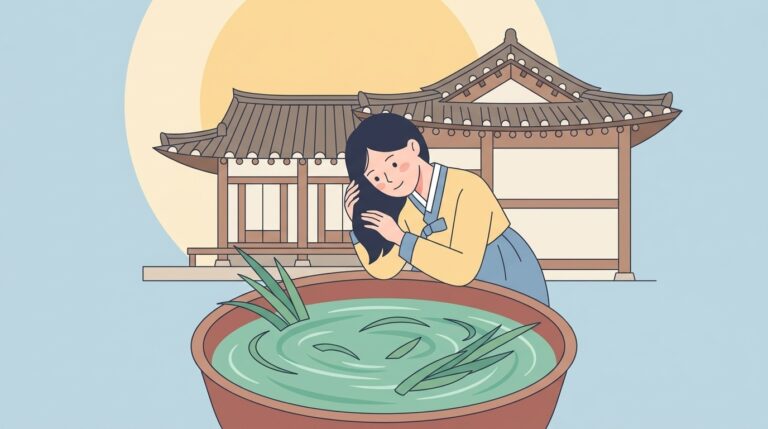
Have you ever stumbled upon a scene in a historical K-Drama like Mr. Queen or The King’s Affection where people gather by a pristine stream on a lush summer morning, pouring freshly boiled green leaves into water to wash their shimmering hair? That magical tradition isn’t just cinematic fiction—it’s the heart of Dano (단오), one of Korea’s major traditional seasonal customs celebrated on the 5th day of the 5th lunar month.
For advanced learners at the C1 level, discussing seasonal customs goes beyond memorizing vocabulary like ‘창포물’ (sweet flag water). The real challenge lies in articulating the symbolic nuances of ritualistic purification (액막이), seamlessly blending archaic cultural terms with sophisticated modern idioms, and using native-like rhetorical framing when sharing cultural insights with Korean friends. Many advanced speakers stumble when trying to express why these ancient customs still resonate subtly in modern Korean lifestyle trends, such as natural K-Beauty herbal haircare.
In this comprehensive guide, we will elevate your Korean expression to a native level. Based on feedback from hundreds of advanced Korean learners, we’ve mapped out key idiomatic structures, nuanced dialogue patterns, and cultural contexts so you can comfortably debate, explain, and immerse yourself in Korean heritage without hesitation.
Phase 2: Core Expressions Deep Dive (핵심 표현 3선)
1. 액운을 물리치다 (Aeg-un-eul mul-li-chi-da)
- Pronunciation: [Aeg-un-eul mul-li-chi-da] (Pronounced naturally like Aeg-un-eul mool-lee-chee-da)
- Meaning: Literal: To drive away bad luck / Nuanced: To perform a symbolic ritual or take preventive actions to ward off misfortune and invite good energy.
- K-Culture Moment: Commonly used in historical dramas when elders perform Dano rituals, or in modern reality shows when celebrities visit traditional markets during seasonal shifts.
- Editor’s Insight: ‘액운’ specifically refers to lingering bad fate. Combining it with ‘물리치다’ (to defeat/repel) gives your speech an authoritative, deeply atmospheric tone perfect for cultural explanations.
- Situation Spectrum:
- Casual: ⚠️ (Sounds overly formal for casual banter unless used playfully)
- Semi-formal: ✅
- Formal: ✅
- 🤔 Think About It: How does your own culture symbolically clear out bad energy at the turn of seasons?
2. 머릿결에 윤기를 더하다 (Meo-rit-gyeol-e yun-gi-reul deo-ha-da)
- Pronunciation: [Meo-rit-gyeol-e yun-gi-reul deo-ha-da] (Sounds like Muh-reet-gyeol-eh yoon-gee-reul duh-ha-da)
- Meaning: Literal: To add gloss/sheen to hair strands / Nuanced: To enrich and restore healthy luster to hair using natural treatments.
- K-Culture Moment: Echoed in K-Beauty television commercials, historical beauty documentaries, or salon reviews discussing traditional iris water treatments.
- Editor’s Insight: ‘윤기’ (gloss/lustrous sheen) is a prized metric in Korean aesthetics. Notice the compound word ‘머릿결’ (texture/grain of hair) using the Sai-si-os (ㅅ) binding rule.
- Situation Spectrum:
- Casual: ✅
- Semi-formal: ✅
- Formal: ✅
- 🤔 Think About It: What specific words in your language distinguish health-induced shine from greasy oiliness?
3. 무병장수를 기원하다 (Mu-byeong-jang-su-reul gi-won-ha-da)
- Pronunciation: [Mu-byeong-jang-su-reul gi-won-ha-da] (Sounds like Moo-byeong-jang-soo-reul gee-won-ha-da)
- Meaning: Literal: To pray for freedom from disease and long life / Nuanced: Expressing profound, traditional well-wishes for healthy longevity during seasonal festivals.
- K-Culture Moment: Uttered during formal ancestral rites, holiday speeches, or traditional Dano gift exchanges.
- Editor’s Insight: A four-character idiom (사자성어: 無病長壽) combined with the sophisticated verb ‘기원하다’. Using this instead of ‘건강하세요’ immediately boosts your C1 proficiency credentials.
- Situation Spectrum:
- Casual: 🚫
- Semi-formal: ✅
- Formal: ✅
- 🤔 Think About It: Why do ancient Korean customs emphasize health collective wish-making at seasonal thresholds?
Phase 3: Textbook Korean vs. Real Native Korean
Situation 1: Explaining why people washed hair in Changpo water
- 📖 Textbook Korean: 단오에는 창포물로 머리를 감아서 병을 예방했습니다. (On Dano, people washed their hair with sweet flag water to prevent disease.)
- 🗣️ Real Native Korean: 단오에 창포물로 머리를 감는 건 액운도 털어내고 무병장수를 빌던 오랜 지혜가 담긴 전통이에요. (Washing hair in Changpo water on Dano is an ancient tradition steeped in wisdom—shaking off bad luck and wishing for longevity.)
- 💡 Why the difference?: Natives use metaphoric verbs like ‘털어내다’ (to shake off) alongside Sino-Korean values to create evocative narrative warmth.
Situation 2: Reacting to traditional K-Beauty herbal hair routines
- 📖 Textbook Korean: 이 전통 머리 감기는 효과가 좋습니다. (This traditional hair washing is effective.)
- 🗣️ Real Native Korean: 확실히 은은한 향도 남고 머릿결이 한결 탱탱해지는 기분이 드네요. (It definitely leaves a subtle fragrance and makes the hair feel noticeably more resilient.)
- 💡 Why the difference?: C1 level speakers utilize sensory adverbs like ‘한결’ (noticeably) and tactile adjectives like ‘탱탱하다’ (resilient/bouncy) to convey subjective sensory experience.
Phase 4: K-Culture Deep Dive & Non-verbal Manners
4-1. Nunchi & Mindful Demeanor
When visiting a traditional Dano festival site (such as Gangneung Danoje) or participating in a Changpo hair-washing demonstration, posture is key. Maintain a gentle, respectful smile with both hands rested softly in front of you when receiving the brewed iris water. Avoid splashing abruptly; handle the wooden basin with two hands to signal honor toward ancient heritage.
4-2. Cultural Code: The Harmony of Yang Energy (양기)
Dano falls on the fifth day of the fifth lunar month—a day considered peak ‘Yang’ (양기) in East Asian philosophy. The sweet flag plant (창포) possesses a sharp, clean aromatic scent believed to dispel damp, harmful summer spirits (잡귀). This blends health science with spiritual symbolism, laying the groundwork for modern Korean holistic beauty rituals.
Phase 5: Interactive Roleplay Scenario
Setting: A serene Korean Hanok culture center during the annual Dano Festival. You are speaking with Curator Min-ji (민지 큐레이터) while trying out the Changpo hair washing experience.
- 민지: 🎭 (따뜻한 미소를 지으며 목재 대야를 내밀고) “어서 오세요! 오늘 단오 맞아 창포물 머리 감기 체험해 보시는 건 어떠세요?”
(Welcome! Since today is Dano, how about trying our Changpo hair washing experience?) - You: 🎭 (관심 어린 눈빛으로 대야를 바라보며) “좋네요! 그런데 왜 하필 단옷날에 창포물을 썼던 건가요?”
(Sounds great! But why specifically did they use Changpo water on Dano?) - 민지: 🎭 (창포 잎을 가리키며 든든하게 설명하듯) “창포의 강한 향이 여름철 액운과 병마를 물리친다고 믿었거든요. 머릿결도 윤택해지고요.”
(It was believed that the strong fragrance of Changpo repelled bad spirits and illnesses in summer. It also makes hair glossy.) - You: 🎭 (고개를 끄덕이며) “아, 단순한 미용뿐만 아니라 액막이의 의미도 깊게 담겨 있군요!”
(Ah, so it contains deep meaning as a ritual against misfortune, not just simple cosmetic beauty!) - 민지: 🎭 (기쁘게 맞장구치며) “맞아요! 직접 대야에 손을 담가 은은한 향을 한번 느껴보시겠어요?”
(Exactly! Would you like to dip your hands in the basin and feel the subtle fragrance yourself?) - You: 🎭 (손끝으로 물을 부드럽게 적시며) “정말 향이 은은하면서도 기분을 상쾌하게 해주네요. 건강을 기원하는 마음이 느껴져요.”
(The scent is subtle yet refreshed my mood. I can feel the heart praying for good health.) - 민지: 🎭 (감탄하며) “한국의 세시 풍속을 이렇게 깊이 이해해 주시니 정말 뿌듯하네요!”
(I’m so proud that you understand Korean seasonal customs so deeply!) - You: 🎭 (두 손을 모으며 미소 짓고) “덕분에 올해 여름은 나쁜 기운 없이 아주 건강하게 보낼 수 있을 것 같습니다.”
(Thanks to this, I feel I can spend this summer in great health without any bad energy.)
🔀 Interactive Choice Point
How would you respond if Curator Min-ji asks you to explain your nation’s summer health customs?
- Choice A: “저희 나라에도 여름에 삼계탕 같은 음식을 먹어서 건강을 챙겨요.” (Mentioning a food context mixing local concepts)
- Choice B: “저희 문화권에서도 계절이 바뀔 때 액운을 막고 건강을 기원하는 비슷한 상징적 정화 의식이 있어요.” (Elaborating sophisticatedly on symbolic purification customs)
- Choice C: “글쎄요, 저희는 그냥 에어컨 켜고 집에 있어요.” (Dismissive/Humorous casual answer)
Feedback:
- Best (Choice B): 🌟 Perfect C1 response! Connects cultural abstract concepts (‘정화 의식’, ‘액운’) effortlessly.
- Bad (Choice C): ⚠️ Breaks the rich narrative flow and skips cultural dialogue building.
- Risk (Choice A): 🚫 Conceptually okay, but confuses Korean local culture (Samgyetang) with your home tradition without clear narrative separation.
Phase 6: 10-Second Emotion Shadowing Drill
- [😊 Expressing deep appreciation & cultural resonance]
단오에 / 창포물로 머리를 감는 건 / 단순히 예뻐지는 걸 넘어 / 액운을 물리치려는 / 선조들의 지혜군요!
(Dano-e / chang-po-mul-ro meo-ri-reul gam-neun geon / dan-sun-hi ye-ppeo-ji-neun geol neo-meo / aeg-un-eul mul-li-chi-ryeo-neun / seon-jo-deul-ui ji-hye-gun-yo!) -
[🥺 Warmly wishing well-being with sincerity]
은은한 창포 향처럼 / 올 한 해 / 아무 탈 없이 / 무병장수하시길 / 진심으로 기원해요.
(Eun-eun-han chang-po hyang-cheo-reom / ol han hae / a-mu tal eop-si / mu-byeong-jang-su-ha-si-gil / jin-sim-eu-ro gi-won-hae-yo.)
Phase 7: K-Culture Mini Dictionary
- 창포물 (Chang-po-mul): Water boiled with sweet flag leaves and roots. Renowned for its aromatic shine-enhancing qualities in traditional skincare.
- 단오 (Da-no): The 5th day of the 5th lunar month, celebrating peak solar energy, seasonal farming readiness, and communal sports.
- 액막이 (Aeg-mag-i): Any traditional action, talisman, or ceremony intended to block (막다) incoming bad luck (액).
- 수릿날 (Su-rit-nal): The ancient native Korean name for Dano, referring to wheels or high noon sunlight.
Phase 8: Traveler Survival Kit
Survival Phrases TOP 3
- 단오 체험 행사는 어디서 진행하나요? (Dan-o chae-heom haeng-sa-neun eo-di-seo jin-haeng-ha-na-yo?) — Where is the Dano experience event taking place?
- 창포물 체험할 때 옷에 튀지 않게 조심해야 하나요? (Chang-po-mul chae-heom-hal ttae ot-e twi-ji anh-ge jo-sim-hae-ya ha-na-yo?) — Should I be careful not to splash water on my clothes during the Changpo experience?
- 전통 수리취떡도 시식해 볼 수 있을까요? (Jeon-tong su-ri-chwi-tteog-do si-sig-hae bol su is-seul-kka-yo?) — May I sample the traditional Surichwi rice cake as well?
Editor’s Travel Note
Planning to experience the UNESCO-listed Gangneung Danoje Festival? Make sure to prepare your transit logistics beforehand. Use Naver Map App Download to check express bus or KTX schedules straight to Gangneung Station. Always carry cash or a local Korean T-Money transit card for shuttle services around regional festival grounds.
Phase 9: A Step Deeper (한 발 더 깊이)
Korean seasonal customs (세시 풍속) reflect an worldview where human wellbeing is synchronized with natural cycles. Rather than viewing nature merely as a backdrop, traditional Koreans used rituals like Dano hair washing to harmonize body and spirit with seasonal shifts. The act of gathering by the river to cleanse hair symbolizes washing away lingering cold winter shadows and welcoming energetic summer light together as a community.
💬 Your Turn: What traditional seasonal ritual in your country helps people reboot their physical or mental health? Share your stories in the comments below!
Phase 10: FAQ & Common Mistakes
Q: Is Changpo the same plant as iris?
A: While commonly translated as ‘sweet flag’ or ‘iris’, true traditional Korean Changpo (Acorus calamus) is different from decorative German irises. It contains aromatic oils historically used to condition hair and scalp.
Q: Do modern Koreans still wash their hair in Changpo water on Dano?
A: It is rarely done as a daily routine today, but thousands participate enthusiastically at annual regional heritage festivals like Gangneung Danoje and Namsangol Hanok Village events.
Q: Can I use the expression ‘액막이’ in modern business or casual conversations?
A: Yes! People playfully use it when buying small lucky items, or after overcoming a minor mishap (e.g., “오늘 액땜했네!” – We warded off bad luck today!).
🚨 Common Mistakes Warning Board
| Mistake | Why It’s Wrong | Correct Action |
|---|---|---|
| Saying “머리를 씻다” | ‘씻다’ is used for hands/body; hair requires ‘감다’. | Use “머리를 감다” |
| Confusing ‘창포’ with ‘양파’ | Phonetic similarity leads to funny mix-ups (Onion water!). | Articulate [Chang-po] clearly |
| Using formal ‘무병장수’ on peers | Sounds absurdly archaic for young friends. | Use “건강하게 잘 지내!” for peers |
Phase 11: Action Mission & Engagement
Action Mission (3 Steps)
- 🥉 Bronze: Read Phase 6 Shadowing Drill aloud 3 times focusing on correct pause markers
/. - 🥈 Silver: Record your audio trying to explain Dano to a friend and review your pronunciation of ‘액운을 물리치다’.
- 🥇 Gold: Leave a comment in Korean below using at least 2 target expressions from Phase 2!
🎮 K-Culture Mission
Watch a historical Korean drama episode featuring a summer festival scene. Identify whether characters mention seasonal rice cakes (수리취떡) or Changpo hair washing! Write down the exact minute mark you find it.
Phase 12: Interactive Quiz Challenge
Test your mastery of Korean Dano seasonal customs below!
Q1. What is the symbolic meaning of washing hair in Changpo water on Dano?
👉 Click to see Answer & Explanation
Answer: It symbolizes repelling bad energy/misfortune (액운을 물리치다) and praying for long health without sickness (무병장수).
Q2. Fill in the blank with the natural native phrasing: “단오에는 액운을 ( ) 건강을 기원했습니다.”
👉 Click to see Answer & Explanation
Answer: 물리치고 (To drive away / repel).
Q3. True or False: In Korean, you should say “머리를 씻다” when washing your hair.
👉 Click to see Answer & Explanation
Answer: False! The natural verb reserved specifically for washing hair in Korean is 감다 (머리를 감다).







