

Chilling in Scalding Water: The Romance and Seasonal Poetry of Korea’s Nocheontang Culture
Phase 1: Empathy (Story-driven Opening)
안녕하세요! 매일한글 에디터입니다.
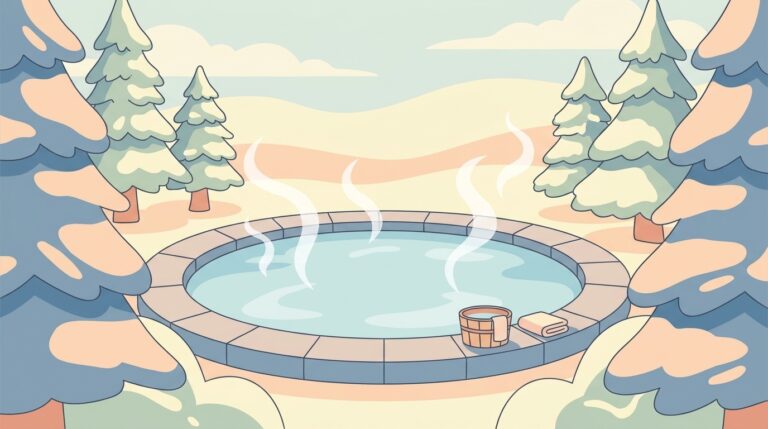
Picture this: It is late November in Gangwon Province. The crisp mountain air turns your breath into soft trails of mist, and your fingertips feel numb from cold winds. You step out into the crisp air wearing nothing but a light towel, bracing for impact—and then you slowly sink into a steaming outdoor mineral pool. The exact moment your shoulders submerge, a involuntary exhale escapes your lips: “아, 시원하다!” (Ah, so refreshing!). If you’ve ever felt the surreal bliss of your head staying frost-chilled while your body melts into scalding spring water, you have unlocked the essence of Korea’s 노천탕 (Nocheontang – Outdoor Hot Spring/Bath) culture.
Many high-intermediate Korean learners understand bathhouse basics like 목욕탕 (bathhouse) or 찜질방 (sauna), but they often struggle to express the nuanced aesthetic appreciation (운치) and sensory delight associated with changing seasons in an outdoor bath. Mastering these expressions moves you beyond simple transaction Korean into sophisticated, emotionally evocative conversations. Based on real learner feedback, this guide will equip you with authentic C1-level vocabulary and cultural insights to articulate this iconic winter relaxation ritual like a true local.
Phase 2: Deep Dive into 3 Core Expressions
1. 노천탕의 운치를 즐기다 (No-cheon-tang-ui un-chi-reul jeul-gi-da)
- Pronunciation: [No-cheon-tang-ui un-chi-reul jeul-gi-da] (Rhythmically sounds like: “No-chon-tang-wee oon-chee-reul jool-gee-dah”)
- Meaning: Literal: To enjoy the mood of an outdoor bath. / Nuance: To savor the poetic, refined atmospheric charm of soaking outdoors while surrounded by nature.
- K-Culture Moment: Seen in atmospheric healing K-dramas where characters retreat to a secluded forest resort during winter, gazing at falling snowflakes while immersed in thermal waters.
- Editor’s Insight: 운치 (Un-chi) is an exquisite C1 noun referring to elegant, artistic atmosphere. Paired with 노천탕, it elevates your comment from just “it’s nice outside” to “I am soaking in the poetic essence of nature.”
- Situation Spectrum: Casual ✅ | Semi-formal ✅ | Formal ✅
- 🤔 Think About It: Does your native culture have a specific word for the aesthetic mood created by weather and nature combined? How does 운치 reflect the traditional East Asian concept of harmony between human body and surrounding environment?
2. 몸이 사르르 녹다 (Mom-i sa-reu-reu nok-da)
- Pronunciation: [Mom-i sa-reu-reu nok-da] (Pronounced naturally with a smooth rolling r: “Mom-ee sah-roo-roo nok-dah”)
- Meaning: Literal: One’s body gently melts away. / Nuance: Expresses absolute physical relief and deep tension release as heat penetrates exhausted muscles.
- K-Culture Moment: Frequently heard in variety shows like Two Days & One Night when cast members enter warm water after finishing grueling outdoors winter missions.
- Editor’s Insight: 사르르 is an mimetic adverb describing something gently dissolving or melting (like snow or cotton candy). Using it with 몸이 녹다 creates vivid sensory imagery.
- Situation Spectrum: Casual ✅ | Semi-formal ✅ | Formal ⚠️
- 🤔 Think About It: Why do Koreans use physical dissolution verbs (“melting”) to describe feelings of profound relaxation?
3. 계절의 운치를 만끽하다 (Gye-jeol-ui un-chi-reul man-kkik-ha-da)
- Pronunciation: [Gye-jeol-ui un-chi-reul man-kkik-ha-da] (Sounds like “Gyeh-jol-wee oon-chee-reul mahn-kkik-hah-dah”)
- Meaning: Literal: To fully drink in / relish the seasonal mood. / Nuance: To indulge completely in the sensory pleasures unique to a specific season (autumn foliage, winter snow).
- K-Culture Moment: Used by travel documentary hosts describing luxury outdoor baths in Seoraksan during peak autumn foliage season.
- Editor’s Insight: 만끽하다 (Man-kkik-ha-da) comes from Sino-Korean characters meaning “to drink and eat to one’s fill.” It implies maximum emotional satisfaction.
- Situation Spectrum: Casual ⚠️ | Semi-formal ✅ | Formal ✅
- 🤔 Think About It: How does seasonal awareness shape daily conversation and lifestyle choices in Korean society?
Phase 3: Textbook Korean vs. Real Korean
Situation 1: Expressing satisfaction with the thermal bath atmosphere
- 📖 교과서 한국어: 노천탕 물이 따뜻하고 밖의 풍경이 정말 아름답습니다.
(The outdoor bath water is warm and the outside scenery is very beautiful.) - 🗣️ 진짜 한국어: 찬 바람 맞으면서 뜨끈한 물에 담그니까 노천탕 운치가 진짜 대박이네요.
(Soaking in hot water while feeling the cold breeze—the vibe of this outdoor bath is seriously amazing.) - 💡 왜 다를까? Textbook Korean treats description linearly. Real native Korean focuses on sensory contrast—comparing cold air (찬 바람) with scalding water (뜨끈한 물) using natural idioms.
Situation 2: Describing physical relief after soaking
- 📖 교과서 한국어: 따뜻한 물에 들어가서 피로가 모두 풀렸습니다.
(I went into warm water and all my fatigue was relieved.) - 🗣️ 진짜 한국어: 피로가 싹 가시고 몸이 사르르 녹아내리는 기분이에요.
(My fatigue completely washed away and I feel like my body is gently melting down.) - 💡 왜 다를까? Advanced speakers replace generic verbs like 풀리다 with expressive adverbs (싹, 사르르) to vividly convey emotional intensity.
Phase 4: K-Culture Deep Dive & Non-Verbal Etiquette
4-1. 눈치 (Nunchi) & Bathing Etiquette
When entering a Korean 노천탕, practice these essential social codes:
* Rinse Before Entering (입탕 전 씻기): Never jump straight into the outdoor bath! You must thoroughly wash at the shower station first. Entering unwashed breaches 눈치 etiquette.
* Towel Management (머리 위 양머리/타월): Keep your small hand towel out of the communal water. Balance it on top of your head or lay it on the pool ledge. Dipping personal towels into shared thermal water is considered unhygienic.
* Gaze Control (시선 처리): Maintain a natural, relaxed gaze towards the surrounding scenery or trees, avoiding direct eye contact with fellow bathers.
4-2. Cultural Code: ‘두한족열’ (Cold Head, Warm Feet)
Korea’s bath culture values the ancient oriental medicine concept of 두한족열 (頭寒足熱)—keeping your head cool and lower body warm. Nocheontang is considered the physical perfection of this principle. Soaking outdoors during snowfall maximizes circulation while offering poetic romanticism (낭만).
Phase 5: Practical Roleplay Scenario
Setting: A snowy mountain hot spring resort in Pyeongchang. You are conversing with local guest Min-jun (민준) at the edge of the outdoor bath.
- 민준: 🎭 (김이 모락모락 나는 물속에서 눈 덮인 소나무를 바라보며) 아, 역시 추운 날에는 노천탕이 최고네요. 피로가 싹 가시는 것 같아요.
- Learner (You): 🎭 (따뜻한 물에 어깨까지 담그며 Smile) 맞아요! 머리는 시원하고 몸은 따뜻하니까 몸이 사르르 녹는 기분이에요.
- 민준: 🎭 (고개를 끄덕이며 감탄한다) 표현을 정말 멋지게 하시네요! 눈 내리는 풍경 보면서 하니까 더 좋죠?
- Learner (You): 🎭 (눈송이가 떨어지는 하늘을 올려다보며) 네, 진짜 겨울 노천탕만의 운치를 제대로 만끽하고 있어요.
- 민준: 🎭 (미소를 지으며) 혹시 가평이나 설악산 쪽 노천탕도 가보셨어요? 계절마다 느낌이 완전히 다르거든요.
- Learner (You): 🎭 (호기심 어린 눈빛으로) 아직 안 가봤는데, 단풍 드는 가을에 가면 또 다른 운치가 있겠네요?
- 민준: 🎭 (손뼉을 치며) 정확합니다! 가을 단풍 노천탕도 정말 기막히죠. 다음 계절에 꼭 도전해보세요.
- Learner (You): 🎭 (기분 좋게 숨을 내쉬며) 네, 사계절 노천탕 투어를 꼭 해봐야겠어요!
🔀 Interactive Choice Point
Min-jun asks if you want to grab a freezing cold bottle of Sikhye (sweet rice drink) after bathing. How do you respond?
- Option A: “목욕 후에는 시원한 식혜 한 잔이 진리죠! 당장 마시러 가요.”
- Option B: “물 온도가 따뜻하니까 음료수는 필요 없습니다.”
- Option C: “식혜는 차가우니까 따뜻한 아메리카노를 마시는 게 낫지 않을까요?”
Feedback:
* Best Choice (Option A): 🌟 Perfect! Combining 노천탕 with post-bath chilled 식혜 shows flawless cultural immersion and high-level conversational flair.
* Bad Choice (Option B): 🚫 Too dry and dismissive. Misses an opportunity for cultural bonding and shared enjoyment.
* Risk Choice (Option C): ⚠️ Grammatically correct, but misses the legendary iconic pairing of Korean bath culture (목욕 후 식혜).
Phase 6: 10-Second Emotion Shadowing Drill
Practice these lines aloud using the indicated emotional cues and pause markers (/):
[😌 은은하고 깊은 감탄을 담아]
찬 바람 맞으면서 / 뜨끈한 물에 몸을 담그니까 / 진짜 몸이 사르르 녹네요.
(Chan ba-ram ma-jeo-myeon-seo / tteu-kkeun-han mu-re mom-eul dam-geu-ni-kka / jin-jja mom-i sa-reu-reu nong-ne-yo.)-
[😊 설레고 기분 좋게]
눈 내리는 풍경을 보면서 / 노천탕의 운치를 만끽할 수 있어서 / 너무 행복해요!
(Nun nae-ri-neun pung-gyeong-eul bo-myeon-seo / no-cheon-tang-ui un-chi-reul man-kkik-hal ssu it-seo-seo / neo-mu haeng-bok-hae-yo!)
Phase 7: K-Culture Mini Dictionary
- 노천탕 (No-cheon-tang): Outdoor bath/hot spring pool. Essential for winter relaxation in Korea.
- 노곤노곤하다 (No-gon-no-gon-ha-da): A state of pleasant, drowsy lethargy felt when your body relaxes in warm water or under sunlight.
- 시원하다 (Si-won-ha-da): Literally “cool,” but uniquely used by Koreans when soaking in hot soup or thermal water to describe deep internal relief.
- 온천욕 (On-cheon-yok): Thermal hot spring bathing, often enjoyed for skin benefit and wellness.
Phase 8: Traveler’s Survival Kit
Survival Expressions Top 3
- “노천탕 운영 시간은 어떻게 되나요?”
(No-cheon-tang un-yeong si-gan-eun eo-tteoh-ge doe-na-yo?)
→ What are the operating hours for the outdoor bath?
Pro Tip: Outdoor baths often close earlier than indoor baths due to outdoor weather. - “여기는 온천수인가요, 일반 수돗물인가요?”
(Yeo-gi-neun on-cheon-su-in-ga-yo, il-ban su-dot-mu-rin-ga-yo?)
→ Is this water natural hot spring water or tap water? - “수영복을 착용해야 하나요?”
(Su-yeong-bo-geul cha-kyong-hae-ya ha-na-yo?)
→ Do I need to wear a swimsuit?
Pro Tip: Traditional gender-segregated baths require full nudity; mixed family outdoor pools require swimsuits.
Editor’s Travel Note
When traveling across Korea for authentic hot springs, use the Naver Map Application Download to search for top-rated thermal baths using search terms like 근처 온천 노천탕. Always check user reviews for seasonal photo updates!
Phase 9: One Step Deeper (Reflective Essay)
In modern Korean society, where hyper-speed productivity (빨리빨리) dominates daily life, the Nocheontang serves as a counter-cultural sanctuary. By sitting exposed to nature’s harsh seasonal cold while immersed in warmth, Koreans practice physical mindfulness. The unique linguistic overlap where hot water feels 시원하다 (refreshing) reveals how Korean emotional logic links bodily relaxation with spiritual release.
💬 Your Turn: Have you ever experienced a hot thermal spring during a freezing winter? What emotion or Korean expression best describes that memory? Share your thoughts in the comments below!
Phase 10: FAQ & Common Mistakes
Q: Can I wear swimsuits in all Korean outdoor baths?
A: No! Traditional gender-segregated 사우나/목욕탕 outdoor sections strictly require full nudity. However, mixed-gender waterparks and modern resort outdoor pools (스파) require swimsuits. Always check venue rules upon arrival.
Q: Why do native Koreans say ‘시원하다’ (cool) when stepping into scalding water?
A: In Korean sensory culture, 시원하다 transcends physical coldness; it signifies the satisfaction of tension releasing from deep inside your organs and muscles.
Q: What is the difference between 운치 (Un-chi) and 분위기 (Bun-wi-gi)?
A: 분위기 is general atmosphere (e.g., party vibe, restaurant mood). 운치 specifically implies poetic, artistic, and elegant harmony with nature or traditional surroundings.
🚨 Common Mistakes Top 3
- Mistake: Calling an outdoor spring 외국 목욕탕 (Foreign bathhouse).
Correct Action: Use 노천탕 (Nocheontang). - Mistake: Using 따뜻해서 시원하다 confusedly.
Correct Action: Understand that 시원하다 expresses thermal relief, not logical contradiction. - Mistake: Bringing standard shoes or towels inside pool water.
Correct Action: Wear pool slippers outside, leave shoes in locker, keep towels completely out of water.
Phase 11: Action Mission & Engagement
- 🥉 Bronze Level: Read the Phase 6 Shadowing Drill aloud 3 times focusing on the emotional tone.
- 🥈 Silver Level: Leave a comment below using the C1 phrase: “[Season] 노천탕의 운치를 즐기고 싶어요!”
- 🥇 Gold Level: Post a travel photo on Instagram tagging
@DailyHangulwith a caption using 몸이 사르르 녹다!
🎮 K-Culture Mission: Watch a winter episode of a Korean travel vlog or variety show and spot the moment someone says “아, 시원하다!” when dipping into warm water.
Phase 12: Interactive Quiz Challenge
Test your C1 Korean fluency with these quick challenges:
- Situational Quiz: Which sentence best describes soaking in an outdoor bath on a snowy winter afternoon?
- A) 노천탕에서 공부를 하니까 아주 잘 됩니다.
- B) 눈 내리는 노천탕의 운치를 만끽하니 몸이 사르르 녹네요.
- C) 물이 차가워서 노천탕을 즐기기 어렵습니다.
- Fill-in-the-Blank: 찬 바람을 맞으며 온천욕을 하니 피로가 [ _____ ] 가시는 기분이다.
- Hints: (싹 / 덜 / 일찍)
- True / False: The word 운치 can be applied to noisy modern game arcades.
- (True / False)
🔍 Click here to reveal Answers & Explanations
- Answer: B – Captures both the poetic atmosphere (운치) and sensory relaxation (몸이 사르르 녹다).
- Answer: 싹 – The adverb 싹 emphasizes complete disappearance of fatigue (피로가 싹 가시다).
- Answer: False – 운치 refers specifically to elegant, poetic, and nature-attuned aesthetics, not loud synthetic environments.







