

Phase 1: 공감 (스토리 몰입형 오프닝)
안녕하세요! 매일한글 에디터입니다.
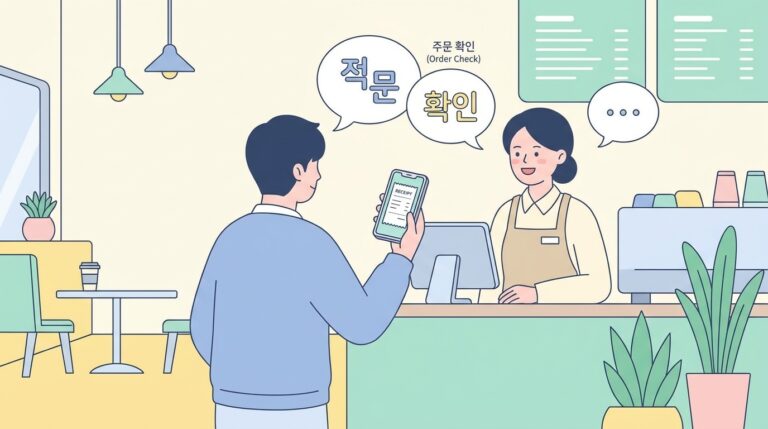
Have you ever felt that burning tightness in your chest when something completely unfair happens, but your mind goes blank because you don’t know how to explain yourself in Korean? Picture this: You are sitting at a trendy café in Seongsu-dong or dealing with a rental service in Seoul. Out of nowhere, someone claims you broke a rule or made a mistake you definitely didn’t commit. In K-Dramas, characters often tearfully shout, “억울해요!” (Eoguraeyo! – It’s so unfair!). But in real life, especially at a B2 Intermediate level, simply crying out your frustration isn’t enough to resolve the issue.
To effectively stand your ground in Korea without escalating conflict, you need to present facts, structure your logic, and state your case calmly and politely. Many of our Daily Hangul learners have shared that standing up for themselves logically in Korean was their biggest hurdle. Today, we’re going to transform that frustration into articulateness! Based on real student experiences and feedback from native language mentors, this guide will equip you with exact Korean expressions, intonation tips, and cultural nuances to handle unfair situations with absolute confidence.
Phase 2: 핵심 표현 3선 심층 분석
1. 오해가 있으신 것 같은데요
- Pronunciation: Ohaega isseusin geot gateundeyeo (Oh-hae-ga ee-sseu-sin geot gah-teun-de-yo)
- Meaning: Direct: “It seems there is a misunderstanding.” / Nuance: “Hold on, let’s pause and clear up what actually happened before jumping to conclusions.”
- K-Culture Moment: Frequently used in office K-Dramas when an employee politely stops an overbearing supervisor from making a hasty accusation.
- Editor’s Insight: The phrase uses the indirect ending
~인 것 같은데요(it seems like). In Korean culture, softening a contradiction preserves face for both parties while effectively pausing the accusation.- Situation Spectrum: Casual ⚠️ | Semi-formal ✅ | Formal ✅
- 🤔 Think About It: Why does Korean communication favor indirect phrasing like “It seems there is a misunderstanding” even when pointing out a clear error?
2. 제 설명을 먼저 들어보시겠어요?
- Pronunciation: Je seolmyeongeul meonjeo deureobosigess-eoyo? (Je seol-myeong-eul meon-jeo deu-reo-bo-si-get-seo-yo?)
- Meaning: Direct: “Would you listen to my explanation first?” / Nuance: “Please grant me the opportunity to state the facts before judging.”
- K-Culture Moment: A university student explaining an unfair attendance deduction to a professor during office hours.
- Editor’s Insight: Adding the honorific
~시~in들어보시겠어요?asserts your right to speak while maintaining high respect toward the listener.- Situation Spectrum: Casual 🚫 | Semi-formal ✅ | Formal ✅
- 🤔 Think About It: How does taking control of the conversation flow with a polite question change the power dynamic in a disagreement?
3. 차근차근 정리해서 말씀드릴게요
- Pronunciation: Chageunchageun jeongrihaeseo malsseumdeurileokkeyo (Cha-geun-cha-geun jeong-ri-hae-seo mal-sseum-deu-ril-kke-yo)
- Meaning: Direct: “I will explain step-by-step after organizing.” / Nuance: “Let me walk you through the logical timeline so we can resolve this objectively.”
- K-Culture Moment: Resolving a billing dispute or security deposit issue with a landlord or property manager.
- Editor’s Insight: The mimetic word
차근차근(step-by-step/calmly) signals emotional composure, which is highly respected in professional Korean settings.- Situation Spectrum: Casual ⚠️ | Semi-formal ✅ | Formal ✅
- 🤔 Think About It: How does demonstrating calm emotional control enhance your personal credibility (Inpum) in Korean culture?
Phase 3: 교과서 한국어 vs 진짜 한국어
Situation 1: Correcting a wrong bill or customer service error
- 📖 교과서 한국어: “이것은 제 잘못이 아닙니다.” (This is not my fault.)
- 🗣️ 진짜 한국어: “저기, 계산이 조금 다르게 된 것 같아요.” (Excuse me, I think the calculation came out a bit differently.)
- 💡 왜 다를까? Directly saying “This isn’t my fault” sounds defensive and aggressive. Pointing out the numerical discrepancy indirectly allows the staff to fix the error without feeling publicly embarrassed.
Situation 2: Explaining a delayed work deadline
- 📖 교과서 한국어: “저는 너무 억울합니다.” (I am so victimized / treated unfairly.)
- 🗣️ 진짜 한국어: “원래 일정대로 진행했는데 차질이 생긴 것 같습니다.” (We proceeded according to the original schedule, but it seems an unexpected delay occurred.)
- 💡 왜 다를까? Stating raw emotions (억울합니다) sounds like complaining. Citing process (원래 일정) and technical outcome (차질) highlights your logical competence.
Phase 4: K-Culture 딥다이브 & 비언어적 매너
4-1. 눈치 (Nunchi) & Gestures for Resolving Misunderstandings
- Eye Contact: Avoid glaring or staring down the other person. Keep a calm, steady gaze slightly centered on their face.
- Body Posture: Do NOT cross your arms or point your index finger—pointing is considered rude and hostile in Korea. Instead, hold your hands together politely in front of you or use an open palm when pointing to documents or receipts.
- Voice Tone: Keep your pitch lowered. Raising your voice in Korea often leads to being labeled as Jinsang (a difficult or rude customer/person), which turns public sympathy against you.
4-2. Culture Code: Respectful Assertion (예의 바른 주장)
In Korean society, standing up for your rights is respected only when wrapped in etiquette (Yeoeui). Using polite speech (Jondaetmal) while asserting hard facts creates a powerful contrast: it shows you are civilized, intelligent, and unyielding. When you combine honorifics with clear receipts or timestamps, Koreans will actively rush to help you fix the problem.
Phase 5: 실전 롤플레이 시나리오
Scenario Background: You rented a shared electric scooter in Seoul. The app charged you a 10,000 KRW penalty for parking outside the designated zone, but you definitely parked inside the green box. You visit the customer service counter.
NPC Character: Manager Min (Customer Service Lead, strict but reasonable).
- Turn 1 (Manager Min): “고객님, 반납 구역 외 주차로 추가 요금이 부과되었습니다.” (Customer, an extra fee was charged for parking outside the drop zone.)
🎭 (무덤덤한 목소리로 모니터를 바라보며) - Turn 2 (You): “저기, 오해가 있으신 것 같은데요.” (Excuse me, I think there might be a misunderstanding.)
🎭 (침착하고 정중한 어조로) - Turn 3 (Manager Min): “앱 시스템에 기재된 위치 정보 기준입니다.” (It is based on the location data recorded in the app system.)
🎭 (단호하게 단말기를 가리키며) - Turn 4 (You): “제 설명을 먼저 들어보시겠어요? 주차 구역 안에서 사진을 찍었습니다.” (Would you listen to my explanation first? I took a photo inside the parking zone.)
🎭 (스마트폰 화면을 준비하며) - Turn 5 (Manager Min): “아, 사진이 있으신가요? 어디 확인해 보겠습니다.” (Ah, do you have a photo? Let me take a look.)
🎭 (놀란 눈으로 화면을 살피며) - Turn 6 (You): “네, 시간과 장소가 찍힌 사진을 차근차근 보여드릴게요.” (Yes, I will show you step-by-step the photo with the timestamp and location.)
🎭 (차분하게 화면을 펼치며) - Turn 7 (Manager Min): “확인되었습니다. 시스템 위치 오류였네요. 추가 요금을 바로 취소해 드리겠습니다.” (Verified. It was a system location error. I will cancel the extra charge right away.)
🎭 (미안한 표정으로 고개를 숙이며) - Turn 8 (You): “빠르게 확인해 주셔서 감사합니다.” (Thank you for checking so quickly.)
🎭 (밝게 미소 지으며)
🔀 인터랙티브 분기점
When Manager Min says the system location is final (Turn 3), how do you respond?
* Choice A: “왜 제 말을 안 믿으세요? 너무 억울해요!” (Why don’t you believe me? It’s so unfair!)
* Choice B: “오해가 있는 것 같은데, 찍어둔 사진을 차근차근 보여드릴게요.” (I think there’s a misunderstanding; let me show you the photo step-by-step.)
* Choice C: “그냥 환불해 주세요. 안 그러면 신고할 거예요.” (Just refund me. Otherwise, I will report you.)
Feedback:
* Choice A (Risk): Expressing raw emotion without proof makes staff defensive and unlikely to re-check.
* Choice B (Best): Excellent B2 choice! Combines polite pause (오해) with clear proof (사진) and calm demeanor (차근차근).
* Choice C (Bad): Threatening immediate action escalates conflict unnecessarily and cuts off helpful dialogue.
Phase 6: 10초 감정 섀도잉 드릴
Practice reading these sentences out loud following the slash (/) pauses and emotion indicators!
[🥺 억울하지만 침착하게]저기… / 오해가 있으신 / 것 같은데요.
(Jeogi… / ohaega isseusin / geot gateundeyeo.)[😐 논리적이고 차분하게]제 설명을 / 먼저 / 들어보시겠어요?
(Je seolmyeongeul / meonjeo / deureobosigess-eoyo?)[🙂 확신에 찬 목소리로]차근차근 / 정리해서 / 말씀드릴게요.
(Chageunchageun / jeongrihaeseo / malsseumdeurileokkeyo.)
Phase 7: K-Culture 미니 사전 (핵심 키워드 4개)
- 억울하다 (Eoguralda) | Feeling wronged / treated unfairly | Used to describe the emotional state of being falsely blamed or facing an unjust outcome.
- 오해 (Ohae) | Misunderstanding | The ultimate buffer word in Korean dispute resolution to avoid direct blame.
- 시정하다 (Sijeonghada) | To correct / rectify | Formal vocabulary used when requesting customer support or official corrections.
- 입증하다 (Ipbjeonghada) | To prove / demonstrate | B2-level term used when bringing receipts, photos, or evidence into a discussion.
Phase 8: 여행자를 위한 생존 키트
Survival Expressions TOP 3
- 확인 한번만 다시 부탁드려요. (Hag-in hanbeonman dasi 부탁deuryeoyo.)
- Pro Tip: Use this at hotel front desks or train ticket windows when booking details look wrong.
- 영수증 여기에 있어요. (Yeongsujeung yeogiye isseoyo.)
- Pro Tip: Having your physical or digital receipt ready solves 90% of billing misunderstandings instantly.
- 제가 말씀드린 부분이 맞는지 봐주세요. (Jega malsseumdeurin bubuni majneunji bwajuseyo.)
- Pro Tip: Great for double-checking contract terms or custom orders.
Editor’s Travel Note
Always keep location services enabled when taking photos of rented bikes, cars, or accommodations in Korea. If an unfair fee pops up, open your photos and present the metadata! You can easily cross-reference location tags using the 네이버 지도 앱 다운로드 to verify official spot names in Korean.
Phase 9: “한 발 더 깊이” (생각 질문)
In Korean culture, maintaining social harmony (Pyeonghwa) and preserving face (Cheomyeon) are deeply valued even during disagreements. Asserting your point logically through polite honorifics allows the other person to correct their mistake without feeling publicly humiliated. This delicate balance of firmness and politeness is at the heart of mature adult communication in Korea.
💬 Your Turn: Have you ever experienced a misunderstanding while traveling or living in Korea? How did you resolve it? Let us know in the comments below!
Phase 10: FAQ & 오해 방지 (FAQ Schema)
Q: Can I just say ‘억울해요!’ directly when a store makes a mistake?
A: You can, but in customer service or professional settings, saying ‘억울해요!’ sounds overly emotional or childish. Using structured expressions like ‘오해가 있으신 것 같아요’ (It seems there’s a misunderstanding) is far more effective.
Q: How can I insist I am right without sounding disrespectful?
A: Maintain polite verb endings like ~습니다 or ~아/어 주시겠어요?, keep a low voice tone, and introduce objective evidence like receipts or app screenshots.
Q: What should I say if someone cuts me off while I’m trying to explain?
A: Politely say, “제 말씀 끝까지 들어보시겠어요?” (Would you mind listening to what I have to say until the end?).
🚨 흔한 실수 (Common Mistakes) TOP 3
- Mistake: Raising your voice pitch when flustered.
👉 Correct Action: Lower your voice pitch and slow down your speaking cadence. - Mistake: Accusatorially saying “당신 잘못이에요” (It’s your fault).
👉 Correct Action: Use passive structure: “계산에 착오가 있었던 것 같습니다” (It seems there was a calculation mistake). - Mistake: Dropping to informal speech (Banmal) in anger.
👉 Correct Action: Maintain polite speech (Jondaetmal) to preserve high personal leverage and authority.
Phase 11: 액션 미션 & 참여 유도
Action Mission 3단계
- 🥉 Bronze: Practice saying “오해가 있으신 것 같아요” 5 times in front of a mirror with a calm posture.
- 🥈 Silver: Record your voice doing the Phase 6 shadowing drill and listen back to check your intonation.
- 🥇 Gold: Use one logical explanation phrase during your next Korean lesson or customer service inquiry!
🎮 K-Culture Mission: Watch an episode of a legal or workplace K-Drama (like Extraordinary Attorney Woo) and catch a moment where a character uses the word 오해 or 확인 during an argument!
Phase 12: 인터랙티브 퀴즈 챌린지
1. Situation Judgment: A café staff member mistakenly hands you an Iced Americano instead of Hot, claiming you ordered Iced. What is the best B2 response?
See Answer & Explanation
Answer: “저기, 주문에 오해가 있으신 것 같아요. 따뜻한 음료로 확인 부탁드려요.” (Polite, soft, and clearly points out the misunderstanding.)
2. Fill in the Blank: “제 설명을 _____ 들어보시겠어요?” (Would you listen to my explanation first?)
See Answer & Explanation
Answer: 먼저 (meonjeo). Full sentence: 제 설명을 먼저 들어보시겠어요?
3. True or False: In Korea, shouting “억울해요!” loudly is the most professional way to get a quick refund at a department store.
See Answer & Explanation
Answer: False. Shouting lowers your social credibility. Calmly explaining step-by-step (차근차근) with proof gets much faster and better results.







