

안녕하세요! 매일한글 에디터입니다.
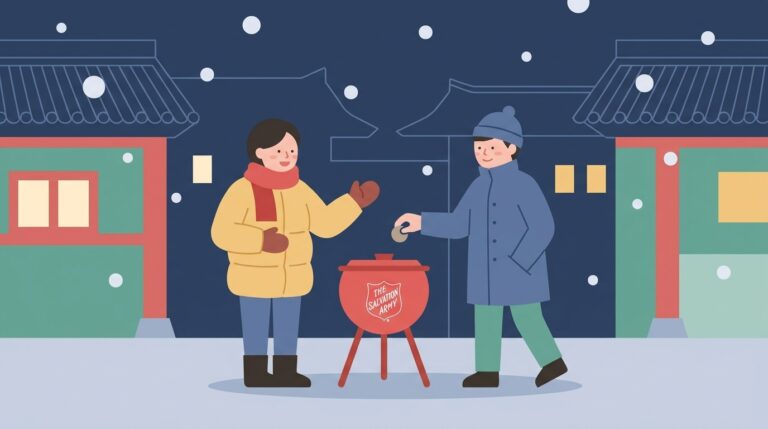
Picture this: It’s mid-December in Myeongdong, Seoul. Soft snow begins to fall, and crisp winter air is filled with the melodious chime of a bell. You turn the corner and spot volunteers in bright red vests standing beside a red kettle—the iconic Salvation Army (구세군 자선냄비). Nearby, people are smiling, dropping envelopes into donation boxes, and exchanging heart-warming winter greetings. You want to walk up, donate a small contribution, and share a warm greeting in natural Korean, but suddenly you freeze. “What if I sound too robotic? Should I use formal or honorific language? How do Koreans express the humble spirit of giving?”
If you’ve ever felt that hesitation, you are in the right place! In Korean culture, year-end fundraising (연말 불우이웃 돕기 모금) isn’t just about transferring money; it’s a deeply emotional practice rooted in Jeong (정) and collective care. Today, based on real feedback from intermediate learners and years of cultural coaching, I’ll guide you through natural, native-level B2 expressions that will make your interactions at volunteer sites and charity booths warm, polite, and authentic.
1. 따뜻한 마음을 나누다
- Pronunciation: [Tta-tteu-than ma-eu-meul na-nu-da] (Think of the sound Tta-tteuth like the soothing warmth of steam rising from hot tea!)
- Meaning: Direct translation: “To share a warm heart” | Real Nuance: Expressing genuine compassion and goodwill through giving back or volunteering.
- K-Culture Moment: In Korean winter dramas, you’ll often see main characters putting on knitted scarves to volunteer delivering coal briquettes (연탄 나눔) or making kimchi (김장 봉사) while saying this exact phrase to reporters or friends.
- Editor’s Insight: This is the ultimate benchmark phrase for year-end giving. Rather than saying “기부하다” (to donate), which can sound somewhat formal or transactional, “따뜻한 마음을 나누다” emphasizes emotional solidarity.
- Situation Spectrum: Casual ⚠️ | Semi-formal ✅ | Formal ✅
- 🤔 Think About It: How does your native language describe charity? Is the focus on the financial transaction, or on sharing emotional warmth like in Korean?
2. 작은 정성을 보태다
- Pronunciation: [Ja-geun jeong-seong-eul bo-tae-da]
- Meaning: Direct translation: “To add a small sincerity” | Real Nuance: Modestly offering a contribution or donation without bragging.
- K-Culture Moment: Used frequently when placing cash into a donation kettle or submitting a office charity envelope during company year-end drives.
- Editor’s Insight: Jeongseong (정성) implies devoted care and sincerity. By prefixing it with jageun (작은 – small), Koreans showcase humility. Even if you donate a large amount, calling it a “small token of sincerity” is peak Korean etiquette.
- Situation Spectrum: Casual ⚠️ | Semi-formal ✅ | Formal ✅
- 🤔 Think About It: Why do you think Korean etiquette places such a high value on self-effacing humility when giving gifts or making donations?
3. 좋은 일에 쓰여서 다행이에요
- Pronunciation: [JOH-eun i-re sseu-yeo-seo da-haeng-i-e-yo]
- Meaning: Direct translation: “It’s a relief that it is used for good work” | Real Nuance: “I’m so glad my contribution is going to a worthy cause!”
- K-Culture Moment: K-pop fandoms frequently order massive rice wreaths (쌀화환) under their favorite idol’s name for charity and express this sentiment on social media afterward.
- Editor’s Insight: Use this phrase after donating money, buying charity seals, or purchasing fundraising goods (like idol donation badges or charity calendars). It conveys deep personal satisfaction.
- Situation Spectrum: Casual ⚠️ | Semi-formal ✅ | Formal ✅
- 🤔 Think About It: How do fan communities or civic groups in your home country harness collective power for social causes?
📖 교과서 한국어 vs 🗣️ 진짜 한국어
Situation 1: Inquiring about how to participate in street fundraising
- 📖 교과서 한국어: “제가 돈을 기부하고 싶은데 어디로 해야 합니까?”
(Where should I donate if I wish to give money? – Too transactional and overly rigid) - 🗣️ 진짜 한국어: “연말 모금 참여하고 싶은데, 어떻게 하면 돼요?”
(I’d love to participate in the year-end drive, how can I join in?) - 💡 왜 다를까?: B2 intermediate speakers naturally soft-launch sentences using background connectors like
-고 싶은데combined with friendly non-formal polite endings (-면 돼요?).
Situation 2: Handing over a small contribution to volunteers
- 📖 교과서 한국어: “저는 불우한 이웃을 돕기 위해 물품을 제출합니다.”
(I submit goods to help unfortunate neighbors. – Sounds like a legal report!) - 🗣️ 진짜 한국어: “작은 정성이지만 좋은 곳에 쓰였으면 좋겠어요.”
(It’s just a small token, but I hope it goes to a good place.) - 💡 왜 다를까?: Native speakers avoid dry administrative words like “제출하다” (submit) or direct labels like “불우한 이웃” (unfortunate neighbors) in spoken interactions. Instead, they express heartfelt wishes (
-었으면 좋겠어요).
4-1. 눈치(Nunchi) & Non-Verbal Manners
- Two-Hand Rule (두 손 사용): When dropping cash or receiving a donation receipt/badge, always use both hands or support your right wrist with your left hand. It shows respect to the volunteer.
- Eye Contact & Bowing: A gentle 15 to 30-degree nod accompanied by a warm smile creates an instant connection. Avoid staring intensely into the eyes of volunteers while donating—keep your posture humble.
4-2. Culture Code: Korean Winter Charity Icons
- Salvation Army Red Kettle (구세군 자선냄비): The quintessential symbol of Korean December streets.
- Yeontan Nanum (연탄 나눔): Volunteer groups delivering black coal briquettes on foot to low-income households in hillside villages (달동네). It remains a symbol of physical sweat and community warmth.
- Fandom Charity (팬덤 기부): Fans donating tons of rice or ramen under their favorite K-pop artist’s name during concerts and press conferences.
Background & Characters
- Setting: A chilly, snow-dusted street corner in Myeongdong. Volunteer Min-soo is wearing a red Salvation Army vest, holding a brass bell.
- NPC: Min-soo (민수) – A warm, enthusiastic college volunteer.
Dialogue
- 민수: 🎭 (종을 딸랑이며 밝게 웃는다) 안녕하세요! 추운 겨울, 따뜻한 마음을 나눠주세요!
(Clanging the bell with a bright smile) Hello! Please share a warm heart this chilly winter! - You: 🎭 (두 손으로 주머니에서 지갑을 꺼내며) 안녕하세요! 저도 모금에 참여하고 싶은데요.
(Taking out your wallet with both hands) Hello! I’d love to participate in the fundraiser too. - 민수: 🎭 (감사해하며 냄비를 가리킨다) 와, 정말 감사합니다! 이쪽에 넣어주시면 돼요.
(Gratefully pointing to the kettle) Wow, thank you so much! You can pop it in right here. - You: 🎭 (지폐를 정성스레 접어 두 손으로 냄비에 넣는다) 작은 정성이지만 좋은 곳에 쓰였으면 좋겠어요.
(Folding the bill neatly and dropping it into the kettle using two hands) It’s just a small token, but I hope it goes to a good cause. - 민수: 🎭 (배지를 건네며) 따뜻한 정성 진심으로 감사드립니다! 여기 연말 기념 배지 받으세요.
(Handing over a souvenir badge) Thank you sincerely for your warm generosity! Please take this year-end commemorative badge. - You: 🎭 (두 손으로 배지를 받으며) 아, 감사합니다! 너무 예쁘네요.
(Receiving the badge with both hands) Ah, thank you! It’s so pretty. - 민수: 🎭 (손을 덮어 가며 인사를 건넨다) 오늘 밤부터 더 추워진대요. 감기 조심하세요!
(Waving cheerfully) They say it gets colder tonight. Take care not to catch a cold! - You: 🎭 (고개를 살짝 숙이며) 네, 봉사자분들도 추운데 수고 많으세요! 따뜻한 연말 보내세요.
(Nodding lightly) Thank you, stay warm! You volunteers are working hard in this cold. Have a warm year-end!
🔀 Interactive Branching Decision
After receiving the badge, Min-soo asks if you’d like a donation tax receipt (기부금 영수증). How do you respond?
- Option A: “괜찮습니다! 좋은 일에 잘 써주세요.” (It’s alright! Please just put it to good use.)
- 👉 Best Response! Demonstrates magnanimity and intermediate fluency. Perfectly fits the spirit of spontaneous street donation.
- Option B: “네, 영수증 주세요. 얼마예요?” (Yes, receipt please. How much is it?)
- ⚠️ Bad Choice. Asking “How much is it?” right after donating cash creates awkward confusion.
- Option C: “돈 줬으니까 영수증 당연히 줘야죠.” (Since I gave money, of course you must give me a receipt.)
- 🚫 Risk Choice! Extremely aggressive and rude tone in a charitable context.
Practice reading this aloud with high emotional immersion. Pauses are marked with /.
[😊 따뜻하고 진심 어린 목소리로]
“추운 날씨에 / 고생 많으시죠? / 작은 정성이지만 / 좋은 곳에 쓰였으면 / 좋겠어요.”
(Chun nal-ssi-e / go-saeng man-eu-si-jo? / Ja-geun jeong-seong-i-ji-man / joh-eun go-se sseu-yeot-eu-myeon / joh-get-eo-yo.)-
[🥺 감사함과 격려를 담아]
“덕분에 / 마음까지 / 따뜻해지네요. / 봉사자분들도 / 따뜻한 연말 / 보내세요!”
(Deok-bu-ne / ma-eum-kka-ji / tta-tteut-hae-ji-ne-yo. / Bong-sa-ja-bun-deol-do / tta-tteut-han yeon-mal / bo-nae-se-yo!)
- 구세군 자선냄비 (Gusegun Jaseon-naembi) | Salvation Army Red Kettle
- Usage: The premier symbol of street fundraising during December in major Korean city centers.
- 연탄 나눔 (Yeontan Nanum) | Coal Briquette Sharing/Volunteering
- Usage: A classic winter charity activity where people form human chains to deliver heating briquettes to elderly residents.
- 불우이웃 (Buru-i-ut) | Neighbors in Need / Underprivileged Neighbors
- Usage: Commonly used in official news and charity campaign titles (불우이웃 돕기).
- 기부금 영수증 (Gibugeum Yeongsujeung) | Donation Receipt
- Usage: Essential for tax deduction (연말정산) claims among foreign workers and expats residing in Korea.
Survival Phrases TOP 3
현금 말고 카드로도 기부할 수 있나요?(Can I donate by card instead of cash?)- Pro Tip: Yes! Modern Korean red kettles and subway fundraising booths now feature digital QR codes and contactless payment terminals.
봉사 활동 신청은 어디서 해요?(Where do I apply for volunteer activities?)- Pro Tip: Useful if you want to join coal briquette or soup kitchen volunteering.
추운데 수고 많으십니다!(Thank you for your hard work in this cold!)- Pro Tip: The absolute best ice-breaker to warm up any volunteer’s heart instantly.
Editor’s Travel Note
Want to find volunteer opportunities or street charity locations near you? Use 네이버 지도 앱 검색 (Naver Map App search) with search terms like “자선냄비” or
Frequently Asked Questions (FAQ)
Q: What does "따뜻한 마음을 나누다" mean in Korean and how do you pronounce it?
A: In Korean, "따뜻한 마음을 나누다" is pronounced [Tta-tteu-than ma-eu-meul na-nu-da] and means: Direct translation: "To share a warm heart" | Real Nuance: Expressing genuine compassion and goodwill through giving back or volunteering.
Q: What does "작은 정성을 보태다" mean in Korean and how do you pronounce it?
A: In Korean, "작은 정성을 보태다" is pronounced [Ja-geun jeong-seong-eul bo-tae-da] and means: Direct translation: "To add a small sincerity" | Real Nuance: Modestly offering a contribution or donation without bragging.
Q: What does "좋은 일에 쓰여서 다행이에요" mean in Korean and how do you pronounce it?
A: In Korean, "좋은 일에 쓰여서 다행이에요" is pronounced [JOH-eun i-re sseu-yeo-seo da-haeng-i-e-yo] and means: Direct translation: "It's a relief that it is used for good work" | Real Nuance: "I'm so glad my contribution is going to a worthy cause!"







