

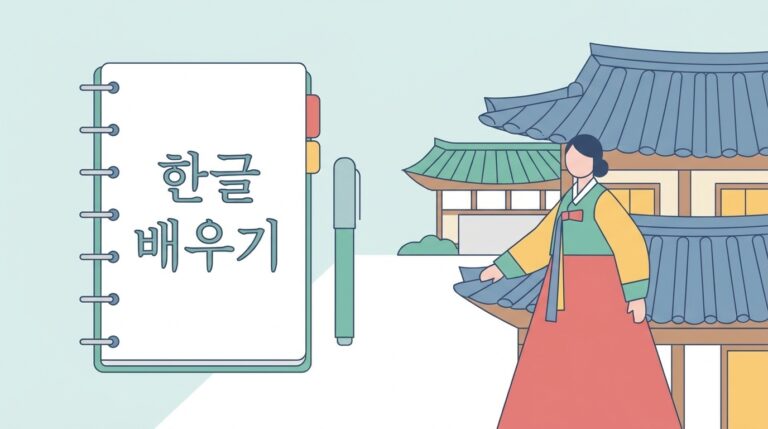
Rent Hanbok in Jeonju Hanok Village Like a Local: Essential Korean Phrases & Tips
Phase 1: Empathy (Story-Driven Opening)
안녕하세요! 매일한글 에디터입니다. (Hello! I am your Daily Hangul editor.) Imagine stepping into Jeonju Hanok Village—the warm scent of traditional grilled street food in the air, framed by hundreds of elegant, curved wooden rooflines (기와집). You see travelers gracefully strolling down cobblestone alleys in vibrant, modern, and traditional Korean Hanbok. You want to join in, step into a rental shop, and pick out the perfect outfit, but suddenly a wave of anxiety hits: What if I don’t know how to ask for the right size? What if I pick something meant for royalty or weddings by mistake? How do I ask them to style my hair?
If you have ever felt hesitant or overwhelmed when walking into a busy rental shop in Korea, you are certainly not alone! Many of our learners share that renting traditional clothing feels intimidating due to rapid conversational Korean and unique garment vocabulary. But don’t worry! In this guide, tailored specifically for B1 intermediate learners, we will walk you through authentic expressions, cultural nuances, and non-verbal manners so you can rent your dream Hanbok with complete confidence in Jeonju.
Phase 2: Core Expressions Deep Dive
1. 이 한복 추천해 주시겠어요? (I hanbok chucheon-hae jusigesseoyo?)
- Pronunciation: ee han-bok choo-chuhn-hae joo-see-geh-ssuh-yo? (Sounds like ‘chu’ as in ‘choose’ + ‘cheon’ as in ‘chunk’)
- Meaning: “Could you recommend a Hanbok for me?” (Direct: Could you recommend this Hanbok?)
- K-Culture Moment: Commonly heard in travel vlog episodes or historical romance dramas where characters visit traditional markets or custom tailors.
- Editor’s Insight: Staff members in Jeonju know which color palettes look best against the wooden hanok backdrop. Using the polite suffix
-주시겠어요?(-jusigesseoyo) shows great respect while inviting their expert opinion.- Situation Spectrum: Casual 🚫 / Semi-formal ✅ / Formal ✅
- 🤔 Think About It: In Korean service culture, asking for recommendations shows trust in the artisan’s expertise rather than indecisive behavior.
2. 속치마도 같이 들어있나요? (Sokchimado gachi deureoinnayo?)
- Pronunciation: sok-chee-mah-doh gah-chee deu-ruh-een-nah-yo? (‘gachi’ sounds like ‘gah-chee’)
- Meaning: “Is the underskirt (petticoat) included too?”
- K-Culture Moment: Essential when selecting rental packages, as the underskirt gives the traditional skirt (chima) its famous bell-shaped volume seen in photos.
- Editor’s Insight: Without a sokchima, the Hanbok skirt hangs flat. Asking this clarifies whether the volume layer comes with the standard rental fee or costs extra.
- Situation Spectrum: Casual ⚠️ / Semi-formal ✅ / Formal ✅
- 🤔 Think About It: Korean clothing relies heavily on layering to achieve smooth, silhouette-based aesthetics.
3. 머리 정리는 어떻게 해야 하나요? (Meori jeongnineun eotteokke haeya hanayo?)
- Pronunciation: muh-ree juhng-nee-neun uh-ttuh-keh hae-yah hah-nah-yo?
- Meaning: “How should I get my hair styled/arranged?”
- K-Culture Moment: Rental shops in Jeonju offer traditional hair braiding (daenggi) with floral pins (baessi daenggi).
- Editor’s Insight: Jeongni (정리) literally means ‘organization/arrangement.’ In this context, it naturally asks what hair services are available with the rental.
- Situation Spectrum: Casual 🚫 / Semi-formal ✅ / Formal ✅
- 🤔 Think About It: In Korean heritage, hair was considered a precious connection to ancestors, making hairstyling an integral part of wearing Hanbok.
Phase 3: Textbook Korean vs. Real Native Korean
Situation 1: Asking to try on or inspect a garment
- 📖 Textbook Korean: “이 옷을 입어보고 싶습니다.” (I oseul ibeobogo sipseumnida. – I wish to try this clothing on.)
- 🗣️ Real Native Korean: “이 한복 한번 대봐도 돼요?” (I hanbok hanbeon daebwado dwaeyo? – Can I hold this Hanbok up against myself to check?)
- 💡 Why the difference?: Because authentic Hanbok can be delicate or stiff, shopkeepers usually prefer you hold the garment against your torso (대보다) rather than slipping into it immediately.
Situation 2: Inquiring about hair accessories
- 📖 Textbook Korean: “머리 장식이 포함되어 있습니까?” (Meori jangsigi pohamdeo-eo isseumnida? – Are hair decorations included?)
- 🗣️ Real Native Korean: “머리 스타일링은 혹시 포함인가요?” (Meori seutailing-eun hoksi pohamingayo? – Is hair styling by any chance included?)
- 💡 Why the difference?: Modern Koreans use the loanword styling (스타일링) and soften inquiries with hoksi (혹시 – by any chance) to sound polite and soft.
Phase 4: K-Culture Deep Dive & Non-Verbal Manners
4-1. Nunchi (눈치) & Gestures
When walking through Jeonju Hanok Village in Hanbok, the skirt can be long. Instead of letting it drag, gently gather both sides of the chima skirt with two hands and lift it slightly above ankle height. When entering a Hanbok rental shop, offer a soft 15-degree head bow and say “안녕하세요!” (Annyeonghaseyo!). Showing appreciation for the delicate fabric makes staff far more eager to give you premium styling accessories!
4-2. Culture Code: Jeonju’s Slow City Vibe
Jeonju is recognized as a UNESCO City of Gastronomy and a premier cultural slow city. Unlike fast-paced Seoul rentals near Gyeongbokgung, Jeonju Hanok Village emphasizes historical immersion. Hanbok here ranges from traditional royal attire (Gonryongpo) to modern fusion (Gaehwa-gi early 1900s style). Matching your tone to the relaxed, respectful atmosphere enhances your overall experience.
Phase 5: Real-Life Roleplay Scenario
Setting: Inside a popular Hanbok rental shop near 경기전 (Gyeonggijeon Shrine) in Jeonju.
Characters: Staff Member (직원), Learner (Alex).
- 직원: 안녕하세요! 어떤 스타일 한복 찾으세요?
(Annyeonghaseyo! Eotdeon seutail hanbok chajeuseyo?)
“Hello! What style of Hanbok are you looking for?”
🎭 Action: Welcoming Alex with a warm smile near the display racks. -
Alex: 안녕하세요! 전주 한옥마을 배경에 잘 어울리는 걸로 추천해 주시겠어요?
(Annyeonghaseyo! Jeonju hanok-maeul baegyeong-e jal eoul-lineun geollo chucheon-hae jusigesseoyo?)
“Hello! Could you recommend one that looks good against the Jeonju Hanok Village backdrop?”
🎭 Action: Glancing politely around the colorful displays. -
직원: 요즘은 파스텔톤 개량 한복이나 화려한 전통 한복이 사진에 정말 잘 나와요.
(Yojeumeun paseutelton gaeryang hanbok-ina hwaryeohan jeontong hanbok-i sajin-e jeongmal jal nawa-yo.)
“These days, pastel modern Hanbok or bright traditional Hanbok come out great in photos.”
🎭 Action: Pointing toward a row of elegant silk skirts. -
Alex: 이 은은한 하늘색 치마가 마음에 드네요. 혹시 속치마도 같이 들어있나요?
(I euneunhan haneulsaek chimaga ma-eume deuneyo. Hoksi sokchimado gachi deureoinnayo?)
“I like this subtle sky-blue skirt. Is the underskirt included by any chance?”
🎭 Action: Touching the edge of the skirt material gently. -
직원: 네, 링 속치마 기본 포함이에요! 옷 입으시는 거 도와드릴게요.
(Ne, ring sokchima gibon poham-ieyo! Ot ibuseineun geo dowadeureilgeyo.)
“Yes, the ring underskirt is included by default! I’ll help you put it on.”
🎭 Action: Guiding Alex toward the fitting booth. -
Alex: 감사합니다! 그리고 머리 정리는 어떻게 해야 하나요?
(Gamsahamnida! Geurigo meori jeongnineun eotteokke haeya hanayo?)
“Thank you! And how should I handle my hair styling?”
🎭 Action: Pointing toward the dressing table with floral ribbons. -
직원: 옷 다 입으시고 이쪽에 앉으시면 댕기머리나 반묶음으로 예쁘게 해드릴게요.
(Ot da ibuseigo itjjoge anjeusimyeon daenggimeorina banmukkeumeuro yeppeuge haedeureilgeyo.)
“Once you’re dressed, sit over here and we’ll braid your hair with ribbons or do a lovely half-updo.”
🎭 Action: Motioning cheerfully to the vanity seat. -
Alex: 완벽하네요! 정말 기대돼요.
(Wanbyeokhaneyo! Jeongmal gidaedwaeyo.)
“Perfect! I’m really looking forward to it.”
🎭 Action: Nodding with excitement.
🔀 Interactive Branching Point
The staff member asks if you would like to rent a matching traditional handbag or hat. How do you respond?
- Option A: “아니요, 됐어요.” (Aniyo, dwaesseoyo. – No, it’s fine.)
- Feedback (Risk): Blunt and slightly cold in service settings. Staff might feel disrespected.
- Option B: “가방도 같이 하면 얼마 추가되나요?” (Gabangdo gachi hamyeon eolma chugadrena-yo? – How much extra is it if I add a bag too?)
- Feedback (Best): Natural, polite, and practical. Shows curiosity while handling budget smoothly.
- Option C: “그거 진짜 필요 없는데요.” (Geugeo jinzza piryo eomneundeyo. – I really don’t need that.)
- Feedback (Bad): Unnecessarily defensive. Avoid using 진짜 필요 없다 directly to shop staff.
Phase 6: 10-Second Emotion Shadowing Drill
Practice reading these out loud with natural pauses (/) and emotional tone!
[😊 Enthusiastic & Polite]
전주 한옥마을 배경에 / 잘 어울리는 걸로 / 추천해 주시겠어요?
(Jeonju hanok-maeul baegyeong-e / jal eoul-lineun geollo / chucheon-hae jusigesseoyo?)-
[🤔 Curious & Soft]
이 하늘색 치마가 마음에 드는데 / 혹시 속치마도 / 같이 들어있나요?
(I haneulsaek chimaga ma-eume deuneunde / hoksi sokchimado / gachi deureoinnayo?) -
[🥰 Excited & Grateful]
머리까지 예쁘게 해주셔서 / 정말 감사합니다! / 사진 잘 찍고 올게요!
(Meorigaji yeppeuge haejusyeoseo / jeongmal gamsahamnida! / Sajin jal jjiggo olgeyo!)
Phase 7: K-Culture Mini Dictionary
- 속치마 (Sokchima) | Petticoat / Underskirt
- Used under the main Hanbok skirt to give shape, volume, and freedom of movement.
- 댕기 (Daenggi) | Traditional Hair Ribbon
- A long decorative ribbon tied into braided hair, commonly worn during cultural activities.
- 배씨댕기 (Baessi Daenggi) | Head ornament / Hairpin
- A small decorative headpiece placed on top of the head when hair is center-parted.
- 개량한복 (Gaeryang Hanbok) | Modernized / Fusion Hanbok
- Contemporary Hanbok tailored for comfort, featuring elastic waistbands and shorter skirts.
Phase 8: Traveler’s Survival Kit
Survival Phrases TOP 3
- 몇 시간 기준인가요? (Myeot sigan gijuningayo?)
- Pro Tip: Ask this to clarify if the rental fee is for 2 hours, 4 hours, or a full day.
- 사물함에 짐 맡길 수 있나요? (Samulhame jim matgil su innayo?)
- Pro Tip: Rental stores almost always provide free lockers (사물함) for your street clothes and luggage.
- 신발도 대여되나요? (Sinbaldo daeyeodrena-yo?)
- Pro Tip: Traditional shoes (kkotsin) complete the outfit, but sneakers under long skirts are often fine for walking long distances!
Editor’s Travel Note
Before heading to Jeonju, check transport schedules via the Naver Map app download. From Seoul Station, take the KTX train directly to Jeonju Station (approx. 1 hour 40 minutes). Local buses run frequently from Jeonju Station to Jeonju Hanok Village (전주한옥마을).
Phase 9: One Step Deeper (Reflection)
In modern Korea, Hanbok is no longer strictly reserved for ancient history or ancestral holidays. Young generations and international visitors alike have turned wearing Hanbok into a joyful daily ritual of self-expression and photo-carving memories. By renting Hanbok in Jeonju, you participate in preserving living heritage—bridging past architectural elegance with modern cultural appreciation.
💬 Your Turn: Which style of Hanbok would you pick for your trip to Jeonju—traditional royal clothing or soft modern pastel fusion? Tell us in the comments below!
Phase 10: FAQ & Common Mistakes
Q: Can I wear my own clothes underneath the Hanbok?
A: Yes! Thin clothing like heattech leggings or t-shirts work great in colder months. In summer, light cotton shorts are recommended under the sokchima.
Q: Do I need to make a reservation in advance for rental shops in Jeonju?
A: Walk-ins are widely accepted on weekdays, but booking online in advance for weekend trips helps secure premium accessories and hair styling time slots without waiting.
Q: Is Hanbok rental uncomfortable for tall or plus-size visitors?
A: Not at all! Most modern rental shops carry various waist-adjustable sizes ranging from XS to 3XL.
🚨 Common Mistakes Alert
- Mistake: Stepping onto the outside street fabric with bare feet during fitting.
- Correct Action: Keep your socks on during the fitting session inside the store.
- Mistake: Pulling the waist band tightly by yourself.
- Correct Action: Let the staff tie the chest and waist ties (goreum) so the knot rests in the correct traditional position.
- Mistake: Saying “이거 주세요” (Igeo juseyo) while snatching delicate silk garments off racks.
- Correct Action: Gently point and ask “이거 입어봐도 될까요?” (Igeo ibeobwado doelkkayo?).
Phase 11: Action Mission
- 🥉 Bronze: Practice saying “추천해 주시겠어요?” out loud 3 times in front of a mirror.
- 🥈 Silver: Leave a comment below using the expression “속치마도 같이 들어있나요?”
- 🥇 Gold: On your next trip to Korea, use at least two of today’s phrases inside a Hanbok rental shop in Jeonju or Seoul!
🎮 K-Culture Mission: Watch a scene from a K-drama set in a Hanok village (e.g., Love in the Moonlight or Twenty-Five Twenty-One filmed in Jeonju) and see if you can spot traditional accessories like Daenggi!
Phase 12: Interactive Quiz Challenge
1. Multiple Choice: How do you politely ask for a recommended Hanbok fitting for photo spots?
* A) 이거 주세요. (Igeo juseyo.)
* B) 추천해 주시겠어요? (Chucheon-hae jusigesseoyo?)
* C) 진짜 필요 없어요. (Jinzza piryo eopseoyo.)
2. Fill in the Blank: “Is the underskirt included?” -> “________도 같이 들어있나요?”
* (Hint: Starts with 속…)
3. True or False: You must take off your shoes before walking on stone paths in Jeonju Hanok Village when wearing Hanbok.
* (True / False)
Click to view Quiz Answers & Explanations
- Answer: B – 추천해 주시겠어요? is the polite B1 phrase for asking recommendations.
- Answer: 속치마 (Sokchima) – The essential underskirt layer.
- Answer: False – You wear comfortable shoes or rented traditional shoes while exploring outside!







