

Navigating Senior and Junior Titles in Korean Social Life
Phase 1: Empathy
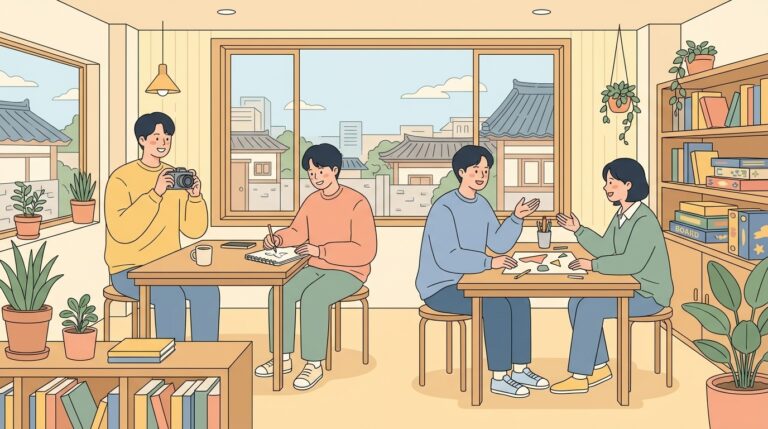
안녕하세요! I’m your Daily Hangul editor. Imagine this: You join a local tennis club or a hobby group in Seoul. You meet someone who is older or joined the club before you. You want to be friendly, but calling them by their first name feels a bit too informal, while calling them ‘Sonsaengnim’ sounds like they are your school principal! This is the exact moment foreign learners panic in Korean social settings. Social hierarchy and senior-junior relationships (Sunbae-Hoebae) extend far beyond university campuses and company boardrooms into everyday social clubs, volunteering groups, and community meetups. Mastering these address terms will immediately make you sound more natural, respectful, and culturally savvy, transforming awkward silences into warm social connections.
Phase 2: Deep Dive into 3 Key Expressions
1. 선배님 (Sunbaenim)
- Pronunciation: Seon-bae-nim (sounds like ‘sun-bae-neem’)
- Meaning: ‘Senior member’ (Literal: Earlier born/joined) vs. Real Nuance: A respectful, polite title for someone who joined an organization, club, or field before you.
- K-Culture Moment: In K-dramas, junior actors or club members address older colleagues as ‘Sunbaenim’ to show professional respect and affection.
- Editor’s Insight: Adding ‘-nim’ creates a respectful boundary. Once you become closer, you might drop ‘-nim’ to just ‘Sunbae’, but start with ‘Sunbaenim’ first!
- Situation Spectrum: Casual ⚠️ / Semi-formal ✅ / Formal ✅
- 🤔 Think About It: Does your native language have a single word that combines respect for experience without implying high age or official authority?
2. 형 / 누나 / 오빠 / 언니 (Hyeong / Nuna / Oppa / Eonni)
- Pronunciation: Hyeong (like ‘young’ with an H), Nuna (‘noo-nah’), Oppa (‘oh-pah’), Eonni (‘un-nee’)
- Meaning: Big brother/sister vs. Real Nuance: Friendly titles used for older social acquaintances once a comfortable bond is established.
- K-Culture Moment: At a social gathering, an older club member says, “편하게 언니라고 불러!” (Feel free to call me Eonni!).
- Editor’s Insight: Never use these terms right away with someone you just met! Wait until the older person explicitly invites you to use sibling terms.
- Situation Spectrum: Casual ✅ / Semi-formal ⚠️ / Formal 🚫
- 🤔 Think About It: How does calling a social acquaintance ‘brother’ or ‘sister’ change the psychological distance between people?
3. ~씨 (~Ssi)
- Pronunciation: Ssi (sounds like ‘see’ with a sharp ‘S’)
- Meaning: Mr./Ms. vs. Real Nuance: Polite title attached to full names or first names among peers or towards lower status/juniors.
- K-Culture Moment: Introducing team members in a casual hobby project: “이쪽은 민수 씨예요.” (This is Minsu-ssi).
- Editor’s Insight: Be careful! Using ~씨 with someone significantly older or higher in status can sound condescending. Use it mainly with peers or younger acquaintances.
- Situation Spectrum: Casual ⚠️ / Semi-formal ✅ / Formal ✅
Phase 3: Textbook Korean vs. Real Korean
Situation 1: Asking an older club member for help
- 📖 Textbook Korean: 김철수 씨, 이것을 도와주실 수 있습니까? (Kim Chulsoo-ssi, can you help me with this?)
- 🗣️ Real Korean: 철수 선배님, 이것 좀 도와주실 수 있으세요? (Chulsoo Sunbaenim, could you help me with this for a moment?)
- 💡 Why it’s different? In real life, replacing ‘~씨’ with ‘선배님’ creates warmth and respect, while ‘좀’ softens the request naturally.
Situation 2: Suggesting grab a coffee after a meeting
- 📖 Textbook Korean: 우리 함께 커피를 마시러 갑시다. (Let us go drink coffee together.)
- 🗣️ Real Korean: 선배님, 커피 한잔하러 가실래요? (Sunbaenim, would you like to grab a cup of coffee?)
- 💡 Why it’s different? Koreans rarely use ‘우리 함께 ~갑시다’ in personal suggestions; honorific ending ‘-실래요?’ sounds far more polite and inviting.
Phase 4: K-Culture Deep Dive & Non-verbal Manners
4-1. Nunchi & Gestures
When handing something to a senior (선배님), always use two hands or support your right wrist with your left hand. Maintain soft eye contact, bow your head slightly (around 15-30 degrees), and avoid overly dramatic hand gestures.
4-2. Culture Code Analysis
In Korean culture, age and experience build social order, but this structure also creates strong mentor-mentee bonds (Jeong). When a Sunbae buys coffee or dinner for a Hoebae, it is an expression of care. As a Hoebae, offering a genuine ‘잘 먹었습니다!’ (Thank you for the food!) reinforces mutual goodwill.
Phase 5: Practical Roleplay Scenario
Setting: A community photography club meeting in Hongdae. You (Jimin) meet an older member, Sujin.
- Sujin: 안녕하세요! 사진 동아리에 새로 오신 분 맞죠? / Annyeonghaseyo! Sajin dongarie saero osin bun matjyo? / (Hello! You’re the new member of the photo club, right?) / 🎭 Smiles warmly while holding a camera
- Jimin: 네, 안녕하세요! 저는 지민이라고 합니다. / Ne, annyeonghaseyo! Jeoneun Jimin-irago hamnida. / (Yes, hello! I am Jimin.) / 🎭 Bows slightly with hands folded
- Sujin: 반가워요! 편하게 수진 선배라고 부르세요. / Bangawoyo! Pyeonhage Sujin seonbaerago bureuseyo. / (Nice to meet you! Feel free to call me Sujin Sunbae.) / 🎭 Handing over a club pamphlet
- Jimin: 아, 수진 선배님! 잘 부탁드립니다. / A, Sujin seonbaenim! Jal 부탁deurimnida. / (Ah, Sujin Sunbaenim! Please treat me well.) / 🎭 Receives pamphlet with both hands
- Sujin: 이번 주 출사 모임에 나올 수 있어요? / Ibeon ju chulsa moime naol su issoyo? / (Can you make it to this week’s photo outing?) / 🎭 Looking interested
- Jimin: 네! 꼭 참석하고 싶어요. 많이 배워야겠어요. / Ne! Kkok chamseokhago sip-eoyo. Mani baewoyagesseoyo. / (Yes! I definitely want to attend. I have a lot to learn.) / 🎭 Nodding enthusiastically
- Sujin: 기대되네요! 궁금한 건 언제든 물어봐요. / Gidaedoeneyo! Gunggeumhan geon eonjedeun mureobwayo. / (I’m looking forward to it! Ask me anytime you have questions.) / 🎭 Thumbs up
- Jimin: 감사합니다, 선배님! 맛있는 커피 사드릴게요! / Gamsahamnida, seonbaenim! Masinneun keopi sadeurilgeyo! / (Thank you, Sunbaenim! I’ll buy you good coffee!) / 🎭 Smiling brightly
🔀 Interactive Choice Point:
How do you respond when Sujin says, “편하게 언니라고 불러!” (Feel free to call me Eonni!)?
– Option A: “네, 언니! 잘 부탁드려요!” (Best: Accepts friendly title naturally with gratitude)
– Option B: “아니요, 저는 그냥 수진 씨라고 부를게요.” (Bad: Too distant and refects her friendliness awkwardly)
– Option C: “야, 수진아! 반갑다!” (Risk: Dropping honorifics completely without permission is extremely rude)
Phase 6: 10-Second Emotion Shadowing Drill
- [😊 Friendly & Polite]
선배님! / 오늘 모임 / 정말 즐거웠습니다! / (Seonbaenim! / Oneul moim / jeongmal jeulgeowosseumnida!) -
[🥺 Humble & Eager to learn]
제가 아직 부족해서 / 선배님께 / 많이 배우고 싶어요. / (Jega ajik bujokhaeseo / seonbaenimkke / mani baewogo sip-eoyo.) -
[🎉 Enthusiastic & Warm]
다음 모임 때 / 제가 커피 사드릴게요! / (Daeum moim ttae / jega keopi sadeurilgeyo!)
Phase 7: K-Culture Mini Dictionary
- 선배 (Seonbae) | Senior | A person with more experience in a specific group or field.
- 후배 (Hoebae) | Junior | A person who joined a group or field later than others.
- 동아리 (Dongari) | Social Club / Hobby Interest Group | Communities where Koreans make friends based on shared hobbies.
- 번개모임 (Beongae-moim) | Impromptu Meetup | Flash gatherings organized quickly among social members.
Phase 8: Survival Kit for Travelers
Top 3 Expressions:
1. 선배님, 저 이것 좀 가르쳐 주실 수 있으세요? (Sunbaenim, could you teach me this?)
2. 오늘 정말 많이 배웠습니다! (I learned so much today!)
3. 제가 다음에 맛있는 밥 사드릴게요! (I’ll buy you a nice meal next time!)
Editor’s Travel Note:
When visiting social gatherings or workshops in Korea, check out the Naver Map App Download Guide to easily locate meeting venues and cafes.
Phase 9: One Step Deeper
In Korean society, hierarchical language is not meant to suppress individuality, but rather to foster group harmony and clear social roles. Calling someone ‘Sunbae’ acknowledges their effort and invites them to take care of you. Once you embrace this cultural nuance, you will discover warmth and strong social bonding behind these structured address terms.
💬 Your Turn: Have you ever felt confused about what to call someone in Korea? Share your story in the comments below!
Phase 10: FAQ & Common Mistakes
Q: Can I call someone ‘Sunbae’ if they are younger than me?
A: Yes! If they joined the organization, club, or company before you, they are still your Sunbae regardless of physical age.
Q: Is it okay to use ‘Oppa’ or ‘Unnie’ right away if we are close in age?
A: No, it’s safer to start with ‘Sunbaenim’ or name + ‘-ssi’ until the older person explicitly invites you to use sibling terms.
Q: How do I address a junior (Hoebae)?
A: You can call them by [Name]-ssi or [Name]-ah/ya if you have established a comfortable relationship.
🚨 Common Mistakes:
1. Calling a social senior ‘Sonsaengnim’ -> Correct Action: Use ‘Sunbaenim’ instead.
2. Using first names without any title -> Correct Action: Add ‘-ssi’ or ‘Sunbaenim’.
3. Calling someone ‘Oppa/Eonni’ on the first day -> Correct Action: Wait for their invitation.
Phase 11: Action Mission & Engagement
- Bronze Mission: Practice saying “선배님, 안녕하세요!” out loud 3 times.
- Silver Mission: Leave a comment using ‘선배님’ in a sentence on our Instagram page.
- Gold Mission: Use ‘Sunbaenim’ naturally in your next language exchange or meetup session!
🎮 K-Culture Mission: Watch a Korean drama episode and spot three times a character addresses another person as ‘Sunbae’!
Phase 12: Interactive Quiz Challenge
- What is the most appropriate title for someone who joined your hobby club before you?
(A) Teacher (B) Sunbaenim (C) Chingu -
True or False: You should immediately call older social members ‘Oppa’ or ‘Unnie’ upon meeting them.
🔍 Click here for Quiz Answers & Explanations
1. Answer: (B) Sunbaenim. It shows respect for their experience in the group.
2. Answer: False. You should wait until they suggest using closer sibling terms!







