

Phase 1: Empathy
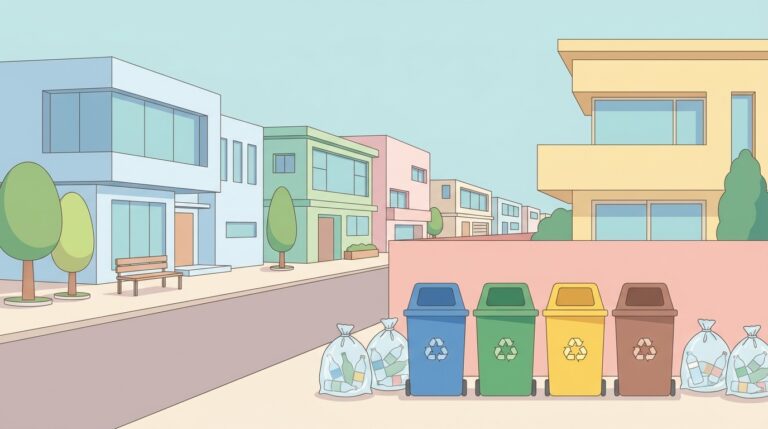
안녕하세요! I’m your Daily Hangul editor. Have you ever stood in front of a Korean residential trash area on a Tuesday evening, holding a clear plastic bottle and a folded cardboard box, completely frozen in confusion? If so, you are definitely not alone! Korea has one of the world’s most advanced waste separation systems, but for expatriates and language learners, figuring out 분리배출 요일 (designated recycling days) can feel like solving a complex puzzle.
In many Korean neighborhoods—especially in villas or residential areas—recyclable items like glass, plastic, paper, and vinyl cannot be thrown out whenever you want. Disposal is strictly restricted to specific days of the week. Placing your recyclables on the wrong day might result in warnings or even fines from local municipal authorities. By mastering the core B2-level phrases and cultural insights in this guide, you will be able to navigate apartment notices, ask your neighbors with confidence, and fit seamlessly into Korean community life!
Phase 2: Core Expressions Deep Dive
1. 분리배출 요일이 언제예요?
- Pronunciation: [Bun-ri-bae-chul yo-il-i eon-je-yeo-yo?] (Sounds like: Boon-ree-bae-chool yo-eel-ee eon-jeh-yeo-yo)
- Meaning: “When is the designated recycling day?”
- K-Culture Moment: You often see this situation in K-dramas where a protagonist moves into a new residential neighborhood and asks the local building supervisor or neighbor about waste disposal schedules.
- Editor’s Insight: While ‘분리수거’ (bun-ri-su-geo) literally refers to the collection of sorted waste by authorities, ‘분리배출’ (bun-ri-bae-chul) refers to the act of residents discharging sorted waste. Using ‘분리배출’ shows a nuanced, polished command of B2-level Korean!
- Situation Spectrum: Casual (⚠️) | Semi-formal (✅) | Formal (✅)
- 🤔 Think About It: Does your home country enforce specific disposal days for individual recyclable materials, or is everything collected on a single day?
2. 재활용품은 지정된 날짜에만 내놓아야 돼요.
- Pronunciation: [Jae-hwal-yong-pum-eun ji-jeong-doen nal-jja-e-man nae-noh-a-ya dwae-yo.] (Sounds like: Jae-hwal-yong-poom-eun jee-jung-doen nal-chah-eh-man nae-no-ah-yah dwae-yo)
- Meaning: “Recyclables must be put out only on designated dates.”
- K-Culture Moment: Seen on neighborhood public announcement banners hung across streets in residential districts like Mapo-gu or Gangnam-gu.
- Editor’s Insight: Notice the structure ‘-아/어야 돼요’ (must/should). Combined with ‘-에만’ (only on), it clearly communicates strict rules politely without sounding aggressive.
- Situation Spectrum: Casual (⚠️) | Semi-formal (✅) | Formal (✅)
- 🤔 Think About It: Why do you think public cooperation and civic responsibility are emphasized so strongly in Korean urban living?
3. 투명 페트병은 라벨을 떼서 따로 모아야 돼요.
- Pronunciation: [Tu-myeong pe-teu-byeong-eun ra-bel-eul tte-seo tta-ro mo-a-ya dwae-yo.] (Sounds like: Too-myung peh-teu-byeong-eun rah-bell-eul tteh-sur ttah-ro moh-ah-yah dwae-yo)
- Meaning: “Clear PET bottles must be gathered separately after removing their labels.”
- K-Culture Moment: Korea instituted a mandatory clear PET bottle recycling policy nationwide. You will see dedicated white mesh collection bags specifically for clear plastic bottles in every apartment complex.
- Editor’s Insight: ‘떼다’ (tte-da) means to peel off or remove. ‘따로’ (tta-ro) means separately. This specific rule is widely tested in real Korean living situations!
- Situation Spectrum: Casual (✅) | Semi-formal (✅) | Formal (✅)
- 🤔 Think About It: How does separating clear plastic bottles help lower environmental costs during industrial processing?
Phase 3: Textbook Korean vs Real Korean
Situation 1: Asking if today is recycling day
- 📖 Textbook Korean: 오늘 재활용품을 버리는 날입니까? (Is today the day to discard recyclables?)
- 🗣️ Real Korean: 오늘 재활용 버리는 날이에요? / 오늘 분리수거 날인가요?
- 💡 Why the difference? Real Korean speakers shorten ‘재활용품’ to ‘재활용’ and frequently use ‘분리수거 날’ in daily conversations instead of formal dictionary phrases.
Situation 2: Explaining label removal rules
- 📖 Textbook Korean: 라벨을 제거한 후 분리수거함에 넣어주십시오. (Please put it in the recycling bin after removing the label.)
- 🗣️ Real Korean: 라벨 떼서 비닐 따로, 병 따로 버려 주세요.
- 💡 Why the difference? Native speakers prefer sequence connectors like ‘-아/어서’ (peel off and then…) and action verbs like ‘버려 주세요’ over formal verbs like ‘제거하다’ or ‘넣어주십시오’.
Phase 4: K-Culture Deep Dive & Non-verbal Etiquette
4-1. Nunchi (눈치) & Gestures
When taking out recyclables in Korea, always practice Nunchi (눈치)—reading the environment! Before dumping your waste:
1. Look closely at how your neighbors have arranged their bins.
2. Always flatten cardboard boxes completely and tie them with string if possible.
3. Rinse out milk cartons and food containers completely with water; putting dirty containers in recycling bags is considered rude to neighbors and sanitation workers.
4-2. Cultural Code Analysis
In Korean apartment complexes, the resident building manager (경비아저씨) plays a essential role in keeping the community organized. Maintaining a friendly relationship with your building manager by bowing lightly (approx. 15–30 degrees) and saying “안녕하세요!” or “수고하십니다!” when discarding waste will make your life in Korea immensely smoother!
Phase 5: Real Roleplay Scenario
Setting: Outside a villa complex in Seoul on a Tuesday evening.
Characters:
* You (Intermediate Korean Learner)
* Resident Association Leader / Neighbor (동네 주민)
- You: 안녕하세요! 혹시 오늘 비닐하고 플라스틱 버리는 날인가요?
(An-nyeong-ha-se-yo! Hok-si o-neul bi-nil-ha-go pleu-ra-seu-tik beo-ri-neun nal-in-ga-yo?)
“Hello! By any chance, is today the day to throw out vinyl and plastic?”
🎭 Action: Bow lightly holding a clear plastic bag. -
Neighbor: 아, 비닐은 오늘 맞는데 플라스틱은 목요일에 내놓으셔야 돼요!
(A, bi-nil-eun o-neul mat-neun-de pleu-ra-seu-tik-eun mok-yo-il-e nae-noh-eu-syeo-ya dwae-yo!)
“Ah, vinyl is today, but plastic has to be put out on Thursday!”
🎭 Action: Smiles gently and points to the neighborhood schedule board. -
You: 아, 정말요? 제가 요일을 착각했네요. 그럼 플라스틱은 다시 가져가야겠어요.
(A, jeong-mal-yo? Je-ga yo-il-eul chak-gak-haen-ne-yo. Geu-reom pleu-ra-seu-tik-eun da-si ga-jyeo-ga-ya-get-eo-yo.)
“Ah, really? I mixed up the days. Then I should take the plastic back inside.”
🎭 Action: Expresses mild regret with an apologetic smile. -
Neighbor: 네, 그래주시면 감사하죠. 참, 비닐도 내용물 깨끗이 씻어서 버리셔야 해요!
(Ne, geu-rae-ju-si-myeon gam-sa-ha-jo. Cham, bi-nil-do nae-yong-mul kkae-kkeut-i ssis-eo-seo beo-ri-syeo-ya hae-yo!)
“Yes, I’d appreciate that. Oh, and make sure the inside of the vinyl is washed clean too!”
🎭 Action: Points gently at the printed label on the wall. -
You: 네! 깨끗이 씻어서 말려왔어요. 투명 페트병은 어디에 두나요?
(Ne! Kkae-kkeut-i ssis-eo-seo mal-ryeo-wat-eo-yo. Tu-myeong pe-teu-byeong-eun eo-di-e du-na-yo?)
“Yes! I washed and dried it thoroughly. Where should I put transparent PET bottles?”
🎭 Action: Shows the clear, label-free plastic bottle. -
Neighbor: 저기 흰색 망에 따로 넣어주시면 돼요. 라벨도 잘 떼셨네요!
(Jeo-gi hin-saek mang-e tta-ro neo-heo-ju-si-myeon dwae-yo. Ra-bel-do jal tte-syeot-ne-yo!)
“You can put them separately in that white mesh bag over there. You removed the label nicely too!”
🎭 Action: Nods approvingly. -
You: 친절하게 알려주셔서 정말 감사합니다!
(Chin-jeol-ha-ge al-ryeo-ju-syeo-seo jeong-mal gam-sa-hap-ni-da!)
“Thank you so much for explaining so kindly!”
🎭 Action: Smiles politely and bows. -
Neighbor: 아니에요, 편안한 저녁 보내세요!
(A-ni-e-yo, pyeon-an-han jeo-nyeok bo-nae-se-yo!)
“Not at all, have a pleasant evening!”
🔀 Interactive Branching Choice
What would you do if you realized you accidentally put plastic out on the wrong day?
- Option A: Leave it there quietly hoping nobody notices.
- Option B: Say “죄송합니다! 몰랐어요. 바로 다시 들고 들어갈게요!” and take it back immediately.
- Option C: Argue that it should be fine because it’s clean plastic.
Feedback:
* Best Choice (Option B): Excellent! Taking initiative to fix mistakes shows respect for Korean residential rules and builds strong trust with neighbors.
* Risk (Option A): CCTV cameras are common near waste areas. Leaving waste on non-designated days could lead to property management fines.
* Bad Choice (Option C): Arguing about recycling rules disrupts community etiquette and causes friction with neighbors.
Phase 6: 10-Second Emotion Shadowing Drill
Practice these intonation and pause patterns (/) with the indicated emotional tone:
[😊 친절하고 수줍게]오늘 재활용 / 버리는 날 맞죠? / 어디에 두면 돼요?
(Oh-neul jae-hwal-yong / beo-ri-neun nal mat-jo? / eo-di-e doo-myeon dwae-yo?)[😅 당황스럽지만 다정하게]아, 죄송합니다! / 제가 요일을 착각했어요! / 바로 치울게요.
(Ah, joe-song-hap-ni-da! / je-ga yo-il-eul chak-gak-haet-eo-yo! / ba-ro chi-ul-ge-yo.)[👍 감사함을 담아]라벨까지 떼서 / 요일에 맞춰 버릴게요! / 감사합니다.
(Ra-bel-kka-ji tte-seo / yo-il-e mat-chweo beo-ril-ge-yo! / gam-sa-hap-ni-da.)
Phase 7: K-Culture Mini Dictionary
- 분리배출 (Bun-ri-bae-chul) | Waste Separation & Discharge | The practice of sorting domestic waste into recyclables, food waste, and general waste before disposal.
- 종량제 봉투 (Jong-nyang-je Bong-tu) | Pay-as-you-throw Trash Bag | Government-mandated prepaid trash bags used for non-recyclable general waste.
- 투명 페트병 (Tu-myeong Pe-teu-byeong) | Clear PET Bottle | Transparent drink bottles that must be collected separately from colored plastics.
- 일반쓰레기 (Il-ban-sseu-re-gi) | General Household Trash | Non-recyclables that must be disposed of in official prepaid trash bags.
Phase 8: Traveler’s Survival Kit
Top 3 Survival Phrases
- 분리수거함 어디 있어요? (Where is the recycling bin?)
Pro Tip: Use this at convenience stores or highway rest areas. - 이건 일반쓰레기인가요, 재활용인가요? (Is this general trash or recyclable?)
Pro Tip: Perfect when you’re unsure about multi-material packaging. - 종량제 봉투 하나 주세요. (Please give me one official trash bag.)
Pro Tip: Ask this at supermarket cashiers when buying household trash bags.
Editor’s Travel Note
Download the official municipal waste guide app or search on the Naver Map App Download to find local waste rules, as recycling schedules vary across districts in Seoul and Busan!
Phase 9: A Step Deeper (Reflection)
In Korea, waste separation is not merely a legal requirement—it is a core reflection of 공동체 의식 (community mindset). Because urban population density is high, maintaining clean shared spaces depends on individual responsibility. Following recycling days demonstrates courtesy to your neighbors and respect for shared community living.
💬 Your Turn: How does recycling management in your country compare to Korea’s designated day system? Share your experiences in the comments below!
Phase 10: FAQ & Common Mistakes
Q: Can I dispose of recyclables in black plastic bags?
A: No. Recyclables should be placed in transparent or semi-transparent bags so inspectors and managers can verify that items are properly sorted.
Q: What happens if I miss the designated recycling day?
A: You must keep the recyclables inside your residence until the next designated collection day. Leaving items outside on off-days violates local civil codes.
Q: Are pizza boxes considered recyclable paper?
A: Only clean, grease-free cardboard can be recycled as paper. Food-stained parts must be disposed of as general household waste in a pay-as-you-throw bag.
🚨 Common Mistakes TOP 3
- Leaving labels attached to plastic bottles ❌ -> Correct Action: Peel off vinyl labels before placing clear PET bottles in designated bins. ✅
- Throwing non-washed food containers into plastic bins ❌ -> Correct Action: Rinse out oily residues completely with water before disposal. ✅
- Discarding recyclables on any day of the week in residential neighborhoods ❌ -> Correct Action: Check local neighborhood notices for exact disposal days (e.g., Mon/Thu or Tue/Fri). ✅
Phase 11: Action Mission & Engagement
- Bronze Mission: Read the expressions out loud 3 times using the 10-Second Shadowing Drill.
- Silver Mission: Take a photo of your local Korean neighborhood’s recycling guide sign and translate the designated days into English!
- Gold Mission: Ask a neighbor or building administrator in Korean: “분리배출 요일이 언제예요?” and successfully complete your recycling!
🎮 K-Culture Mission: Watch a modern Korean slice-of-life drama scene set in an apartment neighborhood and identify when characters carry out their recycling bags!
Phase 12: Interactive Quiz Challenge
Quiz 1: Situation Judgment
Which of the following actions is correct when disposing of a plastic soda bottle in Korea?
1. Throw it directly into general trash without opening.
2. Wash it, peel off the label, and put it in the clear PET bottle bin on the designated day.
3. Put it outside on any day inside an opaque black plastic bag.
🔍 Check Answer & Explanation
Answer: 2
Explanation: In Korea, clear PET bottles must be rinsed, stripped of plastic labels, and placed in dedicated bins only on designated recycling days!
Quiz 2: Fill in the Blank
투명 페트병은 ________을(를) 떼서 따로 버려야 돼요. (Transparent PET bottles must be discarded separately after removing the ________.)
🔍 Check Answer & Explanation
Answer: 라벨 (Label)
Explanation: ‘라벨’ means label. Removing labels helps improve the purity of recycled plastic particles.
Quiz 3: True / False Culture Quiz
True or False: Paper food containers stained heavily with spicy sauce or grease can be recycled with clean waste paper.
🔍 Check Answer & Explanation
Answer: False
Explanation: Heavily contaminated paper cannot be recycled and must be thrown into general household trash (종량제 봉투).







