

Master Advanced Korean Through Pilsa: The Art of Hand-Copying Books
Phase 1: Empathy & K-Culture Entry
안녕하세요! 매일한글 에디터입니다. Have you ever been reading a breathtaking Korean novel or listening to a hauntingly poetic K-drama dialogue, only to feel that simple vocabulary memorization falls short of capturing its true soul? You understand every individual word, yet the emotional resonance slips through your fingers. You are not alone! Many advanced C1 learners reach a plateau where textbook Korean no longer satisfies their craving for literary depth.
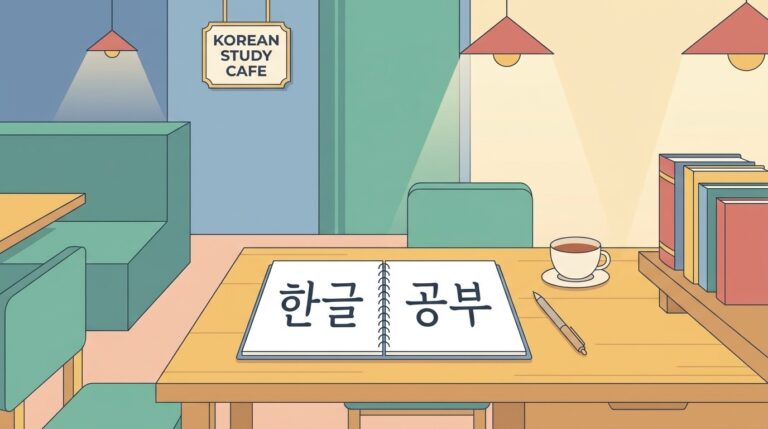
Picture this: You are sitting in a quiet, sunlit book cafe in Seongsu-dong. Around you, stylish locals are silently jotting down lines into beautiful aesthetic journals. This is the craze sweeping across Korea’s literary scenes—필사 (Pilsa), the deliberate practice of hand-copying text. It is not mere handwriting practice; it is a mindful Korean ritual to internalize subtle grammar nuances, aesthetic sentence structures, and deep cultural sentiment. By mastering Pilsa, you move from merely understanding Korean to feeling its poetic pulse. Let us explore how hand-copying Korean literature can elevate your language proficiency to an authentic C1 fluency!
Phase 2: Core Expressions Deep Dive
1. 글귀를 곱씹다 (Geul-gwi-reul gop-ssip-da)
- Pronunciation: [Geul-gwi-reul gop-ssip-da] (Pronounced like gool-gwee-reul gohp-ship-da; think of ‘chewing’ a thought slowly like chewing food)
- Meaning: Literally “to chew on a passage,” meaning to ruminate, savor, or deeply reflect on a line of writing.
- K-Culture Moment: Frequently heard in K-dramas when characters read old love letters or in literary podcasts when hosts discuss iconic book passages.
- Editor’s Insight: ‘곱씹다’ comes from ruminant animals re-chewing food. In language, it signifies dissecting every layer of nuance in a sentence rather than rushing through reading.
- Situation Spectrum: Casual ⚠️ | Semi-formal ✅ | Formal ✅
- 🤔 Think About It: How does your native language express the act of slowly digesting written words? Does it use physical metaphors like eating or tasting?
2. 손으로 꾹꾹 눌러 쓰다 (Son-eu-ro kkuk-kkuk nul-leo sseu-da)
- Pronunciation: [Son-eu-ro kkuk-kkuk nul-leo sseu-da] (Kkuk-kkuk sounds like pressing down firmly with rhythmic intention)
- Meaning: To write down carefully and deliberately by pressing firmly with a pen.
- K-Culture Moment: Seen in popular Instagram posts tagged with
#필사스타그램where Koreans share photos of meticulously hand-copied book pages.- Editor’s Insight: The mimetic word ‘꾹꾹’ conveys sincere intention and physical effort, highlighting that the writer is putting their whole heart into each character.
- Situation Spectrum: Casual ✅ | Semi-formal ✅ | Formal ⚠️
- 🤔 Think About It: Why do you think physical touch and pressure in handwriting are linked to sincerity in Korean cultural expression?
3. 여운이 남다 (Yeo-un-i nam-da)
- Pronunciation: [Yeo-un-i nam-da] (Yeo-un rhymes smoothly with yeaw-oon)
- Meaning: To leave a lingering aftertaste, impression, or emotional resonance long after an experience ends.
- K-Culture Moment: Commonly used in book reviews (서평) and movie critiques to describe an ending that haunts you pleasantly for days.
- Editor’s Insight: ‘여운’ (餘韻) originates from music theory—the reverberation of a bell after it is struck. In Pilsa, it describes lines that linger in your mind.
- Situation Spectrum: Casual ✅ | Semi-formal ✅ | Formal ✅
- 🤔 Think About It: Can a single sentence change your entire day? How does lingering emotion shape your reading habits?
Phase 3: Textbook Korean vs Real Korean
Situation 1: Expressing deep resonance with a text
- 📖 Textbook Korean: 이 책의 문장은 매우 인상적입니다. (This book’s sentence is very impressive.)
- 🗣️ Real Korean: 문장 하나하나가 가슴에 팍 와닿아요. (Every single sentence hits right in the heart.)
- 💡 Why the difference?: While textbooks use descriptive adjectives like ‘인상적이다’, native speakers prefer sensory, visceral idioms like ‘가슴에 와닿다’ with the emphatic adverb ‘팍’ to convey emotional impact.
Situation 2: Recommending hand-copying to a friend
- 📖 Textbook Korean: 책을 필사하는 것은 한국어 공부에 도움이 됩니다. (Hand-copying books is helpful for studying Korean.)
- 🗣️ Real Korean: 눈으로만 보지 말고 꼭 필사해 보세요. 글의 결이 달라요. (Don’t just read with your eyes; try transcribing it! The ‘texture’ of the writing feels completely different.)
- 💡 Why the difference?: C1 level native speakers frequently use tactile metaphors like ‘결’ (grain/texture) to describe style, tone, and literary depth.
Phase 4: K-Culture Deep Dive & Non-Verbal Manners
4-1. Nunchi & Non-Verbal Manners in Literary Spaces
When engaging in Pilsa at a Korean independent bookstore (독립서점) or quiet cafe, observing Nunchi (눈치) is key. Keep your handwriting quiet—avoid aggressive pen tapping. When reviewing someone else’s Pilsa journal, turn the pages gently using two hands or nod softly with a slight smile (목인사) to signal respect for their private reflection space.
4-2. Cultural Code: The #필사 (Pilsa) Trend
In fast-paced modern Korea, Pilsa has evolved into a form of digital detox and emotional healing (힐링). Best-selling Korean essayists often design books with blank pages explicitly dedicated to hand-copying. Joining this trend connects you directly to the emotional rhythm of contemporary Korean youth who use handwriting to find inner stillness.
Phase 5: Interactive Roleplay Scenario
Setting: A serene book cafe in Seongsu-dong. You are chatting with Min-ji, a passionate bookstore curator.
- Turn 1 (Min-ji): 손님, 혹시 필사 노트 둘러보고 계신가요? 어떤 책을 좋아하세요?
(Son-nim, hok-si pil-sa no-te dul-leo-bo-go gye-sin-ga-yo? Eot-teon chaeg-eul jo-a-ha-se-yo?)
[Hi there! Are you looking around at our Pilsa notebooks? What kind of books do you enjoy?]
🎭 Smiles warmly while holding a display notebook -
Turn 2 (You): 한국 소설을 읽고 있는데, 문장의 여운을 더 깊이 느껴보고 싶어서요.
(Han-guk so-seol-eul ilg-go in-neun-de, mun-jang-ui yeo-un-eul deo gip-i nyeok-keo-bo-go si-peo-seo-yo.)
[I’m reading Korean novels, and I want to feel the lingering resonance of the sentences more deeply.]
🎭 Expresses sincere interest while pointing gently to a book -
Turn 3 (Min-ji): 아! 그러시군요. 눈으로 읽을 때랑 직접 필사할 때 느낌이 정말 다르죠?
(A! Geu-reo-si-gun-yo. Nun-eu-ro ilg-eul ttae-rang jik-jeob pil-sa-hal ttae neuk-kim-i jeong-mal da-reu-jyo?)
[Ah! I see. The feeling is completely different when reading with your eyes versus transcribing by hand, right?]
🎭 Nods enthusiastically in agreement -
Turn 4 (You): 맞아요. 그래서 마음에 드는 글귀를 손으로 꾹꾹 눌러 써보려고 해요.
(Ma-ja-yo. Geu-rae-seo ma-eum-e deu-neun geul-gwi-reul son-eu-ro kkuk-kkuk nul-leo sseo-bo-ryeo-go hae-yo.)
[Exactly. So I’m planning to firmly write down the passages I love by hand.]
🎭 Gestures writing action with a pen -
Turn 5 (Min-ji): 정말 좋은 방법이에요! 문장을 곱씹다 보면 작가의 숨결도 느껴지거든요.
(Jeong-mal jo-eun bang-beob-i-e-yo! Mun-jang-eul gop-ssip-da bo-myeon jak-ga-ui sum-gyeol-do neuk-kyeo-ji-geon-deung-yo.)
[That’s a wonderful method! As you chew on the sentences, you can even feel the author’s breath.]
🎭 Hands over a sample fountain pen -
Turn 6 (You): 혹시 초보자에게 추천해주실 만한 필사 전용 도서가 있나요?
(Hok-si cho-bo-ja-e-ge chu-cheon-hae-ju-sil man-han pil-sa jeon-yong do-seo-ga in-na-yo?)
[By any chance, do you have any dedicated Pilsa books you would recommend for a beginner?]
🎭 Takes the pen politely with two hands -
Turn 7 (Min-ji): 이 짧은 시집이나 산문집부터 시작해 보세요. 부담 없이 쓰기 좋답니다.
(I jjalb-eun si-jib-i-na san-mun-jib-bu-teo si-jak-hae beo-se-yo. Bu-dam eob-si sseu-gi jo-than-da-mi-da.)
[Try starting with this short poetry or prose collection. It’s easy to write without feeling overwhelmed.]
🎭 Recommends a beautifully bound book -
Turn 8 (You): 감사합니다! 오늘부터 매일 한 쪽씩 정성껏 써볼게요.
(Gam-sa-ham-ni-da! O-neul-bu-teo mae-il han jjok-ssik jeong-seong-kkeot sseo-bol-ge-yo.)
[Thank you! Starting today, I will transcribe one page every day with sincere devotion.]
🎭 Bows politely with a determined smile
🔀 Interactive Choice Point
**Min-ji asks:
Frequently Asked Questions (FAQ)
Q: What does "글귀를 곱씹다 (Geul-gwi-reul gop-ssip-da)" mean in Korean and how do you pronounce it?
A: In Korean, "글귀를 곱씹다 (Geul-gwi-reul gop-ssip-da)" is pronounced [Geul-gwi-reul gop-ssip-da] and means: Literally "to chew on a passage," meaning to ruminate, savor, or deeply reflect on a line of writing.
Q: What does "손으로 꾹꾹 눌러 쓰다 (Son-eu-ro kkuk-kkuk nul-leo sseu-da)" mean in Korean and how do you pronounce it?
A: In Korean, "손으로 꾹꾹 눌러 쓰다 (Son-eu-ro kkuk-kkuk nul-leo sseu-da)" is pronounced [Son-eu-ro kkuk-kkuk nul-leo sseu-da] and means: To write down carefully and deliberately by pressing firmly with a pen.
Q: What does "여운이 남다 (Yeo-un-i nam-da)" mean in Korean and how do you pronounce it?
A: In Korean, "여운이 남다 (Yeo-un-i nam-da)" is pronounced [Yeo-un-i nam-da] and means: To leave a lingering aftertaste, impression, or emotional resonance long after an experience ends.







