

Phase 1: Empathy (Story-Driven Opening)
안녕하세요! 매일한글 에디터입니다. 👋
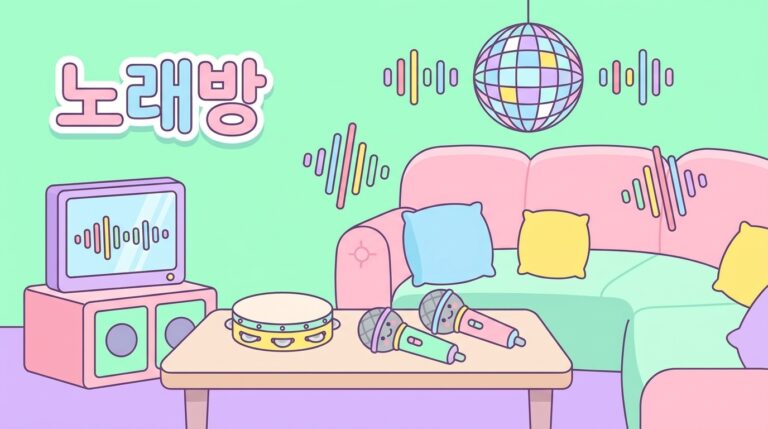
Imagine this: You’re standing inside a dimly lit Korean Noraebang (노래방 – Karaoke room) surrounded by glowing neon lights and enthusiastic friends. Someone hands you a wireless microphone, hands you the giant remote control, and queues up your favorite K-pop song. The music starts pumping, but suddenly—yikes! The pitch is dangerously high, far beyond your vocal range, and the beat feels like a runaway bullet train! 🎤⚡
Don’t drop the mic just yet! Wanting to adjust the song pitch or tempo in Korean is one of the most common beginner friction points at Karaoke. But here’s the secret: you don’t need complicated grammar to fix it. With just three ultra-simple A1-level Korean phrases, you can easily tweak the pitch, adjust the tempo, and get everyone to sing along with you like a real local. Based on feedback from hundreds of our global learners at Daily Hangul, these quick expressions will instantly turn karaoke anxiety into maximum fun. Ready to rock the mic?
Phase 2: Core Expressions Deep Dive
1. 음 올려 주세요 (Eum ol-ryeo ju-seyo)
- Pronunciation: [Eum ol-ryeo joo-seh-yo] (Sounds like “Eum” + “all-year” + “ju-say-yo”)
- Meaning: “Please raise the pitch / key.”
- K-Culture Moment: When a song is too low for your vocal range, you hold up the remote control and ask your friend to hit the UP key button.
- Editor’s Insight: 음 (Eum) means tone or pitch. Combining it with 올려 주세요 (Please raise) creates a polite, highly practical request.
- Situation Spectrum: Casual: ⚠️ | Semi-formal: ✅ | Formal: ✅
- 🤔 Think About It: In English, we often say “Can you raise the key?” In Korean, specifying “sound tone” (음) keeps your request crystal clear.
2. 박자 빨라요 (Bak-ja bbal-la-yo)
- Pronunciation: [Bak-ja mbal-la-yo] (Sounds like “Back-jah” + “Bbal-lah-yo”)
- Meaning: “The beat/tempo is fast!”
- K-Culture Moment: You selected an upbeat dance track, but your tongue gets tied trying to keep up with the fast Korean lyrics!
- Editor’s Insight: 박자 (Bak-ja) means rhythm or beat, and 빨라요 comes from 빠르다 (to be fast). You can also use it to explain why you missed an entry!
- Situation Spectrum: Casual: ✅ | Semi-formal: ✅ | Formal: 🚫
- 🤔 Think About It: Adjectives like 빨라요 function directly as verbs in Korean sentences—no extra “is” required!
3. 같이 불러요! (Gat-i bul-leo-yo!)
- Pronunciation: [Ga-chi bool-leo-yo] (Sounds like “Gah-chee” + “bool-leh-yo”)
- Meaning: “Let’s sing together!”
- K-Culture Moment: High notes approaching? Save yourself from voice cracks by inviting your besties to jump into the chorus!
- Editor’s Insight: 같이 (together) + 불러요 (sing). Noraebang in Korea is a collective team sport, so asking others to join in is considered energetic and friendly.
- Situation Spectrum: Casual: ✅ | Semi-formal: ✅ | Formal: ⚠️
- 🤔 Think About It: Is singing at karaoke in your culture a solo performance or a team activity?
Phase 3: Textbook Korean vs. Real Korean
Situation 1: Lowering the Pitch
- 📖 Textbook Korean: “음정을 낮추어 주십시오.” (Eum-jeong-eul nat-chueo ju-sip-si-o. – Please lower the musical pitch.)
- 🗣️ Real Korean: “키 좀 내려 주세요!” (Ki jom nae-ryeo ju-seyo! – Lower the key please!)
- 💡 Why is it different? Native speakers borrow the English word “Key” (키) and pair it with 내려 주세요 (please lower) for a much smoother, everyday request.
Situation 2: The Song Beat is Too Fast
- 📖 Textbook Korean: “템포가 매우 빠릅니다.” (Tem-po-ga mae-u bba-reum-ni-da. – The tempo is very fast.)
- 🗣️ Real Korean: “너무 빨라요!” (Neo-mu bbal-la-yo! – It’s too fast!)
- 💡 Why is it different? Real Korean speakers drop unnecessary nouns when the context is obvious, using 너무 (too/so) + 빨라요 (fast).
Phase 4: K-Culture Deep Dive & Non-Verbal Manners
4-1. Nunchi (눈치) & Gestures
- The Pitch Gesture: If it’s too loud to speak, point your index finger upward (or downward) at the remote controller to signal raising or lowering the key.
- The Tambourine Duty: When your friend is struggling with pitch or rhythm, shake the tambourine to the beat! It shows encouragement and masks small vocal mistakes.
4-2. Cultural Code Analysis: The Remote Control (리모콘)
Korean karaoke remote controllers look like giant futuristic bricks full of buttons! Look closely at the buttons: 키 (Key), 음정 (Pitch), and 템포 (Tempo). Pushing ♭ lowers the pitch, while ♯ raises it. Pressing 취소 (Cancel) stops the current track instantly.
Phase 5: Real-Life Roleplay Scenario
Setting: A cozy Coin Noraebang (코노) in Hongdae with your Korean buddy, Minjun.
- Minjun: 이 노래 어때요? (I no-rae eot-tae-yo? / How about this song?)
- You: 좋아요! 그런데 키가 높아요. (Jo-a-yo! Geon-de ki-ga nop-a-yo. / Sounds good! But the key is high.)
- Minjun: 🎭 (Grabs remote) 키 내려 줄까요? (Ki nae-ryeo jul-kka-yo? / Shall I lower the key?)
- You: 네, 키 좀 내려 주세요! (Ne, ki jom nae-ryeo ju-seyo! / Yes, please lower the key!)
- Minjun: 🎭 (Presses ♭ button twice) 자, 시작합니다! (Ja, si-jak-ham-ni-da! / Here we go!)
- You: 🎭 (Eyes widen) 우와, 박자 빨라요! (U-wa, bak-ja bbal-la-yo! / Whoa, the beat is fast!)
- Minjun: 괜찮아요! 같이 불러요! (Gwaen-chan-a-yo! Gat-i bul-leo-yo! / It’s okay! Let me join!)
- You: 🎭 (Smiles brightly) 네, 같이 불러요! (Ne, gat-i bul-leo-yo! / Yes, let’s sing together!)
🔀 Interactive Choice Point!
Minjun asks: “이 노래 어려워요?” (Is this song hard?) What do you do?
* Choice A: Hand over the mic quietly.
* Choice B: Shout “같이 불러요!” (Let’s sing together!).
* Choice C: Press the red ‘취소’ (Cancel) button immediately without warning.
- Feedback A (Bad): Awkward silence! Passing the mic without a word can make your friend feel confused.
- Feedback B (BEST! ⭐): Perfect! It creates a fun, shared singing moment without any stress.
- Feedback C (Risk ⚠️): Abruptly canceling a song can disrupt the high vibe of Noraebang unless agreed upon beforehand!
Phase 6: 10-Second Emotion Shadowing Drill
[😊 Excited]키 / 내려 주세요! (Ki / nae-ryeo ju-seyo!)[😲 Surprised]너무 / 빨라요! (Neo-mu / bbal-la-yo!)[🎉 Joyful]같이 / 불러요! (Gat-i / bul-leo-yo!)
Phase 7: K-Culture Mini Dictionary
- 노래방 (Noraebang) | Karaoke room. Literally translates to “Song Room”.
- 리모콘 (Rimokon) | Remote control. Used to search tracks, adjust key/tempo, and add reverb effects.
- 음정 (Eumjeong) | Pitch / Vocal key. Essential for getting comfortable singing voice tones.
- 박자 (Bakja) | Beat / Tempo. Rhythm speed of the song background track.
Phase 8: Traveler’s Survival Kit
Survival Expressions TOP 3
- 키 내려 주세요 (Ki nae-ryeo ju-seyo) – Lower the key, please.
- 천천히 해주세요 (Cheon-cheon-hi hae-ju-seyo) – Slow down the tempo, please.
- 취소 버튼 어디 있어요? (Chwi-so beo-teun eodi isseoyo?) – Where is the cancel button?
Editor’s Travel Note
Looking for nearby karaoke spots in Seoul? Open your phone and use Naver Map App Download to search for 코인노래방 (Coin Noraebang). Coin karaoke rooms let you pay per song (usually 1,000 KRW for 2-3 songs), making it perfect for solo travelers or short budget-friendly breaks!
Phase 9: One Step Deeper
In many Western cultures, karaoke is seen as a solo performance where pitch accuracy matters. However, Korean Noraebang culture values harmony, togetherness, and letting go of daily stress (heung – 흥). Nobodys expects perfection! Singing off-key or missing the beat is just a great excuse to cheer each other on with tambourines.
💬 Your Turn: What is your go-to song when you visit Karaoke? Tell us in the comments below!
Phase 10: FAQ & Common Mistakes
Q: How do I raise or lower the key on the remote?
A: Look for buttons marked 키 with ♭ (lower key) and ♯ (raise key). Press ♭ to lower it!
Q: What if I lose the beat completely during a fast song?
A: Don’t panic! Smile, pass a glance to your friends, and say: 같이 불러요! (Let’s sing together!).
Q: What is the difference between Noraebang and Coin Noraebang?
A: Standard Noraebang charges per hour (great for groups), while Coin Noraebang (Co-no) charges per song or small time increments (ideal for 1-2 people).
🚨 Common Mistakes
- ❌ Mistake 1: Screaming “Tempo fast!” in English when the beat is too quick.
- 👉 Correct Action: Say “박자 빨라요!” or “너무 빨라요!”
- ❌ Mistake 2: Struggling through high notes until your voice snaps.
- 👉 Correct Action: Ask “키 내려 주세요” before the chorus starts.
- ❌ Mistake 3: Sitting silently when someone else is singing.
- 👉 Correct Action: Grab a tambourine and clap to the beat!
Phase 11: Action Mission & K-Culture Challenge
- 🥉 Bronze Mission: Practice saying “키 내려 주세요!” out loud 3 times in front of a mirror.
- 🥈 Silver Mission: Post your favorite K-pop song title in the comments and state if its pitch is high or low for you!
- 🥇 Gold Mission: Visit a Coin Noraebang during your Korean trip and successfully adjust the key using the remote!
- 🎮 K-Culture Mission: Watch a K-drama karaoke scene and spot the giant remote control! Can you see someone hitting the key buttons?
Phase 12: Interactive Quiz Challenge
Q1. You want your friend to lower the musical key. Which phrase should you use?
A) 박자 빨라요
B) 키 내려 주세요
C) 같이 불러요
Click for Answer & Explanation
Key: B) 키 내려 주세요! ‘키’ means key, and ‘내려 주세요’ means please lower.
Q2. True or False: In Korean Noraebang, missing a beat or singing off-pitch is considered disrespectful.
Click for Answer & Explanation
False! Noraebang is about having fun and destressing together. Mistakes are welcomed with cheer!







