

Navigating Courier Strikes in Korea: Advanced Alternative Delivery Tactics
Phase 1: Empathy & Storytelling
안녕하세요! 매일한글 에디터입니다. Have you ever experienced that heart-dropping moment when you check your delivery status app expecting a package to arrive, only to see a notice reading “배송 지연” (Delivery Delayed) or “물류 파업” (Logistics Strike)?
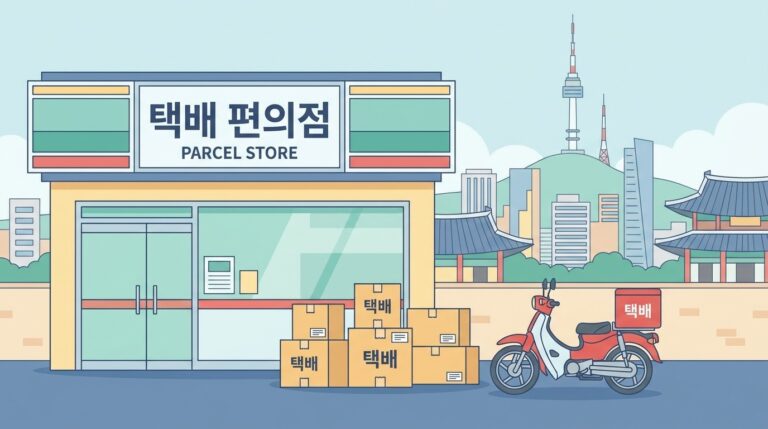
Korea is world-renowned for its hyper-efficient Pali-pali (빨리빨리) culture and next-day deliveries (익일배송). However, when unionized courier strikes (택배 파업) hit major logistics hubs, the seamless system faces friction. For advanced learners living, working, or conducting business in Korea, navigating these logistic bottlenecks requires more than just dictionary Korean—it demands an understanding of alternative shipping networks like convenience store half-price logistics (ban-gat taek-bae), quick-service motorbikes (quick service), and nuanced communication with delivery drivers.
Today, we’re going beyond beginner phrases. As C2 learners, you’ll master high-level, practical expressions to handle shipping disruptions effortlessly while maintaining cultural etiquette.
Phase 2: Core Expressions Deep Dive
1. 대체 배송 수단을 강구하다
- Pronunciation: [dae-che bae-song su-dan-eul gang-gu-ha-da] (Pronounced naturally as Dae-che bae-song soo-da-neul gahng-goo-ha-da)
- Meaning: Literally “To devise alternative delivery means.” It implies proactively searching for alternative logistical solutions during a disruption.
- K-Culture Moment: Seen in corporate emails or news reports when major logistics hubs face paralysis.
- Editor’s Insight: Combining ‘강구하다’ (to devise/seek a plan) elevates your register to formal/professional C2 Korean.
- Situation Spectrum: Casual 🚫 | Semi-formal ⚠️ | Formal ✅
- 🤔 Think About It: How does your native language express the urgent strategic shift when primary supply chains fail?
2. 차질이 생기다 / 차질을 빚다
- Pronunciation: [cha-jil-i saeng-gi-da / cha-jil-eul bij-da] (Cha-jeel-ee saeng-gee-da)
- Meaning: “To encounter a setback or disruption in plans/logistics.”
- K-Culture Moment: Frequently used in customer advisories by e-commerce platforms like Coupang or SmartStore during labor union walkouts.
- Editor’s Insight: Use ‘차질을 빚다’ when emphasizing that an active cause (like a strike) is creating the complication.
- Situation Spectrum: Casual ⚠️ | Semi-formal ✅ | Formal ✅
- 🤔 Think About It: Is there a distinction in your culture between accidental delays and systemic disruptions?
3. 반값택배 / 편의점 택배로 돌리다
- Pronunciation: [ban-gkab-taek-bae-ro dol-ri-da] (Bahn-kkahp taek-bae-ro dohl-ree-da)
- Meaning: “To reroute/switch the shipment via convenience store logistics (Half-Price Delivery).”
- K-Culture Moment: A lifesaver for residents when mainstream door-to-door couriers go on strike.
- Editor’s Insight: ‘돌리다’ here is used colloquially to mean “to redirect a method or route.”
- Situation Spectrum: Casual ✅ | Semi-formal ✅ | Formal ⚠️
- 🤔 Think About It: How heavily does your country rely on retail franchise networks as backup social infrastructure?
Phase 3: Textbook Korean vs. Real Korean
Situation 1: Asking if a package will be delayed due to a strike
* 📖 Textbook Korean: 택배 파업 때문에 내 물건이 늦게 올까요?
* 🗣️ Real Korean (C2): 파업 여파로 배송에 차질이 생길지 확인 부탁드립니다.
* 💡 Why the difference? Using noun phrases like ‘파업 여파’ (aftermath of strike) and ‘차질이 생기다’ sounds professional and concise.
Situation 2: Suggesting an alternative delivery method to a seller
* 📖 Textbook Korean: 다른 방법으로 보내 줄 수 있나요?
* 🗣️ Real Korean (C2): 일반 택배가 먹통이면, 편의점 반값택배나 퀵으로 돌려주실 수 있나요?
* 💡 Why the difference? ‘먹통’ vividly describes a system that is completely paralyzed or non-responsive.
Phase 4: K-Culture Deep Dive & Non-verbal Manners
4-1. Nunchi & Mindful Communication
When interacting with delivery drivers (택배 기사님) during strikes, remember that couriers work extreme hours under high tension. Always maintain a soft tone (경어). If asking about a delayed parcel, avoid demanding or aggressive phrasing. A soft nod and starting with “기사님, 노고가 많으십니다” (Driver, thank you for your hard work) opens doors immediately.
4-2. Logistics Infrastructure & Convenience Store Culture
Korea’s unique convenience store networks (GS25, CU) operate their own internal distribution trucks. Because these trucks transport daily food stock regardless of door-to-door courier strikes, “Ban-gat Taek-bae” (Half-Price Courier) remains operational even when major logistics companies strike. Understanding this dual-layer infrastructure is key to surviving strike season in Korea.
Phase 5: Interactive Roleplay Scenario
Scenario: You ordered urgent business documents/goods, but the main carrier is stalled due to a regional strike. You call the seller’s customer service.
- Characters: You (C2 Native-like Speaker), CS Representative (Min-ji)
- You: 안녕하세요, 주문번호 402번 배송 관련해서 문의드립니다. (🎭 Calm, polite tone)
- Min-ji: 네, 고객님. 확인해 보니 해당 지역이 현재 파업 여파로 물류가 마비된 상태입니다.
- You: 아, 그렇군요. 혹시 다른 대체 배송 수단을 강구해 주실 수 있을까요? (🎭 Inquiring calmly)
- Min-ji: 죄송하지만, 일반 택배사는 모두 집하 중단 상태입니다.
- You: 그러면 혹시 편의점 자체 물류망을 이용한 반값택배로 변경은 가능한가요? (🎭 Proposing a solution)
- Min-ji: 아! GS25나 CU 편의점 수령으로 변경하시면 정상 발송 가능합니다.
- You: 다행이네요. 그럼 즉시 편의점 수령으로 주소 변경해 주세요. (🎭 Relieved tone)
- Min-ji: 네, 바로 처리해 드리겠습니다. 불편을 드려 죄송합니다.
🔀 Decision Point
If the seller says convenience store pickup is unavailable, what do you say?
- Option A: 그럼 어쩔 수 없네요. 취소해 주세요. (Cancel the order immediately)
- Option B: 착불 퀵서비스로 변경해서 보내주실 수 있나요? 비용은 제가 부담하겠습니다. (Propose quick-service motorbike delivery at your own expense)
- Option C: 왜 배송을 안 해줘요? 당장 해결해 주세요! (Complain angrily)
Feedback:
* Best Choice (Option B): Excellent C2 problem-solving! Asking for a ‘퀵서비스’ (Quick service) at your expense (‘착불’) guarantees immediate delivery.
* Bad Choice (Option A): Acceptable, but misses the opportunity to retrieve urgent items.
* Risk Choice (Option C): Culturally poor choice. Causing a scene (jinsang) gets negative results in Korean customer service.
Phase 6: 10-Second Emotion Shadowing Drill
[🥺 Worried & Urgent]파업 때문에 / 배송이 묶여 있어서 / 정말 난감하네요.[😊 Relieved & Polite]편의점 택배로 / 돌려주신다면 / 정말 감사하겠습니다.[👔 Professional & Direct]물류 차질을 최소화할 / 대체 방안을 / 확인 부탁드립니다.
Phase 7: K-Culture Mini Dictionary
- 집하 중단 (Jip-ha Joong-dan): Suspension of parcel collection at logistics hubs.
- 먹통 (Meok-tong): Complete system paralysis/breakdown (slang/idiom).
- 반값택배 (Ban-gat Taek-bae): Ultra-cheap store-to-store logistics powered by convenience store chains.
- 착불 (Chak-bul): Cash/Pay on delivery (shipping paid by recipient).
Phase 8: Traveler’s Survival Kit
Top 3 Survival Phrases
- 파업 영향권인가요? (Is this area affected by the strike?)
- 퀵으로 받겠습니다. (I will receive it via quick-service motorbike.)
- 가까운 편의점에서 수령할게요. (I’ll pick it up at a nearby convenience store.)
Editor’s Travel Note
Always install the Naver Maps App and search for nearby convenience stores (편의점) to locate designated collection points when standard shipping halts.
Phase 9: One Step Deeper
Korea’s parcel delivery eco-system relies heavily on strict time-efficiency. However, labor strikes reflect complex socio-economic debates regarding worker fatigue and rights. Navigating delivery disruptions with empathy and flexibility demonstrates not only high linguistic competence, but also deep cultural maturity.
💬 Your Turn: Have you ever experienced a logistics strike in your home country versus Korea? Share your story in the comments below!
Phase 10: FAQ & Common Mistakes
Q: What is the main difference between general couriers and convenience store ‘Ban-gat’ delivery?
A: General couriers perform door-to-door residential deliveries. ‘Ban-gat’ delivery transfers items from store to store using the franchise’s proprietary supply trucks, bypassing major delivery union networks.
Q: What does ‘집하 보류’ mean on tracking apps?
A: It means your package is held at the local origin hub and has not yet been loaded onto transport trucks due to regional bottlenecks.
Q: Can I request Quick Service (퀵) anywhere in Korea?
A: Quick service motorbikes primarily operate within metropolitan areas like Seoul/Gyeonggi. Inter-city quick delivery uses express buses or KTX trains.
🚨 Common Mistakes
- Mistake 1: Demanding drivers to deliver during walkouts.
- Correct Action: Contact the seller or platform directly to re-route.
- Mistake 2: Misusing ‘택배’ for bike express.
- Correct Action: Specify ‘퀵서비스’ when requesting same-day motorbike delivery.
- Mistake 3: Confusing ‘선불’ (Prepaid) and ‘착불’ (Pay on delivery).
- Correct Action: Ensure you specify ‘착불’ if offering to pay shipping fees upon arrival.
Phase 11: Action Mission
- 🥉 Bronze: Pronounce “대체 배송 수단을 강구하다” fluently 3 times.
- 🥈 Silver: Comment below using the idiom “차질을 빚다” in a complete sentence.
- 🥇 Gold: Use a Korean logistics app or customer chat to inquire about shipment alternatives.
-
🎮 K-Culture Mission: Watch a current news segment regarding Korean logistics and spot the term ‘집하 중단’.
Phase 12: Interactive Quiz Challenge
Q1. What is the most effective alternative delivery method when national door-to-door logistics are paralyzed?
A) 일반 우편 (Regular Mail)
B) 편의점 반값택배 (Convenience Store Half-Price Delivery)
C) 그냥 기다리기 (Just waiting)
Click to reveal Answer & Explanation
Answer: B
Explanation: Convenience store networks utilize internal distribution logistics that operate independently from major home-delivery unions.
Q2. Complete the blank: “파업으로 인해 배송 일정에 ______ 생겼습니다.”
A) 차질이
B) 집하가
C) 퀵서비스가
Click to reveal Answer & Explanation
Answer: A
Explanation: ‘차질이 생기다’ means to experience a delay or disruption in plans/schedules.







