

Phase 1: Empathy (Story-Based Opening)
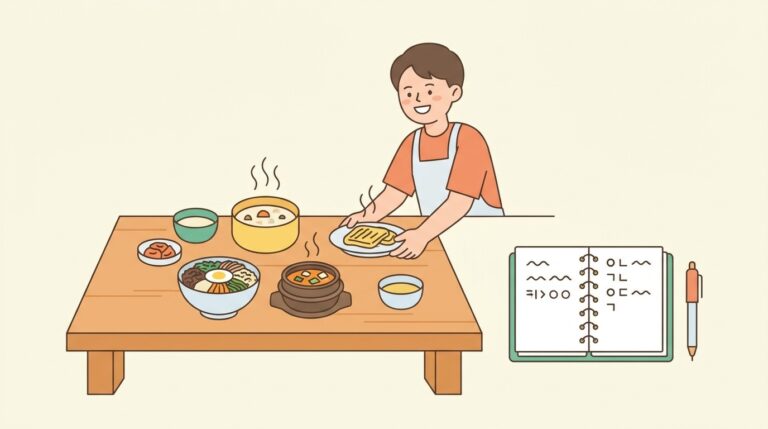
안녕하세요! I’m your Daily Hangul editor, your 10-year local culture navigator. Picture this: You’ve just arrived in Seoul after a long flight, your stomach is rumbling, and you finally step into a vibrant Korean restaurant in Hongdae. You press the wireless call button on your table, order a bubbling hot pot of Kimchi Jjigae, and hand back the menu. Exactly three minutes pass. You glance around and notice nearby diners getting their dishes almost instantly, while a busy waiter zips past your table holding trays at lightning speed. You catch yourself wondering, “Is my order taking too long, or am I just impatient? How do locals ask when the food is coming out without sounding rude?”
Welcome to Korea’s iconic 빨리빨리 (Ppalli-Ppalli / Hurry-Hurry) culture! In Korea, speed isn’t just about efficiency—it’s a shared social rhythm. Asking about your order status right after placing it is surprisingly common, but there is a fine line between sounding naturally proactive and coming off as impatient or demanding. Based on real feedback from hundreds of foreign learners who felt awkward at Korean dining spots, this guide will give you the exact phrases, cultural nuances, and polite tone you need to navigate these speedy moments smoothly!
Phase 2: Core Expressions Deep Dive
1. 저희 음식 곧 나오나요? (Jeohui eomsik got naonayo?)
- Pronunciation: [Jeo-hee eum-sik got nah-oh-nah-yo?] (Sounds like “joh-hee oom-seek goat nah-oh-nah-yo”)
- Meaning: Literal: “Is our food coming out soon?” / Nuance: A gentle, polite check on order progress.
- K-Culture Moment: Seen frequently in K-Dramas when coworkers on a tight 1-hour lunch break politely remind busy kitchen staff.
- Editor’s Insight: Using 저희 (jeohui) instead of 우리 (uri) shows humble politeness toward the staff, making your inquiry sound courteous rather than demanding.
- Situation Spectrum: Casual ⚠️ | Semi-formal ✅ | Formal ✅
- 🤔 Think About It: In your home country, how many minutes do you usually wait before asking the waiter about your meal?
2. 언제쯤 나와요? (Eonjejjeum nawayo?)
- Pronunciation: [Eon-je-jjeum nah-wah-yo?] (Sounds like “eon-jeh-jjeom nah-wah-yo”)
- Meaning: Literal: “Around when will it come out?” / Nuance: Direct yet soft inquiry regarding estimated time.
- K-Culture Moment: Used at fast-casual spots like Gimbap Heaven (김밥천국) when you need to grab a quick bite before catching a KTX train.
- Editor’s Insight: The suffix -쯤 (jjeum) means “around” or “approximately.” Adding it prevents you from sounding like you are holding them to an exact second!
- Situation Spectrum: Casual ✅ | Semi-formal ✅ | Formal ⚠️
- 🤔 Think About It: Why do you think adding an approximation word like “around” softens a question so effectively in Korean?
3. 얼마나 더 기다려야 해요? (Eolmana deo gidaryeoyahae-yo?)
- Pronunciation: [Eol-mah-nah deo gee-dah-ryeo-yah-hae-yo?]
- Meaning: Literal: “How much longer do I have to wait?” / Nuance: Expresses slight urgency when food is noticeably delayed.
- K-Culture Moment: Common in food stalls at bustling night markets when a crowd gathers around a popular vendor.
- Editor’s Insight: Use this expression only when at least 15-20 minutes have passed. Using it immediately after ordering might startle the staff!
- Situation Spectrum: Casual ✅ | Semi-formal ✅ | Formal 🚫
- 🤔 Think About It: How does directly asking about wait time reflect the high-tempo lifestyle of urban Seoul?
Phase 3: Textbook Korean vs. Real Korean
Situation 1: Checking your order status at a busy BBQ shop
- 📖 Textbook Korean: 제 주문이 제대로 들어갔습니까? (Je jumun-i jedaero deureogasseumnika? – Has my order been correctly registered?)
- 🗣️ Real Korean: 저기요, 저희 주문 들어갔나요? (Jeogiyo, jeohui jumun deureogannayo? – Excuse me, did our order go through?)
- 💡 Why it differs: The textbook version sounds like a formal corporate audit! Native speakers use the soft interrogative ending -나요? (-nayo?) to ask warm, conversational questions.
Situation 2: Asking if a takeout coffee will be ready quickly
- 📖 Textbook Korean: 음료가 언제 완성이 됩니까? (Eumryoga eonje wanseong-i doemnika? – When will the beverage be completed?)
- 🗣️ Real Korean: 음료 금방 나오나요? (Eumryo geumbang naonayo? – Will the drink be out soon?)
- 💡 Why it differs: Native Koreans prefer verbs like 나오다 (naoda – to come out) over heavy passive verbs like 완성되다 (to be completed) in daily retail contexts.
Phase 4: K-Culture Deep Dive & Non-Verbal Manners
4-1. Nunchi (눈치) & Gestures
When asking staff about your food in a fast-paced environment, Nunchi (tact/situational awareness) is key. Before speaking, catch the staff member’s eye with a warm smile and lightly raise your hand—avoid waving vigorously. A slight head tilt paired with 저기요~ (Jeogiyo~ / Excuse me~) in a rising, friendly tone establishes instant rapport. Never tap your watch impatiently, as that crosses the line from Ppalli-Ppalli efficiency into disrespect.
4-2. Cultural Code: The Mechanics of Ppalli-Ppalli
In Korean dining, speed is viewed as customer service excellence. Kitchens are designed for maximum throughput, which is why side dishes (반찬) arrive within seconds. Because service is naturally rapid, asking “저희 음식 곧 나오나요?” after 10 minutes is viewed as reasonable monitoring rather than complaining. It keeps the workflow flowing for both customer and kitchen!
Phase 5: Real-Life Roleplay Scenario
- Setting: A bustling BBQ restaurant in Gangnam during peak dinner hours.
- Characters: Min-jun (Busy Server, NPC) & You (Hungry Traveler).
- Min-jun: 주문하시겠어요? (Jumunhasigesseoyo? / Ready to order?) 🎭 Holding an electronic notepad, tapping quickly
- You: 삼겹살 2인분이랑 김치찌개 하나 주세요. (Samgyeopsal i-inbun-irang kimchi-jjigae hana juseyo. / Two portions of grilled pork belly and one Kimchi Jjigae, please.) 🎭 Pointing at the menu cheerfully
- Min-jun: 네, 확인했습니다. 잠시만 기다려 주세요. (Ne, hwaginhaessumnida. Jamsiman gidaryeojuseyo. / Yes, confirmed. Please wait a moment.) 🎭 Bows quickly and turns toward the kitchen
- (5 minutes pass, smells of sizzling meat fill the room)
- You: 저기요, 저희 음식 곧 나오나요? (Jeogiyo, jeohui eomsik got naonayo? / Excuse me, is our food coming out soon?) 🎭 Catching eyes softly with a gentle smile
- Min-jun: 아, 삼겹살 바로 준비해 드릴게요! (A, samgyeopsal baro junbihae deurilgeyo! / Ah, I will prepare the pork belly right away!) 🎭 Nods apologetically
- You: 감사합니다! 천천히 하셔도 돼요. (Gamsahamnida! Cheoncheonhi hasyeodo dwaeyo. / Thank you! Take your time.) 🎭 Giving a light nod
- Min-jun: 맛있게 구워 드릴게요! (Masitge guwo deurilgeyo! / I’ll grill it deliciously for you!) 🎭 Places meat on the grill with a bright smile
🔀 Interactive Choice Point
What do you say if 15 minutes pass and your side dishes haven’t arrived yet?
- Option A: “왜 이렇게 오래 걸려요? 빨리 주세요!” (Wae ireokke ore geolryeoyo? Ppalli juseyo!)
- Option B: “저기요, 혹시 저희 주문 들어갔는지 확인해 주실 수 있나요?” (Jeogiyo, hoksi jeohui jumun deureoganneunji hwaginhae jusil su innayo?)
- Option C: “음식이 안 나오니까 그냥 취소해 주세요.” (Eumsik-i an naonikka geunyang chwisohae juseyo.)
Feedback:
* Option A (Bad ❌): Too aggressive! Demanding speed directly can offend the staff.
* Option B (Best ✅): Perfect B1 level! Polite, indirect, and prompts an instant check without blame.
* Option C (Risk ⚠️): Canceling abruptly might create awkwardness, especially if the food is already cooking.
Phase 6: 10-Second Emotion Shadowing Drill
Practice reading these lines aloud with emotion markers and rhythm breaks (/):
[😊 Friendly & Polite]
저기요~ / 저희 음식 / 곧 나오나요?
(Jeogiyo~ / jeohui eomsik / got naonayo?)-
[🤔 Curious & Soft]
음료 나오려면 / 얼마나 더 / 기다려야 해요?
(Eumryo naoryeomyeon / eolmana deo / gidaryeoyahae-yo?) -
[🥺 Gentle Reminder]
바쁘시겠지만 / 저희 주문 / 확인 부탁드려요!
(Bappeusigessjiman / jeohui jumun / hwagin 부탁deuryeoyo!)
Phase 7: K-Culture Mini Dictionary
- 빨리빨리 (Ppalli-Ppalli) | Noun/Adverb | The dynamic mindset of doing things with utmost speed and high efficiency across daily life in Korea.
- 눈치 (Nunchi) | Noun | The art of reading emotional cues, body language, and social context quickly to act appropriately.
- 벨 (Bel / Call Button) | Noun | The small wireless button found on restaurant tables in Korea used to summon service instantly without shouting.
- 서빙 (Seobing) | Noun/Verb | Refers to serving dishes at tables; often heard as “서빙해 드릴게요” (I’ll serve this to you).
Phase 8: Traveler’s Survival Kit
TOP 3 Survival Expressions
- 이거 금방 나오나요? (Igeo geumbang naonayo?) – Does this come out quickly? (Pro Tip: Great when ordering before catching a show or train!)
- 포장도 빨리 되나요? (Pojangdo ppalli doenayo?) – Can this be packed for takeout quickly?
- 천천히 주셔도 돼요. (Cheoncheonhi jusyeodo dwaeyo.) – You can take your time. (Pro Tip: Use this when staff seem overwhelmed to show kindness!)
Editor’s Travel Note
When traveling around Seoul, finding top-rated restaurants with super-fast service is easy when you download Naver Map app for local reviews and turn on location services. Don’t forget that water and extra side dishes are usually self-service (셀프) at fast-paced eateries!
Phase 9: One Step Deeper (Reflective Essay)
Korea’s Ppalli-Ppalli culture is often misunderstood as pure impatience. In reality, it represents a deep mutual respect for people’s time. Restaurants streamline their service so customers can enjoy hot, fresh food without wasting a single minute of their busy day. By learning to ask about your food with politeness (저희 음식 곧 나오나요?), you participate in this vibrant social dance of efficiency and care.
💬 Your Turn: How does restaurant pacing in your country compare to Korea? Have you ever had to ask for your food in a rush? Leave a comment below and share your story!
Phase 10: FAQ & Common Mistakes
Q: Is it considered rude to ask “언제 나와요?” immediately after ordering?
A: Yes, asking within 1-2 minutes can sound impatient. It is best to wait about 10-15 minutes or check if you notice tables who arrived after you getting served first.
Q: What if I press the table call button (벨) multiple times?
A: Pressing the button repeatedly creates a buzzing noise in the kitchen and is considered impolite. Press it once and wait a moment for staff to acknowledge you.
Q: How do I ask if my food will take long before I order?
A: You can ask: “오래 걸리나요?” (Ore geolrinayo? – Does it take long?).
🚨 Common Mistakes TOP 3
- Mistake: Shouting “야!” (Ya!) to get the waiter’s attention.
- Correct Action: Say softly: “저기요~” (Jeogiyo~).
- Mistake: Using formal dictionary style “음식이 언제 나옵니까?” while waving arms.
- Correct Action: Keep hands low and ask politely “저희 음식 곧 나오나요?”
- Mistake: Demanding free drinks because of a minor 5-minute wait.
- Correct Action: Patiently remind staff with “저희 주문 확인 부탁드려요” (Please check our order).
Phase 11: Action Mission & Engagement
- Bronze Mission: Read “저희 음식 곧 나오나요?” out loud 5 times using proper emotional pacing.
- Silver Mission: Record a 10-second video speaking the line and tag
@DailyHangulon Instagram or TikTok! - Gold Mission: Use this exact expression at a real Korean restaurant or local K-town eatery during your next visit!
🎮 K-Culture Mission: Watch a scene in a K-Drama set in a restaurant (like Itaewon Class) and spot how characters call the waiter or ask about food!
Phase 12: Interactive Quiz Challenge
Q1. What is the most polite way to ask if your food is coming out soon at a Korean restaurant?
* A) 왜 이렇게 안 나와요?
* B) 저희 음식 곧 나오나요?
* C) 야, 음식을 빨리 가져와!
🔍 Click to reveal Answer & Explanation
Correct Answer: B) 저희 음식 곧 나오나요?
Explanation: “저희” shows respect, and “-나오나요?” creates a soft, polite inquiry tone perfect for B1 speakers.
Q2. Fill in the blank: “음료 나오려면 얼마나 ____ 기다려야 해요?”
* A) 더 (deo)
* B) 못 (mot)
* C) 안 (an)
🔍 Click to reveal Answer & Explanation
Correct Answer: A) 더 (deo)
Explanation: “더” means “more/longer,” creating the phrase “how much longer do I have to wait?”
Q3. True or False: In Korea, table call buttons (벨) are meant to be pressed continuously until someone arrives.
🔍 Click to reveal Answer & Explanation
Correct Answer: False!
Explanation: You should press the button once. Continuous pressing is loud and considered bad dining etiquette.







