

Phase 1: Empathy & Storytelling Opening
안녕하세요! Welcome back to another lesson with your favorite Korean tutoring team, 매일한글 (Daily Hangul)! I’m your Korean culture guide, here to make sure you sound like a local wherever you go.
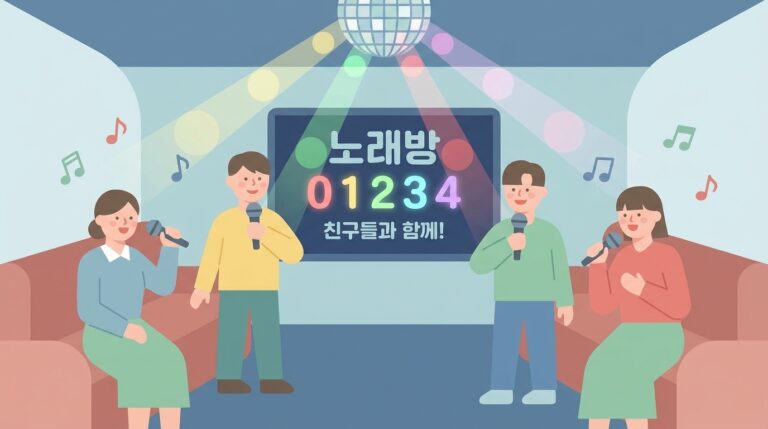
Picture this: You are at a K-norebang (Korean Karaoke) with your best friends. You’ve sung your heart out to BTS and BLACKPINK for a whole hour. Suddenly, the timer on the wall monitor blinks: 0 minutes remaining. You start packing up your bag with a sigh. But wait! The screen suddenly flashes and adds 30 minutes for free! Your friends cheer, and you wonder: What just happened?
That magical addition of free extra time is called 서비스 (Seobeiseu – Service) in Korea! In Korean karaoke culture, owners often gift free extra minutes to happy customers. But what if the time doesn’t appear automatically? Can you politely ask for it? Absolutely! Today, we are going to learn how to ask for bonus time like a natural Korean local without feeling shy or awkward. Let’s dive in!
Phase 2: Top 3 Core Expressions Deep Dive
1. 서비스 시간 좀 주실 수 있나요? (Seobeiseu sigan jom jusil su innayo?)
- Pronunciation: [Suh-bee-seu see-gan jom joo-sheel soo een-na-yo?]
- Sound Tip: ‘Service’ sounds like ‘Suh-bee-seu’. ‘Jom’ sounds like ‘chom’ (a gentle polite ‘please’).
- Meaning: Direct: “Can you give some service time?” / Real Nuance: “Could we possibly get some extra bonus time, please?”
- K-Culture Moment: Seen in K-Dramas whenever college students visit a Karaoke after exams and smile sweetly at the counter owner!
- Editor’s Insight: Adding ‘좀 (jom)’ acts as a magic softener in Korean. It prevents you from sounding demanding and turns your sentence into a cute, polite request.
- Situation Spectrum: Casual ⚠️ | Semi-formal ✅ | Formal 🚫
- 🤔 Think About It: In your country, does ‘service’ mean free gifts, or just customer support? How does language adapt foreign words?
2. 서비스 조금만 더 주세요! (Seobeiseu jogeumman deo juseyo!)
- Pronunciation: [Suh-bee-seu joh-geum-man deoh joo-seh-yo!]
- Meaning: Direct: “Give a little more service!” / Real Nuance: “Please give us just a tiny bit more bonus time!”
- K-Culture Moment: When you are having the time of your life and you run out to the counter right before your favorite song ends.
- Editor’s Insight: ‘조금만 (jogeumman – just a little)’ makes your request sound humble and irresistible. Owners love friendly customers!
- Situation Spectrum: Casual ✅ | Semi-formal ✅ | Formal 🚫
- 🤔 Think About It: Why does saying “just a little bit” make requests sound much friendlier in both English and Korean?
3. 혹시 서비스 들어오나요? (Hoksi seobeiseu deuro-onayo?)
- Pronunciation: [Hok-shee suh-bee-seu deuh-roh-oh-na-yo?]
- Meaning: Direct: “By any chance, is service coming in?” / Real Nuance: “Are we getting any bonus time added to our room?”
- K-Culture Moment: Asking the staff via the interphone inside the karaoke room.
- Editor’s Insight: Using ‘혹시 (hoksi – by any chance)’ shows great respect for the other person’s boundaries while inquiring softly.
- Situation Spectrum: Casual ⚠️ | Semi-formal ✅ | Formal 🚫
- 🤔 Think About It: How does starting a question with soft words change the tone of voice in your native language?
Phase 3: Textbook Korean vs. Real Native Korean
Situation 1: Asking if free time is possible
- 📖 Textbook Korean: 추가 시간을 무료로 주실 수 있습니까? (Chuga siganeul muryoro jusil su itsseumnida? – Can you give additional time for free?)
- 🗣️ Real Native Korean: 혹시 서비스 조금 들어오나요? (Hoksi seobeiseu jogeum deuro-onayo? – By any chance, will a little bonus time be added?)
- 💡 Why is it different?: The textbook phrase sounds like an official business contract inquiry! Native Koreans use ‘서비스’ to refer to free perks naturally.
Situation 2: Expressing gratitude when receiving bonus time
- 📖 Textbook Korean: 선물에 감사드립니다. (Seonmure gamsadeureimnida. – Thank you for the gift.)
- 🗣️ Real Native Korean: 와, 서비스 감사합니다! 잘 놀다 갈게요! (Wa, seobeiseu gamsahamnida! Jal nolda galgeyo! – Wow, thank you for the bonus time! We’ll have fun!)
- 💡 Why is it different?: Showing genuine excitement (‘잘 놀다 갈게요 – We will play well and go’) makes the host feel proud and happy to host you.
Phase 4: K-Culture Deep Dive & Non-Verbal Manners
4-1. Nunchi (눈치) & Gestures
When asking for bonus time at a Norebang counter, tone and body language matter! Do not stand rigidly or speak too bluntly. Bow your head slightly, make warm eye contact, and hold your hands together gently. Smiling bright and making a small plead gesture (like holding up two fingers to ask for just 10-20 minutes) works like a charm!
4-2. Culture Code: What does ‘서비스 (Service)’ mean in Korea?
In Western countries, ‘service’ usually refers to the quality of waitstaff or customer support. However, in Korean hospitality culture (Konglish context), 서비스 (Seobeiseu) specifically refers to complimentary goods or free extra services given by business owners to show warm generosity (Jeong, 정).
Phase 5: Roleplay Scenario & Interactive Branch
Scenario: Speaking to the friendly Karaoke Manager (이모님 – Imo-nim)
- Turn 1 (Manager): 어서 오세요! 1시간 이용하시겠어요? (Eoseo oseyo! Han-sigan iyonghasigesseoyo? / Welcome! Would you like to use 1 hour?)
- Turn 2 (You): 🎭 [Smiles warmly and bows] 네, 1시간 부탁드려요! (Ne, han-sigan 부탁deuryeoyo! / Yes, 1 hour please!)
- Turn 3 (Manager): 3번 방으로 들어가시면 됩니다! (Sam-beon bang-euro deureogasimyeon doemnida! / You can go into Room 3!)
- Turn 4 (You – 55 mins later at counter): 🎭 [Politely walks up to counter] 저… 사장님! (Jeo… Sajangnim! / Excuse me… Boss!)
- Turn 5 (Manager): 네, 무슨 일이에요? (Ne, museun irieyo? / Yes, what’s up?)
- Turn 6 (You): 혹시 서비스 시간 조금만 주실 수 있나요? (Hoksi seobeiseu sigan jogeumman jusil su innayo? / By any chance, could you give us a little bonus time?)
- Turn 7 (Manager): 하하, 노래 아주 잘 부르더라고요! 20분 넣어줬어요! (Haha, norae aju jal bureudeoragoyo! Isip-bun neoeojwosseoyo! / Haha, you sang so well! I just put in 20 minutes!)
- Turn 8 (You): 🎭 [Claps happily] 와, 감사합니다! 잘 놀게요! (Wa, gamsahamnida! Jal nolgeyo! / Wow, thank you! We’ll have fun!)
🔀 Interactive Choice Point
What will you say if the timer has 5 minutes left and you want to ask for extra time?
* Choice A: “서비스 당장 주세요!” (Give me service right now!)
* Choice B: “사장님, 혹시 서비스 조금만 들어올까요? ㅎㅎ” (Boss, by any chance will a little service come in? hehe)
* Choice C: “시간 더 안 주면 그냥 갈게요.” (If you don’t give more time I’ll just leave.)
Feedback:
* Best Choice: B – Perfect! Polite, cute, and respectful. The manager will definitely hit that +20 min button!
* Risk Choice: A – Demanding ‘당장’ (right now) sounds aggressive and rude!
* Bad Choice: C – Threatening to leave will ruin the joyful vibe of Korean hospitality.
Phase 6: 10-Second Emotion Shadowing Drill
Practice reading these out loud with appropriate feeling! The / symbol indicates a brief pause.
[🥺 Cute & Polite Request]- 사장님~ / 혹시 서비스 시간 / 조금만 주실 수 있나요?
- (Sajangnim~ / hoksi seobeiseu sigan / jogeumman jusil su innayo?)
[🎉 Super Excited & Grateful]- 와! / 서비스 30분! / 정말 감사합니다!
- (Wa! / seobeiseu samsip-bun! / jeongmal gamsahamnida!)
Phase 7: K-Culture Mini Dictionary
- 서비스 (Seobeiseu) | Free Bonus / Complimentary gift.
- 코인 노래방 (Coin Noreanbang) | Coin-operated Karaoke room (popular for solo singers!).
- 막곡 (Makgok) | The very last song of the karaoke session.
- 우선예약 (Useon-yeyak) | Priority reservation button on the Karaoke remote control.
Phase 8: Traveler’s Survival Kit
Top 3 Survival Phrases
- 1시간 주세요. (Han-sigan juseyo. / 1 hour please.)
- 마이크 커버 주세요. (Maikeu keobeo juseyo. / Please give us a mic cover.)
- 서비스 감사합니다! (Seobeiseu gamsahamnida! / Thank you for the bonus time!)
Editor’s Travel Note
Before heading out to Hongdae or Gangnam for karaoke, download Naver Map App to search for highly-rated ‘Coin Norebang’ (코노) or general Karaoke spots near your subway station!
Phase 9: A Step Deeper (Reflection)
In Korea, the concept of ‘서비스 (Service)’ isn’t just about sales tactics—it’s connected to 정 (Jeong), the deep Korean sentiment of warm affection, bonding, and hospitality. Business owners love sharing extra moments of happiness with polite visitors.
💬 Your Turn: Has a business owner ever given you something free unexpectedly in your country? How did it make you feel? Share your thoughts in the comments below!
Phase 10: FAQ & Common Mistakes
Q: Can I demand ‘서비스’ at every single karaoke spot?
A: Not always! Smaller coin-karaokes (코노) run strictly on automated systems, so managers might not be able to manually add time. It works best at traditional hourly Norebangs!
Q: Is service always free?
A: Yes! If a staff member says “서비스예요 (It’s service),” it means 100% free of charge.
Q: Should I ask right when I enter the room?
A: It’s better to wait until your original time is almost finished (around 5-10 minutes remaining) before asking kindly.
🚨 Common Mistakes TOP 3
- Mistake: Calling free food or time “Free gift!”
- Correct Action: Use the local term 서비스 (Seobeiseu).
- Mistake: Using formal military style (-습니까) when asking for extra time.
- Correct Action: Use natural semi-formal endings like ~주실 수 있나요?.
- Mistake: Forgetting to say thank you after receiving time.
- Correct Action: Smile big and say “감사합니다! 잘 놀게요!”.
Phase 11: Action Mission
- 🥉 Bronze: Practice saying “서비스 시간 좀 주실 수 있나요?” out loud 3 times in front of a mirror.
- 🥈 Silver: Record your voice saying the shadowing sentence from Phase 6 and upload it to Instagram Stories tagging @DailyHangul!
- 🥇 Gold: Visit a real Korean Karaoke on your next travel and ask the manager for bonus time!
🎮 K-Culture Mission: Watch a K-Drama scene set in a Norebang and spot if the timer screen adds bonus minutes automatically!
Phase 12: Interactive Quiz Challenge
Q1. What is the correct Korean word for free bonus time in Karaoke?
* A) 비스킷 (Biskit)
* B) 서비스 (Seobeiseu)
* C) 디스카운트 (Diseukaunteu)
🔍 Click to view Answer & Explanation
Answer: B) 서비스 (Seobeiseu)
Explanation: In Korean hospitality culture, complimentary gifts or bonus minutes are called ‘서비스’.
Q2. True or False: You should use strict military grammar when asking karaoke staff for bonus time.
🔍 Click to view Answer & Explanation
Answer: False!
Explanation: Using friendly, polite semi-formal grammar (존댓말) with soft words like ‘혹시’ and ‘좀’ works much better!







