

Phase 1: Empathy
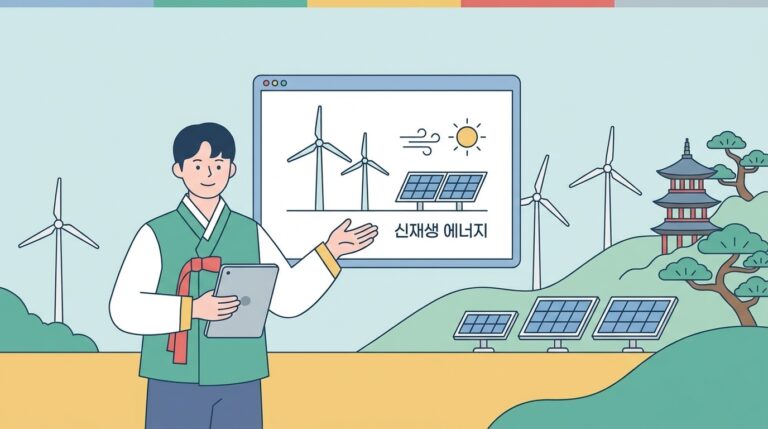
안녕하세요! 매일한글 에디터입니다. Have you ever watched a Korean news debate or a high-stakes K-Drama like Queen of Tears where characters intensely discuss corporate ESG goals or eco-friendly investments, only to feel overwhelmed by advanced vocabulary? Transitioning to renewable energy (재생 에너지 전환) is a burning topic in South Korea today. Discussing policy level climate action in Korean can feel daunting, even at a C1 level. This guide uses authentic feedback from advanced learners to help you articulate complex environmental opinions fluently and with cultural nuance.
Phase 2: Key Expressions
1. 재생 에너지 전환을 가속화해야 합니다.
- Pronunciation: Jaesaeng eneoji jeonhwaneul gaseokhwa-haeya hamnida (Jae-saeng eh-ner-jee jeon-hwan-eul gah-seok-hwa-hae-ya ham-nee-da)
- Meaning: Direct: We must accelerate the renewable energy transition. / Nuance: A strong, policy-oriented assertion suitable for debates or business meetings.
- K-Culture Moment: A corporate director in a Korean business drama advocating for green energy shift in a board meeting.
- Editor’s Insight: ‘가속화하다’ (to accelerate) adds a formal, urgency-driven tone compared to simple ‘빠르게 하다’.
- Situation Spectrum: Casual 🚫 / Semi-formal ⚠️ / Formal ✅
- 🤔 Think About It: How does your native language balance technical terms with urgency compared to Korean’s Sino-Korean derivatives?
2. 탄소 중립 달성은 선택이 아닌 필수입니다.
- Pronunciation: Tanso jungnip dalseongeun seontaegi anin pilsuimnida (Tan-so joong-neep dal-seong-eun seon-taek-ee ah-nin peel-soo-im-nee-da)
- Meaning: Direct: Achieving carbon neutrality is a necessity, not an option. / Nuance: Expresses an unavoidable global standard with firm conviction.
- K-Culture Moment: Seen on public campaign posters or spoken by eco-conscious Korean celebrities during documentaries.
- Editor’s Insight: The phrase ‘선택이 아닌 필수’ (a necessity, not an option) is a widely used rhetorical pattern in Korean persuasion.
- Situation Spectrum: Casual ⚠️ / Semi-formal ✅ / Formal ✅
- 🤔 Think About It: In your country, is carbon neutrality framed as a civic duty or an economic trade-off?
3. 지속 가능한 발전 모델을 구축할 필요가 있습니다.
- Pronunciation: Jisok ganeung-han baljeon modeoreul guchuk-hal pil-yoga isseumnida (Jee-sok gah-neung-han bal-jeon moh-deol-eul goo-chook-hal peel-yo-gah eess-eum-nee-da)
- Meaning: Direct: There is a need to build a sustainable development model. / Nuance: A balanced, constructive policy recommendation.
- K-Culture Moment: Used in university seminars or policy roundtables in Seoul.
- Editor’s Insight: ‘구축하다’ (to build/construct) is preferred over ‘만들다’ when referring to systems, frameworks, or abstract models.
- Situation Spectrum: Casual 🚫 / Semi-formal ⚠️ / Formal ✅
- 🤔 Think About It: What verbs does your native language use when talking about abstract socio-economic frameworks?
Phase 3: Textbook vs. Real-World Korean
Situation 1: Discussing green policy necessity
- 📖 Textbook: 정부는 친환경 에너지를 써야 합니다. (The government must use eco-friendly energy.)
- 🗣️ Real-World: 이제는 친환경 에너지 정책을 본격적으로 추진할 때입니다. (It’s high time to actively drive eco-friendly energy policies.)
- 💡 Why?: ‘본격적으로 추진하다’ sounds far more persuasive and politically mature for C1 speakers.
Situation 2: Reacting to climate change urgency
- 📖 Textbook: 기후 위기는 매우 심각한 문제입니다. (Climate crisis is a very serious problem.)
- 🗣️ Real-World: 기후 위기 대응은 더 이상 미룰 수 없는 시대적 과제예요. (Climate response is a task of our times that can no longer be delayed.)
- 💡 Why?: Using terms like ‘시대적 과제’ (task of our times) elevates your language depth significantly.
Phase 4: K-Culture Deep Dive & Non-verbal Manners
- 4-1. Nunchi & Gestures: When discussing serious topics like energy transition in formal Korean settings, maintain steady eye contact, keep hands composed (clasped or resting on the table), and use soft head nods to signal active listening. Avoid aggressive hand gestures.
- 4-2. Culture Code: Korea’s rapid industrial history makes the shift toward ‘탄소 중립’ (Carbon Neutrality) a fascinating conflict between traditional manufacturing giants and new green initiatives. Showing awareness of Korea’s RE100 initiatives instantly earns respect in professional settings.
Phase 5: Interactive Roleplay Scenario
Setting: A panel discussion on Korea’s energy policy at a seminar in Yeouido, Seoul.
Character: Dr. Kim (Eco-Policy Expert)
- Dr. Kim: 한국의 재생 에너지 비중은 여전히 낮습니다. 어떻게 생각하시나요?
(Hong-guk-ui jaesaeng eneoji bijungeun yeojeonhi nat-seumnida. Eotteokke saenggak-hasinayo? / Korea’s renewable energy ratio is still low. What are your thoughts?) - You: 🎭 (Confidently, leaning forward slightly) 재생 에너지 전환을 가속화해야 한다고 봅니다.
(Jaesaeng eneoji jeonhwaneul gaseokhwa-haeya handago bomnida. / I believe we must accelerate the renewable energy transition.) - Dr. Kim: 하지만 산업계의 경제적 부담도 무시할 수 없지 않을까요?
(Hajiman san-eop-gye-ui gyeongje-jeok budamdo musihal ssu eop-ji aneul-kkayo? / But shouldn’t we consider the financial burden on industries?) - You: 🎭 (Nodding calmly) 물론이지만, 탄소 중립 달성은 이제 선택이 아닌 필수입니다.
(Mullon-ijiman, tanso jungnip dalseongeun ije seontaegi anin pilsuimnida. / Of course, but achieving carbon neutrality is now a necessity, not an option.) - Dr. Kim: 그렇다면 구체적으로 어떤 대응책이 필요할까요?
(Geureotdamyeon guche-jeoguro eotteon dae-eung-chaegi pil-yohal-kkayo? / Then what specific measures are needed?) - You: 🎭 (Using clear hand movements to emphasize structure) 지속 가능한 발전 모델을 구축할 필요가 있습니다.
(Jisok ganeung-han baljeon modeoreul guchuk-hal pil-yoga isseumnida. / We need to build a sustainable development model.) - Dr. Kim: 인프라 구축 비용은 어떻게 마련해야 할까요?
(Inpeura guchuk biyongeun eotteokke maryeon-haeya hal-kkayo? / How should we fund this infrastructure development?) - You: 🎭 (Smiling reassuringly) 정부와 기업의 협력적 투자가 핵심이라고 생각합니다.
(Jeongbu-wa gieobui hyeop-ryeok-jeok tujaga haeksim-irago saenggak-hamnida. / I believe collaborative investment between government and business is key.)
🔀 Interactive Choice:
How do you respond when asked if renewable energy is realistic in Korea?
* Option A: 어렵지만 시대적 과제이므로 반드시 추진해야 합니다. (Best – Clear, diplomatic, and sophisticated)
* Option B: 글쎄요, 기름값이 오르면 안 되는데요. (Bad – Too casual and off-topic for a panel)
* Option C: 무조건 원자력 발전소를 다 꺼야 합니다. (Risk – Too radical without policy context)
Phase 6: 10-Second Emotion Shadowing Drill
[🔥 Firm & Convincing]탄소 중립 달성은 / 선택이 아닌 / 필수입니다.[🤝 Persuasive & Professional]지속 가능한 / 발전 모델을 / 구축할 필요가 있습니다.[⚡ Urgent & Direct]재생 에너지 전환을 / 더 이상 미룰 수 없습니다.
Phase 7: K-Culture Mini Dictionary
- 탄소 중립 (Tanso Jungnip) | Carbon Neutrality | Used in public policy, corporate news, and environmental campaigns.
- 재생 에너지 (Jaesaeng Eneoji) | Renewable Energy | Solar, wind, and eco-friendly power sources.
- ESG 경영 (ESG Gyeong-yeong) | ESG Management | Massive buzzword in Korean corporate culture today.
- 시대적 과제 (Sidae-jeok Gwaje) | Task of the Times | Sophisticated expression used for major societal challenges.
Phase 8: Traveler’s Survival Kit
- TOP 3 Expressions:
- 텀블러 할인 되나요? (Teambulleo harin doenayo? / Can I get a tumbler discount?) – Pro Tip: Most Korean cafes give 300-500 KRW off!
- 분리수거는 어디에 하나요? (Bullisugeoneun eodie hanayo? / Where do I sort recyclable trash?)
- 일회용품은 안 주셔도 돼요. (Ilhoeyongpumeun an jusyeodo dwaeyo. / You don’t need to give me disposables.)
- Editor’s Travel Note: When navigating Korean eco-initiatives, use the 네이버 지도 앱 다운로드 to find green spaces and recycled product pop-up stores in Seongsu-dong.
Phase 9: A Step Deeper (Thinking Question)
Korea’s rapid economic growth was historically powered by manufacturing, making the green shift uniquely challenging yet urgent. Language reflects this dynamic shift—moving from pure growth vocabulary to balance and sustainability.
💬 Your Turn: What is the biggest barrier to renewable energy adoption in your home country? Share your thoughts in Korean below!
Phase 10: FAQ & Common Mistakes
Q: What is the difference between 친환경 and 재생 에너지?
A: ‘친환경’ means eco-friendly (broad concept), while ‘재생 에너지’ refers specifically to renewable energy sources like wind or solar.
Q: Can I use ‘가속화하다’ in casual conversation?
A: It sounds overly formal for daily life. Use ‘빠르게 하다’ or ‘속도를 내다’ with friends.
Q: Is ‘ESG 경영’ used widely in Korean?
A: Yes! It is extremely common in Korean job interviews, business news, and university courses.
🚨 Common Mistakes:
* Incorrect: 탄소 중립을 만들어요. (Too casual)
* Correct Action: Use ‘탄소 중립을 달성하다’ (Achieve carbon neutrality).
Phase 11: Action Mission
- Bronze: Read the 3 key expressions aloud 3 times.
- Silver: Write a 2-sentence opinion on climate policy using ‘시대적 과제’.
- Gold: Comment on a Korean news article about energy policy using learned terms.
- 🎮 K-Culture Mission: Watch a Korean news report on ‘탄소 중립’ and spot at least 2 key terms!
Phase 12: Interactive Quiz Challenge
- Which phrase means “Achieving carbon neutrality is a necessity, not an option”?
- A) 탄소 중립 달성은 선택입니다.
- B) 탄소 중립 달성은 선택이 아닌 필수입니다.
See Answer & Explanation
Answer: B! ‘선택이 아닌 필수’ translates to ‘a necessity, not an option’.






