

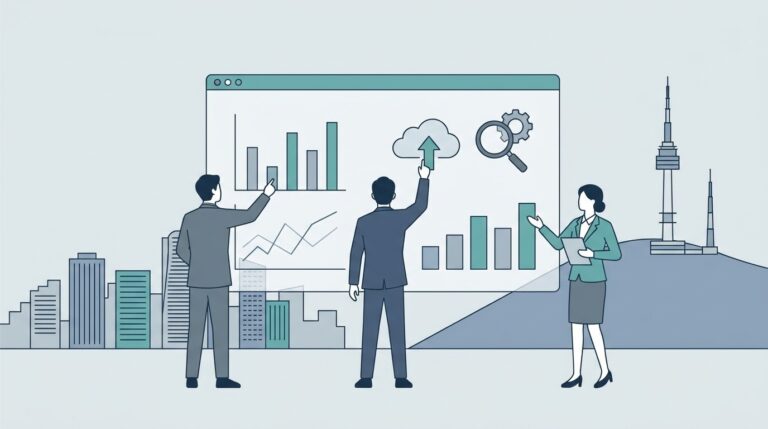
Master Advanced Korean Data Terminology: Public Data & Private Sector Synergy
안녕하세요! 매일한글 에디터입니다. Welcome back to another deep dive into high-level Korean! Today, we’re tackling a sophisticated topic that frequently appears in Korean tech news, policy briefs, and corporate strategy meetings: 공공 데이터 개방과 민간 활용 활성화 (Open Public Data & Private Sector Activation).
Imagine you are reading a Korean economic journal or pitching a data-driven startup idea in Seoul. You know basic business vocabulary, but when discussing policy frameworks, data accessibility, and synergy between government datasets and private enterprise, standard textbook Korean simply falls short. Learners at the C2 level often express frustration over the nuanced difference between structural release versus real-world data application. This guide bridges that exact gap with practical insights, authentic dialogue, and high-level linguistic nuances.
Phase 2: Core Expressions Breakdown
1. 공공 데이터 개방 (Gong-gong dae-i-teo gae-bang)
- Pronunciation: [Gong-gong dae-i-teo gae-bang] (Sounds like ‘gong-gong’ + data + ‘gae-bang’ similar to ‘open garage’)
- Meaning: Literal: Public Data Opening | Nuance: Government initiatives making public sector datasets accessible to everyone.
- K-Culture Moment: Seen in tech dramas like Start-Up when founders leverage government mobility or healthcare API databases to build seamless apps.
- Editor’s Insight: Beyond simply ‘sharing’, 개방 implies a structural, policy-level removal of access barriers.
- Situation Spectrum: Casual 🚫 | Semi-formal ⚠️ | Formal ✅
- 🤔 Think About It: How does your home country balance public data transparency with privacy regulation?
2. 민간 활용 활성화 (Min-gan hwal-yong hwal-seong-hwa)
- Pronunciation: [Min-gan hwal-yong hwal-seong-hwa]
- Meaning: Literal: Private Sector Utilization Activation | Nuance: Energizing private business growth through public resource adoption.
- K-Culture Moment: Frequently used by tech executives and government officials on news panel debates regarding AI innovation.
- Editor’s Insight: Notice the double ‘활’ (活 – life/active). It stresses turning static data into dynamic commercial value.
- Situation Spectrum: Casual 🚫 | Semi-formal ⚠️ | Formal ✅
- 🤔 Think About It: Why is public data crucial for private startups in highly digitalized societies like South Korea?
3. 부가가치 창출 (Bu-ga-ga-chi chang-chul)
- Pronunciation: [Bu-ga-ga-chi chang-chul]
- Meaning: Literal: Value-added Creation | Nuance: Generating additional secondary economic benefit from raw data.
- K-Culture Moment: Featured in Korean startup pitch competitions (IR demos) to show investors real revenue potential.
- Editor’s Insight: C2 speakers use ‘창출’ instead of simple ‘만들기’ when presenting formal outcomes.
- Situation Spectrum: Casual 🚫 | Semi-formal ⚠️ | Formal ✅
- 🤔 Think About It: How does raw demographic data transform into actionable commercial value?
Phase 3: Textbook Korean vs. Native Real-Talk
Situation 1: Discussing Data Availability
- 📖 Textbook Korean: 정부가 데이터를 많이 제공해서 좋습니다. (It is good that the government provides a lot of data.)
- 🗣️ Native Real-Talk: 공공 데이터 개방 덕분에 민간 서비스 개발이 한층 수월해졌어요. (Thanks to open public data, private service development has become significantly easier.)
- 💡 Why the difference? C2 native discourse uses noun-modifying structures and precise business terminology (수월해지다, 개방 덕분에) rather than simple casual adjectives.
Situation 2: Emphasizing Business Impact
- 📖 Textbook Korean: 이 데이터를 쓰면 돈을 더 벌 수 있습니다. (If you use this data, you can make more money.)
- 🗣️ Native Real-Talk: 데이터 연동을 통해 새로운 부가가치를 창출할 수 있습니다. (Through data integration, we can generate new added value.)
- 💡 Why the difference? Formal economic contexts demand terms like ‘연동’ (integration) and ‘부가가치 창출’ (value-added creation).
Phase 4: K-Culture Deep Dive & Non-Verbal Protocol
4-1. Manner & Gestures
When presenting data strategy in a Korean formal setting, maintain steady eye contact with senior stakeholders while delivering statistics. Avoid over-gesturing; a composed demeanor with slight nods emphasizes analytical precision and authority.
4-2. Cultural Insight: The Korean Big Data Ecosystem
Korea’s rapid digitalization (from public transit data used in KakaoBus to real-time health data) relies heavily on government-led public data portals. Understanding this infrastructure unlocks real insight into Korean corporate digital transformation (DX).
Phase 5: Live Roleplay Scenario
Characters: Mina (Tech Startup Lead) & Director Park (Government Data Policy Board)
- Mina: 🎭 Hands over project proposal confidentially Director Park, 이번 프로젝트는 공공 데이터 개방을 기반으로 기획되었습니다.
(Director Park, this project was planned based on open public data.) - Dir. Park: 🎭 Adjusts glasses thoughtfully 민간 활용 활성화 측면에서 실질적인 성과가 기대되는군요.
(In terms of private sector activation, I expect practical results.) - Mina: 🎭 Points to market projection graph 네, 데이터를 연동하여 비즈니스 부가가치를 창출하고자 합니다.
(Yes, by integrating data, we aim to create business value.) - Dir. Park: 🎭 Nods slowly 보안 및 개인정보 보호 문제는 충분히 검토하셨나요?
(Have you thoroughly reviewed security and privacy protection issues?) - Mina: 🎭 Presents compliance certification document 물론입니다. 비식별 조치를 완료하여 법적 기준을 철저히 준수했습니다.
(Of course. We completed de-identification measures to strictly comply with legal standards.) - Dir. Park: 🎭 Smiles subtly 훌륭합니다. 민관 협력의 좋은 본보기가 되겠네요.
(Excellent. This will serve as a fine model for public-private cooperation.) - Mina: 🎭 Bows slightly in appreciation 감사드립니다. 성공적인 모범 사례로 만들겠습니다.
(Thank you. We will make this a successful best practice.) - Dir. Park: 🎭 Extends hand for handshake 기대하겠습니다. 적극 지원하겠습니다.
(I look forward to it. We will actively support you.)
🔀 Interactive Decision Point
How should Mina respond if Director Park asks about data formatting compatibility?
* Option A:
Frequently Asked Questions (FAQ)
Q: What does "공공 데이터 개방 (Gong-gong dae-i-teo gae-bang)" mean in Korean and how do you pronounce it?
A: In Korean, "공공 데이터 개방 (Gong-gong dae-i-teo gae-bang)" is pronounced [Gong-gong dae-i-teo gae-bang] and means: Literal: Public Data Opening | Nuance: Government initiatives making public sector datasets accessible to everyone.
Q: What does "민간 활용 활성화 (Min-gan hwal-yong hwal-seong-hwa)" mean in Korean and how do you pronounce it?
A: In Korean, "민간 활용 활성화 (Min-gan hwal-yong hwal-seong-hwa)" is pronounced [Min-gan hwal-yong hwal-seong-hwa] and means: Literal: Private Sector Utilization Activation | Nuance: Energizing private business growth through public resource adoption.
Q: What does "부가가치 창출 (Bu-ga-ga-chi chang-chul)" mean in Korean and how do you pronounce it?
A: In Korean, "부가가치 창출 (Bu-ga-ga-chi chang-chul)" is pronounced [Bu-ga-ga-chi chang-chul] and means: Literal: Value-added Creation | Nuance: Generating additional secondary economic benefit from raw data.






