

Phase 1: 공감 (Empathy & Narrative Opening)
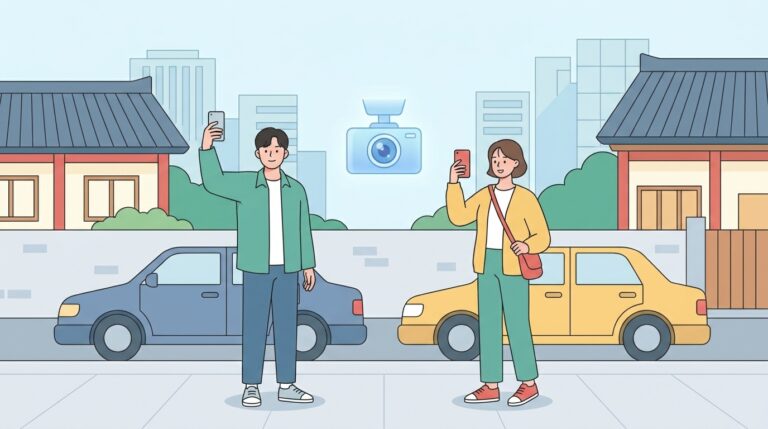
안녕하세요! I’m your Daily Hangul lead editor and your personal Korean culture navigator. Have you ever watched a K-drama scene where two drivers step out of their cars after a fender bender, pointing fingers, pulling out smartphones, and fiercely debating who is at fault? In Korea, dealing with a traffic accident—specifically negotiating fault ratios (과실 비율) on the spot—is a delicate art that requires a blend of diplomatic vocabulary, extreme situational awareness (눈치), and formal dispute resolution skills.
Navigating a car accident in a foreign country can be terrifying. But if you are at a C1 level in Korean, mastering the nuance of legal, insurance, and mediation terminology won’t just keep you safe—it will give you absolute confidence when advocating for yourself. Based on real feedback from foreign residents and expats in Korea, this guide breaks down high-level conflict resolution Korean so you can speak with precision, authority, and cultural tact during high-stress situations.
Phase 2: 핵심 표현 3선 심층 분석 (Deep Dive: Top 3 Expressions)
1. 과실 비율을 가리다 (Gwasil biyureul garida)
- Pronunciation: [gwa-sil bi-yul-eul ga-ri-da] (Sounds like “gwa-seal bee-yool-ool gah-ree-dah”)
- Meaning: Literally “to sift through fault ratios,” meaning to formally determine/apportion legal liability.
- K-Culture Moment: You will hear this constantly in legal K-dramas or news segments covering traffic disputes. Insurance adjusters (보험 사동원) use this exact phrase when assessing dashboard camera (블랙박스) footage.
- Editor’s Insight: The verb 가리다 implies separating truth from falsehood or right from wrong (like sifting grain). Using this verb instead of a simple “정하다” (to decide) shows high-level language competence and signals that you want a fair, objective assessment based on evidence.
- Situation Spectrum:
- Casual: 🚫
- Semi-formal: ⚠️
- Formal: ✅
- 🤔 Think About It: In your culture, do drivers debate fault immediately on the road, or do they strictly exchange insurance info in silence? In Korea, asserting your logical stance early—without losing your temper—is key.
2. 원만한 합의를 시도하다 (Wonmanhan hab-uireul sidohada)
- Pronunciation: [won-man-han hab-ui-reul si-do-ha-da] (Sounds like “wan-man-hahn hab-ee-rool see-doh-hah-dah”)
- Meaning: Literally “to attempt an amicable settlement.”
- K-Culture Moment: Commonly seen in corporate or personal dispute resolution scenes in K-dramas where parties want to avoid formal court litigation (법적 공방).
- Editor’s Insight: 원만하다 combines smoothness and harmony. By bringing up an “amicable settlement,” you signal that you are not looking for an aggressive fight, but rather a reasonable, balanced middle ground that respects both parties’ dignity.
- Situation Spectrum:
- Casual: 🚫
- Semi-formal: ⚠️
- Formal: ✅
- 🤔 Think About It: How does the Korean preference for social harmony (화합) influence legal negotiations compared to western litigation culture?
3. 블랙박스 영상을 확인해 보시죠 (Beullaekbakseu yeongsangeul hwaginhae bosijyo)
- Pronunciation: [beul-laek-bak-seu yeong-sang-eul hwa-gin-hae bo-si-jyo] (Sounds like “black-box young-sang-ool hwa-gin-hae boh-see-jyo”)
- Meaning: “Let’s check the dashcam footage.”
- K-Culture Moment: Dashcams are practically mandatory in Korea! TV shows like Han Moon-chul’s Dashcam Show (한문철의 블랙박스 리뷰) are massive hits where experts analyze accident percentages down to 10% increments.
- Editor’s Insight: Suggesting to review the dashcam shifts the conversation from subjective emotional arguments to objective digital evidence. Ending with the honorific suggestion -보시죠 keeps your tone firm yet impeccably polite.
- Situation Spectrum:
- Casual: ⚠️
- Semi-formal: ✅
- Formal: ✅
- 🤔 Think About It: Why has dashcam footage become the ultimate truth-teller in modern Korean conflict resolution?
Phase 3: 교과서 한국어 vs 진짜 한국어 (Textbook vs. Real Native Korean)
Scenario 1: Proposing to check who is responsible
- 📖 Textbook: 제 잘못이 얼마나 되는지 확인합시다. (Let us check how much is my fault.)
- 🗣️ Real Native: 일단 블랙박스 확인하고 과실 비율 따져 보시죠. (Let’s check the dashcam first and figure out the fault ratio.)
- 💡 Why the difference?: Real native Korean at a C1 level uses the active verb 따지다 (to analyze closely/scrutinize) along with objective evidence references like 블랙박스 rather than overly passive expressions.
Scenario 2: Refusing unfair liability
- 📖 Textbook: 저는 100% 잘못하지 않았습니다. (I did not do 100% wrong.)
- 🗣️ Real Native: 저한테 100% 과실을 묻는 건 받아들이기 어렵습니다. (It is difficult for me to accept assigning 100% fault to me.)
- 💡 Why the difference?: Direct denial sounds childish or overly defensive. C1 Korean uses passive/formal structure (~을 묻는 건 받아들이기 어렵습니다) to reject an offer professionally without escalating into a shouting match.
Phase 4: K-Culture 딥다이브 & 비언어적 매너 (K-Culture Deep Dive & Non-Verbal Etiquette)
4-1. Nunchi & Gestures during Traffic Disputes
- Maintain Calm Eye Contact: Shouting or waving arms lowers your credibility in Korea. Keep your posture upright, maintain steady eye contact, and use neutral hand gestures when pointing to road marks or vehicle damage.
- The “Two-Hand Phone Hold”: When exchanging contacts or showing photos of damage on your phone, hold your phone with both hands or support your right wrist with your left hand. It maintains respect even in a tense negotiation.
4-2. Cultural Code: The Dashcam Culture (한블리 현상)
Korea’s vehicle density and narrow street grids led to the world’s highest dashcam adoption rate. Shows like Han Moon-chul’s Dashcam Review have turned fault ratio analysis into a national pastime. Koreans expect every claim to be backed by camera angles (front, rear, side). Claiming innocence without dashcam proof is considered ineffective.
Phase 5: 실전 롤플레이 시나리오 (Interactive Role-Play Scenario)
Context: You are driving in Seoul and another car bumps into your side while changing lanes without signaling. The driver gets out, trying to claim it’s a 50:50 fault. You are speaking with the insurance adjuster (보험사 담당자).
Characters:
* You (C1 Learner): Calm, logical, firm.
* Insurance Adjuster (Mr. Park): Fast-talking, trying to settle quickly.
Dialogue (8 Turns)
- Adjuster: 고객님, 차선 변경 중 발생한 사고라 보통 5:5나 6:4로 진행됩니다. (Sir/Madam, since it happened during a lane change, it usually goes 5:5 or 6:4.)
- You (🎭 Firm & Calm): 상대방이 신호등 없이 갑자기 들이받았는데요. 5:5는 말도 안 됩니다. (The other party suddenly hit me without a turn signal. 5:5 makes no sense.)
- Adjuster: 하지만 쌍방 과실 원칙이 적용될 수 있습니다. (However, mutual fault principles might apply.)
- You (🎭 Presenting Evidence): 제 블랙박스 영상 보셨나요? 전 명확히 제 차선을 유지하고 있었습니다. (Have you seen my dashcam video? I was clearly maintaining my lane.)
- Adjuster: 아, 영상을 아직 정밀하게 확인하지 못했습니다. (Ah, I haven’t checked the footage in detail yet.)
- You (🎭 Logical Pushback): 영상부터 먼저 확인하시죠. 무과실 입장을 고수하겠습니다. (Please check the video first. I will maintain my position of zero fault.)
- Adjuster: 알겠습니다. 영상 확인 후 과실 비율을 다시 산정해보겠습니다. (Understood. I will recalculate the fault ratio after reviewing the video.)
- You (🎭 Polite Closing): 네, 원만한 합의가 이루어지길 바랍니다. 연락 주세요. (Yes, I hope an amicable settlement is reached. Please contact me.)
🔀 Interactive Decision Point
If the adjuster still insists on a 50:50 split, how should you respond?
* Option A: “야! 내가 잘못 없다니까! 당신 법대로 해!” (Casual/Aggressive)
* Option B: “분쟁조정위원회에 안건을 올리고 정식 절차를 밟겠습니다.” (Formal/Legal)
* Option C: “그냥 알겠습니다. 귀찮으니까 50:50으로 해요.” (Passive submission)
- Feedback:
- Option A (Risk): Using aggressive informal language (“야”) will destroy your leverage and might lead to harassment charges.
- Option B (Best): Perfect C1 response! Mentioning the Dispute Mediation Committee (분쟁조정위원회) shows deep knowledge of Korean legal rights and forces the adjuster to take your case seriously.
- Option C (Bad): Giving up unnecessarily costs you thousands in insurance premiums.
Phase 6: 10초 감정 섀도잉 드릴 (10-Sec Emotional Shadowing Drill)
Practice these lines with the indicated emotional tempo and pauses (/).
- [😐 Cold & Calm]
과실 비율은 / 객관적인 블랙박스 영상을 바탕으로 / 가려야 합니다.
(Gwasil biyureun / gaekgwanjeogin beullaekbakseu yeongsangeul batang-euro / garyeoya hamnida.) -
[😠 Firm & Assertive]
제 쪽에서는 / 100% 무과실을 / 주장할 수밖에 없습니다.
(Je jjogeeseonun / baek-pro mugwasireul / jujanghal subakke eopseumnida.) -
[🤝 Polite yet Unyielding]
원만한 합의를 원하지만 / 부당한 과실 산정은 / 받아들일 수 없습니다.
(Wonmanhan hab-uireul wonhajiman / budanghan gwasil sanjeongeun / badadeoril su eopseumnida.)
Phase 7: K-Culture 미니 사전 (Mini Dictionary)
- 과실 비율 (Gwasil Biyul) | Fault ratio / Percentage of liability in an insurance claim.
- 쌍방 과실 (Ssangbang Gwasil) | Mutual fault / Both parties sharing liability.
- 무과실 (Mugwasil) | Zero fault / Complete innocence in an accident.
- 분쟁조정위원회 (Bunjang Jojeong Wiwonhoe) | Dispute Mediation Committee / Official body resolving insurance conflicts.
Phase 8: 여행자 & 정주자를 위한 생존 키트 (Survival Kit)
Top 3 Emergency Expressions
- 보험사에 연락하셨나요? (Have you contacted your insurance company?)
- 현장 사진부터 찍으시죠. (Let’s take photos of the scene first.)
- 경찰에 신고하겠습니다. (I will report this to the police.)
Editor’s Travel Note
If you rent a car or drive in Korea, download Naver Maps App for real-time traffic updates and navigation. In case of an accident, immediately capture: 1) Wheel directions, 2) Long-distance shots showing lane markers, and 3) Close-up vehicle damage before moving cars to the shoulder.
Phase 9: 한 발 더 깊이 (Deeper Cultural Insight)
In Korean dispute resolution, maintaining self-control while utilizing elevated honorific vocabulary (격식체) is the ultimate power move. Historically rooted in Confucian values of emotional restraint (정중함), loud shouting is viewed as a loss of control and weakness. By mastering terms like 과실 비율 and 원만한 합의, foreign drivers flip the dynamic—showing they respect Korean legal norms while standing their ground.
💬 Your Turn: Have you ever experienced a conflict or traffic dispute in Korea? How did you handle it? Share your story in the comments below!
Phase 10: FAQ & 오해 방지 (FAQ & Common Mistakes)
Q: Should I apologize on the spot at an accident scene in Korea?
A: Expressing polite concern (“괜찮으세요?” – Are you okay?) is good manners, but saying “제 죄송합니다” (I am sorry) can sometimes be misinterpreted by the other driver or insurance companies as an admission of legal fault. Stick to checking health conditions first!
Q: What if the other driver refuses to call their insurance company?
A: Take photos of their license plate and call the Korean Police (112) immediately. Leaving the scene without exchanging information can be classified as hit-and-run (뺑소니).
Q: Can I use informal Korean if the other driver gets angry?
A: Never. Always stay in formal Korean (존댓말). It protects you legally and keeps you on the moral high ground.
🚨 Common Mistakes Warning Board
- ❌ Mistake 1: Moving cars before taking photos of tire angles and road markings.
- 👉 Correct Action: Take 360-degree photos first, then move to safety.
- ❌ Mistake 2: Agreeing to verbal cash settlements on the spot without documentation.
- 👉 Correct Action: Always notify insurance companies or document agreements in writing.
- ❌ Mistake 3: Accepting a 50:50 fault ratio just to avoid confrontation.
- 👉 Correct Action: Request official review of dashcam footage (블랙박스 영상).
Phase 11: 액션 미션 & 참여 유도 (Action Missions)
- 🥉 Bronze Mission: Practice Phase 6 shadowing drills out loud 3 times using correct pauses.
- 🥈 Silver Mission: Share this post on your social media with your own Korean learning goal for C1 vocabulary.
- 🥇 Gold Mission: Write a mock statement in Korean explaining a hypothetical road scenario using all 4 words from the Phase 7 Mini Dictionary!
🎮 K-Culture Mission: Watch an episode of Han Moon-chul’s Dashcam Show (한블리) on YouTube and spot how many times the presenter says 과실 비율!
Phase 12: 인터랙티브 퀴즈 챌린지 (Interactive Quiz)
Quiz 1: Situation Judgment
What is the most appropriate C1 response when an insurance adjuster offers an unfair fault ratio?
* A)






